


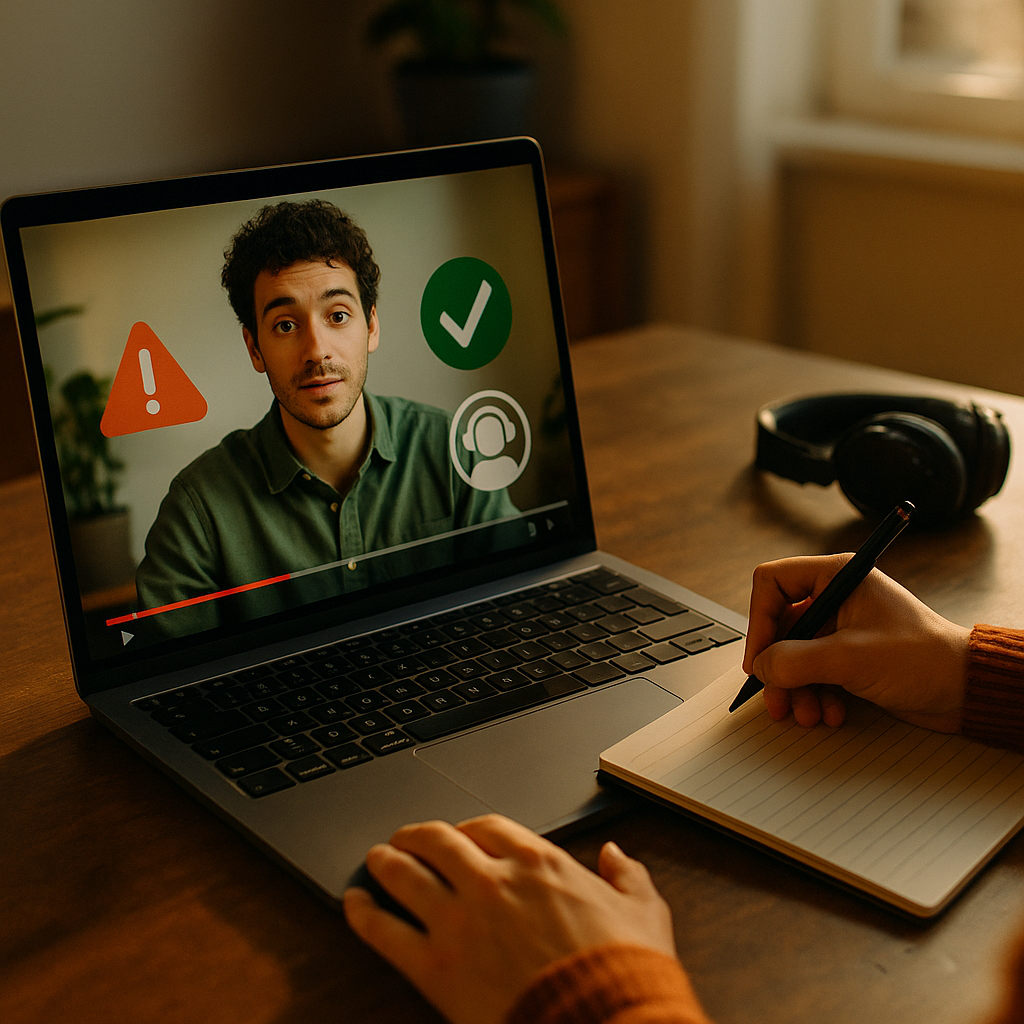
One in five people is neurodivergent. Yet most brand video briefs are still built for a viewer who processes fast cuts, dense captions, and layered audio without friction. Neuro-inclusive short-form video isn’t a niche accessibility checkbox anymore — it’s a completion-rate lever hiding in plain sight, and most brands are leaving it untouched.
Think about your last ten creator briefs. How many mentioned flicker rate, caption pacing, or sensory load? Probably none. That gap is the opportunity.
Why Cognitive Load Is a Performance Metric, Not Just an Accessibility One
Marketers tend to file “neuro-inclusive design” under compliance or CSR. That’s a mistake. Cognitive load — the mental effort required to process a piece of content — determines whether someone watches to the end, remembers your CTA, or bounces at second three. Neurodivergent viewers (autistic, ADHD, dyslexic, and sensory-sensitive audiences) simply hit that wall faster and more visibly. But the wall exists for everyone.
Fast-cutting montages, strobing transitions, overlapping text and voiceover, and cluttered lower-thirds don’t just alienate a subset of viewers. They tax working memory across the board. Attention data from eMarketer has shown completion rates dropping sharply after the first few seconds on most short-form platforms — and a chunk of that drop is design-induced, not disinterest-induced.
Neuro-inclusive video design isn’t about slowing content down. It’s about removing friction between the message and the moment someone decides to keep watching.
What “High-Legibility, Low-Load” Actually Means in a Brief
This isn’t abstract theory. It translates into specific, briefable production choices:
- Caption timing that matches speech rhythm, not compressed to fit a trend’s pacing. Rushed captions force rapid re-reading, which spikes load.
- One information channel at a time. Don’t stack a voiceover, on-screen text, and a product callout simultaneously. Sequence them.
- Consistent color contrast for text overlays — no white text over light backgrounds, no flashing color transitions between cuts.
- Predictable structure. Neurodivergent viewers (and honestly, most viewers) process content faster when a video signals its format early: hook, demo, payoff, CTA. Chaotic structure forces the brain to constantly re-orient.
- Reduced strobe and flicker. Rapid flashing isn’t just a photosensitive epilepsy risk — it’s a universal attention-drainer.
None of this requires a bigger budget. It requires a different brief. The same way caption-driven design for sound-off viewing became standard practice once brands realized 70%+ of feed video plays without audio, legibility-first design becomes standard once brands see the retention data.
The Business Case: Reach You’re Currently Not Counting
Roughly 15-20% of the global population is neurodivergent, per widely cited figures from disability and neurodiversity research bodies. Add in situational and temporary cognitive load — someone scrolling while distracted, tired, or multitasking on a commute — and the addressable audience for “low-load” content design is closer to the majority of your feed traffic, not a minority carve-out.
That reframes the ROI conversation. This isn’t charity. It’s addressable-market expansion dressed up as accessibility. A brand that designs for the accessibility floor tends to win the attention ceiling too — better captions help everyone, cleaner pacing helps everyone, predictable structure helps everyone.
There’s also a risk-mitigation angle brand and legal teams should care about. Regulatory pressure around digital accessibility is intensifying globally, and while short-form creator content sits in a gray zone compared to owned web properties, platforms themselves are moving. Both Meta’s ad platform and TikTok’s advertising tools now push auto-captioning and accessibility prompts by default. Ignoring that signal is a forward-looking compliance risk, not just a UX nitpick.
Briefing Creators: What Changes, What Doesn’t
Creators are not accessibility consultants. Most have never heard the term “cognitive load” outside a psych class. Your brief has to translate the principle into filming instructions they can execute without feeling creatively boxed in.
Practical brief additions that work:
- Cap jump-cut frequency — suggest a minimum shot length rather than banning fast cuts outright.
- Require captions burned in with generous hold time, reviewed for reading speed, not just accuracy.
- Ask for one clear visual focal point per shot. No split-screen reaction plus text plus product overlay all at once, unless it’s genuinely sequenced.
- Specify a calm open: the first two seconds shouldn’t be visually loud even if they’re attention-grabbing. A strong hook and a low-load hook aren’t mutually exclusive.
This isn’t unfamiliar territory for anyone who’s already worked on split-screen reaction formats or poll-driven video — both formats already require careful sequencing to avoid overwhelming the viewer. Neuro-inclusive design just makes that discipline explicit and non-negotiable rather than a nice-to-have.
Where Brands Get It Wrong
The most common failure mode: treating accessibility as a post-production patch. Auto-generated captions slapped on after editing, timed to the algorithm’s default speed, riddled with errors on brand and product names. That’s not inclusion. That’s a checkbox.
The second failure: assuming low cognitive load means boring. It doesn’t. Some of the highest-performing formats on the platforms right now are inherently low-load by design — ASMR-style product demos succeed precisely because they’re single-sense, single-focus, and unhurried. Time-lapse and hyper-lapse formats work for the same reason: one continuous visual thread, no competing stimuli.
The best neuro-inclusive content doesn’t look “accessible.” It just looks calm, clear, and confident — which is exactly what high-performing creator content should look like anyway.
Third failure: ignoring audio design. Sudden volume spikes, jarring sound effect drops, and layered music-plus-voiceover tracks are a major cognitive load trigger, especially for auditory-sensitive viewers. If you’re already building brand jingles into creator content, make sure the jingle doesn’t compete with dialogue for attention in the same three seconds.
A Simple Framework for Auditing Existing Creator Content
Before you rewrite every brief, audit what’s already live. Run your last quarter of creator content through four questions:
- Can it be understood muted, at half attention? If not, captions and pacing need work. This overlaps directly with sound-off design best practices.
- Is there ever more than one text element competing for attention at once? If yes, simplify.
- Does the video open with visual chaos? Strobing, rapid cuts, or clutter in the first two seconds should be flagged.
- Would a viewer with ADHD or an autistic viewer be able to predict what happens next by the midpoint? Structure clarity matters more than novelty here.
Score each asset. You’ll likely find your best-performing organic content already scores well — creators who’ve built large followings tend to intuitively avoid overload because their audience data punishes confusion. That’s a useful internal proof point when you’re pitching this framework to a skeptical CMO.
Measurement: What to Track Beyond Completion Rate
Completion rate is the obvious metric, but it’s blunt. Layer in:
- Re-watch rate — high re-watches on short content can indicate viewers didn’t catch information the first time, a load signal.
- Caption toggle behavior, where platform data allows it — are viewers actively turning captions on, suggesting your audio-only version isn’t landing?
- Drop-off timestamp clustering — if viewers consistently bail at the same second, that’s likely a specific edit decision, not general fatigue.
Tools like Sprout Social and native platform analytics can surface most of this without new tooling spend. The point isn’t new martech. It’s asking sharper questions of the data you already have.
Format Fit: Where Neuro-Inclusive Design Slots In Naturally
Some formats are easier starting points than others. Carousel content is naturally self-paced — viewers control advancement, which sidesteps a lot of forced-pacing load issues. Day-in-the-life formats also lend themselves to calmer pacing since they’re built on real routines rather than manufactured urgency.
Formats that need the most retrofitting: fast-cut cliffhanger series and vertical drama content, where tension and pacing are the entire point. That doesn’t mean avoid them. It means build in deliberate breathing room between high-tension beats, and never stack a cliffhanger cut with a caption change and a scene change simultaneously.
FAQs
Frequently Asked Questions
What does “neuro-inclusive video” mean in a creator marketing context?
It means designing short-form content — pacing, captions, audio layering, visual structure — so it’s easy to process for viewers with ADHD, autism, dyslexia, or general sensory sensitivity, without sacrificing creative quality or hook strength.
Does low-cognitive-load design mean slower, less exciting content?
No. It means sequenced, clear content. A video can be fast-paced and still low-load if information is presented one channel at a time and structure is predictable. Boredom and clarity aren’t the same thing.
How do I brief a creator on cognitive load without overwhelming them with jargon?
Translate principles into filming instructions: minimum shot length, one on-screen text element at a time, calm opening two seconds, generous caption hold time. Skip the theory, give production specs.
Is this an accessibility compliance requirement or a best practice?
Currently it’s largely best practice for creator content rather than a hard legal mandate, though platform-level accessibility tools and evolving digital accessibility regulation suggest that could shift. Treat it as forward-looking risk mitigation, not just optional polish.
What’s the fastest way to test if this is worth investing in?
Audit your last quarter of creator content against a simple four-point cognitive load checklist, then compare completion and re-watch rates between high-load and low-load assets. The data usually makes the business case on its own.
Start small: pick your next three creator briefs, add one legibility rule each (caption pacing, single-focus shots, calm opens), and compare completion data against your last quarter’s average. The audience you’re not currently reaching is bigger than your dashboard suggests.
Top Influencer Marketing Agencies
The leading agencies shaping influencer marketing in 2026
Agencies ranked by campaign performance, client diversity, platform expertise, proven ROI, industry recognition, and client satisfaction. Assessed through verified case studies, reviews, and industry consultations.
Moburst

-
2

The Shelf
Boutique Beauty & Lifestyle Influencer AgencyA data-driven boutique agency specializing exclusively in beauty, wellness, and lifestyle influencer campaigns on Instagram and TikTok. Best for brands already focused on the beauty/personal care space that need curated, aesthetic-driven content.Clients: Pepsi, The Honest Company, Hims, Elf Cosmetics, Pure LeafVisit The Shelf → -
3

Audiencly
Niche Gaming & Esports Influencer AgencyA specialized agency focused exclusively on gaming and esports creators on YouTube, Twitch, and TikTok. Ideal if your campaign is 100% gaming-focused — from game launches to hardware and esports events.Clients: Epic Games, NordVPN, Ubisoft, Wargaming, Tencent GamesVisit Audiencly → -
4

Viral Nation
Global Influencer Marketing & Talent AgencyA dual talent management and marketing agency with proprietary brand safety tools and a global creator network spanning nano-influencers to celebrities across all major platforms.Clients: Meta, Activision Blizzard, Energizer, Aston Martin, WalmartVisit Viral Nation → -
5

The Influencer Marketing Factory
TikTok, Instagram & YouTube CampaignsA full-service agency with strong TikTok expertise, offering end-to-end campaign management from influencer discovery through performance reporting with a focus on platform-native content.Clients: Google, Snapchat, Universal Music, Bumble, YelpVisit TIMF → -
6

NeoReach
Enterprise Analytics & Influencer CampaignsAn enterprise-focused agency combining managed campaigns with a powerful self-service data platform for influencer search, audience analytics, and attribution modeling.Clients: Amazon, Airbnb, Netflix, Honda, The New York TimesVisit NeoReach → -
7

Ubiquitous
Creator-First Marketing PlatformA tech-driven platform combining self-service tools with managed campaign options, emphasizing speed and scalability for brands managing multiple influencer relationships.Clients: Lyft, Disney, Target, American Eagle, NetflixVisit Ubiquitous → -
8

Obviously
Scalable Enterprise Influencer CampaignsA tech-enabled agency built for high-volume campaigns, coordinating hundreds of creators simultaneously with end-to-end logistics, content rights management, and product seeding.Clients: Google, Ulta Beauty, Converse, AmazonVisit Obviously →