


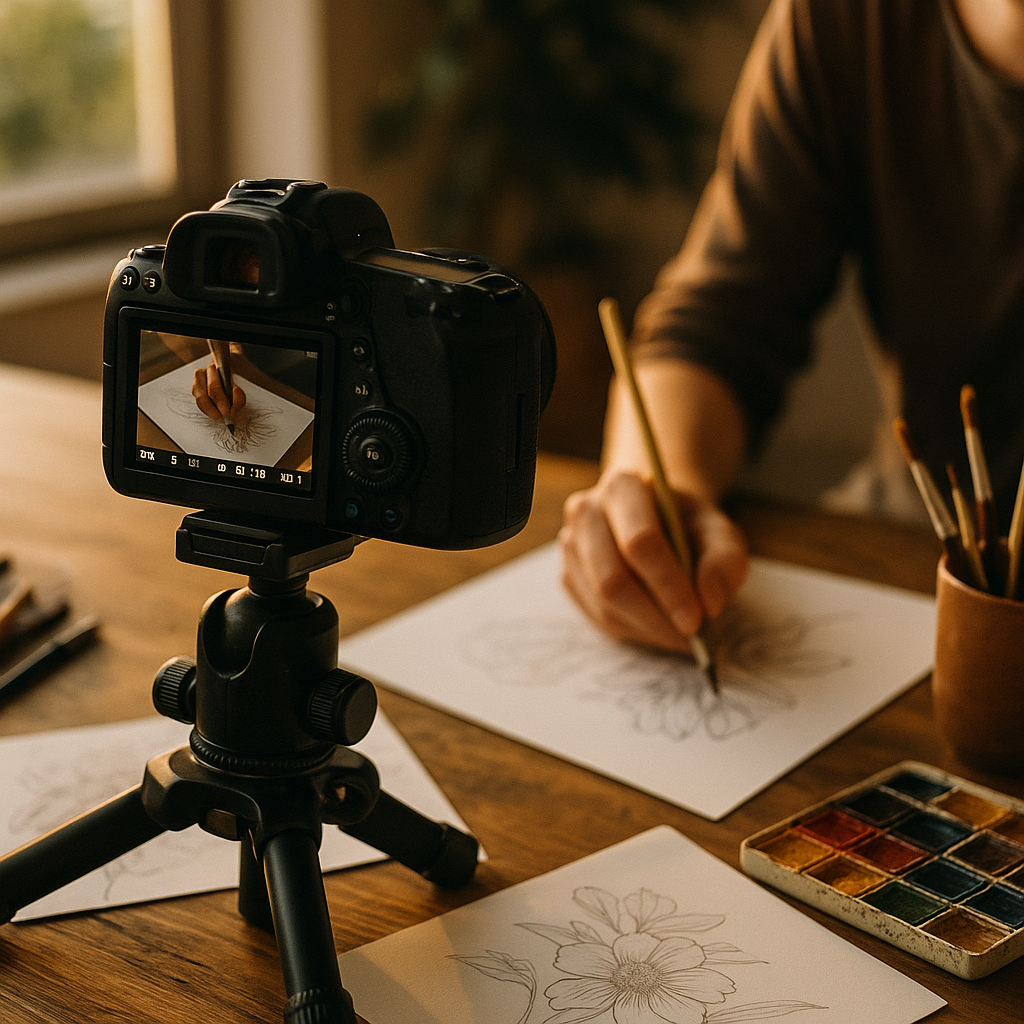
Seventy-one percent of consumers say they trust a brand more after seeing how its products are actually made, according to research cited by HubSpot on video marketing trends. So why do most manufacturing videos still look like corporate training tapes? The time-lapse process format is the fix marketers keep underusing, and it’s costing brands a credibility shortcut that’s sitting right on their factory floor.
Why “Show the Making” Beats “Tell the Story”
Craftsmanship claims are cheap. Anyone can write “handmade” or “small-batch” on a label. What’s expensive, and therefore trustworthy, is footage that proves it. Time-lapse compresses hours or days of labor into a scroll-stopping 15 to 30 seconds, and it does something claims-based marketing can’t: it lets the audience watch the transformation happen in front of them.
This isn’t a new technique. Bakers, potters, and woodworkers have used time-lapse on YouTube for over a decade. What’s changed is the context. Consumers are more skeptical of brand messaging than ever, and AI-generated content is flooding feeds with imagery nobody can verify. A raw, unpolished time-lapse of a real production line reads as a rare, believable signal in a sea of synthetic polish.
Time-lapse doesn’t just show a product being made — it shows effort, and effort is the one thing audiences can’t fake-detect. That’s why it converts skeptics faster than testimonials or specs.
What Makes a Time-Lapse Feel Authentic Instead of Staged
Here’s the tension every brand marketer runs into: time-lapse requires editing, sped-up footage, sometimes reshoots for coverage gaps. All of that can tip into looking manufactured (pun intended) rather than manufactured-and-honest. The line between “beautifully edited process video” and “suspiciously perfect content” is thinner than most creative teams admit.
- Keep imperfections in frame. A slightly uneven stitch, a tool being set down wrong then corrected, a worker wiping sweat — these micro-moments signal reality. Scrub them out and you lose the thing that made the format trustworthy in the first place.
- Match speed to material logic. Leather curing and dough proofing shouldn’t move at the same frame rate as CNC machining. Audiences intuitively sense when speed-ramping is hiding dead time versus compressing genuinely long processes.
- Avoid over-scoring with hype music. A dramatic swell over a candle-pouring video reads as ironic at best, dishonest at worst. Let ambient factory or studio sound carry weight alongside music.
- Show hands, not just machines. Fully automated lines can still work as time-lapse content, but if you’re selling “craftsmanship,” human hands need to be visibly present and repeatedly so.
Briefing Creators for Process Content Without Killing the Craft
Most brands make one of two mistakes when briefing this format. Either they over-script it, handing creators a shot list so rigid it strips out spontaneity, or they under-brief it, sending a creator into a facility with zero guidance and hoping something usable comes back. Neither works.
The better approach: brief the beats, not the shots. Tell the creator what stages of the process matter (raw material, transformation, quality check, final product) and let them find the compelling angle inside each stage. This mirrors the same principle used in origin story micro-documentaries, where structure guides the narrative but doesn’t dictate every frame.
Practical brief components that actually move the needle:
- Duration ratio guidance. Specify roughly how much real-world time should compress into how much screen time. A rule of thumb: aim for 20-40x compression for multi-hour processes, less for anything under an hour.
- Anchor shots. Identify two or three non-negotiable moments (first cut, final polish, packaging seal) that must appear regardless of edit style.
- B-roll permission. Give creators explicit license to grab texture shots, close-ups of tools, ambient facility sound, things that add richness without derailing the main sequence.
- Safety and NDA boundaries. If proprietary equipment or trade processes are visible, flag what can’t be shown before the shoot, not after the edit is delivered.
The Compliance Layer Brands Forget
Process content feels harmless from a regulatory standpoint. It’s not a testimonial, there’s no explicit performance claim, so why would disclosure rules apply? Because they still do, if a creator is compensated or given product to make the video, FTC guidance on endorsements still requires clear disclosure, even in process-focused or “educational” formats.
There’s a second, subtler risk: implied claims. A time-lapse showing a “100% handmade” process, when in reality a machine does the bulk of the work and a person finishes the last five percent, can trigger deceptive advertising scrutiny. Brands walking this line should look at how disclosure has been handled in adjacent formats, like the approach detailed in before-and-after briefs that stay FTC compliant, and apply the same rigor to any process video making implicit quality or effort claims.
If your time-lapse implies more human labor than actually occurs, you’re not just risking brand trust, you’re risking a deceptive advertising complaint. Verify the claim before you cut the footage.
Platform Considerations You Can’t Skip
TikTok, Instagram Reels, and YouTube Shorts all handle sped-up footage differently in terms of algorithmic favor and audio sync. TikTok’s native speed-ramp tools tend to outperform footage edited entirely in post and re-uploaded, because the platform’s creative tools are optimized for its own compression and audio-matching. If a creator is filming for multi-platform distribution, brief separate export specs rather than assuming one cut fits all channels.
Also worth noting: Sprout Social’s engagement benchmarks consistently show that process and “how it’s made” content outperforms product-only content on save and share rates, particularly in categories like food, apparel, and home goods. Saves matter more than likes here because they signal intent to reference or return to the content, a strong proxy for purchase consideration.
Where This Format Fits in a Broader Content Mix
Time-lapse shouldn’t carry a campaign alone. It’s a trust-building layer that pairs well with other formats further down the funnel. A viewer who watches raw material become finished product is primed for a follow-up piece, maybe a slow-motion product reveal that lingers on the finished item, or a ASMR product demo that lets them experience texture and sound in real time rather than compressed.
Brands running full-funnel creator programs increasingly sequence these: time-lapse for top-of-funnel trust, slow-motion or ASMR for mid-funnel sensory appeal, and a testimonial or day-in-the-life format for bottom-funnel conversion. If you’re building that sequence, the structural thinking in day-in-the-life briefs is a useful companion, since both formats depend on making real operational moments feel unscripted.
For brands specifically building out craft-and-process libraries, the deeper technical breakdown in time-lapse and hyper-lapse briefs that prove your process covers shot-pacing frameworks in more depth than this piece can, worth bookmarking for the production team.
Measuring Whether It Actually Worked
Vanity metrics lie. A time-lapse can rack up views purely because sped-up footage is inherently watchable, regardless of whether it built brand trust or moved anyone toward purchase. Track these instead:
- Save-to-view ratio, the strongest signal of “I want to remember this brand.”
- Comment sentiment specifically mentioning craftsmanship, quality, or process, not just generic reaction emojis.
- Click-through to product or “our process” landing pages, if the video links out.
- Branded search lift in the days following a high-performing post, a proxy for consideration even without direct attribution.
If a time-lapse pulls big view counts but none of these secondary signals move, the content was entertaining, not persuasive. That’s a creative direction problem, not a distribution problem, and it usually traces back to the brief being too shot-focused and not narrative-focused enough.
Manufacturing transparency is one of the few remaining content advantages that can’t be faked at scale. Brief for real moments, disclose honestly, and let the process speak for itself, that’s the whole playbook.
FAQs
How long should a time-lapse process video be?
Most high-performing versions run 15 to 45 seconds for social feeds, with longer 60-90 second cuts reserved for YouTube or website use where viewers are already engaged with the brand’s process story.
Do creators need special equipment to film time-lapse content?
Not necessarily. Modern smartphones handle native time-lapse capture well for controlled environments. Facilities with variable lighting or long durations (multi-hour processes) benefit from a mounted camera and interval shooting rather than relying on real-time speed-up in editing.
Is time-lapse footage covered by FTC disclosure rules?
Yes, if a creator receives payment, product, or any material benefit to produce the content, standard endorsement disclosure rules apply regardless of format, including process and educational-style videos.
What industries benefit most from this format?
Food and beverage, apparel and textiles, furniture and woodworking, jewelry, and artisanal goods see the strongest engagement lift, though any brand with a visually transformative production process can adapt it.
How is time-lapse different from hyper-lapse for process content?
Time-lapse compresses a stationary process over time (a static camera watching dough rise or a sculpture form). Hyper-lapse involves camera movement through space while also compressing time, more common for facility tours than single-craft demonstrations.
Top Influencer Marketing Agencies
The leading agencies shaping influencer marketing in 2026
Agencies ranked by campaign performance, client diversity, platform expertise, proven ROI, industry recognition, and client satisfaction. Assessed through verified case studies, reviews, and industry consultations.
Moburst

-
2

The Shelf
Boutique Beauty & Lifestyle Influencer AgencyA data-driven boutique agency specializing exclusively in beauty, wellness, and lifestyle influencer campaigns on Instagram and TikTok. Best for brands already focused on the beauty/personal care space that need curated, aesthetic-driven content.Clients: Pepsi, The Honest Company, Hims, Elf Cosmetics, Pure LeafVisit The Shelf → -
3

Audiencly
Niche Gaming & Esports Influencer AgencyA specialized agency focused exclusively on gaming and esports creators on YouTube, Twitch, and TikTok. Ideal if your campaign is 100% gaming-focused — from game launches to hardware and esports events.Clients: Epic Games, NordVPN, Ubisoft, Wargaming, Tencent GamesVisit Audiencly → -
4

Viral Nation
Global Influencer Marketing & Talent AgencyA dual talent management and marketing agency with proprietary brand safety tools and a global creator network spanning nano-influencers to celebrities across all major platforms.Clients: Meta, Activision Blizzard, Energizer, Aston Martin, WalmartVisit Viral Nation → -
5

The Influencer Marketing Factory
TikTok, Instagram & YouTube CampaignsA full-service agency with strong TikTok expertise, offering end-to-end campaign management from influencer discovery through performance reporting with a focus on platform-native content.Clients: Google, Snapchat, Universal Music, Bumble, YelpVisit TIMF → -
6

NeoReach
Enterprise Analytics & Influencer CampaignsAn enterprise-focused agency combining managed campaigns with a powerful self-service data platform for influencer search, audience analytics, and attribution modeling.Clients: Amazon, Airbnb, Netflix, Honda, The New York TimesVisit NeoReach → -
7

Ubiquitous
Creator-First Marketing PlatformA tech-driven platform combining self-service tools with managed campaign options, emphasizing speed and scalability for brands managing multiple influencer relationships.Clients: Lyft, Disney, Target, American Eagle, NetflixVisit Ubiquitous → -
8

Obviously
Scalable Enterprise Influencer CampaignsA tech-enabled agency built for high-volume campaigns, coordinating hundreds of creators simultaneously with end-to-end logistics, content rights management, and product seeding.Clients: Google, Ulta Beauty, Converse, AmazonVisit Obviously →