


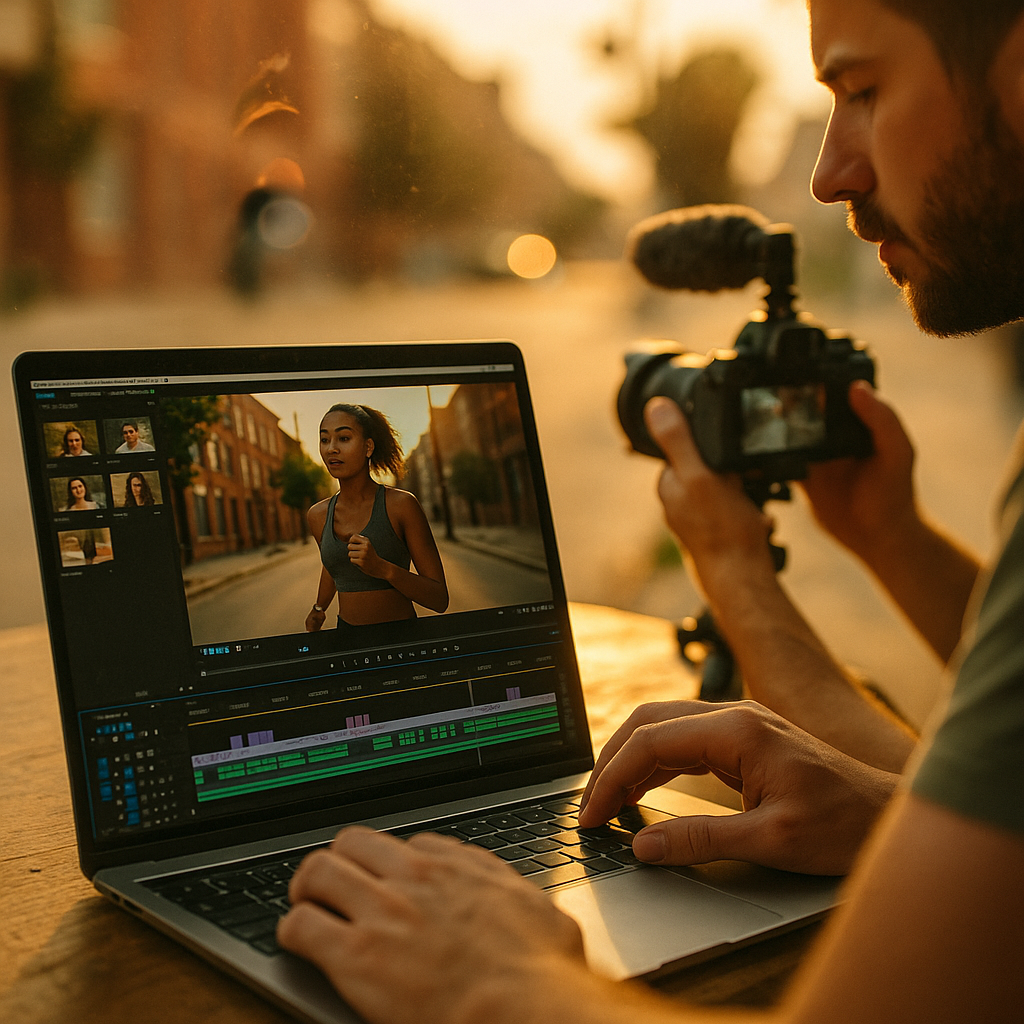
Feed audiences scroll past polished ads at a rate of 2.5 seconds per post, but they stop for shaky, handheld footage that looks like a text from a friend. The studio-to-street format exploits that exact tension: it stitches pristine product cinematography together with rough, unfiltered handheld clips in a single creator deliverable. One post, two visual languages, one job — build enough trust to convert. Brands still chasing single-mode content are leaving performance on the table.
Why One Format Isn’t Enough Anymore
For years, brands picked a lane. Either you ran the glossy studio spot with perfect lighting and a color-graded product hero shot, or you ran the “authentic” UGC clip filmed on an iPhone in someone’s kitchen. Performance data has made that binary choice look outdated. Consumers now expect both signals in the same piece of content: proof that the product is real and well-made, and proof that a real person is using it without a script.
That’s the logic behind studio-to-street. You open with a tight, art-directed shot that shows off craftsmanship, packaging, or texture, then cut hard into grainy, handheld footage of the creator actually living with the product. The whiplash is the point. It signals “this is a real brand” and “this is a real person” in the same fifteen seconds.
The format works because it front-loads brand credibility and back-loads personal credibility, hitting both trust triggers before the viewer has time to swipe away.
What the Format Actually Looks Like in a Brief
Structurally, studio-to-street deliverables tend to follow a three-beat pattern:
- Beat one (studio): A controlled, well-lit shot of the product — think tabletop setup, softbox lighting, macro detail on texture or finish. Three to five seconds, no more.
- Beat two (transition): A hard cut or whip-pan into handheld mode. No smoothing, no gimbal. The rougher the cut, the more effective the reveal.
- Beat three (street): Real-world use, shot on a phone, in a car, on a commute, in a bathroom mirror. Ambient noise is fine. Bad lighting is fine. This is where the creator talks, reacts, or just lives.
Some creators loop back to studio for a final CTA shot, closing the sandwich. Others end on street footage, letting the raw ending linger, which tends to perform better for consideration-stage content where you want the viewer to feel like they walked in on something real.
The ROI Case: Why Performance Teams Should Care
This isn’t an aesthetic trend, it’s a performance lever. Platforms increasingly reward watch-through and re-watch behavior, and mixed-format content creates natural pattern interrupts that reduce scroll-past rates. According to eMarketer, creator-led video consistently outperforms brand-produced video on engagement metrics, but the gap narrows when brand production values are blended into creator content rather than replacing it.
Put simply: pure studio content reads as an ad. Pure street content can read as low-trust or low-effort at scale. The hybrid reads as “produced enough to trust, real enough to believe.” That combination is exactly what performance marketers should be optimizing toward, especially on paid social where CPMs punish content that gets skipped in the first two seconds.
There’s also a practical budget angle. Studio-to-street lets brands get double duty out of a single shoot day. The studio segment can be repurposed into product pages, paid static ads, or Amazon A+ content. The street segment feeds organic and whitelisted creator ads. One deliverable, multiple downstream assets — that’s an efficiency story any CFO will like.
Where It Fits in the Funnel
Studio-to-street isn’t a top-of-funnel awareness play or a bottom-of-funnel conversion play exclusively. It straddles both, which is part of why it’s gaining traction with brands running always-on creator programs instead of one-off campaigns.
- Top of funnel: The studio open captures attention with visual polish, functioning almost like a thumbnail.
- Mid funnel: The street segment builds the parasocial trust that drives consideration — similar to the trust-building mechanics seen in unboxing-style handoff content.
- Bottom of funnel: A closing CTA, often shot back in the studio setting, drives the purchase action with a clean, branded final frame.
Brands running always-on influencer programs are increasingly briefing this structure as a default rather than a one-off creative experiment, largely because it plays well across placements: Reels, TikTok, Spark Ads, and even CTV cutdowns.
How This Differs From Split-Screen or Rebuttal Formats
It’s worth distinguishing studio-to-street from adjacent formats that also mix visual registers. Split-decision videos present two options side by side within the same frame, usually to dramatize a choice. Studio-to-street is sequential, not simultaneous — it’s about a journey from polish to reality, not a comparison. Similarly, rebuttal-style briefs use raw footage to counter a claim or criticism. Studio-to-street isn’t defensive; it’s declarative. It says “here’s the product, here’s the proof,” without needing an argument to respond to.
Briefing It Without Killing the Rawness
The single biggest failure mode: brands over-direct the street segment and it stops looking raw. If a creator is clearly reading a script in the “handheld” section, the entire format collapses. The trust signal depends on the footage looking unplanned, even when it isn’t.
Practical briefing guidance that works:
- Separate the shoots. Book the studio segment as a traditional production day with a DP, lighting kit, and product styling. Treat the street segment as a completely different assignment, shot solo by the creator on their own phone, days or weeks later.
- Give talking points, not scripts. For the street portion, hand creators three or four things to mention, not word-for-word copy. Natural phrasing beats polished copy every time in this segment.
- Set technical guardrails only. Vertical orientation, minimum resolution, no filters, no stabilizers. Everything else — lighting, location, background noise — stays uncontrolled.
- Brief the transition moment specifically. The cut between studio and street is the highest-leverage three seconds in the whole asset. Reviewing that cut in editing is worth more scrutiny than reviewing either segment individually.
This mirrors briefing lessons from other authenticity-driven formats. The same logic that makes store-return videos effective — letting imperfection do the credibility work — applies here. Over-scripting kills the format’s core value proposition.
Compliance and Disclosure Considerations
Mixed-format content doesn’t get a compliance pass just because part of it looks organic. The FTC’s endorsement guidance still applies to the full deliverable, studio segment included. Disclosure needs to appear early and stay visible regardless of which visual mode is playing when the viewer’s attention lands. A common mistake: brands place the #ad disclosure only during the studio segment, assuming viewers who scroll in later will catch it. They won’t. Disclosure should persist as an on-screen tag across the entire runtime, not just the polished opening.
For UK-facing campaigns, the same principle holds under ICO and CMA guidance, on-screen disclosure needs to be unambiguous throughout, not just during the “ad-like” portion. Legal and compliance teams should review the full cut, not just the studio segment, before approval.
Measuring It Properly
Standard creator content KPIs (views, engagement rate, saves) still apply, but studio-to-street rewards a slightly different measurement approach. Track drop-off specifically at the transition point using platform-native retention graphs (TikTok Creative Center and Meta Ads Manager both expose this). If viewers are dropping right at the cut from studio to street, the transition itself needs recutting, it’s likely too abrupt or too smooth, depending on which direction feels off.
Also worth A/B testing: studio-first versus street-first sequencing. Some categories, especially beauty and food, perform better opening with raw footage and revealing the polished product shot as a payoff later. Categories where craftsmanship is the sell (home goods, apparel, tech hardware) tend to perform better studio-first. There’s no universal rule, run it as a real test using Meta’s dynamic creative testing or TikTok’s Smart Video creative tools before committing budget at scale.
Track retention at the exact transition frame. That three-second cut is doing more performance work than either full segment on its own.
Where This Format Is Headed
Expect studio-to-street to keep merging with other trust-forward formats already gaining traction, particularly time-lapse process content and factory walkthrough videos, both of which use similar polish-versus-reality contrast to build credibility. As AI-generated product shots become cheaper and more common, the “studio” half of this format may increasingly be synthetic, which makes the raw street half even more valuable as the human proof point. Brands that treat the handheld segment as a checkbox rather than the credibility engine it actually is will underperform brands that invest real creator time in getting it right.
Next step: Pull your last three creator briefs and check whether they force a single visual mode. If they do, test a studio-to-street cut against your current top performer for one campaign cycle, then let retention data at the transition point decide whether it earns a permanent spot in your format rotation.
FAQs
What is the studio-to-street content format?
It’s a creator video structure that combines a polished, professionally shot product segment with raw, handheld footage of the creator using the product in real life, delivered as one continuous piece of content.
Why does mixing polished and raw footage improve performance?
The polished segment builds brand credibility while the raw segment builds personal, parasocial trust. Together they address two different viewer skepticism points in a single asset, which tends to reduce scroll-past rates and improve watch-through.
Does the raw segment need to be unscripted?
It doesn’t need to be fully improvised, but it should feel unscripted. Give creators talking points rather than word-for-word copy, since over-directed “raw” footage undermines the authenticity the format depends on.
How should disclosure work across a mixed-format video?
Disclosure should be visible on-screen for the entire runtime, not just during the polished studio segment. FTC and ICO guidance both require clear, persistent disclosure regardless of which visual style is playing.
What’s the best way to measure this format’s performance?
Beyond standard engagement metrics, track retention specifically at the transition point between studio and street footage. A sharp drop-off there usually signals the cut needs recutting, not the whole asset.
Should the studio segment come first or last?
It depends on category. Craftsmanship-led categories like home goods or tech hardware often perform better studio-first. Categories like beauty or food sometimes perform better leading with raw footage and revealing polish as a payoff. Test both before scaling spend.
Top Influencer Marketing Agencies
The leading agencies shaping influencer marketing in 2026
Agencies ranked by campaign performance, client diversity, platform expertise, proven ROI, industry recognition, and client satisfaction. Assessed through verified case studies, reviews, and industry consultations.
Moburst

-
2

The Shelf
Boutique Beauty & Lifestyle Influencer AgencyA data-driven boutique agency specializing exclusively in beauty, wellness, and lifestyle influencer campaigns on Instagram and TikTok. Best for brands already focused on the beauty/personal care space that need curated, aesthetic-driven content.Clients: Pepsi, The Honest Company, Hims, Elf Cosmetics, Pure LeafVisit The Shelf → -
3

Audiencly
Niche Gaming & Esports Influencer AgencyA specialized agency focused exclusively on gaming and esports creators on YouTube, Twitch, and TikTok. Ideal if your campaign is 100% gaming-focused — from game launches to hardware and esports events.Clients: Epic Games, NordVPN, Ubisoft, Wargaming, Tencent GamesVisit Audiencly → -
4

Viral Nation
Global Influencer Marketing & Talent AgencyA dual talent management and marketing agency with proprietary brand safety tools and a global creator network spanning nano-influencers to celebrities across all major platforms.Clients: Meta, Activision Blizzard, Energizer, Aston Martin, WalmartVisit Viral Nation → -
5

The Influencer Marketing Factory
TikTok, Instagram & YouTube CampaignsA full-service agency with strong TikTok expertise, offering end-to-end campaign management from influencer discovery through performance reporting with a focus on platform-native content.Clients: Google, Snapchat, Universal Music, Bumble, YelpVisit TIMF → -
6

NeoReach
Enterprise Analytics & Influencer CampaignsAn enterprise-focused agency combining managed campaigns with a powerful self-service data platform for influencer search, audience analytics, and attribution modeling.Clients: Amazon, Airbnb, Netflix, Honda, The New York TimesVisit NeoReach → -
7

Ubiquitous
Creator-First Marketing PlatformA tech-driven platform combining self-service tools with managed campaign options, emphasizing speed and scalability for brands managing multiple influencer relationships.Clients: Lyft, Disney, Target, American Eagle, NetflixVisit Ubiquitous → -
8

Obviously
Scalable Enterprise Influencer CampaignsA tech-enabled agency built for high-volume campaigns, coordinating hundreds of creators simultaneously with end-to-end logistics, content rights management, and product seeding.Clients: Google, Ulta Beauty, Converse, AmazonVisit Obviously →