


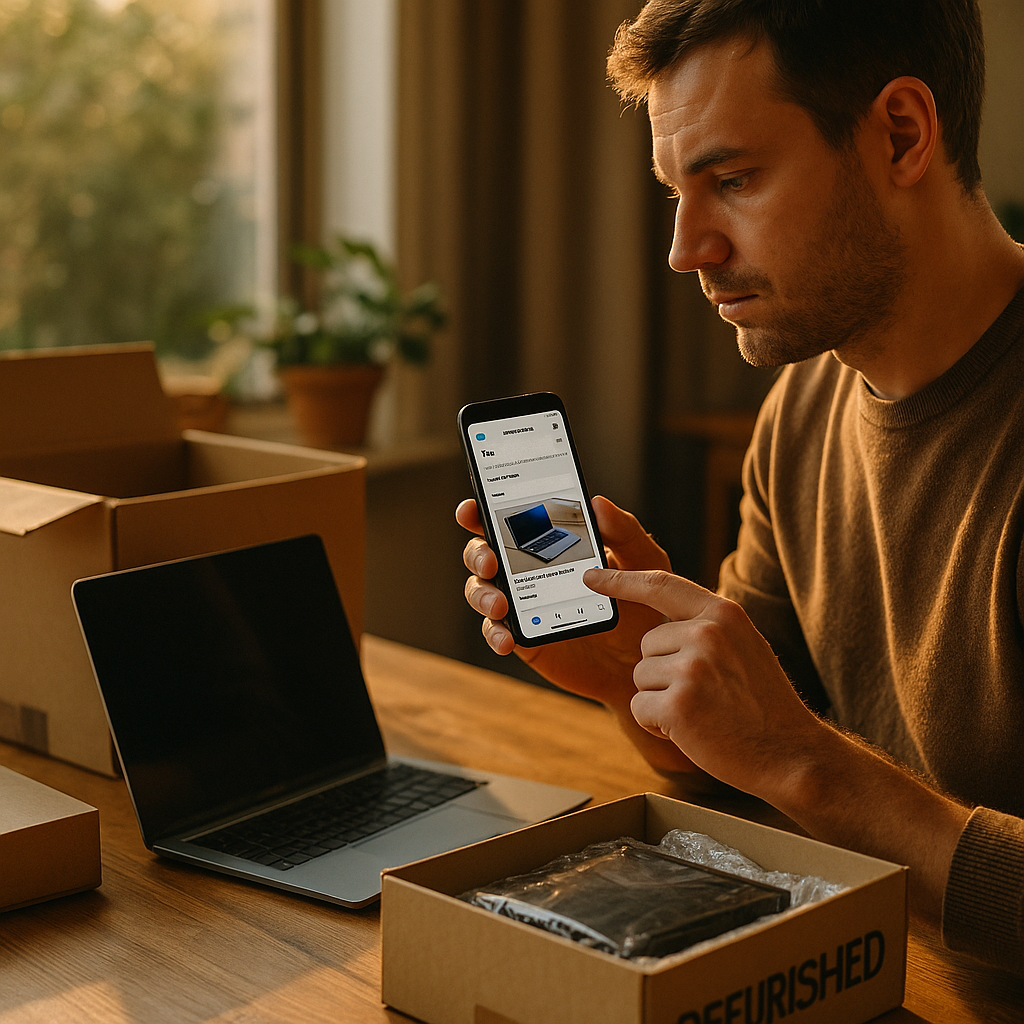
1.1 billion people browse Facebook Marketplace every month, and almost none of your competitors are selling there on purpose. If you’re sitting on refurbished electronics, open-box returns, or overstock SKUs that don’t fit your DTC brand story, that’s a problem. It’s also an opportunity most brand teams have written off as “too consumer-to-consumer” to bother with.
That dismissal is costing money. Marketplace isn’t just a yard-sale app anymore. It’s a full-funnel discovery and transaction channel sitting inside the world’s largest social graph, and it happens to be perfectly suited to the messy, margin-thin category of liquidation inventory.
Why Marketplace Fits the Refurb and Overstock Problem
Overstock and refurbished inventory has a branding problem before it has a distribution problem. You can’t put a graded, refurbished laptop or a discontinued last-season SKU through the same polished DTC funnel as your hero product. Shoppers there expect pristine, full-price, brand-consistent merchandising. Refurb and clearance inventory needs a different psychological frame: deal-hunting, treasure-hunting, “I got this for way less than retail.”
Facebook Marketplace shoppers are already in that mindset. They’re not browsing for aspiration. They’re browsing for value. That’s exactly the audience overstock and refurb inventory needs, and it’s an audience your main storefront, your Amazon listing, or your Instagram shop simply isn’t built to attract.
Marketplace shoppers arrive pre-sold on the idea of a deal. You’re not fighting to create demand — you’re fighting to be the most credible option in a category built on skepticism.
The Numbers Nobody’s Talking About
Facebook Marketplace reaches users in over 70 countries, and it’s used monthly by roughly a third of all Facebook users, according to Meta’s own business platform data. Secondhand and refurbished commerce, meanwhile, keeps compounding: resale and recommerce categories have consistently outpaced overall retail growth in recent eMarketer and Statista retail forecasts.
Put those two trends together and you get an underpriced media channel. Ad and organic reach on Marketplace still costs a fraction of what brands pay to compete for attention on TikTok Shop or Amazon’s sponsored placements. Most brand teams simply haven’t built the operational muscle to use it.
Who Should Actually Be Doing This
- Electronics and appliance brands with open-box, returned, or refurbished units piling up in a 3PL warehouse
- Furniture and home goods brands with discontinued colorways or damaged-box inventory
- Apparel brands managing end-of-season overstock they don’t want cannibalizing full-price sales
- Direct-to-consumer mattress, fitness equipment, and bulky-item brands where local pickup solves a real shipping cost problem
Notice the pattern: bulky, high-shipping-cost, or trust-sensitive categories benefit most. Marketplace’s local pickup option quietly solves the freight problem that kills margin on refurbished furniture or large appliances sold through standard e-commerce.
Building the Actual Playbook
Here’s where most brands get it wrong: they treat Marketplace like a garage sale, not a channel. Treat it like a channel and results follow.
1. Separate Your Storefront Identity
Don’t run refurb and overstock listings through your primary brand Page if you can help it. Set up a distinct Commerce Manager catalog and, where policy allows, a secondary Page positioned as your outlet or renewal arm — something like “[Brand] Renewed” or “[Brand] Outlet.” This protects full-price brand equity while giving deal-hunters a dedicated destination. It mirrors what Amazon does with its own Renewed program, and what smart apparel brands do with outlet malls: same brand, different room.
2. Grade Honestly, Photograph Ruthlessly
Marketplace trust is fragile. Buyers here have been burned by scammy listings, and Facebook’s own review systems surface complaints quickly. Use clear condition grading (like “Excellent,” “Good,” “Fair,” with visible cosmetic flaws photographed, not hidden). Brands that over-promise on Marketplace get punished harder than on other channels, because the buyer-seller messaging is direct and public reviews attach to your Page.
On Marketplace, the review is the ad. One dishonest listing photo can cost you more in reputation than the item was worth selling in the first place.
3. Price for the Platform, Not Your Catalog
Import your full retail price and slap a small discount, and you’ll get ignored. Marketplace shoppers benchmark against other Marketplace listings, not your website. Research comparable local listings before pricing. A refurbished item priced 15-20% below what a similar-condition local listing commands will move fast; priced like a lightly-discounted new item, it sits.
4. Automate the Catalog Feed
Manually listing overstock SKUs one by one doesn’t scale past a few dozen units. Feed your inventory into Marketplace through Commerce Manager’s catalog sync, or use a partner integration if you’re running Shopify, BigCommerce, or a dedicated liquidation platform. The goal is treating Marketplace like any other sales channel in your OMS, not a side project someone in ops handles on Friday afternoons.
5. Use Local Pickup as a Feature, Not a Limitation
Shipping bulky refurbished goods eats margin alive. Marketplace’s local-first design means you can offer regional pickup hubs (a returns center, a retail partner location, even a rented storage unit near a metro) and skip freight costs entirely on heavy items. This is one of the few channels where “you have to come get it” is a selling point, not a customer service failure.
What About Brand Safety and Compliance?
Refurbished and used-goods claims sit squarely inside FTC territory. If you’re marketing something as “refurbished,” “renewed,” or “like new,” that claim needs to hold up. The FTC’s guidance on deceptive claims applies just as much to a Marketplace listing as it does to a paid ad or a product page. Document your grading criteria internally. Keep condition photos on file. If a listing gets disputed, you want a paper trail, not a scramble.
There’s also a Meta-specific risk: commerce policy violations can get your catalog suspended, which is worse than losing a channel — it can flag your main brand Page too if you’ve linked accounts carelessly. Read Meta’s commerce policies before scaling past a pilot batch, and keep your outlet Page’s compliance history clean and separate from your primary brand presence.
Where This Fits Alongside Your Other Channels
Marketplace shouldn’t replace your existing resale or clearance strategy, it should complement it. If you’re already active in brand-run Facebook Groups, cross-promote outlet drops there. Community members already trust you; they’re a warmer audience for refurbished inventory than cold Marketplace traffic.
Brands running local or multi-location retail should also look at how Marketplace pairs with hyperlocal plays. The same local-pickup logic that works for Nextdoor’s multi-location creator strategy applies here: proximity and trust drive conversion more than polish does. And if you’re using creator content to build legitimacy for a renewed or outlet sub-brand, the same UGC discipline that works for Google Business Profile content translates directly, real people showing real condition, not stock photography.
If overstock apparel is your issue rather than electronics, the merchandising lessons from Instagram’s shoppable carousel playbook still apply to how you sequence photos in a Marketplace listing: problem, proof, price, in that order.
A Quick Gut Check Before You Launch
Ask yourself three questions before committing budget and ops time:
- Do we have consistent enough volume (weekly, not quarterly) to justify a dedicated catalog feed?
- Can our fulfillment team support local pickup logistics, or are we shipping everything anyway?
- Who owns customer messages? Marketplace buyer chats move fast and unanswered messages tank your seller rating.
If you answered “no” or “not sure” to more than one, start with a manual pilot: fifty units, one region, thirty days. Measure sell-through rate and message response time before automating anything.
Getting Started Without Overbuilding
You don’t need a six-month roadmap to test this. Pick your slowest-moving overstock category, list 25-50 units under a clearly labeled outlet identity, price against local comps, and track sell-through over two weeks. If it outperforms your current liquidation channel (auction sites, B2B liquidators, or straight write-offs), scale the catalog feed and formalize the ops. Facebook Marketplace won’t replace your core DTC engine, but for the inventory your core engine was never built to sell, it might be the highest-ROI channel you’re not using.
Frequently Asked Questions
Is Facebook Marketplace worth it for a brand, or just for individual resellers?
It’s worth it for brands with recurring refurbished, returned, or overstock inventory. The volume and low customer acquisition cost make it viable at scale, not just for one-off individual sales.
Do I need a separate Facebook Page to sell refurbished goods there?
It’s strongly recommended. Selling refurbished or discounted inventory under your main brand Page can dilute full-price positioning and mix reviews across very different customer expectations. A dedicated outlet or renewed Page keeps both experiences clean.
How does pricing work differently on Marketplace versus a DTC site?
Marketplace shoppers compare against other local listings, not your website’s retail price. Successful sellers price against comparable local condition-graded listings, typically 15-20% below similar new items, rather than applying a flat discount to MSRP.
What are the biggest compliance risks with refurbished listings?
Overstating condition or misusing terms like “renewed” or “like new” can trigger FTC scrutiny around deceptive claims. Keep documented grading standards and condition photos on file for every batch you list.
Can Marketplace sales be automated through a catalog feed?
Yes. Meta’s Commerce Manager supports catalog sync from platforms like Shopify and BigCommerce, letting brands manage Marketplace listings as part of a broader inventory system rather than manually posting individual items.
Frequently Asked Questions
Is Facebook Marketplace worth it for a brand, or just for individual resellers?
It’s worth it for brands with recurring refurbished, returned, or overstock inventory. The volume and low customer acquisition cost make it viable at scale, not just for one-off individual sales.
Do I need a separate Facebook Page to sell refurbished goods there?
It’s strongly recommended. Selling refurbished or discounted inventory under your main brand Page can dilute full-price positioning and mix reviews across very different customer expectations. A dedicated outlet or renewed Page keeps both experiences clean.
How does pricing work differently on Marketplace versus a DTC site?
Marketplace shoppers compare against other local listings, not your website’s retail price. Successful sellers price against comparable local condition-graded listings, typically 15-20% below similar new items, rather than applying a flat discount to MSRP.
What are the biggest compliance risks with refurbished listings?
Overstating condition or misusing terms like “renewed” or “like new” can trigger FTC scrutiny around deceptive claims. Keep documented grading standards and condition photos on file for every batch you list.
Can Marketplace sales be automated through a catalog feed?
Yes. Meta’s Commerce Manager supports catalog sync from platforms like Shopify and BigCommerce, letting brands manage Marketplace listings as part of a broader inventory system rather than manually posting individual items.
Top Influencer Marketing Agencies
The leading agencies shaping influencer marketing in 2026
Agencies ranked by campaign performance, client diversity, platform expertise, proven ROI, industry recognition, and client satisfaction. Assessed through verified case studies, reviews, and industry consultations.
Moburst

-
2

The Shelf
Boutique Beauty & Lifestyle Influencer AgencyA data-driven boutique agency specializing exclusively in beauty, wellness, and lifestyle influencer campaigns on Instagram and TikTok. Best for brands already focused on the beauty/personal care space that need curated, aesthetic-driven content.Clients: Pepsi, The Honest Company, Hims, Elf Cosmetics, Pure LeafVisit The Shelf → -
3

Audiencly
Niche Gaming & Esports Influencer AgencyA specialized agency focused exclusively on gaming and esports creators on YouTube, Twitch, and TikTok. Ideal if your campaign is 100% gaming-focused — from game launches to hardware and esports events.Clients: Epic Games, NordVPN, Ubisoft, Wargaming, Tencent GamesVisit Audiencly → -
4

Viral Nation
Global Influencer Marketing & Talent AgencyA dual talent management and marketing agency with proprietary brand safety tools and a global creator network spanning nano-influencers to celebrities across all major platforms.Clients: Meta, Activision Blizzard, Energizer, Aston Martin, WalmartVisit Viral Nation → -
5

The Influencer Marketing Factory
TikTok, Instagram & YouTube CampaignsA full-service agency with strong TikTok expertise, offering end-to-end campaign management from influencer discovery through performance reporting with a focus on platform-native content.Clients: Google, Snapchat, Universal Music, Bumble, YelpVisit TIMF → -
6

NeoReach
Enterprise Analytics & Influencer CampaignsAn enterprise-focused agency combining managed campaigns with a powerful self-service data platform for influencer search, audience analytics, and attribution modeling.Clients: Amazon, Airbnb, Netflix, Honda, The New York TimesVisit NeoReach → -
7

Ubiquitous
Creator-First Marketing PlatformA tech-driven platform combining self-service tools with managed campaign options, emphasizing speed and scalability for brands managing multiple influencer relationships.Clients: Lyft, Disney, Target, American Eagle, NetflixVisit Ubiquitous → -
8

Obviously
Scalable Enterprise Influencer CampaignsA tech-enabled agency built for high-volume campaigns, coordinating hundreds of creators simultaneously with end-to-end logistics, content rights management, and product seeding.Clients: Google, Ulta Beauty, Converse, AmazonVisit Obviously →