


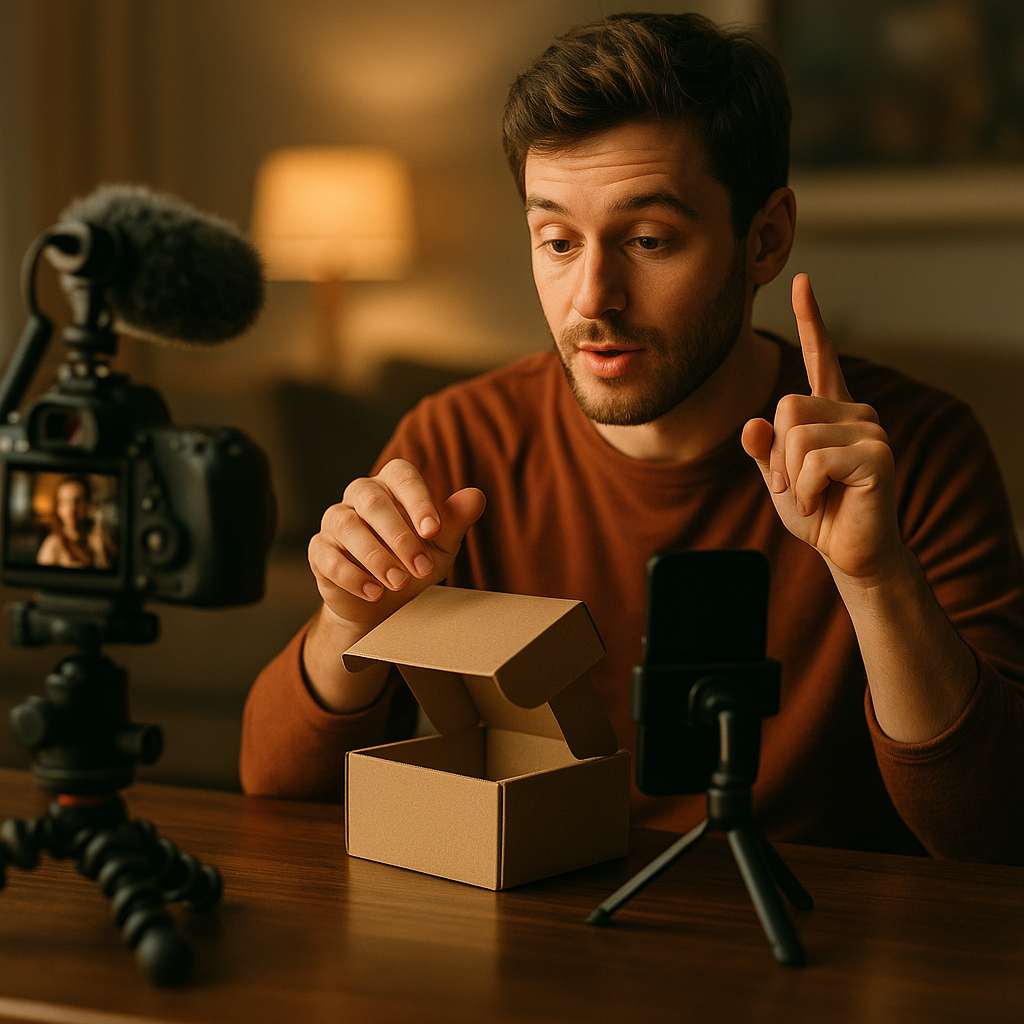
Single-video launches get skipped. TikTok’s own data shows completion rates cratering after the first three seconds if there’s no reason to stay. So what happens when a brand asks an audience to follow a story for two weeks instead of two minutes? A creator series format built around a slow reveal doesn’t just survive that attention economy — it exploits it.
This isn’t a new idea borrowed from TV writers rooms. It’s a direct response to how junk-food content trained audiences to scroll past anything that looks like an ad. A 10-part series, dripped out over days or weeks, does the opposite. It rewards patience. And in 2026, patience is the scarcest currency a brand can ask for.
Why Slow-Burn Beats the Single Big Reveal
A one-shot launch video has one job: convert immediately. If it fails, the spend is gone. A serialized format spreads that risk across ten touchpoints, each one a chance to build trust, answer objections, and re-engage lapsed viewers before the ask even happens.
There’s also a compounding attention effect. Every episode a viewer watches increases the odds they’ll watch the next one — and platforms reward that behavior with better distribution. TikTok and Instagram both favor accounts and series with rewatch and follow-through signals, according to guidance from Meta’s business platform and TikTok’s ads resources. A serialized drop isn’t just a storytelling choice. It’s a distribution hack disguised as content strategy.
A 10-part series doesn’t need ten great ideas. It needs one strong narrative spine and nine reasons to keep watching.
The Three-Act Skeleton for a 10-Episode Arc
Before mapping individual episodes, brands need a spine. Borrow from screenwriting: setup, escalation, payoff. Applied to a product reveal, it looks like this:
- Episodes 1-3 (Setup): Establish the creator’s world, the problem, and the tension — without mentioning the brand directly or with only a light tease.
- Episodes 4-7 (Escalation): Introduce clues, partial glimpses, behind-the-scenes fragments. This is where curiosity compounds.
- Episodes 8-10 (Payoff): The reveal, the demo, and the close — usually with a clear offer or launch window.
Most brands rush this. They want the reveal by episode three because that’s where the “real” marketing feels like it starts. Resist that instinct. The setup phase is doing the heaviest lifting: it’s building a reason for anyone to care about the payoff at all.
What Goes Wrong When Brands Skip the Setup
Cut the setup short and you get a fast burn, not a slow one — a series that reveals too early, loses tension, and becomes a stretched-out ad. Audiences can smell a forced arc. If episode two already hints at the product with a full logo shot, you’ve told viewers there’s nothing left to discover.
Compare this to formats that already prove patience pays off. The progress log format works on a similar principle: trust accrues over time, not in a single post. A slow-burn product series is really a compressed version of that same mechanic, played out over ten episodes instead of ten weeks.
Casting the Right Creator for a Long Arc
Not every creator can hold an audience for ten episodes. Sketch comedians and trend-chasers are built for one-off virality; they’re less reliable for sustained narrative. Look instead for creators who already run recurring formats — cooking series, day-in-the-life vlogs, review channels with numbered parts. They understand pacing because they’ve already trained an audience to expect installment two.
Vet for retention, not just reach. A creator with 200K followers and a 60% average series completion rate on their existing serialized content will outperform a 2M-follower account whose series consistently die by part three. Ask for that data before signing. Most professional creators track it and will share it, especially for a multi-episode deal that pays more than a single post.
Building the Brief: What Ten Episodes Actually Need
A single-post brief covers hook, message, CTA, disclosure. A 10-part brief needs all of that, times ten, plus continuity rules. Miss the continuity layer and episodes feel disconnected — like ten separate ads instead of one story.
Here’s what belongs in a serialized brief:
- Episode map: a one-line summary of what happens in each part, shared with the creator upfront (even if scripts come later).
- Reveal placement: the exact episode where the product becomes visible, and how much is shown before that.
- Disclosure cadence: paid partnership labels need to appear on every episode featuring the brand, not just the finale. The FTC’s endorsement guidance applies to each piece of sponsored content independently.
- Consistency anchors: recurring visual cues — a location, a prop, a phrase — that signal “this is part of the same story” even across platforms or weeks.
- Fallback plan: what happens if an early episode underperforms. Do you adjust episode four’s hook? Do you pull forward the reveal?
Brands used to briefing single videos often underestimate how much a serialized format resembles a vertical-horizontal hybrid brief — it needs to work across formats and aspect ratios if it’s going to run on TikTok, Reels, and YouTube Shorts simultaneously.
Pacing the Drop Schedule
Daily drops burn out an audience fast; once-a-week drops lose momentum between episodes. Most successful 10-part series land somewhere in between — three to four episodes per week, condensed into a two-to-three week window. That’s frequent enough to stay top-of-feed, spaced enough to let curiosity build.
Some brands stagger release across platforms deliberately: TikTok gets the episode first, Instagram Reels a day later, YouTube Shorts as a compilation at the end of each week. This isn’t just about platform-native audiences. It’s a hedge. If TikTok’s algorithm buries episode five, the Reels audience might still be climbing toward the reveal unaffected.
Treat the drop calendar as its own campaign asset. A misplaced reveal episode can undo six episodes of built trust in a single post.
Tracking Mid-Series Drop-Off
Watch completion rate episode-by-episode, not just aggregate views. A steep drop between episode four and five usually signals a pacing problem, not a creative one — the escalation phase dragged, or the “clue” wasn’t clue-like enough to matter. According to Sprout Social’s engagement benchmarking resources, sustained series content typically loses viewers gradually rather than in cliffs — so a cliff is a signal worth acting on mid-flight, not just in the post-mortem.
If you catch the drop early enough, there’s often time to recut episode six’s hook before it posts. That’s the real advantage of a staggered release: it gives brands a live feedback loop that a single launch video never offers.
The Reveal Episode Itself
By episode eight or nine, the product should feel earned, not sprung. The best reveal episodes don’t oversell — they simply confirm what viewers have been suspecting since episode five. This is where formats like the product origin format can slot in neatly, giving the reveal substance by connecting it to a sourcing or development story the earlier episodes hinted at.
Avoid the temptation to make the final episode do everything — full demo, full pitch, full CTA, all disclosures, all at once. Split it. Episode nine reveals; episode ten demos and closes. Two shorter, focused episodes convert better than one overstuffed finale, and it gives the algorithm two more chances to surface the series to new viewers right before the sales push.
Measuring ROI Across a Series, Not a Post
Standard influencer reporting — views, engagement rate, one CTA click-through — undersells a serialized campaign. Brands need series-level metrics: completion rate across the full arc, follower growth on the creator’s channel during the run, and a lift comparison between viewers who saw all ten episodes versus those who saw only the reveal.
That last metric is the one that justifies the format to finance teams. If full-series viewers convert at meaningfully higher rates than reveal-only viewers, the slow burn has proven its cost. eMarketer’s research on creator content consistently shows that sustained exposure outperforms single-touch exposure on purchase intent — the series format is simply built to capture that lift on purpose rather than by accident.
Budget allocation should reflect this too. Don’t pay creators a flat per-post rate across ten episodes; consider a structure weighted toward completion bonuses if series-wide retention hits a target. It aligns incentives — the creator wants viewers to stick around just as much as the brand does.
Where This Fits Alongside Other Trust-Building Formats
The slow-burn series isn’t a replacement for other credibility-driving formats — it’s a container for them. A single episode within the arc might use one-take demo techniques for authenticity. Another might borrow structure from annotated screen-record formats if the product is digital. The series is the frame; these are the tools that fill it.
What makes the format work isn’t novelty. It’s patience, applied deliberately, with a measurement plan that actually captures the payoff.
Next step: before greenlighting a 10-part series, map the reveal episode first, then work backward. If you can’t explain why episode one earns episode ten, the arc isn’t ready to brief.
FAQs
How long should a 10-part creator series run before the reveal?
Most effective series compress the full arc into two to three weeks, with three to four episodes released per week. Longer timelines risk losing momentum between episodes; shorter ones don’t leave room for curiosity to build.
Should every episode disclose the brand partnership?
Yes. FTC guidance requires disclosure on each piece of sponsored content, not just the episode where the product appears. Even setup episodes that don’t show the product need a partnership label if the creator was compensated for the series.
What’s the biggest mistake brands make with serialized formats?
Revealing the product too early. Rushing the setup phase kills the curiosity mechanic that makes the format work, turning a slow burn into a stretched-out advertisement.
How do you measure success across a multi-episode series?
Track episode-by-episode completion rate, follower growth during the run, and conversion lift between viewers who watched the full series versus those who only saw the reveal episode. Aggregate view counts alone undersell the format’s actual ROI.
Can a slow-burn series work on a limited budget?
Yes, if the creator is chosen for narrative reliability rather than raw reach. A smaller creator with strong series completion history often outperforms a larger account with no track record of sustained storytelling.
Top Influencer Marketing Agencies
The leading agencies shaping influencer marketing in 2026
Agencies ranked by campaign performance, client diversity, platform expertise, proven ROI, industry recognition, and client satisfaction. Assessed through verified case studies, reviews, and industry consultations.
Moburst

-
2

The Shelf
Boutique Beauty & Lifestyle Influencer AgencyA data-driven boutique agency specializing exclusively in beauty, wellness, and lifestyle influencer campaigns on Instagram and TikTok. Best for brands already focused on the beauty/personal care space that need curated, aesthetic-driven content.Clients: Pepsi, The Honest Company, Hims, Elf Cosmetics, Pure LeafVisit The Shelf → -
3

Audiencly
Niche Gaming & Esports Influencer AgencyA specialized agency focused exclusively on gaming and esports creators on YouTube, Twitch, and TikTok. Ideal if your campaign is 100% gaming-focused — from game launches to hardware and esports events.Clients: Epic Games, NordVPN, Ubisoft, Wargaming, Tencent GamesVisit Audiencly → -
4

Viral Nation
Global Influencer Marketing & Talent AgencyA dual talent management and marketing agency with proprietary brand safety tools and a global creator network spanning nano-influencers to celebrities across all major platforms.Clients: Meta, Activision Blizzard, Energizer, Aston Martin, WalmartVisit Viral Nation → -
5

The Influencer Marketing Factory
TikTok, Instagram & YouTube CampaignsA full-service agency with strong TikTok expertise, offering end-to-end campaign management from influencer discovery through performance reporting with a focus on platform-native content.Clients: Google, Snapchat, Universal Music, Bumble, YelpVisit TIMF → -
6

NeoReach
Enterprise Analytics & Influencer CampaignsAn enterprise-focused agency combining managed campaigns with a powerful self-service data platform for influencer search, audience analytics, and attribution modeling.Clients: Amazon, Airbnb, Netflix, Honda, The New York TimesVisit NeoReach → -
7

Ubiquitous
Creator-First Marketing PlatformA tech-driven platform combining self-service tools with managed campaign options, emphasizing speed and scalability for brands managing multiple influencer relationships.Clients: Lyft, Disney, Target, American Eagle, NetflixVisit Ubiquitous → -
8

Obviously
Scalable Enterprise Influencer CampaignsA tech-enabled agency built for high-volume campaigns, coordinating hundreds of creators simultaneously with end-to-end logistics, content rights management, and product seeding.Clients: Google, Ulta Beauty, Converse, AmazonVisit Obviously →