


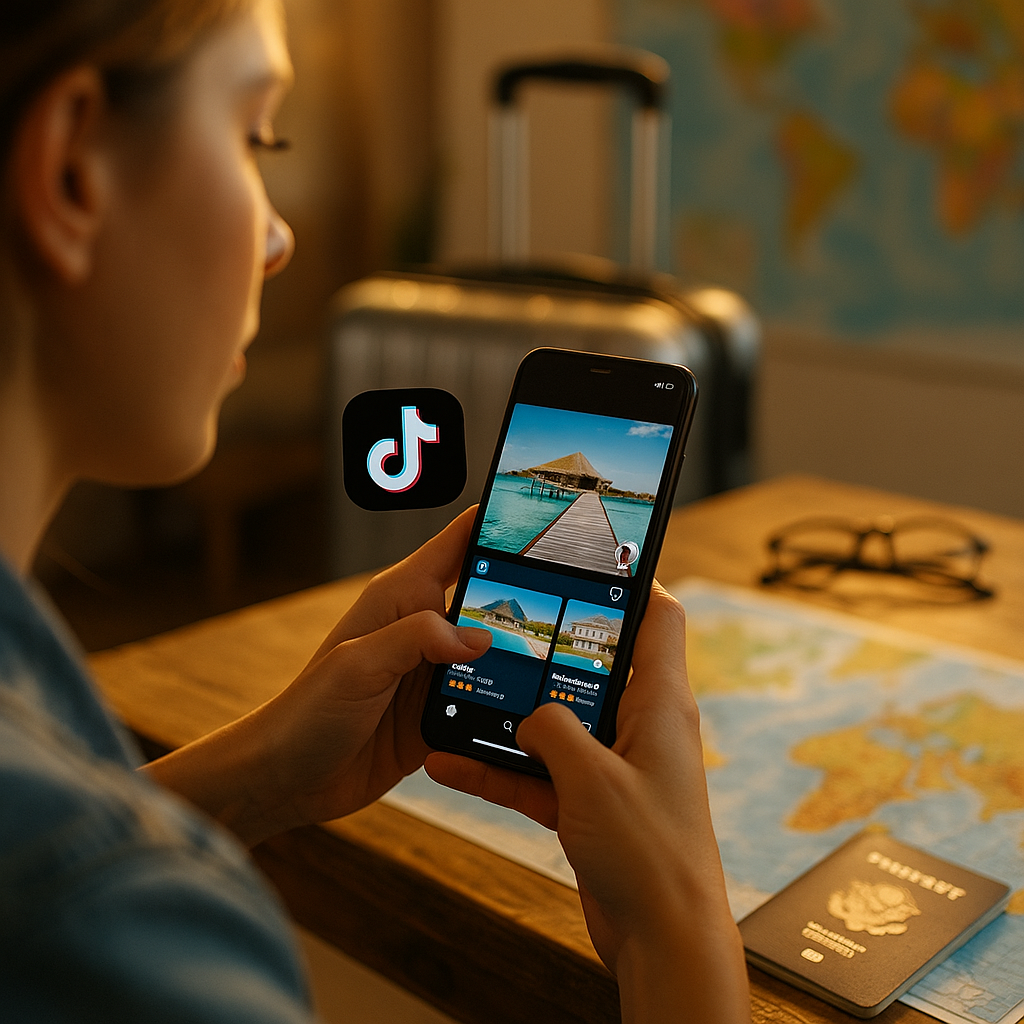
Sixty-nine percent of travelers say short-form video directly influences their destination choice, yet most travel brands still can’t tell you which TikTok actually drove a booking. That’s the gap. TikTok Go for travel brands isn’t another awareness play — it’s a shift toward trackable, bookable, revenue-attributable content. If your team is still measuring views instead of reservations, you’re leaving margin on the table.
Why Travel Marketers Can’t Ignore This Anymore
Travel has always been an aspirational category. Someone sees a lagoon, a rooftop bar, a hidden ryokan, and files it away for “someday.” TikTok broke that delay. The app compressed the path from inspiration to intent into a single scroll session, and travel brands that haven’t rebuilt their funnel around that speed are losing bookings to competitors who have.
TikTok’s travel content ecosystem has matured fast. Search behavior on the platform now rivals traditional search engines for destination discovery — TikTok itself has pushed this narrative hard, and independent surveys back it up. Gen Z and younger millennials increasingly treat TikTok as a first-stop planning tool, not a supplementary one. That changes what “top of funnel” even means for a travel brand.
Here’s the uncomfortable part: most travel marketing teams still allocate budget like it’s 2019. Big spend on static OTA listings, a trickle into influencer gifting, and a vague hope that “brand awareness” eventually converts. TikTok Go — the platform’s expanded toolkit for commerce-linked, trackable content — forces a more disciplined approach.
If you can’t trace a booking back to a specific creator, a specific video, or a specific CTA, you’re not doing influencer marketing. You’re doing content donation.
What “TikTok Go” Actually Means for Travel
TikTok Go isn’t a single feature — it’s the umbrella for TikTok’s push to make content shoppable and measurable across verticals, and travel has become one of its priority categories given the platform’s ad growth in travel and hospitality. For brands, that means three things worth paying attention to:
- Deep-linked CTAs that route directly into booking engines, not just a generic website click.
- Pixel and API-based conversion tracking tied to TikTok’s ad manager, so a booking made three days after a video view still gets attributed correctly.
- Creator-tagged product/service links similar to TikTok Shop’s affiliate structure, adapted for itineraries, hotel stays, and tour packages rather than physical products.
This mirrors what’s already working in retail. If you’ve read our breakdown of the TikTok Shop discovery stack, you’ll recognize the pattern: discovery, tagging, tracked conversion. Travel is simply the next category to get the same treatment, with booking windows instead of cart checkouts.
The Attribution Problem Travel Brands Actually Have
Booking cycles in travel are long. Someone might watch a Bali content creator’s video in January and not book until April. That lag has historically made TikTok look weak in attribution reports, when in reality the platform simply isn’t being measured on the right window.
Fix this by extending your conversion window in TikTok Ads Manager to match your actual booking cycle (30, 60, even 90 days for international travel), and by using UTM-tagged links on every creator post, not just paid amplifications. Pair that with server-side conversion API integration so booking confirmations from your reservation system feed back into TikTok’s reporting. Without that loop, you’re guessing.
Consider also whether your booking engine supports post-view attribution, not just post-click. Long consideration cycles mean a huge share of travel conversions happen after someone simply watched a video and didn’t tap anything — they searched for you later instead.
Building a Creator Roster That Sells Trips, Not Just Vibes
Aesthetic travel content is easy to find. Creators who can actually move bookings are rarer, and the difference matters enormously for ROI.
Look for creators who already do three things naturally: name specific properties and tour operators (not vague “hidden gem” language), include practical booking friction points (visa requirements, best months to go, price ranges), and respond to comments with real planning advice. That last one is a strong signal — it means their audience trusts them for decisions, not just daydreaming.
A tiered roster works best for most travel brands:
- Macro travel creators (500K+ followers) for reach and destination-level awareness campaigns.
- Mid-tier niche creators (50K–250K) focused on a specific travel style — luxury solo travel, budget backpacking, family cruises — for higher-intent audiences.
- Micro and local creators for specific properties or regional tourism boards, often producing the highest conversion rate per dollar spent.
This tiering approach isn’t unique to travel — it’s the same logic behind the TikTok Shop affiliate commission ladder, where reward structures scale with performance rather than follower count alone. Applying a commission or bonus structure tied to actual bookings (not just posted content) keeps creators incentivized past the initial post.
Brief Creators Like You’d Brief a Media Buyer
Stop sending mood boards and calling it a brief. Travel creators need booking-relevant specifics: rate parity rules, cancellation policy language, any FTC-required disclosure format, and the exact tracked link or promo code to use. Treat the brief the way you’d treat an ad unit spec sheet, because that’s functionally what it is now.
Disclosure compliance matters more in travel than people assume, especially with paid stays, comped tours, or discounted rates. The FTC’s endorsement guidelines apply just as much to a sponsored resort stay as they do to a sponsored skincare product. Build disclosure language into the brief itself rather than leaving it to creator judgment — it protects both parties and keeps the content eligible for paid amplification later.
Turning Views Into Verified Revenue
This is where most travel marketing teams stall. They can report views, saves, and shares beautifully. Ask them for cost-per-booking by creator, though, and the spreadsheet goes quiet.
Fixing this requires a tracking stack, not a single tool. At minimum:
- Unique promo codes or tracked landing pages per creator, not shared campaign-wide links.
- TikTok’s conversion API connected to your booking engine or CRM, not just Google Analytics.
- A standardized reporting cadence — weekly for high-spend creators, monthly for the long tail — so budget reallocation decisions happen fast, not at campaign postmortem.
Some travel brands are also experimenting with TikTok’s in-app booking flows for tours and experiences, cutting out the website hop entirely. Fewer steps between “interested” and “booked” almost always lifts conversion rate, even if it complicates attribution slightly on the backend.
A destination video with 2 million views and zero tracked bookings isn’t a win. It’s an expensive assumption.
Livestream shopping formats, already proven in retail, are creeping into travel too — think live Q&A sessions with a tour operator during a flash-sale window. If you haven’t looked at how retail brands structure these, our guide on the first five minutes of a TikTok livestream translates surprisingly well to a “book this trip live” format, where urgency and creator credibility do the heavy lifting in a compressed window.
Budget Allocation: What’s Actually Working Right Now
Travel brands running TikTok Go campaigns effectively tend to split spend roughly three ways: creator fees and commissions, paid amplification (Spark Ads on top-performing organic posts), and a smaller reserve for rapid testing of new creators or destinations. The mistake most teams make is front-loading spend into big-name creator fees before they’ve tested which content angles even convert for their specific product.
Run small tests first. A $2,000–$5,000 test across five to eight mid-tier creators, each producing distinct content angles (budget vs. luxury framing, solo vs. group travel, seasonal urgency vs. evergreen), tells you more in three weeks than a single splashy partnership tells you in three months.
Once you find a winning angle, amplify it with paid spend rather than commissioning new content from scratch every time. TikTok’s algorithm rewards proven engagement, and Spark Ads let you put money behind organic posts that are already converting — a far more efficient use of budget than gambling on new production.
According to eMarketer data on short-form video ad spend, travel and hospitality brands have been among the fastest-growing categories on TikTok’s ad platform over the past two years, which means competition for creator attention is rising too. Lock in relationships with high-performing creators before your competitors do — exclusivity clauses are becoming standard in travel creator contracts for exactly this reason.
Don’t Skip the Compliance Layer
Travel content involves more regulatory nuance than most categories: pricing accuracy, availability claims, insurance disclaimers, and international advertising standards if you’re running campaigns across multiple markets. If you operate in or advertise to UK audiences, the ICO’s guidance on data use in targeted advertising is worth a review alongside your standard FTC compliance checklist. Build a one-page compliance checklist into every creator brief. It’s cheaper than a takedown request after a campaign has already run.
For brands running multi-platform strategies, it’s also worth comparing how creator-driven urgency plays out elsewhere — the mechanics in Snapchat’s AR lens campaigns and YouTube’s CTV creator campaigns both offer useful cross-platform benchmarks for measuring attribution against a long consideration window, which is exactly the challenge travel brands face on TikTok too.
Next step: Audit your last two quarters of TikTok travel content against one question — can you trace a single booking to a single creator post? If the answer is no, fix your tracking stack before you spend another dollar on creator fees.
FAQs
What is TikTok Go for travel brands?
TikTok Go refers to TikTok’s expanded suite of commerce and tracking tools applied to the travel category, including deep-linked booking CTAs, conversion API integration, and creator-tagged links that let brands trace bookings back to specific content rather than relying on general brand awareness metrics.
How do travel brands track bookings from TikTok content?
By combining unique promo codes or tracked landing pages per creator, TikTok’s conversion API connected directly to booking engines or CRM systems, and extended attribution windows (30-90 days) that reflect actual travel booking cycles rather than standard retail conversion windows.
Which creators perform best for travel bookings versus just views?
Creators who name specific properties and operators, address practical booking details like pricing and visa requirements, and actively respond to planning questions in comments tend to convert better than creators producing purely aesthetic destination content.
How long should the attribution window be for travel campaigns on TikTok?
Most travel brands need windows of 30 to 90 days given typical booking consideration cycles, significantly longer than the 7-day windows common in retail or CPG campaigns.
What compliance issues are unique to travel influencer content?
Beyond standard FTC disclosure requirements for sponsored content, travel campaigns need to account for pricing accuracy, availability claims, insurance disclaimers, and regional advertising standards if targeting multiple international markets.
Top Influencer Marketing Agencies
The leading agencies shaping influencer marketing in 2026
Agencies ranked by campaign performance, client diversity, platform expertise, proven ROI, industry recognition, and client satisfaction. Assessed through verified case studies, reviews, and industry consultations.
Moburst

-
2

The Shelf
Boutique Beauty & Lifestyle Influencer AgencyA data-driven boutique agency specializing exclusively in beauty, wellness, and lifestyle influencer campaigns on Instagram and TikTok. Best for brands already focused on the beauty/personal care space that need curated, aesthetic-driven content.Clients: Pepsi, The Honest Company, Hims, Elf Cosmetics, Pure LeafVisit The Shelf → -
3

Audiencly
Niche Gaming & Esports Influencer AgencyA specialized agency focused exclusively on gaming and esports creators on YouTube, Twitch, and TikTok. Ideal if your campaign is 100% gaming-focused — from game launches to hardware and esports events.Clients: Epic Games, NordVPN, Ubisoft, Wargaming, Tencent GamesVisit Audiencly → -
4

Viral Nation
Global Influencer Marketing & Talent AgencyA dual talent management and marketing agency with proprietary brand safety tools and a global creator network spanning nano-influencers to celebrities across all major platforms.Clients: Meta, Activision Blizzard, Energizer, Aston Martin, WalmartVisit Viral Nation → -
5

The Influencer Marketing Factory
TikTok, Instagram & YouTube CampaignsA full-service agency with strong TikTok expertise, offering end-to-end campaign management from influencer discovery through performance reporting with a focus on platform-native content.Clients: Google, Snapchat, Universal Music, Bumble, YelpVisit TIMF → -
6

NeoReach
Enterprise Analytics & Influencer CampaignsAn enterprise-focused agency combining managed campaigns with a powerful self-service data platform for influencer search, audience analytics, and attribution modeling.Clients: Amazon, Airbnb, Netflix, Honda, The New York TimesVisit NeoReach → -
7

Ubiquitous
Creator-First Marketing PlatformA tech-driven platform combining self-service tools with managed campaign options, emphasizing speed and scalability for brands managing multiple influencer relationships.Clients: Lyft, Disney, Target, American Eagle, NetflixVisit Ubiquitous → -
8

Obviously
Scalable Enterprise Influencer CampaignsA tech-enabled agency built for high-volume campaigns, coordinating hundreds of creators simultaneously with end-to-end logistics, content rights management, and product seeding.Clients: Google, Ulta Beauty, Converse, AmazonVisit Obviously →