


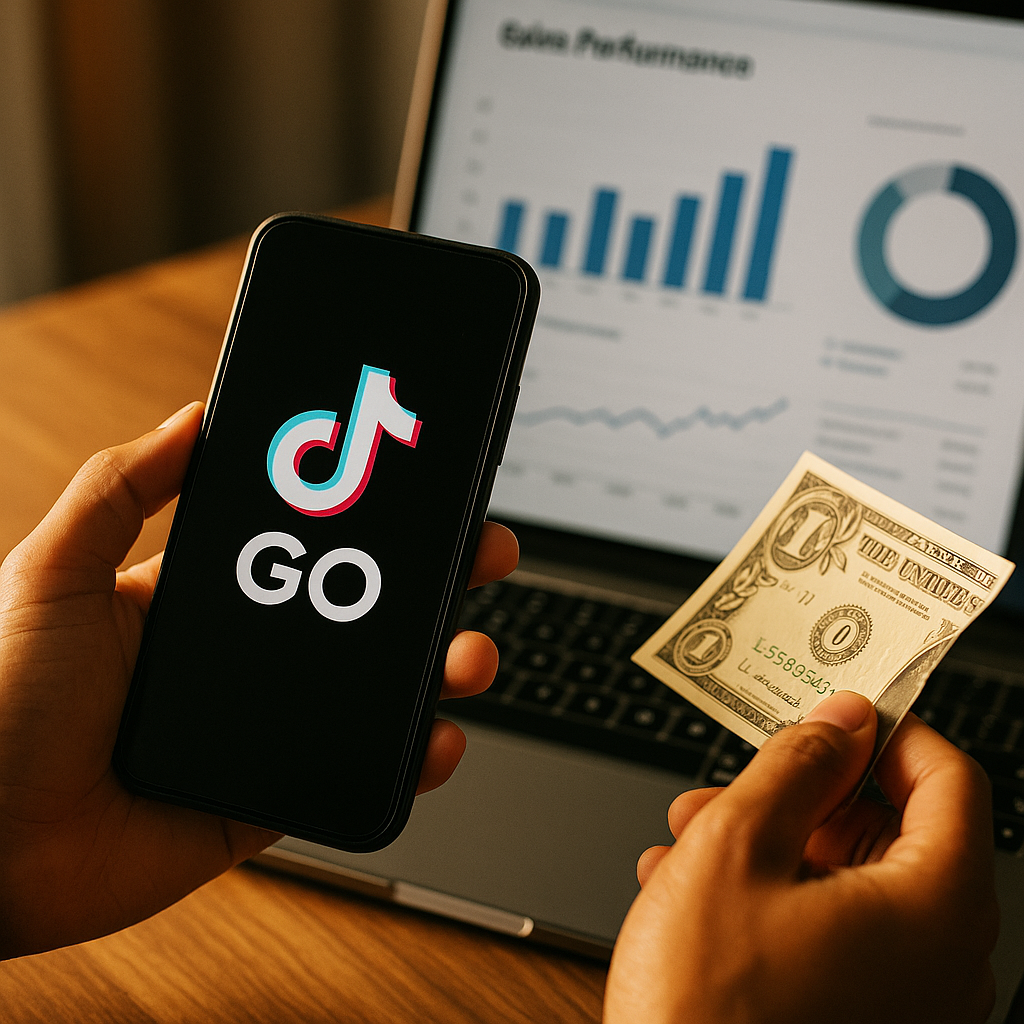
TikTok is quietly rewiring how creators get paid, and brands should be paying closer attention. With TikTok Go, payouts shift from flat fees toward performance benchmarks tied to views, engagement, and conversions. For marketers still negotiating rate cards like it’s 2019, this is the wake-up call. The TikTok Go performance-based creator payout model isn’t just a platform feature. It’s a preview of where the entire influencer economy is headed.
What TikTok Go Actually Changes
TikTok Go is TikTok’s expanding push to formalize performance-based compensation directly within its creator marketplace tools, rewarding creators based on outcomes their content generates rather than the size of their following or a pre-negotiated flat fee. Instead of brands wiring a lump sum for a single branded video, payouts scale with verified performance: views past a threshold, click-throughs, conversions tracked through TikTok Shop, or engagement rates that clear a set bar.
This isn’t entirely new territory. TikTok Shop’s affiliate program has run on commission-per-sale logic for a while now. What’s different is the scope. TikTok Go signals an effort to make performance-based pay the default expectation across more of the platform’s creator economy, not just the shopping-adjacent corners of it.
For brands, that means the negotiation conversation changes. You’re no longer just haggling over a flat rate based on follower count and past brand deals. You’re structuring contracts around measurable outcomes, which requires different legal language, different tracking infrastructure, and frankly, a different mindset from your finance team.
Follower count was always a vanity proxy for influence. Performance-based payouts finally force the market to price what actually matters: results.
Why This Was Inevitable
Marketers have complained for years that influencer marketing lacked the attribution rigor of paid search or programmatic display. You could spend $50,000 on a mega-influencer post and walk away with vanity metrics and a vague sense that “brand awareness” happened. That’s not a defensible line item to a CFO anymore.
Platforms felt this pressure too. TikTok Shop has aggressively pushed commerce-driven content because it wants a cut of transactions, not just ad revenue. eMarketer has tracked social commerce growth accelerating faster than traditional social ad spend for several consecutive years, and TikTok wants to own that infrastructure end to end, including how creators get paid.
There’s also a trust dimension. Ad Age and other trade outlets have documented the industry’s shift away from follower-count vanity metrics toward engagement and brand lift as the credible currency, a trend covered in Ad Age’s move to engagement metrics. Performance-based payouts are the logical next step: if engagement and lift matter more than reach, why wouldn’t compensation follow the same logic?
None of this happened in a vacuum, either. Micro and mid-tier creators have been outperforming macro influencers on cost efficiency for a while, a shift explored in how micro-creators out-earn macro influencers on TikTok. Performance-based models simply formalize what smart buyers were already discovering through trial and error: smaller, more engaged audiences often convert better per dollar spent.
The ROI Case for Brands
Let’s be blunt about why marketing leaders should care. Performance-based payouts reduce wasted spend. Full stop.
Under a flat-fee model, you’re paying for a promise. Under a performance model, you’re paying for delivery. If a creator’s content flops, your downside is capped. If it overperforms, you pay more, but you’re paying against revenue or verified engagement you actually received. That’s a much easier conversation to have with a CFO who’s used to programmatic dashboards showing cost-per-acquisition in real time.
This mirrors a broader shift already documented across the industry. CFO-friendly influencer deals are replacing flat-fee mega bets precisely because finance leaders want influencer marketing to behave like every other measurable channel. And affiliate-driven compensation structures have already shown they can triple effective creator pay in categories like travel, as detailed in coverage of travel brands tripling creator pay with affiliate-first deals.
There’s a risk mitigation angle too. Performance-based contracts naturally build in fraud resistance. Bot-inflated follower counts and purchased engagement matter less when payout is tied to platform-verified conversions or watch-through metrics that are harder to fake at scale. That’s not a perfect shield, but it’s a meaningfully better one than the current honor-system approach many brands still rely on.
If your influencer budget still gets approved based on follower count alone, you’re negotiating with a metric the market has already moved past.
Where It Gets Complicated
Performance-based pay sounds great in a boardroom deck. Executing it is messier.
First, attribution. TikTok Shop can track a purchase that happens inside the app relatively cleanly. But what about a creator who drives someone to research a product on Google before buying it three weeks later on your own site? Multi-touch attribution across platforms remains genuinely hard, and TikTok Go’s internal metrics will always favor TikTok-native conversion paths over your broader funnel. Brands need to decide upfront whether they’re optimizing for platform-reported performance or their own first-party data, because those two numbers won’t always agree.
Second, creator pushback. Not every creator wants income tied to conversion variance. Established creators with strong personal brands may resist performance-only deals, preferring hybrid structures: a smaller guaranteed base plus a performance kicker. Expect more of these hybrid deals to become the norm rather than pure pay-per-result arrangements, especially for creators who’ve built leverage through creator studios pushing for new contract standards.
Third, contract complexity. Performance-based deals require far more precise legal language than flat-fee agreements: defined KPIs, measurement windows, dispute resolution for tracking discrepancies, and clarity on what happens when a platform algorithm change tanks organic reach through no fault of the creator. Your legal and procurement teams need new templates, not a redlined version of the old ones.
Fourth, and this matters more than brands like to admit: over-indexing on short-term performance metrics can quietly erode long-term brand building. A creator chasing conversion bonuses might lean into aggressive sales language that feels off-brand or erodes the trust that made their audience valuable in the first place. Brand safety and message consistency don’t disappear just because the payout model changed. If anything, they need tighter creative guardrails, a challenge already stretching teams thin according to research on creative waste in approval workflows.
How This Fits the Bigger Compensation Shift
TikTok Go doesn’t exist in isolation. It’s one more data point in a multi-year trend away from flat-fee, follower-driven influencer economics toward something closer to performance marketing.
Affiliate-first models have already proven creators can earn more, not less, when compensation ties to sales rather than a flat rate, a pattern examined in how flat fees are fading in favor of affiliate monetization. Micro-creators, who tend to convert better relative to cost, have been claiming a growing share of influencer budgets, a shift now approaching half of total influencer spend according to recent industry analysis. And affiliate performance data has repeatedly shown why micro-creators are winning larger shares of ad budgets despite smaller followings.
Put simply: the market has been moving toward pay-for-performance for a while. TikTok Go just gives it a platform-level enforcement mechanism. When the platform itself builds performance tracking into its native creator tools, brands lose the excuse of “we don’t have good measurement.” The infrastructure is being handed to you.
What should brands actually do with this? Start by auditing your current influencer contracts. How many still pay flat fees with no performance component? Consider testing a hybrid structure on your next campaign: modest base pay plus a bonus tied to engagement rate or click-through, benchmarked against TikTok’s own advertising platform data where possible. Loop in your legal team early to build KPI-based contract templates before you’re negotiating under time pressure. And keep your marketing analytics stack (whether that’s HubSpot, a dedicated influencer platform, or in-house dashboards) capable of reconciling platform-reported performance against your own attribution model, because the two will rarely match perfectly.
Compliance teams should also get ahead of this. Performance-based influencer pay, especially tied to sales, raises disclosure questions the FTC already scrutinizes closely around endorsements and material connections. If a creator’s income literally depends on driving purchases, that’s a disclosure risk brands need to manage proactively, not retroactively after a complaint.
The Talent Pool Will Sort Itself
One underrated effect of performance-based payouts: it will separate creators who can actually drive commerce from creators who are simply good at getting views. Those are related skills, but they are not the same skill. A creator with average reach but a highly engaged, purchase-ready audience may suddenly out-earn a creator with triple the followers but weaker conversion behavior.
That’s a healthy correction for the market, honestly. Brands have overpaid for reach and underpaid for relevance for years. TikTok Go, and the broader wave of performance-based models it represents, should push budgets toward creators who deliver, regardless of whether they’re mega, macro, or micro. It’s a shift worth watching closely as platforms like Sprout Social and others build out the analytics infrastructure to help brands make sense of it.
FAQs
Frequently Asked Questions
What is the TikTok Go performance-based creator payout model?
TikTok Go is TikTok’s expanded approach to compensating creators based on measurable performance, such as views, engagement, or conversions, rather than relying solely on flat fees negotiated upfront based on follower count.
How does this differ from TikTok Shop’s affiliate program?
TikTok Shop’s affiliate model has long paid creators commission on sales generated through shoppable content. TikTok Go extends similar performance logic more broadly across the platform’s creator marketplace tools, beyond just commerce-driven posts.
Will performance-based pay replace flat-fee influencer deals entirely?
Unlikely in the near term. Many brands and creators will land on hybrid structures: a smaller guaranteed base fee combined with performance bonuses, which balances risk for both sides while still incentivizing results.
What risks should brands consider before adopting performance-based payouts?
Attribution accuracy across platforms, contract complexity around KPI definitions, potential creative pressure that harms brand voice, and FTC disclosure obligations tied to sales-driven creator compensation all require careful planning.
Does performance-based pay favor micro-creators over macro-influencers?
Often, yes. Micro-creators frequently show stronger engagement and conversion rates relative to cost, which tends to translate into better ROI under performance-based compensation structures compared to reach-heavy macro deals.
The Bottom Line
TikTok Go isn’t the end state, it’s a signal. Brands that build performance-based contract infrastructure now, complete with clear KPIs, attribution alignment, and disclosure compliance, will be negotiating from a position of strength when this becomes the industry default rather than the exception.
Frequently Asked Questions
What is the TikTok Go performance-based creator payout model?
TikTok Go is TikTok’s expanded approach to compensating creators based on measurable performance, such as views, engagement, or conversions, rather than relying solely on flat fees negotiated upfront based on follower count.
How does this differ from TikTok Shop’s affiliate program?
TikTok Shop’s affiliate model has long paid creators commission on sales generated through shoppable content. TikTok Go extends similar performance logic more broadly across the platform’s creator marketplace tools, beyond just commerce-driven posts.
Will performance-based pay replace flat-fee influencer deals entirely?
Unlikely in the near term. Many brands and creators will land on hybrid structures: a smaller guaranteed base fee combined with performance bonuses, which balances risk for both sides while still incentivizing results.
What risks should brands consider before adopting performance-based payouts?
Attribution accuracy across platforms, contract complexity around KPI definitions, potential creative pressure that harms brand voice, and FTC disclosure obligations tied to sales-driven creator compensation all require careful planning.
Does performance-based pay favor micro-creators over macro-influencers?
Often, yes. Micro-creators frequently show stronger engagement and conversion rates relative to cost, which tends to translate into better ROI under performance-based compensation structures compared to reach-heavy macro deals.
Top Influencer Marketing Agencies
The leading agencies shaping influencer marketing in 2026
Agencies ranked by campaign performance, client diversity, platform expertise, proven ROI, industry recognition, and client satisfaction. Assessed through verified case studies, reviews, and industry consultations.
Moburst

-
2

The Shelf
Boutique Beauty & Lifestyle Influencer AgencyA data-driven boutique agency specializing exclusively in beauty, wellness, and lifestyle influencer campaigns on Instagram and TikTok. Best for brands already focused on the beauty/personal care space that need curated, aesthetic-driven content.Clients: Pepsi, The Honest Company, Hims, Elf Cosmetics, Pure LeafVisit The Shelf → -
3

Audiencly
Niche Gaming & Esports Influencer AgencyA specialized agency focused exclusively on gaming and esports creators on YouTube, Twitch, and TikTok. Ideal if your campaign is 100% gaming-focused — from game launches to hardware and esports events.Clients: Epic Games, NordVPN, Ubisoft, Wargaming, Tencent GamesVisit Audiencly → -
4

Viral Nation
Global Influencer Marketing & Talent AgencyA dual talent management and marketing agency with proprietary brand safety tools and a global creator network spanning nano-influencers to celebrities across all major platforms.Clients: Meta, Activision Blizzard, Energizer, Aston Martin, WalmartVisit Viral Nation → -
5

The Influencer Marketing Factory
TikTok, Instagram & YouTube CampaignsA full-service agency with strong TikTok expertise, offering end-to-end campaign management from influencer discovery through performance reporting with a focus on platform-native content.Clients: Google, Snapchat, Universal Music, Bumble, YelpVisit TIMF → -
6

NeoReach
Enterprise Analytics & Influencer CampaignsAn enterprise-focused agency combining managed campaigns with a powerful self-service data platform for influencer search, audience analytics, and attribution modeling.Clients: Amazon, Airbnb, Netflix, Honda, The New York TimesVisit NeoReach → -
7

Ubiquitous
Creator-First Marketing PlatformA tech-driven platform combining self-service tools with managed campaign options, emphasizing speed and scalability for brands managing multiple influencer relationships.Clients: Lyft, Disney, Target, American Eagle, NetflixVisit Ubiquitous → -
8

Obviously
Scalable Enterprise Influencer CampaignsA tech-enabled agency built for high-volume campaigns, coordinating hundreds of creators simultaneously with end-to-end logistics, content rights management, and product seeding.Clients: Google, Ulta Beauty, Converse, AmazonVisit Obviously →