


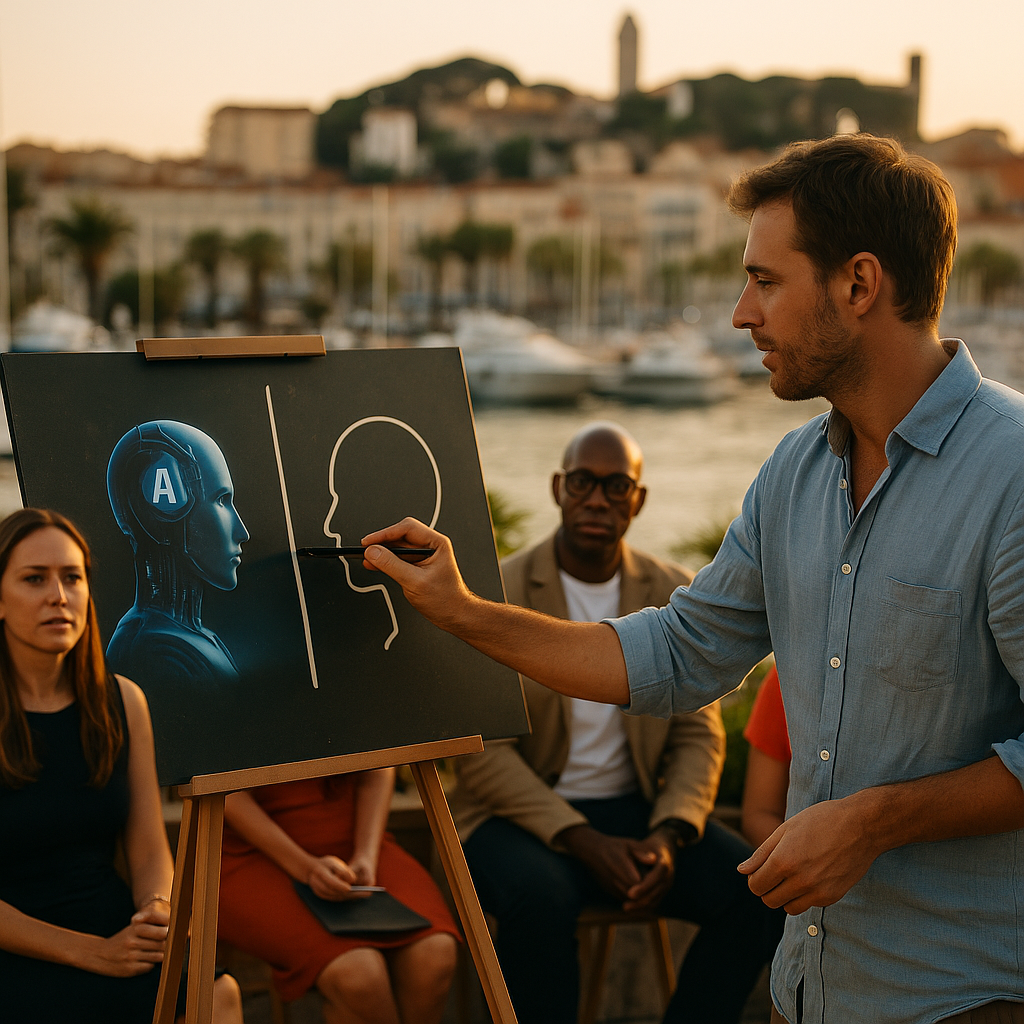
Twenty-eight CMOs, agency heads, and creative directors walked into Cannes 2026 arguing about AI. They walked out agreeing on something rarer: where the line actually sits. The Cannes 2026 AI consensus isn’t a vendor pitch or a policy paper. It’s a working boundary drawn by people who run budgets, hire teams, and answer for creative that flops or flies. If you’re building AI governance into your marketing org this year, this is the closest thing to industry consensus you’re going to get.
Why This Consensus Matters More Than Another AI Trend Report
Cannes Lions has always been part awards show, part industry group therapy. This year, the conversations happening on panels and in the Palais hallways converged on something unusual: genuine agreement across competitive agencies and brands. Not about which AI tool wins. About what AI should never be trusted to decide alone.
That distinction matters for anyone reading this from a budget-owner’s chair. Marketing leaders aren’t debating adoption speed anymore, they’ve moved past that. The real conversation now is about guardrails, and guardrails only work when there’s shared agreement on where the risk actually lives.
The 28 leaders didn’t agree on tools, budgets, or timelines. They agreed on one thing: AI can generate options, but it cannot own the decision.
The Three Things AI Should Never Replace in Creative Work
Strip away the panel jargon and three themes repeated across nearly every conversation.
- Taste and cultural judgment. AI can generate a thousand variations of an ad in an afternoon. It cannot tell you which one will land in a specific cultural moment, or which one will age badly in six months. That’s a human call, informed by lived experience and market intuition that no model has ingested.
- Risk and reputational accountability. When a campaign backfires, nobody is firing the algorithm. Leaders were blunt about this: accountability structures require a human decision-maker at the point of approval, not just a human “in the loop” rubber-stamping AI output.
- The final creative call on brand-defining work. Routine asset production, AI-assisted. Hero campaigns, brand platform decisions, anything tied to long-term equity, still human-led. Several agency heads described this as a tiering system: AI handles volume, humans handle vision.
This isn’t a nostalgic defense of “human creativity” for its own sake. It’s a risk-management position. Brands that let AI make final creative calls on flagship work are making a bet that a pattern-matching system understands nuance it fundamentally cannot access. That’s the same trust-gap problem showing up in AI-personalized ad performance, where over-automation quietly caps ROI instead of lifting it.
Hiring Decisions: Where the Line Gets Even Sharper
If the creative consensus was firm, the hiring consensus was almost unanimous. Not one leader on record said AI should make a final hiring decision. Several described using AI for sourcing, resume screening, and skills-matching, but every single one drew a hard stop before the interview and offer stage.
Why the unanimity? Three reasons kept surfacing:
- Legal exposure. Algorithmic hiring bias is already a regulatory target. The FTC has signaled scrutiny of AI-driven employment tools, and the risk of disparate-impact claims is real enough that legal teams are pushing back on full automation regardless of what marketing wants.
- Creative team fit is not a data problem. Portfolio strength is quantifiable. Chemistry with a creative director, adaptability under brand pressure, willingness to challenge a bad brief, none of that shows up cleanly in a dataset.
- Talent trust. Job candidates increasingly ask directly whether AI screened them. Agencies that can’t answer honestly risk losing exactly the senior creative talent they’re trying to recruit.
This mirrors a broader shift already reshaping agency structure. As covered in why ad agencies are hiring coders, technical hiring itself is evolving fast, but the human-judgment layer at decision points hasn’t moved. If anything, it’s hardened.
The Efficiency Trap: Fast Doesn’t Mean Right
Here’s the uncomfortable subtext running through every Cannes session on this topic: efficiency gains from AI are real, and they’re seductive enough to tempt leaders into over-automating decisions that shouldn’t be automated at all.
One agency CEO put it bluntly during a panel Q&A: “We can now produce 50 versions of an ad in the time it used to take to produce five. That’s not the problem. The problem is when teams start letting the AI pick the winner because picking is slower than making.” Speed became the trap, not the tool.
This tension shows up everywhere in current marketing operations. AI efficiency is reshaping how budgets get planned, and agencies charging a premium for AI-augmented services are under pressure to prove that premium buys judgment, not just output volume. The 22 percent AI agency premium only makes sense if clients are paying for better decisions, not just faster ones.
Speed is not a substitute for judgment. The agencies winning right now are the ones charging for judgment, not just automation.
What This Means for Your Vendor and Governance Stack
If you’re a brand-side marketer or agency lead trying to operationalize this consensus, it’s not enough to nod along at a conference panel. You need actual structure. A few practical moves came up repeatedly across Cannes sessions:
- Build a decision-tier framework. Categorize creative and hiring decisions by risk level. Low-risk, high-volume tasks (A/B ad variants, initial resume screens) can run through AI with light human review. High-risk, brand-defining decisions require named human sign-off, documented.
- Document your AI involvement in hiring, now. Regulatory scrutiny is only increasing. Having a clear, written policy on where AI touches your hiring pipeline protects you legally and gives candidates an honest answer when they ask.
- Audit vendor concentration risk. Many marketing orgs are quietly dependent on one or two AI vendors for both creative generation and hiring tools. That’s a governance blind spot worth examining, especially as covered in AI investment concentration and hidden martech vendor risk.
- Reassess agency contracts for judgment clauses. If you’re paying an AI premium, get specific about what human oversight is guaranteed in the SOW, not just what tools are used.
None of this is anti-AI. It’s pro-clarity. The brands and agencies getting burned right now aren’t the ones using AI aggressively, they’re the ones who never decided where the human line sits, and found out the hard way when a campaign or a hire went sideways.
The Bigger Signal Behind Cannes 2026
Step back and this consensus says something bigger about where the industry’s confidence in AI actually sits. Marketers are done debating whether AI belongs in the workflow. They’re now doing the harder work of defining exactly where it doesn’t belong, and building enforcement around that line rather than hoping good judgment happens by default.
That shift tracks with broader consumer sentiment too. Research on the consumer AI trust gap shows audiences are already skeptical of over-automated brand messaging. If your customers can sense when a decision felt algorithmic instead of considered, that skepticism becomes a brand risk long before it becomes a headline.
Industry data backs the caution. Recent workplace surveys tracked by HubSpot and Statista consistently show marketing leaders trust AI for production and analysis far more than they trust it for judgment calls, a gap that’s widening, not closing, as the tools get more capable. Capability was never the question. Trust in autonomous judgment is.
Next Step: Put the Line in Writing
Don’t wait for a bad hire or a botched campaign to force the conversation. Draft a one-page AI decision-rights policy this quarter, specifying exactly which creative and hiring calls require named human sign-off, and circulate it before your next AI vendor renewal, not after.
Frequently Asked Questions
What is the Cannes 2026 AI consensus among marketing leaders?
It’s the shared agreement among 28 senior marketing and agency leaders that AI should assist creative production and hiring workflows, but should never make final decisions on brand-defining creative work or hiring outcomes. The consensus centers on preserving human judgment, accountability, and cultural taste at key decision points.
Should AI be used in hiring decisions for creative roles?
AI can support sourcing, resume screening, and skills-matching, but leaders agree it should not make final hiring decisions. Legal risk around algorithmic bias, combined with the difficulty of quantifying creative fit and team chemistry, keeps final calls with human hiring managers.
Does this mean brands should slow down AI adoption in marketing?
No. The consensus isn’t anti-AI, it’s about drawing clear lines. Brands are encouraged to keep expanding AI use in production, testing, and analysis while explicitly reserving high-risk creative and hiring decisions for human sign-off.
How can brands operationalize this AI-human decision split?
Build a tiered decision framework that categorizes tasks by risk level, document where AI touches hiring pipelines for legal compliance, and add judgment clauses to agency contracts that specify guaranteed human oversight.
What’s the risk of over-relying on AI for creative decisions?
The main risk is mistaking speed for quality. AI can generate many creative variations quickly, but letting it select the “winning” version removes the cultural judgment and risk assessment that determines whether a campaign actually resonates or backfires.
Top Influencer Marketing Agencies
The leading agencies shaping influencer marketing in 2026
Agencies ranked by campaign performance, client diversity, platform expertise, proven ROI, industry recognition, and client satisfaction. Assessed through verified case studies, reviews, and industry consultations.
Moburst

-
2

The Shelf
Boutique Beauty & Lifestyle Influencer AgencyA data-driven boutique agency specializing exclusively in beauty, wellness, and lifestyle influencer campaigns on Instagram and TikTok. Best for brands already focused on the beauty/personal care space that need curated, aesthetic-driven content.Clients: Pepsi, The Honest Company, Hims, Elf Cosmetics, Pure LeafVisit The Shelf → -
3

Audiencly
Niche Gaming & Esports Influencer AgencyA specialized agency focused exclusively on gaming and esports creators on YouTube, Twitch, and TikTok. Ideal if your campaign is 100% gaming-focused — from game launches to hardware and esports events.Clients: Epic Games, NordVPN, Ubisoft, Wargaming, Tencent GamesVisit Audiencly → -
4

Viral Nation
Global Influencer Marketing & Talent AgencyA dual talent management and marketing agency with proprietary brand safety tools and a global creator network spanning nano-influencers to celebrities across all major platforms.Clients: Meta, Activision Blizzard, Energizer, Aston Martin, WalmartVisit Viral Nation → -
5

The Influencer Marketing Factory
TikTok, Instagram & YouTube CampaignsA full-service agency with strong TikTok expertise, offering end-to-end campaign management from influencer discovery through performance reporting with a focus on platform-native content.Clients: Google, Snapchat, Universal Music, Bumble, YelpVisit TIMF → -
6

NeoReach
Enterprise Analytics & Influencer CampaignsAn enterprise-focused agency combining managed campaigns with a powerful self-service data platform for influencer search, audience analytics, and attribution modeling.Clients: Amazon, Airbnb, Netflix, Honda, The New York TimesVisit NeoReach → -
7

Ubiquitous
Creator-First Marketing PlatformA tech-driven platform combining self-service tools with managed campaign options, emphasizing speed and scalability for brands managing multiple influencer relationships.Clients: Lyft, Disney, Target, American Eagle, NetflixVisit Ubiquitous → -
8

Obviously
Scalable Enterprise Influencer CampaignsA tech-enabled agency built for high-volume campaigns, coordinating hundreds of creators simultaneously with end-to-end logistics, content rights management, and product seeding.Clients: Google, Ulta Beauty, Converse, AmazonVisit Obviously →