


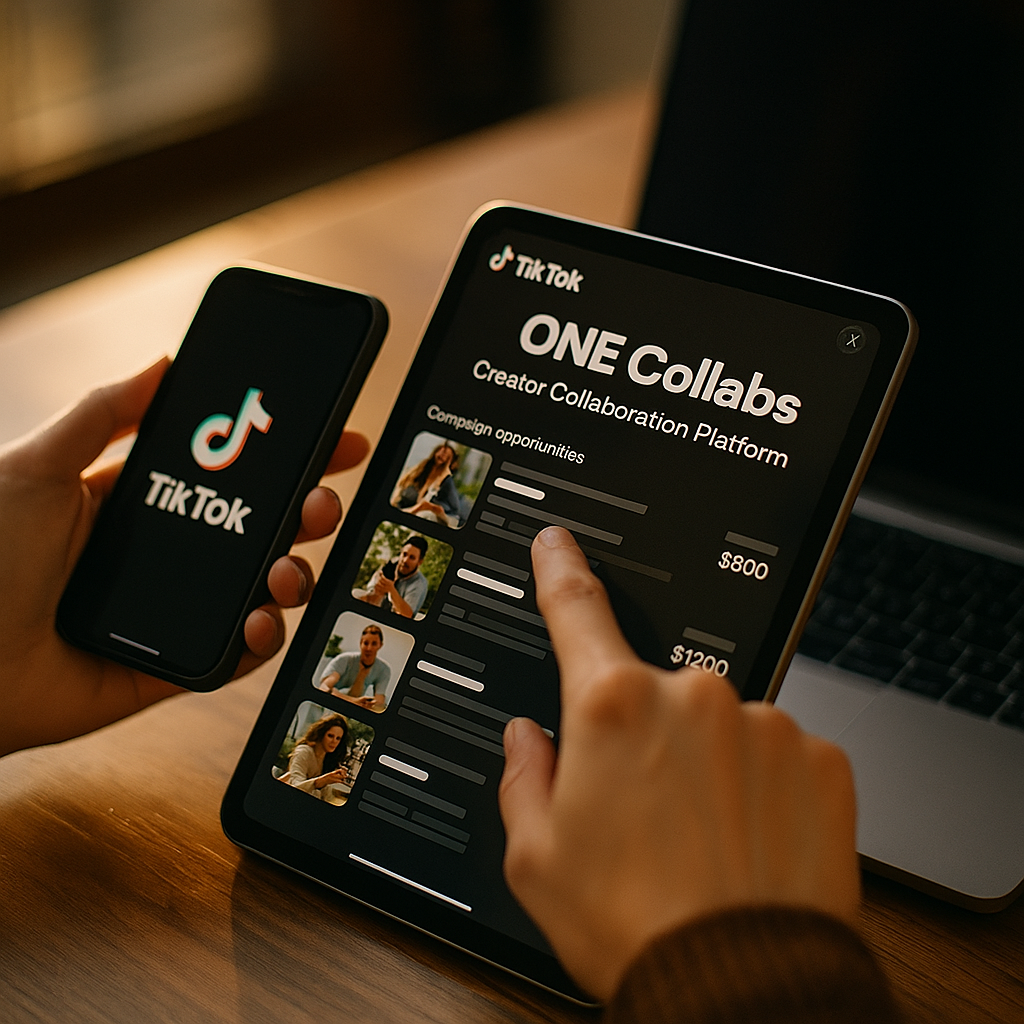
TikTok quietly rolled out a feature that could reshape how brands find creators, and most marketing teams haven’t noticed yet. TikTok One Collabs embeds a creator marketplace directly inside the platform’s business suite, letting brands browse, vet, and pitch creators without leaving TikTok’s own ecosystem. That matters more than it sounds. Early surfaces like this tend to reward the brands who show up first.
What Exactly Is TikTok One Collabs?
TikTok One is the platform’s broader creator solutions hub, covering everything from the Creator Marketplace to branded content tools. Collabs is the newest module inside it: a discovery and outreach layer that surfaces creators based on audience overlap, content category, and past brand partnership performance, all without requiring a third-party agency relationship.
Think of it as TikTok’s answer to the fragmented influencer discovery tools that agencies have charged brands a premium to access for years. Instead of relying on a third-party database scraping public profiles, Collabs pulls from TikTok’s own first-party performance data: watch time, completion rate, audience retention by demographic, and historical branded content engagement. That’s a meaningfully different data set than what most external tools can offer.
First-party platform data on creator performance is something no external influencer marketplace can fully replicate, because they simply don’t have access to it.
Why Brands Should Care Right Now
New discovery surfaces follow a predictable lifecycle. Early adopters get cheaper access, less competition for top creators, and a chance to shape internal workflows before the feature becomes crowded. Late adopters get higher CPMs, saturated creator rosters, and a steep learning curve under time pressure. We’ve seen this pattern before with TikTok’s own Creator Rewards program and with Meta’s Partnership Ads rollout.
Brands that tested Partnership Ads in its first six months locked in creator relationships and learned the permissions workflow before it became table stakes. The ones who waited spent a quarter just figuring out the basics while competitors were already optimizing. Collabs is shaping up to follow the same curve.
There’s also a cost argument. TikTok Shop’s momentum in Europe alone, where quarterly GMV has crossed major revenue milestones, means creator demand is only going one direction. Every brand chasing the same mid-tier lifestyle creator through a paid agency is bidding against each other. Collabs offers a parallel lane where brands who build direct relationships early can negotiate rates before the market catches up.
How Collabs Differs From Existing Agency and Marketplace Models
Agency partner tiers still serve a purpose, particularly for brands running complex, multi-market campaigns that need hands-on project management. Our agency partner tier guide covers how to vet those relationships for risk. But Collabs isn’t trying to replace agencies outright. It’s targeting the mid-funnel use case: brands that want creator discovery without paying a markup for basic matchmaking.
Here’s the practical difference:
- Data access: Collabs uses TikTok’s internal performance metrics, not estimated engagement rates from scraped profiles.
- Outreach speed: Brands can message creators directly inside the platform, cutting the back-and-forth of email introductions through an agency.
- Cost structure: No agency retainer or placement fee, though TikTok’s own platform incentives (ad spend thresholds, Creator Rewards eligibility) still apply.
- Vetting depth: Agencies typically run brand safety screening and contract negotiation. Collabs gives you the discovery layer, but the legal and compliance work still sits with your team.
That last point is where a lot of brands will trip up. Discovery is not the same as vetting. A creator showing strong watch time and audience fit inside Collabs still needs the same brand suitability review you’d run through any other channel, especially if you’re operating in risk-sensitive regional markets.
Where It Fits in Your Discovery Stack
Don’t treat Collabs as a replacement for your existing discovery tools. Treat it as an additional lane, particularly useful for:
- Testing new creator categories before committing agency budget to a full campaign
- Finding nano and micro creators whose audience data isn’t well indexed by third-party tools (our nano creator whitelisting playbook covers why this segment often gets overlooked)
- Running quick turnaround campaigns tied to TikTok Shop moments, where speed matters more than exhaustive agency vetting
- Benchmarking creator rates against what agencies are quoting, giving your procurement team leverage
It’s less useful, at least for now, for brands running heavily regulated campaigns (finance, pharma, alcohol) where compliance documentation needs to be airtight from first contact. For those categories, stick with agency partners who have established legal review processes until Collabs builds out more robust compliance tooling.
What About Measurement and Attribution?
This is the part brand teams always ask about, and reasonably so. Collabs surfaces discovery data, but it doesn’t automatically solve attribution. You’ll still need to connect campaign performance back to your own analytics stack, whether that’s through UTM parameters, TikTok’s own pixel, or a third-party measurement partner.
One thing worth testing early: how Collabs-sourced creators perform when content gets repurposed downstream. If you’re already running a TikTok to Instagram retargeting funnel, pull Collabs creators into that workflow and compare conversion lift against creators sourced through your usual agency channel. Early data from brands testing similar first-party discovery tools on other platforms, like Pinterest’s performance-based creator rewards, suggests first-party matched creators often convert at a comparable or better rate simply because the platform’s own algorithm is doing a better job of audience fit than manual agency curation.
Platform-native discovery tools tend to outperform manual agency matching on audience fit, precisely because the algorithm has access to engagement signals humans can’t see.
That said, don’t take it on faith. Run a controlled test: same budget, same product category, split between Collabs-sourced creators and your existing pipeline. Four to six weeks of data should tell you whether the first-party matching is actually translating into better CTR and conversion, or whether it’s just a faster path to the same results.
Risk and Compliance Considerations
Any time a platform opens up direct brand-to-creator messaging, brand safety teams should ask the obvious question: who’s reviewing these relationships for disclosure compliance? TikTok’s branded content tools already require creators to flag paid partnerships, and that requirement doesn’t change inside Collabs. But because the outreach happens faster and with less agency oversight, brands need to build their own compliance checkpoint into the workflow.
At minimum, your legal or compliance team should:
- Confirm every Collabs-sourced creator partnership gets flagged correctly under TikTok’s branded content toggle
- Maintain the same contract and usage rights documentation you’d require through any other sourcing channel
- Cross-reference creator history for prior brand safety flags, since Collabs doesn’t currently surface a full violation history the way some paid agency tools do
Regulatory bodies like the Federal Trade Commission and the UK’s Information Commissioner’s Office haven’t issued specific guidance on platform-native discovery tools, but the underlying disclosure rules for sponsored content apply regardless of how you sourced the creator. Don’t assume a faster discovery process means a lighter compliance load. If anything, it means your team needs tighter internal checkpoints to keep pace with faster deal velocity.
Early Adoption Playbook: What to Actually Do This Quarter
Here’s a practical rollout sequence for brand teams who want to test Collabs without overcommitting budget:
- Allocate a small test budget, separate from your main agency spend, specifically for Collabs-sourced creator partnerships.
- Pick one product line or campaign moment where speed matters more than exhaustive vetting, ideally something tied to a TikTok Shop promotion.
- Run parallel tracking against your existing creator pipeline so you have a clean comparison on cost per engagement and conversion.
- Loop in compliance early, not after the content goes live. Build the disclosure checkpoint into your workflow from day one.
- Document the learning curve for your team. Platform UI changes fast in the first few months after a feature launches, and institutional knowledge about how to navigate it is worth more than it sounds.
Brands already running structured creator ad refresh cycles, as outlined in our monthly output guide, are well positioned to slot Collabs-sourced creators into an existing content cadence rather than building a new process from scratch.
For context on how fast this space moves, industry trackers like eMarketer and Sprout Social have both flagged platform-native creator tools as one of the fastest growing categories in social commerce tooling. Waiting a full year to test a feature like this usually means testing it after the cost advantage has already disappeared.
The Bottom Line
TikTok One Collabs won’t replace your agency relationships or your existing discovery stack overnight, and it shouldn’t. But it’s a low-cost, low-commitment way to test first-party creator discovery before the feature matures and competition drives costs up. Run a small test this quarter, track it against your existing pipeline, and make the compliance checkpoint non-negotiable from day one.
Frequently Asked Questions
What is TikTok One Collabs?
TikTok One Collabs is a creator discovery and outreach module inside TikTok’s business suite that lets brands find and contact creators using first-party platform data, without going through a third-party agency or marketplace.
Is TikTok One Collabs free to use?
Accessing the Collabs discovery layer doesn’t carry a separate agency fee, but brands still pay creators directly for sponsored content and may need to meet certain ad spend thresholds for full platform feature access.
Does Collabs replace the need for an influencer marketing agency?
No. Collabs is strongest for discovery and initial outreach. Agencies still add value for complex, multi-market campaigns, contract negotiation, and compliance review, particularly in regulated categories.
How is Collabs different from TikTok’s existing Creator Marketplace?
Collabs builds on the same TikTok One ecosystem but emphasizes direct brand-to-creator discovery using first-party engagement and audience fit data, rather than relying solely on creator-submitted profile information.
What compliance risks should brands watch for with Collabs?
Brands need to ensure every Collabs-sourced partnership is properly flagged under TikTok’s branded content disclosure settings and maintain the same contract and usage rights documentation required for any other sourcing channel.
Should every brand test Collabs right now?
Brands running TikTok Shop campaigns or fast-turnaround content moments have the most to gain from early testing. Highly regulated categories like finance or pharma should wait for more robust compliance tooling before relying on it heavily.
Top Influencer Marketing Agencies
The leading agencies shaping influencer marketing in 2026
Agencies ranked by campaign performance, client diversity, platform expertise, proven ROI, industry recognition, and client satisfaction. Assessed through verified case studies, reviews, and industry consultations.
Moburst

-
2

The Shelf
Boutique Beauty & Lifestyle Influencer AgencyA data-driven boutique agency specializing exclusively in beauty, wellness, and lifestyle influencer campaigns on Instagram and TikTok. Best for brands already focused on the beauty/personal care space that need curated, aesthetic-driven content.Clients: Pepsi, The Honest Company, Hims, Elf Cosmetics, Pure LeafVisit The Shelf → -
3

Audiencly
Niche Gaming & Esports Influencer AgencyA specialized agency focused exclusively on gaming and esports creators on YouTube, Twitch, and TikTok. Ideal if your campaign is 100% gaming-focused — from game launches to hardware and esports events.Clients: Epic Games, NordVPN, Ubisoft, Wargaming, Tencent GamesVisit Audiencly → -
4

Viral Nation
Global Influencer Marketing & Talent AgencyA dual talent management and marketing agency with proprietary brand safety tools and a global creator network spanning nano-influencers to celebrities across all major platforms.Clients: Meta, Activision Blizzard, Energizer, Aston Martin, WalmartVisit Viral Nation → -
5

The Influencer Marketing Factory
TikTok, Instagram & YouTube CampaignsA full-service agency with strong TikTok expertise, offering end-to-end campaign management from influencer discovery through performance reporting with a focus on platform-native content.Clients: Google, Snapchat, Universal Music, Bumble, YelpVisit TIMF → -
6

NeoReach
Enterprise Analytics & Influencer CampaignsAn enterprise-focused agency combining managed campaigns with a powerful self-service data platform for influencer search, audience analytics, and attribution modeling.Clients: Amazon, Airbnb, Netflix, Honda, The New York TimesVisit NeoReach → -
7

Ubiquitous
Creator-First Marketing PlatformA tech-driven platform combining self-service tools with managed campaign options, emphasizing speed and scalability for brands managing multiple influencer relationships.Clients: Lyft, Disney, Target, American Eagle, NetflixVisit Ubiquitous → -
8

Obviously
Scalable Enterprise Influencer CampaignsA tech-enabled agency built for high-volume campaigns, coordinating hundreds of creators simultaneously with end-to-end logistics, content rights management, and product seeding.Clients: Google, Ulta Beauty, Converse, AmazonVisit Obviously →