


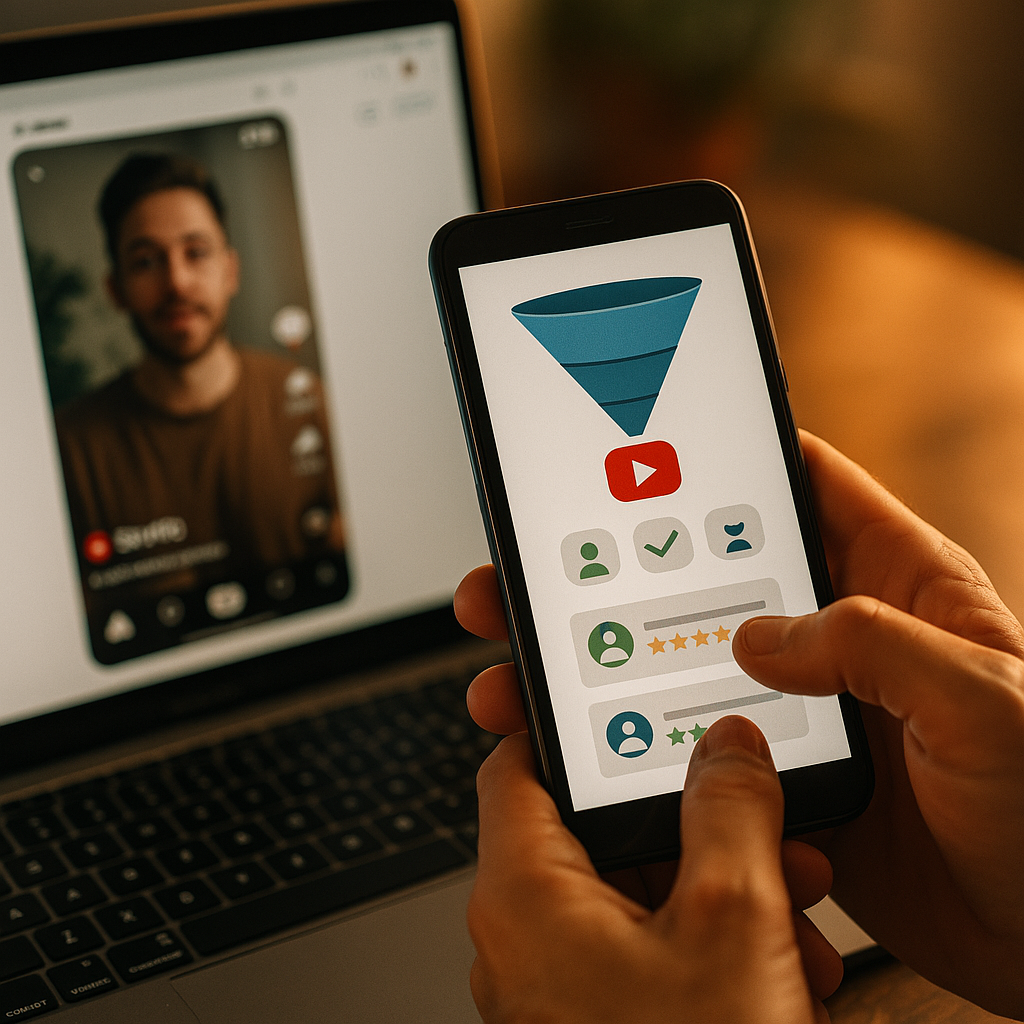
Seventy billion daily views flow through YouTube Shorts, yet most brands treat it like vertical TikTok leftovers. That’s a mistake. YouTube Shorts discovery runs on a different trust architecture than any other short-form feed, and the brands winning there are using it as a review funnel, not just a reach play. If your Shorts strategy is just repurposed TikToks with no sound logic, you’re leaving conversions on the table.
Why Shorts Discovery Isn’t TikTok Discovery
Here’s the thing marketers keep getting wrong: they assume Shorts discovery mirrors the For You Page. It doesn’t. YouTube’s recommendation system is built on top of the same graph that powers long-form watch history, search intent, and subscription behavior. A viewer who watches skincare reviews on long-form YouTube is far more likely to get served a Shorts review from a creator in that same niche, even one they’ve never subscribed to.
That’s a fundamentally different trust signal than TikTok’s completion-rate-driven virality. YouTube is optimizing for “will this viewer trust this content enough to click through, search, or come back,” not just “will they watch to the end.” If you’ve already read our guide to the suggested feed, you know the platform rewards sustained relevance over single-video spikes. The review funnel angle builds directly on that mechanic.
Shorts doesn’t reward the loudest hook. It rewards the creator whose audience keeps coming back to verify a claim, compare a product, or settle a purchase decision.
What Is the Trusted Review Funnel?
Think of it as a three-stage pipeline inside Shorts discovery: awareness clips that surface in cold feeds, comparison or verification content that gets served to warmer viewers already searching the category, and conversion-ready Shorts that appear right as someone is close to a purchase decision. YouTube’s own data, cited frequently by eMarketer, shows that Shorts increasingly function as a pre-purchase research layer, not just top-of-funnel entertainment.
This matters for budget allocation. If you’re briefing creators for a single “hype” Short, you’re only buying the top third of the funnel. The real ROI sits in the middle: the “does this actually work” Shorts that get algorithmically paired with search queries and long-form review content.
- Stage one (discovery): Short, punchy hooks that establish category relevance within the first two seconds.
- Stage two (verification): Side-by-side comparisons, unboxings, or “I tested this for 30 days” formats that YouTube serves alongside search results.
- Stage three (conversion): Shorts with clear CTAs that link to long-form reviews, product pages, or shopping tabs.
Brands that only fund stage one are essentially paying for impressions with no bridge to intent. That’s a wasted spend pattern we see constantly in creator briefs.
The Creator Selection Problem
Not every creator who performs well on Shorts can anchor a review funnel. You need someone with an existing long-form library in the category, because YouTube’s graph rewards topical depth, not just short-form chops. A creator with 400,000 Shorts followers but zero long-form video history in your category is a weaker bet than a mid-tier creator with a modest Shorts following and three years of long-form reviews in the niche.
This is the inverse of how most brands currently vet talent. Shorts view counts get all the attention in pitch decks, but the signal that actually predicts discovery performance is subscriber overlap with long-form search traffic. Ask your creator partners (or your agency) for their YouTube Analytics “traffic source” breakdown. If a meaningful share of their Shorts views come from the “You” tab or browse features tied to watch history, that’s a strong indicator their audience trusts them enough for YouTube to keep recommending them across formats.
For brands building out a bigger review pipeline, it’s worth reading our long-form review pipeline guide, which covers how to structure briefs for creators who carry weight in both formats.
Building Briefs That Actually Trigger the Trust Signal
A generic “make a Short about our product” brief won’t cut it. YouTube’s system is pattern-matching against search behavior, so your brief needs to mirror how people actually search for reviews. That means briefing creators to use language patterns viewers type into search bars: “is it worth it,” “vs,” “honest review,” “after 3 months.”
Specificity here isn’t just an SEO nicety. It directly affects whether the Short gets paired with search results and suggested video slots. A vague lifestyle clip with your product in frame won’t trigger the same discovery pathway as a Short titled around a comparison query.
- Require creators to state a specific use case or comparison point in the first five seconds.
- Ask for at least one Short per campaign that links directly to a longer review video on the same channel.
- Avoid overly polished, ad-like framing. YouTube’s trust signal favors demonstrable, slightly imperfect “real test” framing over studio-level production.
- Build in a pinned comment with a direct answer to the most common objection (price, durability, comparison to competitor).
This last point gets overlooked constantly. Comments on Shorts carry more weight in YouTube’s engagement signal than on most other platforms, because the format encourages a pause-and-scroll behavior that TikTok’s swipe-first UX discourages. A well-seeded comment section does double duty: it answers objections that would otherwise cause drop-off, and it signals sustained engagement to the algorithm.
Measurement: Stop Counting Views, Start Counting Funnel Movement
If your reporting dashboard only tracks views and likes on Shorts, you’re measuring the wrong funnel stage. The metrics that actually correlate with the trusted review funnel are click-through to long-form video, search impressions for branded + comparison terms, and subscriber conversion from Shorts viewers.
Pull your YouTube Studio data and look specifically at “impressions click-through rate” segmented by traffic source. A Short that’s getting served in suggested feeds alongside search results and converting at a healthy click rate is doing real funnel work, even if its raw view count looks modest next to a viral TikTok clip.
A 200,000-view Short with a 12% click-through to a long-form review is worth more to your pipeline than a 2 million-view Short that dead-ends.
This is also where finance and marketing leadership tend to clash. Raw reach numbers are easy to report up the chain, but they don’t map cleanly to revenue. If you’re building a case for budget renewal, pair your Shorts data with a clear ROI model finance can actually approve, rather than leaning on vanity metrics that won’t survive scrutiny.
Cross-Platform Sequencing: Don’t Treat Shorts in Isolation
Shorts rarely close the loop on their own. The strongest-performing brand programs we’ve tracked sequence Shorts discovery with retargeting on other formats. A viewer who watches a comparison Short is a strong retargeting candidate for a Reels ad or a TikTok Shop push a few days later, once purchase intent has warmed up.
If you’re running a multi-platform creator program, our Reels retargeting funnel guide covers the mechanics of moving warm viewers across platforms without losing attribution. The same logic applies in reverse: Shorts viewers who click through to long-form reviews can be retargeted with Shorts ads reinforcing the review’s conclusion.
Don’t ignore compliance here either. Disclosure requirements under FTC guidelines apply just as strictly to Shorts reviews as they do to long-form sponsored content, and YouTube’s own disclosure tools (found via Google’s support documentation) need to be enabled on every paid Short in the funnel, not just the flagship long-form video.
What Most Brands Get Wrong Right Now
The biggest mistake is treating YouTube Shorts as an overflow bucket for TikTok content. It isn’t. The discovery logic is different, the trust signals are different, and the audience behavior around comparison and verification content is different. Brands that port over TikTok-style hook-and-cut editing without adjusting for YouTube’s search-adjacent discovery model consistently underperform relative to brands building Shorts-native review content.
The second mistake is briefing for a single hero Short instead of a connected sequence. One-off content rarely triggers the sustained recommendation loop that drives real funnel movement. Think campaigns, not clips.
Next Step
Audit your last three Shorts campaigns against click-through to long-form content, not view count. If that number is near zero, rebuild your next brief around comparison language and a direct link to a deeper review, then measure again in 30 days.
FAQs
How is YouTube Shorts discovery different from TikTok’s algorithm?
YouTube Shorts discovery draws on the same graph that powers long-form watch history and search intent, so it favors topical trust and category relevance over pure completion rate, which is TikTok’s primary driver.
What counts as a “trusted review funnel” on Shorts?
It’s a staged approach: awareness Shorts for cold reach, comparison or verification Shorts that surface near search results for warmer viewers, and conversion Shorts with direct links to long-form reviews or product pages.
Should brands prioritize creators with high Shorts view counts or long-form history?
Long-form history in the category matters more than raw Shorts view counts, since YouTube’s recommendation system rewards creators with established topical depth and search-adjacent authority.
What metrics actually matter for Shorts ROI?
Click-through rate to long-form video, search impressions for comparison terms, and subscriber conversion from Shorts viewers matter far more than raw views or likes.
Do FTC disclosure rules apply to Shorts the same way they apply to long-form reviews?
Yes. Every paid or sponsored Short needs proper disclosure, using YouTube’s built-in disclosure tools, regardless of whether it’s a standalone clip or part of a larger review campaign.
Top Influencer Marketing Agencies
The leading agencies shaping influencer marketing in 2026
Agencies ranked by campaign performance, client diversity, platform expertise, proven ROI, industry recognition, and client satisfaction. Assessed through verified case studies, reviews, and industry consultations.
Moburst

-
2

The Shelf
Boutique Beauty & Lifestyle Influencer AgencyA data-driven boutique agency specializing exclusively in beauty, wellness, and lifestyle influencer campaigns on Instagram and TikTok. Best for brands already focused on the beauty/personal care space that need curated, aesthetic-driven content.Clients: Pepsi, The Honest Company, Hims, Elf Cosmetics, Pure LeafVisit The Shelf → -
3

Audiencly
Niche Gaming & Esports Influencer AgencyA specialized agency focused exclusively on gaming and esports creators on YouTube, Twitch, and TikTok. Ideal if your campaign is 100% gaming-focused — from game launches to hardware and esports events.Clients: Epic Games, NordVPN, Ubisoft, Wargaming, Tencent GamesVisit Audiencly → -
4

Viral Nation
Global Influencer Marketing & Talent AgencyA dual talent management and marketing agency with proprietary brand safety tools and a global creator network spanning nano-influencers to celebrities across all major platforms.Clients: Meta, Activision Blizzard, Energizer, Aston Martin, WalmartVisit Viral Nation → -
5

The Influencer Marketing Factory
TikTok, Instagram & YouTube CampaignsA full-service agency with strong TikTok expertise, offering end-to-end campaign management from influencer discovery through performance reporting with a focus on platform-native content.Clients: Google, Snapchat, Universal Music, Bumble, YelpVisit TIMF → -
6

NeoReach
Enterprise Analytics & Influencer CampaignsAn enterprise-focused agency combining managed campaigns with a powerful self-service data platform for influencer search, audience analytics, and attribution modeling.Clients: Amazon, Airbnb, Netflix, Honda, The New York TimesVisit NeoReach → -
7

Ubiquitous
Creator-First Marketing PlatformA tech-driven platform combining self-service tools with managed campaign options, emphasizing speed and scalability for brands managing multiple influencer relationships.Clients: Lyft, Disney, Target, American Eagle, NetflixVisit Ubiquitous → -
8

Obviously
Scalable Enterprise Influencer CampaignsA tech-enabled agency built for high-volume campaigns, coordinating hundreds of creators simultaneously with end-to-end logistics, content rights management, and product seeding.Clients: Google, Ulta Beauty, Converse, AmazonVisit Obviously →