


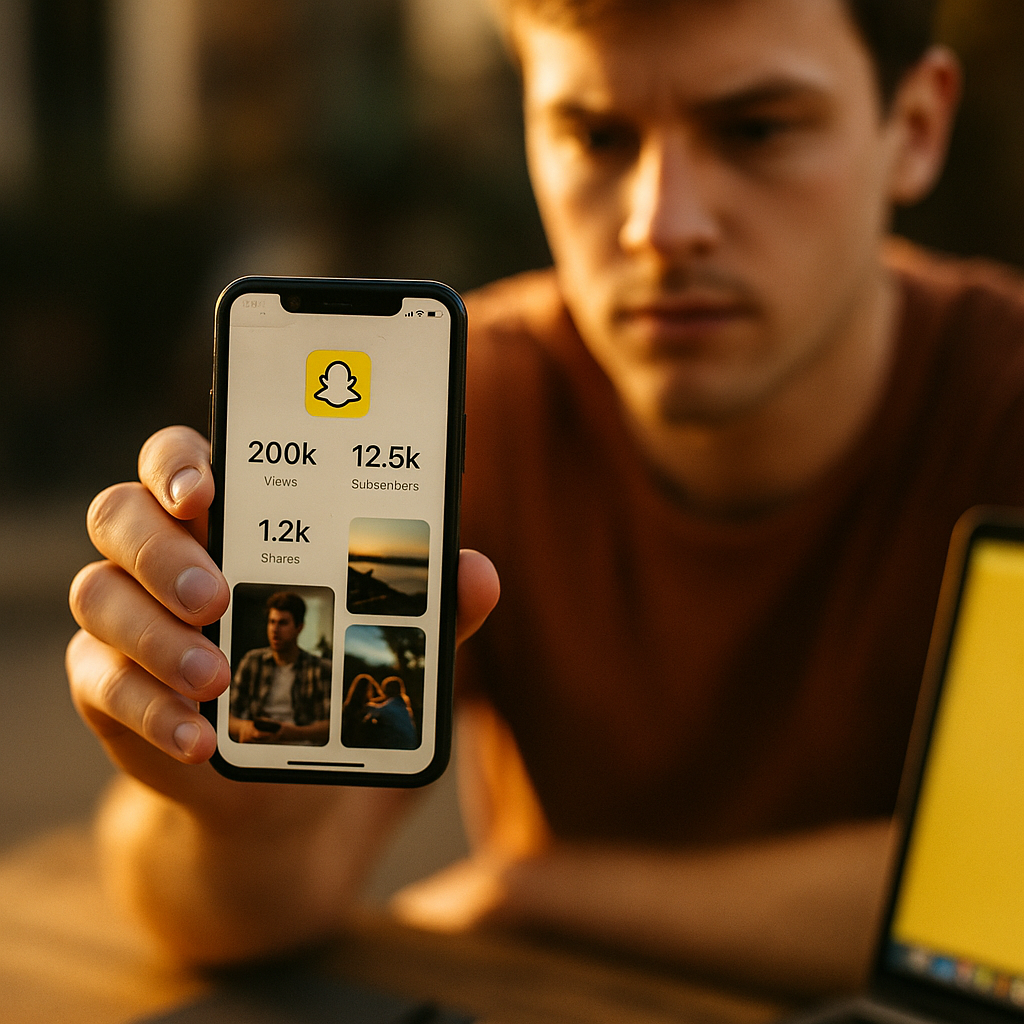
Snapchat reaches more than 90% of 13 to 24 year olds across its core markets, according to the platform’s own advertiser data, yet most brand launch plans still treat it as an afterthought behind TikTok and Instagram. That’s a costly gap. A tested Snapchat creator playbook for Gen Z product launches isn’t optional anymore, it’s the difference between a drop that trends and one that disappears into the feed.
Why Gen Z Still Opens Snapchat Every Day
Here’s the part skeptical CMOs keep missing: Snapchat isn’t a nostalgia app propped up by Bitmoji. It’s a daily utility for a generation that treats disappearing content as the default, not the exception. Snap reports that over 75% of its daily active users in the US are between 13 and 34, and engagement time per session has climbed as Spotlight and AR features matured.
That matters for product launches specifically because Snapchat users arrive with lower guard. They’re not scrolling a curated highlight reel, they’re swapping casual updates with friends. A launch message that feels native to that behavior, raw, quick, a little unfinished, outperforms polished ad creative almost every time. eMarketer’s platform usage data consistently shows Gen Z spending more unduplicated time on Snapchat than brands assume when they’re allocating budget.
Brands that treat Snapchat as a lower-budget TikTok clone miss the one thing that makes it different: the audience expects imperfection, and polished ads read as inauthentic noise.
Who Should You Actually Cast?
Forget follower count as your primary filter. Snapchat’s creator ecosystem rewards consistency and community trust over reach, and the algorithm on Spotlight favors completion rate, not vanity metrics. For a product launch, you want three creator tiers working together, not one mega-influencer carrying the whole campaign.
- Anchor creators (50k to 500k): They set the narrative and film the primary unboxing or reveal moment.
- Mid-tier amplifiers (10k to 50k): They riff on the anchor’s content, adding reaction or remix formats that feel organic.
- Nano creators (under 10k): They seed trust in niche friend groups, the exact audience that converts on word-of-mouth rather than ad spend.
If nano seeding is new to your team, the approach mirrors what we outlined in our nano creator whitelisting framework: smaller creators move cold audiences faster than a single big name, especially on a platform where intimacy is the entire value proposition.
Lens and AR: The Unfair Advantage Nobody’s Budgeting For
This is where Snapchat genuinely separates itself from Meta and TikTok. Custom Lenses let a product live inside the camera itself, not just in front of it. A beauty brand launching a new shade doesn’t need a creator to describe the color, they can build a try-on Lens that lets every viewer test it instantly.
Sponsored Lenses historically carry higher completion and share rates than standard video ads because the interaction itself is the content. Pair a hero Lens with creator-led tutorials showing how to use it, and you get a compounding effect: the creator drives discovery, the Lens drives participation, and participation drives organic reshares that no media budget can buy outright.
Budget for Lens development early. Production timelines run two to four weeks depending on complexity, and that needs to sit inside your launch calendar well before creator content starts filming.
Sequencing the Drop
A launch isn’t a single post, it’s a sequence. Teams that treat Snapchat as a one-day blast consistently underperform teams that stretch the arc across three phases.
- Tease (7 to 10 days out): Anchor creators post cryptic, low-production content. No product reveal, just curiosity. Snapchat’s private, friend-group nature makes speculation feel more authentic here than on public feeds.
- Reveal (launch day): Full creator slate goes live simultaneously, paired with the branded Lens and a Spotlight push. This is also when paid amplification should kick in behind top-performing organic posts.
- Sustain (days 2 to 14): Mid-tier and nano creators publish reaction, review, and usage content. This phase is where most brands quietly give up, and it’s exactly where the sales lift actually compounds.
Compare this against how sequencing works on other platforms. If your team already runs a similar structure on TikTok, our TikTok creator ad refresh guide shows how refresh cadence prevents creative fatigue, a problem that hits Snapchat just as hard given how quickly Gen Z scrolls past repeated formats.
Spotlight Versus Paid: Where to Put the Last Dollar
Once organic creator content is live, you’re choosing between boosting it through Spotlight’s algorithmic distribution or pushing dollars into Snap Ads and Partnership style placements. The honest answer: do both, but sequence it.
Let organic creator posts run for 24 to 48 hours first. Watch completion rate and swipe-up velocity. Whatever clears your internal benchmark gets paid amplification behind it. This is the same logic brands use when deciding paid support across platforms, and the financial justification process looks a lot like what’s covered in our partnership ads ROI model breakdown, which maps creative performance to budget approval in a way finance teams actually accept.
If your team is also running comparable creative on Meta, it’s worth benchmarking formats side by side rather than assuming a single creative asset will perform identically across platforms. Our Snapchat vs Meta creative framework walks through exactly where the format expectations diverge.
Measurement That Actually Predicts Sales
Views are vanity on Snapchat. The metrics that correlate with launch success are swipe-through rate, Lens share count, and completion rate on creator videos under 10 seconds. Snap’s own attribution tools have improved, but most brands still underinvest in post-launch analysis, closing the dashboard the week after launch instead of tracking the 30-day tail.
Set a baseline before launch using category benchmarks from Statista’s social media usage reports and cross-reference against your own historical campaigns. Without a baseline, “it went well” is just a feeling, not a finding.
If you’re not tracking Lens engagement separately from video view rate, you’re measuring half the campaign and calling it the whole story.
Disclosure and Compliance, Non-Negotiable
Gen Z audiences are quick to call out undisclosed partnerships, and regulators are paying closer attention to creator marketing across every platform. The FTC’s endorsement guidelines apply to Snapchat the same as any other channel: creators must clearly disclose paid relationships, and “clearly” means visible without the viewer having to tap or search for it.
If you’re running a layered program with clipping or bounty style creators amplifying the launch, review disclosure requirements against our clipper network compliance guide before scaling paid participation. The legal exposure isn’t theoretical, enforcement actions have targeted exactly this kind of ambiguous disclosure in recent years.
Post-launch, don’t let the creator relationship go cold. Brands that fold top-performing launch creators into an ongoing ambassador structure see materially better retention and repeat purchase behavior than those who treat the launch as a one-off transaction. Our Discord ambassador communities playbook outlines how to carry that momentum into a longer-term retention engine once the launch window closes.
Frequently Asked Questions
FAQs
How much budget should a Snapchat product launch allocate to Lens development?
Most mid-sized launches allocate 15 to 25% of total Snapchat budget to Lens creation, with the remainder split across creator fees and paid amplification. Complexity drives cost more than runtime, so scope the Lens brief before locking the overall budget.
What’s the ideal creator mix for a Gen Z launch on Snapchat?
A blended structure works best: one or two anchor creators in the 50k to 500k range for the reveal moment, several mid-tier creators for remix content, and a wider bench of nano creators for trust-based seeding inside smaller friend groups.
How long before launch should creator outreach begin?
Start outreach four to six weeks out. This allows time for contracting, Lens integration briefing, and a tease phase that builds curiosity without revealing the product too early.
Does Snapchat still matter if our audience skews slightly older than Gen Z?
Snapchat’s user base extends well into the 25 to 34 bracket, and that segment often has higher purchasing power with similar platform habits. It’s worth testing rather than excluding based on age assumptions alone.
How do we measure ROI beyond impressions?
Track swipe-through rate, Lens completion and share counts, and tie creator-driven traffic to a trackable landing page or promo code. Layer that against a 30-day attribution window rather than judging performance on launch day alone.
Stop treating Snapchat as a secondary line item and build the three-phase sequence, anchor plus mid-tier plus nano creator mix, and custom Lens into your next launch brief before the budget gets locked. The brands winning Gen Z attention right now aren’t spending more, they’re sequencing smarter.
Top Influencer Marketing Agencies
The leading agencies shaping influencer marketing in 2026
Agencies ranked by campaign performance, client diversity, platform expertise, proven ROI, industry recognition, and client satisfaction. Assessed through verified case studies, reviews, and industry consultations.
Moburst

-
2

The Shelf
Boutique Beauty & Lifestyle Influencer AgencyA data-driven boutique agency specializing exclusively in beauty, wellness, and lifestyle influencer campaigns on Instagram and TikTok. Best for brands already focused on the beauty/personal care space that need curated, aesthetic-driven content.Clients: Pepsi, The Honest Company, Hims, Elf Cosmetics, Pure LeafVisit The Shelf → -
3

Audiencly
Niche Gaming & Esports Influencer AgencyA specialized agency focused exclusively on gaming and esports creators on YouTube, Twitch, and TikTok. Ideal if your campaign is 100% gaming-focused — from game launches to hardware and esports events.Clients: Epic Games, NordVPN, Ubisoft, Wargaming, Tencent GamesVisit Audiencly → -
4

Viral Nation
Global Influencer Marketing & Talent AgencyA dual talent management and marketing agency with proprietary brand safety tools and a global creator network spanning nano-influencers to celebrities across all major platforms.Clients: Meta, Activision Blizzard, Energizer, Aston Martin, WalmartVisit Viral Nation → -
5

The Influencer Marketing Factory
TikTok, Instagram & YouTube CampaignsA full-service agency with strong TikTok expertise, offering end-to-end campaign management from influencer discovery through performance reporting with a focus on platform-native content.Clients: Google, Snapchat, Universal Music, Bumble, YelpVisit TIMF → -
6

NeoReach
Enterprise Analytics & Influencer CampaignsAn enterprise-focused agency combining managed campaigns with a powerful self-service data platform for influencer search, audience analytics, and attribution modeling.Clients: Amazon, Airbnb, Netflix, Honda, The New York TimesVisit NeoReach → -
7

Ubiquitous
Creator-First Marketing PlatformA tech-driven platform combining self-service tools with managed campaign options, emphasizing speed and scalability for brands managing multiple influencer relationships.Clients: Lyft, Disney, Target, American Eagle, NetflixVisit Ubiquitous → -
8

Obviously
Scalable Enterprise Influencer CampaignsA tech-enabled agency built for high-volume campaigns, coordinating hundreds of creators simultaneously with end-to-end logistics, content rights management, and product seeding.Clients: Google, Ulta Beauty, Converse, AmazonVisit Obviously →