


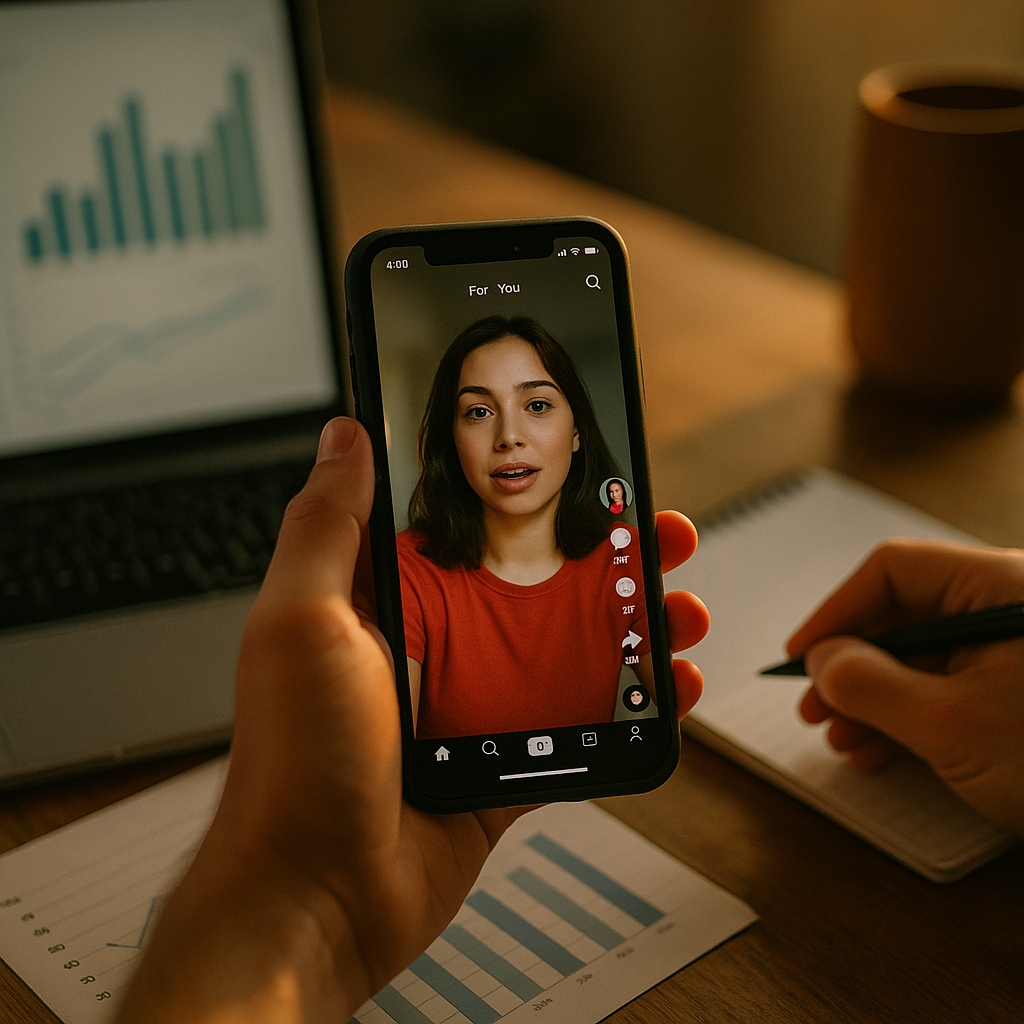
Ninety seconds. That’s roughly how long TikTok’s recommendation system needs to decide whether a creator video deserves a second life on the For You Page or a quiet death in obscurity. Brands pouring budget into creator content without understanding TikTok For You Page signal optimization are essentially flying blind, hoping great creative alone wins distribution. It doesn’t. The algorithm rewards specific behavioral signals, and if your briefs ignore them, you’re leaving reach on the table.
The FYP Isn’t a Popularity Contest, It’s a Prediction Engine
Forget the old mental model of “good content rises.” TikTok’s recommendation system is a machine learning pipeline that predicts the probability a specific user will watch, engage with, or share a specific video. It tests videos on small audience slices first, then expands distribution based on performance against those predictions. Every video goes through this gauntlet, regardless of follower count.
That’s actually good news for brands working with mid-tier and nano creators. A video from a creator with 8,000 followers can outperform one from a creator with 800,000, purely on signal strength. TikTok has said as much in its own transparency materials, and TikTok’s advertiser resources reinforce that content quality signals, not follower count, drive the initial distribution test.
Follower count predicts reach on legacy platforms. On TikTok, it predicts almost nothing. The first 500 views decide everything.
The Signals That Actually Move the Needle
Marketers love to obsess over likes. TikTok’s system barely cares. Here’s the hierarchy that actually matters, based on patterns observed across hundreds of branded campaigns and consistent with what TikTok’s own engineering blog has described publicly.
- Average watch time and completion rate: The single heaviest-weighted signal. A 15-second video watched in full beats a 60-second video abandoned at the 10-second mark, every time.
- Rewatches: If viewers loop a video, that’s an explicit “this content is dense with value or humor” flag. Looping is one of the strongest positive signals TikTok tracks.
- Shares to DMs and off-platform: Weighted higher than public comments because it signals genuine endorsement rather than performative engagement.
- Comment depth and reply chains: Not just comment count. Conversations that spawn sub-replies tell the system the content sparked real discussion.
- Not-interested taps and skip rate: The negative signal that kills distribution fastest. One skip-heavy test batch and your video’s expansion stops cold.
Likes still count, but they’re the weakest positive signal in the stack. A brand that optimizes a creator brief around “get more likes” is optimizing for the wrong metric entirely.
Why Your Briefs Are Sabotaging Distribution
Most brand briefs read like television ad specs: logo visible at second three, key message by second five, CTA at the end. That structure is a distribution killer on TikTok. It front-loads brand information before the algorithm has decided whether to show the video to anyone beyond the initial test pool.
Creators who consistently win placement structure videos around a hook that delays brand reveal, builds curiosity, and only pays off the promise near the end, forcing completion. If your contracted deliverables mandate brand mention in the first three seconds, you’re fighting the platform’s own incentive structure.
This is where agencies and in-house teams need to separate compliance requirements (FTC disclosure, which must appear early and clearly per FTC endorsement guidelines) from creative structure. Disclosure can live in an on-screen caption or the TikTok branded content toggle without killing the hook. Don’t confuse legal requirement with creative sequencing. One is non-negotiable, the other is a conversation with the creator.
Posting Cadence and the Account Health Variable
Individual video performance doesn’t exist in a vacuum. TikTok weighs account-level signals too, meaning a creator’s recent posting history and engagement trend influence how aggressively a new video gets tested. A creator who’s been inconsistent for six weeks and suddenly drops a branded video is starting from a weaker baseline than one who’s posted daily and built algorithmic trust.
This has direct budget implications. Before signing a creator for a paid placement, pull their last 10 to 15 posts and look at completion rate trends, not just follower growth. A creator losing momentum organically will likely underdeliver on a branded asset too, regardless of how good the brief is.
Brands running refresh cycles already understand this dynamic from the paid side. The same logic that governs creative wear out in ad placements applies to organic FYP testing: stale formats and fatigued accounts get deprioritized, fresh signals get rewarded.
Sound, Text Overlay, and the Multimodal Read
TikTok’s recommendation model doesn’t just watch the video, it listens to it and reads the on-screen text. Trending audio gets a modest discovery bump because the system can cross-reference performance against other videos using the same sound. That’s why briefs should never mandate muting trending audio in favor of a branded jingle unless there’s a strong creative reason.
Text overlays matter more than most brands realize. The system parses on-screen captions for topical relevance, which affects which interest clusters a video gets tested against. A video about a skincare product that never mentions skincare in spoken word or text overlay is harder for the algorithm to categorize correctly, and miscategorized content gets tested against the wrong audience segment.
Practical takeaway: require creators to include at least one clear, spoken or on-screen mention of the product category, not just the brand name. “This serum” categorizes better than just a brand’s proper noun, which the model may not yet associate with a topic cluster.
Running the Retargeting and Repurposing Loop
Once a video earns strong organic FYP signal, that’s your cue to amplify it, not replace it. Spark Ads inherit the organic engagement history, so boosting a video that already proved itself with real viewers consistently outperforms boosting an untested asset. Brands skipping this step and going straight to paid are wasting the exact signal data that should inform spend allocation.
There’s also a cross-platform angle worth building into the workflow. High-completion TikTok creative often translates well into Reels with light reformatting, since both platforms reward similar watch-through behavior. Teams managing multi-platform creator programs should read our TikTok to Instagram Reels retargeting guide for the handoff mechanics, and pair that with disciplined collab post timing on the Instagram side to avoid wasting the signal momentum you built on TikTok.
A video with strong organic completion rate and Spark Ads behind it will almost always beat a cold-start paid asset on cost per result. Test organically first, spend second.
Measuring What the Algorithm Measures
Most brand dashboards still report views, likes, and follower delta because those numbers are easy to pull and easy to present in a quarterly deck. None of them tell you whether a video is winning on the signals that actually drive placement. Ask your analytics team or agency partner for average watch time percentage, loop rate if available through TikTok’s Creative Center, and share-to-view ratio.
If those numbers aren’t in your reporting template, you’re measuring the wrong things. According to industry benchmarking from eMarketer, brands that shift creator KPIs toward completion and share metrics typically see better paid media efficiency downstream, because they’re funding creative that’s already proven it can hold attention. Sprout Social’s platform benchmarking tools can help pull these deeper engagement metrics if your native TikTok analytics access is limited.
For teams building nano and micro creator programs specifically to feed cold audiences, pairing this signal-first measurement approach with the seeding logic in our nano creator whitelisting playbook gives a fuller operational picture, from initial seeding through paid amplification.
FAQs
Common questions from brand teams building creator programs around the topic.
Frequently Asked Questions
What is the single most important signal for TikTok For You Page placement?
Average watch time and completion rate carry the most weight. A video that holds attention through to the end, or gets rewatched, consistently earns broader distribution regardless of the creator’s follower count.
Does follower count still matter for FYP distribution?
Follower count affects initial reach among existing followers, but TikTok’s recommendation system tests every video against a fresh audience sample based on content signals, not subscriber base. Small creators regularly outperform large ones on individual videos.
How quickly does TikTok decide whether to expand a video’s reach?
The platform typically evaluates performance within the first batch of test views, often within the first hour or two of posting, before deciding whether to push the video to a wider audience pool.
Should branded content avoid mentioning the brand early in the video?
Creative hooks that delay the brand reveal tend to perform better because they encourage completion before the viewer disengages. FTC disclosure requirements still apply and should be handled through captions or the branded content toggle, which doesn’t require front-loading the brand name in the spoken hook.
Can boosting an organic video with Spark Ads improve algorithmic performance?
Yes. Spark Ads retain the organic engagement history of the original post, so amplifying a video that already demonstrated strong completion and share rates typically delivers better cost efficiency than launching a cold paid asset.
What account-level factors affect an individual video’s distribution?
Posting consistency and recent engagement trends on the creator’s account influence how aggressively a new video is tested. Accounts with declining engagement or long posting gaps often start from a weaker distribution baseline.
Frequently Asked Questions
Visible duplicate omitted for brevity; see schema below for structured data matching the content above.
Stop briefing for likes and start briefing for completion. Rebuild your creator scorecards around watch time, loop rate, and share-to-view ratio this quarter, then let organic signal strength decide which videos earn your paid budget.
Top Influencer Marketing Agencies
The leading agencies shaping influencer marketing in 2026
Agencies ranked by campaign performance, client diversity, platform expertise, proven ROI, industry recognition, and client satisfaction. Assessed through verified case studies, reviews, and industry consultations.
Moburst

-
2

The Shelf
Boutique Beauty & Lifestyle Influencer AgencyA data-driven boutique agency specializing exclusively in beauty, wellness, and lifestyle influencer campaigns on Instagram and TikTok. Best for brands already focused on the beauty/personal care space that need curated, aesthetic-driven content.Clients: Pepsi, The Honest Company, Hims, Elf Cosmetics, Pure LeafVisit The Shelf → -
3

Audiencly
Niche Gaming & Esports Influencer AgencyA specialized agency focused exclusively on gaming and esports creators on YouTube, Twitch, and TikTok. Ideal if your campaign is 100% gaming-focused — from game launches to hardware and esports events.Clients: Epic Games, NordVPN, Ubisoft, Wargaming, Tencent GamesVisit Audiencly → -
4

Viral Nation
Global Influencer Marketing & Talent AgencyA dual talent management and marketing agency with proprietary brand safety tools and a global creator network spanning nano-influencers to celebrities across all major platforms.Clients: Meta, Activision Blizzard, Energizer, Aston Martin, WalmartVisit Viral Nation → -
5

The Influencer Marketing Factory
TikTok, Instagram & YouTube CampaignsA full-service agency with strong TikTok expertise, offering end-to-end campaign management from influencer discovery through performance reporting with a focus on platform-native content.Clients: Google, Snapchat, Universal Music, Bumble, YelpVisit TIMF → -
6

NeoReach
Enterprise Analytics & Influencer CampaignsAn enterprise-focused agency combining managed campaigns with a powerful self-service data platform for influencer search, audience analytics, and attribution modeling.Clients: Amazon, Airbnb, Netflix, Honda, The New York TimesVisit NeoReach → -
7

Ubiquitous
Creator-First Marketing PlatformA tech-driven platform combining self-service tools with managed campaign options, emphasizing speed and scalability for brands managing multiple influencer relationships.Clients: Lyft, Disney, Target, American Eagle, NetflixVisit Ubiquitous → -
8

Obviously
Scalable Enterprise Influencer CampaignsA tech-enabled agency built for high-volume campaigns, coordinating hundreds of creators simultaneously with end-to-end logistics, content rights management, and product seeding.Clients: Google, Ulta Beauty, Converse, AmazonVisit Obviously →