


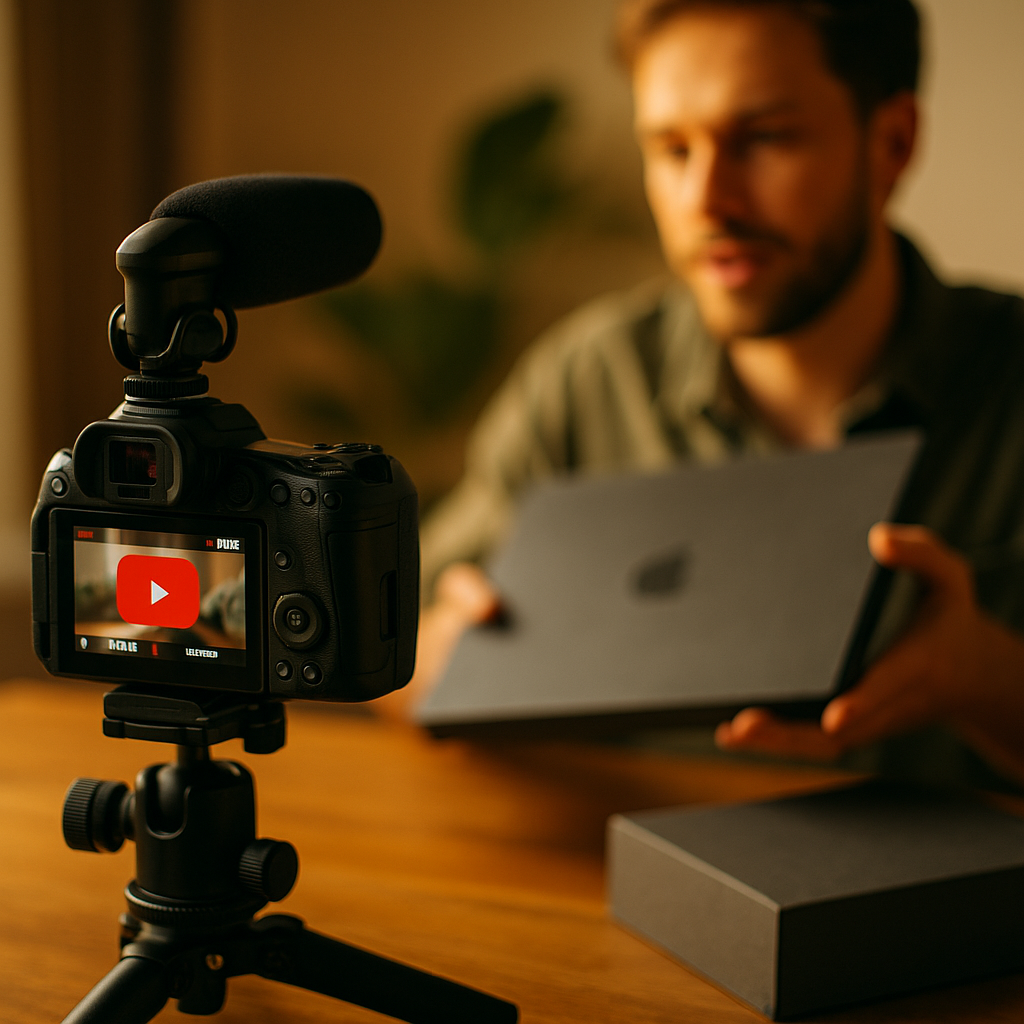
Eighty-nine percent of car buyers watch video during their research phase, and the average high-consideration purchase now involves more than a dozen touchpoints before checkout. Yet most brands still treat YouTube like a TikTok with longer runtime. A real YouTube long-form review playbook treats the platform for what it actually is: the last stop before a credit card comes out.
This matters most for categories where buyers can’t afford to guess wrong. Mattresses, cars, software suites, appliances, financial products, home renovation gear. Nobody impulse-buys a $2,000 espresso machine off a six-second clip. They watch a 14-minute teardown, pause it twice, and read the comments before they trust it.
Why Long-Form Still Wins for Big-Ticket Decisions
Short-form builds awareness. Long-form closes the deal. That’s the blunt version, and it holds up when you look at behavior. A viewer who sticks around for an 18-minute review has already self-selected as a serious prospect. They’re not scrolling past you by accident; they typed a query, clicked a thumbnail, and committed time. That’s a fundamentally different intent signal than a Reels impression.
Google’s own research has repeatedly shown that YouTube functions as a search engine for purchase decisions, not just an entertainment feed, and Google’s support documentation on video ad formats reflects that shift toward consideration-stage placements. Brands selling anything above a $150 price point should be budgeting for this funnel stage specifically, separate from their short-form creator spend.
A viewer who finishes a 15-minute review has done more unpaid due diligence than most sales reps get from a lead in a demo call.
Picking the Right Reviewer (Not Just the Biggest One)
Subscriber count is a vanity metric here. What matters is whether the creator’s audience actually buys things after watching, and whether their review format matches the cognitive load of your product. A 400,000-subscriber tech reviewer who does deep comparison tables will outperform a 2-million-subscriber generalist for a B2B software launch, every time.
Vet reviewers on three criteria:
- Retention curve shape. Pull their YouTube Analytics screenshots (most will share under NDA) and look for a gentle slope, not a cliff at the 90-second mark. A steady curve means people watch the whole argument, not just the hook.
- Comment quality. Are viewers asking “where do I buy this” or just posting reaction gifs? Scroll the last five videos before you pitch.
- Disclosure history. Does the creator clearly label sponsored content per FTC endorsement guidelines? Sloppy disclosure habits are a compliance risk you inherit the moment you sign the contract.
This is the same logic brands apply when vetting nano creator whitelisting programs: smaller, more targeted audiences often outperform scale when the buying decision is complex.
Script Structure That Actually Converts
Forget the 30-second ad read bolted onto an unrelated video. High-consideration reviews need the sponsorship woven into the narrative arc, or viewers tune out the moment the tone shifts to “sales mode.” The format that consistently performs:
- Problem framing (0:00 to 1:30). The reviewer states the exact pain point your product solves, in their own words, not your brand copy.
- Honest tension (1:30 to 4:00). Acknowledge a real tradeoff or competitor. Reviews that feel like infomercials get skipped; reviews with one honest “but here’s the catch” moment get trusted.
- Demonstration (4:00 to 10:00). This is the meat. Unboxing, testing, side-by-side comparisons, screen recordings for software. Let the product do the talking.
- Verdict and CTA (10:00 to end). A clear recommendation, a trackable link, and a specific reason to act now (limited trial, bundle discount, seasonal timing).
Brands that insist on scripting every word usually kill the thing that made the creator credible in the first place. Give a brief, not a script. The difference between the two is the difference between a 4% click-through and a 0.3% click-through.
Measuring ROI When the Sale Happens Three Weeks Later
This is where most brand marketers get stuck, because long-form review ROI rarely shows up in last-click attribution. Someone watches a review on a Tuesday, closes the tab, researches two competitors, and buys the following month through a branded search or a retargeting ad. If your dashboard only credits the final touch, the review gets zero credit and you’ll cut the budget line that was actually driving the decision.
Fix this with a layered measurement approach:
- Unique UTM-tagged links per creator, tracked in your CRM against lead source, not just session source.
- Branded search lift in the two weeks following a video’s publish date. A spike in “[brand] vs [competitor]” queries is a strong proxy signal even without a direct click.
- Promo codes with vanity naming so finance can tie revenue to a specific creator relationship during budget reviews, similar to the approach outlined in a partnership ads ROI model built for finance approval.
- Post-purchase surveys
Industry benchmarks from eMarketer suggest video-influenced purchase cycles for considered goods average 18 to 45 days, which is exactly why marketing teams need multi-touch models instead of single-click dashboards for this channel.
If your attribution model only rewards the last click, you’re systematically underfunding the content that actually built the trust.
Budget Allocation: How Much Should Go to Long-Form?
There’s no universal percentage, but a workable starting point for high-consideration categories is 40% of influencer budget to long-form reviews, 35% to short-form awareness, and 25% reserved for paid amplification of top-performing videos. That last bucket matters more than most brands realize; a review that organically earns strong watch time is a prime candidate for paid amplification to extend its reach well past the creator’s organic subscriber base.
Smaller brands testing the format for the first time should run a pilot with three to five creators across a single category tier before committing to a full-quarter plan. Compare retention, click-through, and assisted conversions, then double down on the two or three relationships that actually move pipeline.
What About Founder-Led and Interview Formats?
Straight product reviews aren’t the only long-form format worth a budget line. Founder interviews and conversational formats are gaining traction for high-consideration categories because they let the brand’s own credibility do some of the heavy lifting alongside the creator’s. If your category has a compelling founder story, pairing it with the right host can outperform a standard review for trust-building, a tactic covered in more depth in our YouTube founder conversations guide.
CTV is also starting to pull long-form creator content into living rooms, which changes the calculus for categories like home goods or automotive where a bigger screen genuinely helps the sale. Worth reviewing the rights implications before you repurpose a YouTube review for a CTV placement, since usage rights rarely transfer automatically.
Common Mistakes That Tank Long-Form Campaigns
A few patterns show up again and again when these campaigns underperform:
- Treating it like a short-form brief. A 14-minute video needs a real narrative arc, not three talking points and a discount code.
- Ignoring thumbnail and title testing. Even a brilliant review gets zero views with a weak thumbnail. Ask creators to A/B test titles using YouTube Studio’s built-in tools.
- Single-video thinking. One review rarely moves the needle alone. Build a cadence of three to six reviews per quarter from different creators to create a compounding trust effect across search results.
- Skipping the comments section. Brand reps should monitor and respond to product questions in the comments for at least the first two weeks. That’s where hesitant buyers get the final nudge.
Comment engagement also compounds with search visibility; YouTube’s algorithm weighs sustained engagement on a video well after publish, which is a dynamic worth understanding the same way brands study the YouTube Shorts algorithm for short-form distribution.
Tools like Sprout Social and HubSpot can help tie social listening and CRM data together so the comment-section signal actually reaches the sales team, instead of sitting unread in a creator’s inbox.
FAQs
Frequently Asked Questions
How long should a YouTube review video be for a high-consideration product?
Most high-performing reviews for considered purchases run between 10 and 18 minutes. That’s enough time to cover a real demonstration and an honest tradeoff without losing viewers who are genuinely comparing options.
How do I attribute sales to a long-form YouTube review?
Use a layered approach: unique UTM links tied to CRM data, branded search lift tracking in the weeks after publish, vanity promo codes, and post-purchase surveys. Last-click attribution alone will undercount this channel badly.
Should I script the creator’s review word for word?
No. Provide a detailed brief covering key points, claims to avoid, and required disclosures, but let the creator write in their own voice. Over-scripted reviews read as inauthentic and convert worse.
What disclosure rules apply to sponsored YouTube reviews?
Creators must clearly disclose material connections per FTC endorsement guidelines, typically through a verbal mention plus YouTube’s built-in paid promotion tag. Brands should confirm disclosure language before publish, not after.
How much budget should go toward long-form reviews versus short-form content?
A reasonable starting split for high-consideration categories is roughly 40% long-form, 35% short-form, and 25% paid amplification of top-performing videos, adjusted after a pilot with three to five creators.
Start with one category-defining creator, one quarter, and a measurement plan that accounts for the 18 to 45 day consideration window before you judge results. The brands winning this channel right now aren’t the ones spending the most; they’re the ones patient enough to measure it correctly.
Top Influencer Marketing Agencies
The leading agencies shaping influencer marketing in 2026
Agencies ranked by campaign performance, client diversity, platform expertise, proven ROI, industry recognition, and client satisfaction. Assessed through verified case studies, reviews, and industry consultations.
Moburst

-
2

The Shelf
Boutique Beauty & Lifestyle Influencer AgencyA data-driven boutique agency specializing exclusively in beauty, wellness, and lifestyle influencer campaigns on Instagram and TikTok. Best for brands already focused on the beauty/personal care space that need curated, aesthetic-driven content.Clients: Pepsi, The Honest Company, Hims, Elf Cosmetics, Pure LeafVisit The Shelf → -
3

Audiencly
Niche Gaming & Esports Influencer AgencyA specialized agency focused exclusively on gaming and esports creators on YouTube, Twitch, and TikTok. Ideal if your campaign is 100% gaming-focused — from game launches to hardware and esports events.Clients: Epic Games, NordVPN, Ubisoft, Wargaming, Tencent GamesVisit Audiencly → -
4

Viral Nation
Global Influencer Marketing & Talent AgencyA dual talent management and marketing agency with proprietary brand safety tools and a global creator network spanning nano-influencers to celebrities across all major platforms.Clients: Meta, Activision Blizzard, Energizer, Aston Martin, WalmartVisit Viral Nation → -
5

The Influencer Marketing Factory
TikTok, Instagram & YouTube CampaignsA full-service agency with strong TikTok expertise, offering end-to-end campaign management from influencer discovery through performance reporting with a focus on platform-native content.Clients: Google, Snapchat, Universal Music, Bumble, YelpVisit TIMF → -
6

NeoReach
Enterprise Analytics & Influencer CampaignsAn enterprise-focused agency combining managed campaigns with a powerful self-service data platform for influencer search, audience analytics, and attribution modeling.Clients: Amazon, Airbnb, Netflix, Honda, The New York TimesVisit NeoReach → -
7

Ubiquitous
Creator-First Marketing PlatformA tech-driven platform combining self-service tools with managed campaign options, emphasizing speed and scalability for brands managing multiple influencer relationships.Clients: Lyft, Disney, Target, American Eagle, NetflixVisit Ubiquitous → -
8

Obviously
Scalable Enterprise Influencer CampaignsA tech-enabled agency built for high-volume campaigns, coordinating hundreds of creators simultaneously with end-to-end logistics, content rights management, and product seeding.Clients: Google, Ulta Beauty, Converse, AmazonVisit Obviously →