


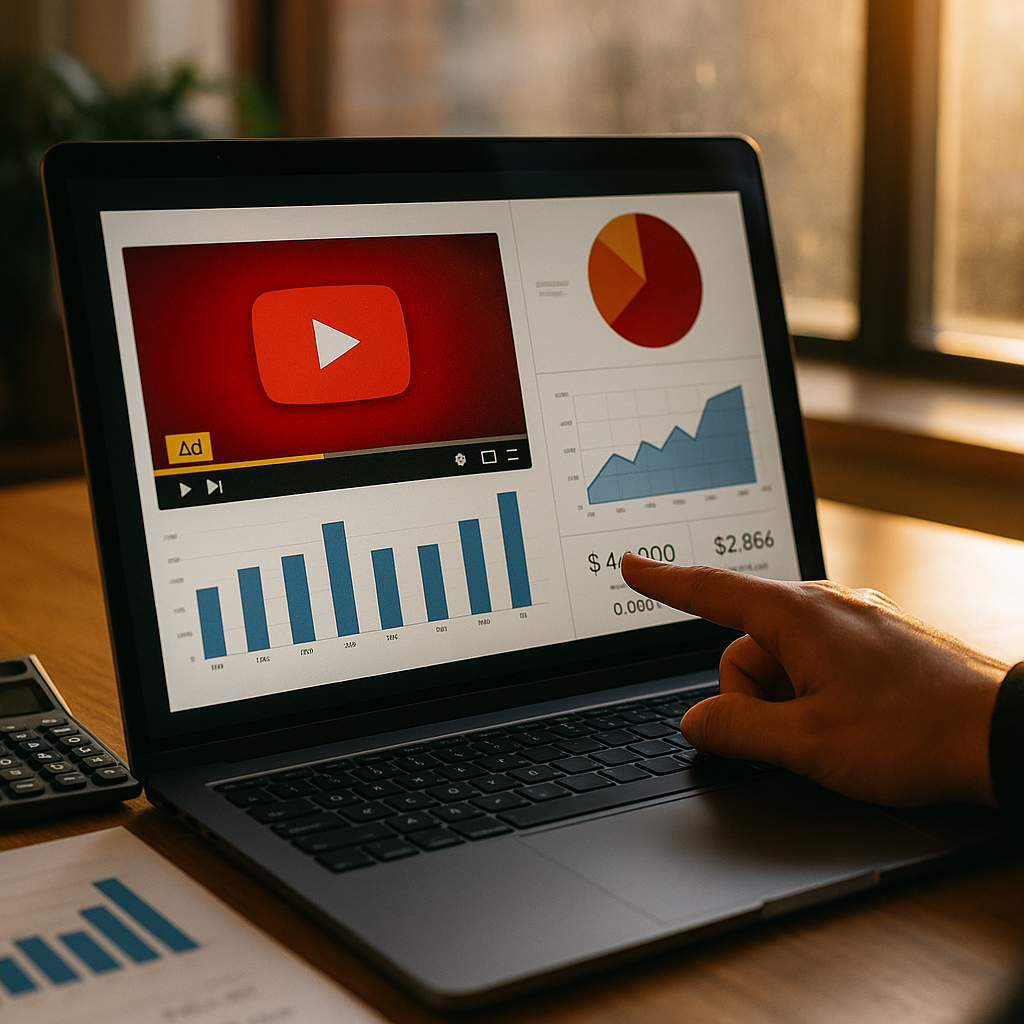
Here’s an uncomfortable number for anyone still treating YouTube as a “post and hope” channel: organic reach on branded creator videos has dropped so far that most sponsored uploads get the majority of their views within the first 72 hours, then flatline. YouTube paid amplification exists precisely to fix that cliff, pushing high-performing creator content back into feeds and search results long after the organic algorithm has moved on. The question isn’t whether to boost. It’s whether you’re measuring the boost correctly.
Why Organic Reach Alone Can’t Prove ROI Anymore
Creators build audiences. Brands rent attention. Those are two different jobs, and conflating them is how marketing teams end up defending a influencer line item with vanity metrics instead of revenue signals.
A branded integration might rack up 200,000 organic views from a creator’s subscriber base, but subscriber bases skew toward people who already know and like the product. That’s retention, not acquisition. Paid amplification lets you extend the same asset into cold audiences, in-market shoppers, and competitor-conquesting segments where the real growth sits. Google’s own guidance on Google Ads campaign types confirms that in-stream and in-feed formats behave very differently depending on targeting intent, which is exactly why a blanket “boost everything” strategy wastes budget.
Organic views tell you a creator has an audience. Paid amplification tells you whether that creator’s content can convert a stranger. Only one of those numbers belongs in a media plan.
The Mechanics: TrueView, VAC, and What “Boosting” Actually Means
When brand teams say “boost the creator video,” they usually mean one of three things, and the distinction matters for budgeting.
- VideoAd campaigns (skippable in-stream): The creator’s existing upload gets served as a pre-roll or mid-roll ad against YouTube’s inventory, targeted by audience rather than placement.
- Video action campaigns (VAC): Same asset, optimized toward a conversion event (purchase, lead, add-to-cart) using Smart Bidding, pulling in Google’s demand-side signals across YouTube, Discover, and Gmail.
- Brand lift and Shorts amplification: Shorter cutdowns of long-form creator content pushed into the Shorts feed, typically bid on CPM or CPV, built for reach and recall rather than direct response.
Most mature programs run all three in sequence: VAC for the bottom of funnel, standard in-stream for mid-funnel consideration, and Shorts amplification for top-of-funnel awareness. The creator’s organic post becomes the creative asset, not the campaign itself.
Whitelisting Still Matters, Even on YouTube
Unlike Meta or TikTok, YouTube doesn’t have a formalized “partnership ads” toggle in the same way. But creator authorization still governs whether you can run their video through Google Ads under your own brand account, use their channel handle in targeting, or access first-party audience data tied to the video. Get this in the contract before the content goes live, not after it performs well and you’re scrambling for rights. Brands that have worked through similar authorization friction on other platforms will recognize the pattern from our Spark Ads authorization breakdown, where missing permissions quietly inflated CPAs for weeks before anyone noticed.
Building a View-Through ROI Model That Finance Will Actually Believe
View-through conversions get a bad reputation, and honestly, some of that reputation is earned. Counting every purchase that happens within a 30-day window after someone merely saw an ad (without clicking) can overstate impact if you’re not careful. But dismissed entirely, you lose the ability to credit upper-funnel creator content for its real job: building familiarity that shortens the path to purchase later.
The fix is a layered attribution approach, not a single metric:
- Set a realistic view-through window. Ten days is more defensible than thirty for most consideration cycles. Thirty days inflates credit for unrelated purchase behavior.
- Run incrementality tests. Use geo holdouts or PSA-style control groups to isolate what the amplified video actually added versus what would have happened anyway.
- Pair with brand lift studies. YouTube’s native brand lift surveys measure recall and favorability shifts, giving you a qualitative backstop for the quantitative view-through number.
- Cross-reference with search lift. A spike in branded search volume during an amplification flight is one of the cleanest signals that paid boosting is doing its job.
Marketing teams reporting into finance should present view-through ROI as a range with a confidence interval, not a single clean number. “This amplification likely drove between 1,200 and 1,800 incremental conversions at a blended CPA of roughly $38 to $45” is a far more credible pitch than a suspiciously precise single figure.
Budget Allocation: How Much Should You Actually Spend to Amplify?
A common rule of thumb among performance marketers is to earmark 20% to 40% of the original creator fee for paid amplification, scaling up if early signals (watch time, click-through rate on end screens, comment sentiment) are strong. Spending heavily to amplify a mediocre video is the fastest way to burn budget with nothing to show for it.
Before committing spend, run a quick qualification check on the asset itself:
- Did the video hit above-average view duration organically in its first 48 hours?
- Does the hook land in the first five seconds, or does it ramp up slowly (a death sentence for skippable in-stream placements)?
- Is there a clear, singular call to action, or does the creator bury the brand mention in minute six?
If a video fails two of these three checks, amplification spend is better redirected toward a different asset, even a less “viral” one, because the paid environment punishes slow starts mercilessly. eMarketer’s research on video advertising benchmarks consistently shows skip rates spiking in the first five seconds, which is the single biggest lever brands underestimate when selecting which creator asset to boost.
Common Mistakes That Quietly Tank Amplification Performance
A few patterns show up again and again in post-campaign audits:
- Amplifying before the organic curve peaks. Boosting too early means you’re paying to compete with the organic algorithm instead of extending its tail.
- Ignoring frequency caps. Creator content, especially longer integrations, fatigues faster than traditional ad creative. Cap frequency at three to five per user per week.
- Using the same targeting for awareness and conversion flights. Broad affinity audiences work for reach; in-market and custom intent audiences work for conversion. Mixing them muddies both.
- Skipping the brand safety review. Paid placement means your brand now appears in Google Ads reporting alongside the creator’s full catalog of content, not just the sponsored video. Review the channel’s recent uploads before committing spend, the same diligence teams apply when vetting affiliate programs like the one covered in our Shein affiliate vetting guide.
Where This Fits in the Broader Creator Media Mix
YouTube amplification rarely works in isolation. The strongest programs treat the boosted video as the anchor asset in a cross-platform sequence: a cutdown runs as a Shorts ad, a still frame becomes a display remarketing creative, and the full video gets referenced in community tab posts to sustain organic engagement alongside the paid push. Brands running live shopping alongside long-form creator content during peak retail windows should also look at how amplification budgets interact with scheduled streams, a topic we cover in depth in our Q4 live shopping guide.
It’s also worth benchmarking YouTube’s paid amplification economics against adjacent formats. Brands weighing creator video spend against partnership ads versus branded content on other platforms often find that YouTube’s CPM runs higher but its view-through attribution window is more generous, which changes the math depending on whether the campaign goal is immediate conversion or sustained consideration.
For teams building out always-on infrastructure rather than one-off boosts, platforms like Sprout Social and HubSpot’s reporting suites increasingly integrate YouTube Ads data directly, reducing the manual export work that used to make view-through reporting such a slog.
Next Step
Don’t boost every creator video that performs well organically. Pick the single asset with the strongest hook and clearest CTA, run it through a VAC campaign with a ten-day view-through window and a geo holdout, and use that one clean test to build the budget case for scaling amplification across the rest of your creator roster.
Frequently Asked Questions
What is YouTube paid amplification?
It’s the practice of using Google Ads to put paid media behind an existing creator video, whether through in-stream ads, video action campaigns, or Shorts placements, in order to extend reach and conversions beyond what organic distribution delivers.
How is view-through ROI different from click-through ROI?
View-through ROI credits conversions that happen after someone saw the ad but didn’t click it, within a defined attribution window. Click-through ROI only credits conversions from users who actively clicked. Both matter, but view-through requires incrementality testing to avoid overstating impact.
Do I need the creator’s permission to run paid ads on their video?
Yes. You need explicit authorization in the influencer contract to run their content through your Google Ads account, access channel-level targeting, or use their handle in campaign naming and reporting.
How much should brands budget for amplifying a creator video?
A common starting range is 20% to 40% of the original creator fee, scaled up if early organic signals like watch time and CTR on end screens are strong.
What’s the ideal view-through attribution window for YouTube amplification?
Ten days is generally more defensible than the default thirty-day window, since shorter windows reduce the risk of crediting unrelated purchase behavior to the ad exposure.
Top Influencer Marketing Agencies
The leading agencies shaping influencer marketing in 2026
Agencies ranked by campaign performance, client diversity, platform expertise, proven ROI, industry recognition, and client satisfaction. Assessed through verified case studies, reviews, and industry consultations.
Moburst

-
2

The Shelf
Boutique Beauty & Lifestyle Influencer AgencyA data-driven boutique agency specializing exclusively in beauty, wellness, and lifestyle influencer campaigns on Instagram and TikTok. Best for brands already focused on the beauty/personal care space that need curated, aesthetic-driven content.Clients: Pepsi, The Honest Company, Hims, Elf Cosmetics, Pure LeafVisit The Shelf → -
3

Audiencly
Niche Gaming & Esports Influencer AgencyA specialized agency focused exclusively on gaming and esports creators on YouTube, Twitch, and TikTok. Ideal if your campaign is 100% gaming-focused — from game launches to hardware and esports events.Clients: Epic Games, NordVPN, Ubisoft, Wargaming, Tencent GamesVisit Audiencly → -
4

Viral Nation
Global Influencer Marketing & Talent AgencyA dual talent management and marketing agency with proprietary brand safety tools and a global creator network spanning nano-influencers to celebrities across all major platforms.Clients: Meta, Activision Blizzard, Energizer, Aston Martin, WalmartVisit Viral Nation → -
5

The Influencer Marketing Factory
TikTok, Instagram & YouTube CampaignsA full-service agency with strong TikTok expertise, offering end-to-end campaign management from influencer discovery through performance reporting with a focus on platform-native content.Clients: Google, Snapchat, Universal Music, Bumble, YelpVisit TIMF → -
6

NeoReach
Enterprise Analytics & Influencer CampaignsAn enterprise-focused agency combining managed campaigns with a powerful self-service data platform for influencer search, audience analytics, and attribution modeling.Clients: Amazon, Airbnb, Netflix, Honda, The New York TimesVisit NeoReach → -
7

Ubiquitous
Creator-First Marketing PlatformA tech-driven platform combining self-service tools with managed campaign options, emphasizing speed and scalability for brands managing multiple influencer relationships.Clients: Lyft, Disney, Target, American Eagle, NetflixVisit Ubiquitous → -
8

Obviously
Scalable Enterprise Influencer CampaignsA tech-enabled agency built for high-volume campaigns, coordinating hundreds of creators simultaneously with end-to-end logistics, content rights management, and product seeding.Clients: Google, Ulta Beauty, Converse, AmazonVisit Obviously →