


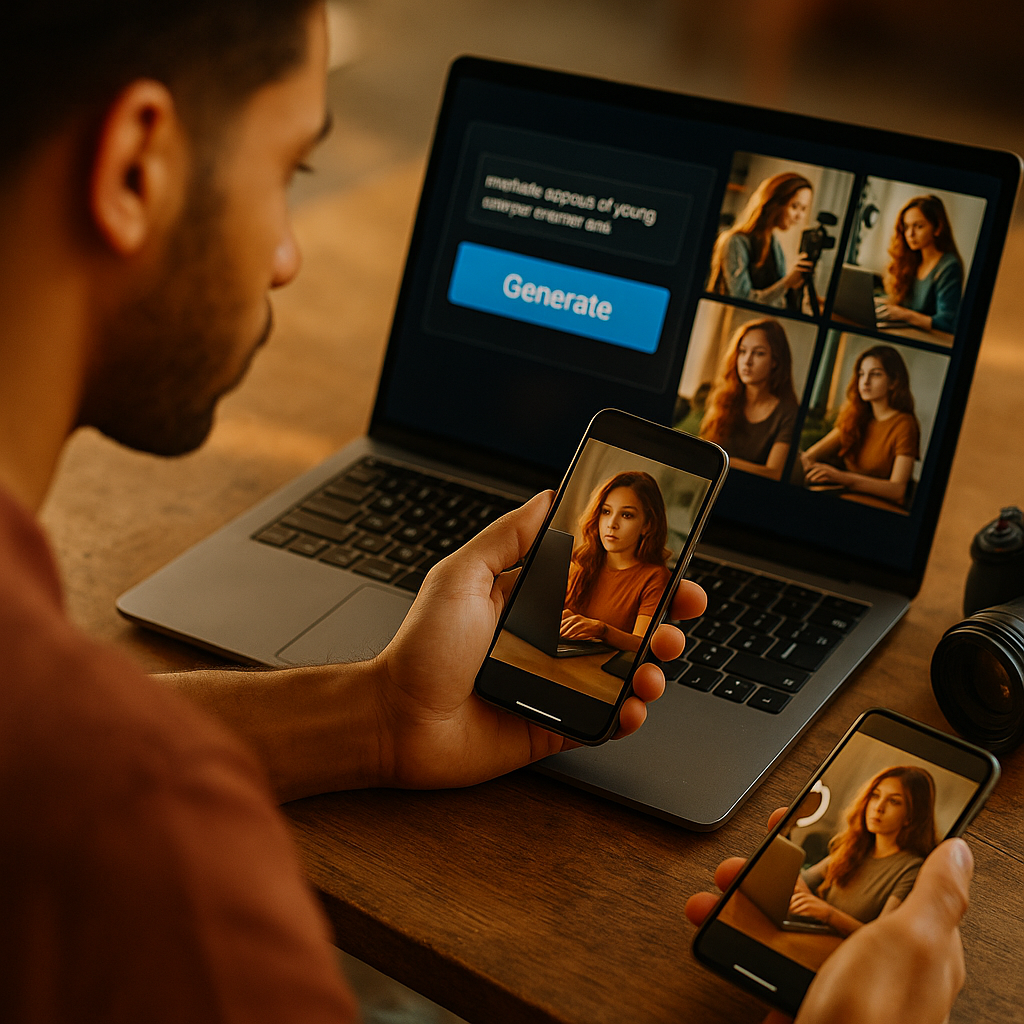
Seventy-three percent of new influencer marketing budget growth is now flowing to creators with under 20,000 followers. That’s not a rounding error — it’s a structural shift, and the micro-creator spend surge behind it is being engineered by AI discovery tools that can now surface, vet, and rank thousands of small-scale creators in the time it used to take a strategist to build a shortlist of twenty. The old bottleneck — human sourcing — is gone. What replaces it changes how brands budget, negotiate, and manage risk.
Why the Math Suddenly Works
Micro-creators were always cheaper per post. That part isn’t new. What’s new is that brands can finally find the right ones without burning three weeks of an agency’s time. AI discovery platforms — think Grin, Aspire, Modash, Upfluence’s newer semantic search layers — now parse engagement quality, audience overlap, brand-fit language, and even sentiment in comments across millions of profiles simultaneously. A search that once took a coordinator days now returns a ranked shortlist in minutes.
That efficiency gain is the real story. Sub-20K creators generate famously higher engagement rates — often 5-8% compared to under 1% for mega-influencers, according to data widely cited by Sprout Social — but brands avoided them for years because sourcing at scale was operationally brutal. You couldn’t vet 500 creators manually and still hit a campaign deadline. Now you can vet 5,000 and still ship on time.
The bottleneck in micro-creator programs was never talent supply. It was discovery speed. AI just removed the constraint.
This mirrors a trend we’ve tracked closely: micro-creators now represent the majority of active brand partnerships on most major platforms, not the long tail they used to be treated as.
What “Discovery at Scale” Actually Means
Let’s be precise about the mechanics, because “AI discovery” gets thrown around loosely in pitch decks. What’s actually happening under the hood:
- Semantic audience matching: Tools now cross-reference a creator’s audience demographics against a brand’s customer data (when permissioned), not just follower counts against a target age bracket.
- Content-level brand-fit scoring: Instead of ranking creators by reach, platforms score them on tone, values alignment, and historical brand-safety signals extracted from past posts.
- Predictive engagement modeling: Machine learning models estimate likely engagement on a hypothetical sponsored post based on the creator’s last 50-100 organic posts.
- Fraud and bot filtering: Sub-20K accounts are disproportionately targeted by engagement farms, so discovery tools now run automated authenticity checks before a creator ever reaches a shortlist.
This is the same shift we covered in brand-fit scoring replacing follower count as the primary discovery filter — the metric brands optimize for has fundamentally changed, and the tooling had to catch up before the budget could follow.
The Volume Problem Nobody Talks About
Here’s the uncomfortable part. Finding 200 great micro-creators is easy now. Managing 200 individual contracts, briefs, payment schedules, and performance reports? That’s still hard, and it’s where a lot of brands get the surge wrong. AI discovery solved sourcing. It didn’t automatically solve coordination.
Programs that scale micro-creator spend without also scaling operational infrastructure tend to collapse under their own logistics within two campaign cycles. We’ve seen this pattern repeatedly in client post-mortems: great creator selection, terrible execution, because nobody budgeted for the coordination overhead of running 15x the number of relationships a mega-influencer deal would require.
That’s why the discovery layer and the program coordination layer need to be treated as one connected system, not two separate purchases. If your discovery tool surfaces 300 qualified creators and your workflow can only handle 40, you’ve just built an expensive bottleneck with extra steps.
Rate Compression Is Coming, Whether You’re Ready or Not
More supply visibility means more price transparency. That’s basic economics, and it’s already playing out. Brands running AI discovery tools can now see, in aggregate, what hundreds of comparable creators charge for similar deliverables. That data used to be locked in individual DMs and agency relationships. Now it’s benchmarked.
The result is a negotiation shift that favors buyers. We covered this dynamic in depth in creator talent pool growth and rate leverage, and the pattern holds here too: when discovery tools reveal how saturated the sub-20K tier has become, brands gain real negotiating power. Creators who don’t understand this yet are still pricing based on scarcity that no longer exists.
Rate benchmarking used to be an agency’s competitive edge. Now it’s a filter setting inside a discovery platform.
That doesn’t mean micro-creator rates are collapsing — good creators with strong brand-fit scores still command premiums. But the middle of the market, creators with decent reach and average engagement, are seeing real downward pressure. This tracks with broader signals from the micro-creator economy’s rate reset, where sheer volume of qualified talent is doing what negotiators used to do manually.
Where the Risk Actually Sits
AI discovery tools are good at finding creators. They’re not automatically good at protecting your brand once those creators are activated. A few risk areas brands consistently underweight:
- Disclosure compliance at volume. One creator missing an #ad tag is a minor issue. Two hundred creators with inconsistent disclosure practices is a pattern regulators notice. The FTC has been explicit that scale doesn’t reduce individual accountability — every creator in a program still needs to meet disclosure standards, and brands share liability.
- Authenticity drift. Fraud filtering catches bots at the point of discovery, but engagement patterns can shift after a creator is onboarded. Programs need ongoing monitoring, not a one-time vetting gate.
- Brand-safety inconsistency. A creator who was brand-safe six months ago might not be today. AI tools that don’t refresh scoring regularly give brands a false sense of security.
None of this is a reason to avoid the micro-creator surge. It’s a reason to pair discovery tools with ongoing oversight, not treat the initial AI-generated shortlist as a set-and-forget decision. This is the same operational maturity gap we flagged in the AI maturity curve small agencies keep getting stuck on — adopting the tool is the easy part; building governance around it is where programs actually differentiate.
Budget Allocation Is the Real Battleground
Finance teams are asking harder questions about influencer spend than they were two years ago, and rightly so. If you’re shifting budget from three mega-influencer deals to 150 micro-creator partnerships, your CFO wants to know why that’s a better bet, not just a trendier one.
The answer lives in the data: better engagement rates, lower cost per engagement, and more authentic audience trust. But you need reporting infrastructure that can actually prove it. This is where CFO-friendly performance metrics matter more than they used to — a scattered spreadsheet tracking 150 creator relationships won’t survive a budget review.
Rebuilding your tier allocation model isn’t optional at this point, either. Brands still running 2022-era budget splits (heavy mega/macro weighting, token micro-creator line item) are leaving efficiency on the table. We laid out a practical framework for this shift in rebuilding creator tier allocation for micro spend, and it’s worth revisiting even if you did this exercise a year ago — the discovery tooling has changed enough to shift the math again.
For sector-specific proof, look at travel. Skift’s travel industry data showed micro-creators consistently outperforming mega-influencers on conversion metrics, not just engagement vanity stats. That’s the kind of evidence finance teams actually respond to. Industry-wide spend tracking from eMarketer and benchmark data from Statista back the broader trend at the macro level too.
What This Means for Agencies
Agencies that built their pitch decks around mega-influencer relationship access are losing ground to shops that can demonstrate AI-native discovery capability instead. It’s a genuine repositioning, not just a talking point. Clients don’t want to hear “we know some big names.” They want to hear “we can find and vet 300 qualified micro-creators in your category by Friday.”
That capability gap is showing up directly in new business. We’ve documented how AI-native small agencies are winning more pitches against larger, legacy-process competitors precisely because discovery speed has become a differentiator clients actually evaluate during procurement.
Take the Next Step
If your discovery tooling can already surface hundreds of qualified sub-20K creators but your team can only realistically manage forty active relationships, fix the operational bottleneck before you increase spend — otherwise you’re just buying more names for a list nobody can execute against.
Frequently Asked Questions
What counts as a micro-creator in current brand budgeting?
Most brands and platforms define micro-creators as accounts with 1,000 to 20,000 followers, though some frameworks extend the range up to 50,000 and separate out “nano” creators under 10,000 as a distinct tier for even more localized targeting.
How do AI discovery tools actually verify authenticity at scale?
They analyze engagement velocity, comment sentiment quality, audience growth patterns, and follower authenticity signals (like sudden spikes or geographic mismatches) across a creator’s historical post data, flagging accounts that show bot-driven or purchased engagement before they reach a brand’s shortlist.
Does shifting budget to micro-creators actually lower cost per engagement?
In most documented cases, yes. Micro-creators typically charge significantly less per post than macro or mega-influencers while delivering engagement rates several times higher, which often produces a lower blended cost per engagement even after accounting for the operational overhead of managing more relationships.
What’s the biggest operational risk in scaling micro-creator programs?
Coordination overhead, not discovery. Brands that can source hundreds of qualified creators often lack the workflow infrastructure — contracts, briefs, payment, compliance tracking — to manage that volume without errors or missed disclosures.
Can AI discovery tools replace agency relationships entirely?
Not entirely. They replace manual sourcing and initial vetting, but strategic judgment, negotiation, campaign creative direction, and ongoing relationship management still require human expertise, especially as programs scale past a few dozen active creators.
Frequently Asked Questions
What counts as a micro-creator in current brand budgeting?
Most brands and platforms define micro-creators as accounts with 1,000 to 20,000 followers, though some frameworks extend the range up to 50,000 and separate out “nano” creators under 10,000 as a distinct tier for even more localized targeting.
How do AI discovery tools actually verify authenticity at scale?
They analyze engagement velocity, comment sentiment quality, audience growth patterns, and follower authenticity signals (like sudden spikes or geographic mismatches) across a creator’s historical post data, flagging accounts that show bot-driven or purchased engagement before they reach a brand’s shortlist.
Does shifting budget to micro-creators actually lower cost per engagement?
In most documented cases, yes. Micro-creators typically charge significantly less per post than macro or mega-influencers while delivering engagement rates several times higher, which often produces a lower blended cost per engagement even after accounting for the operational overhead of managing more relationships.
What’s the biggest operational risk in scaling micro-creator programs?
Coordination overhead, not discovery. Brands that can source hundreds of qualified creators often lack the workflow infrastructure — contracts, briefs, payment, compliance tracking — to manage that volume without errors or missed disclosures.
Can AI discovery tools replace agency relationships entirely?
Not entirely. They replace manual sourcing and initial vetting, but strategic judgment, negotiation, campaign creative direction, and ongoing relationship management still require human expertise, especially as programs scale past a few dozen active creators.
Top Influencer Marketing Agencies
The leading agencies shaping influencer marketing in 2026
Agencies ranked by campaign performance, client diversity, platform expertise, proven ROI, industry recognition, and client satisfaction. Assessed through verified case studies, reviews, and industry consultations.
Moburst

-
2

The Shelf
Boutique Beauty & Lifestyle Influencer AgencyA data-driven boutique agency specializing exclusively in beauty, wellness, and lifestyle influencer campaigns on Instagram and TikTok. Best for brands already focused on the beauty/personal care space that need curated, aesthetic-driven content.Clients: Pepsi, The Honest Company, Hims, Elf Cosmetics, Pure LeafVisit The Shelf → -
3

Audiencly
Niche Gaming & Esports Influencer AgencyA specialized agency focused exclusively on gaming and esports creators on YouTube, Twitch, and TikTok. Ideal if your campaign is 100% gaming-focused — from game launches to hardware and esports events.Clients: Epic Games, NordVPN, Ubisoft, Wargaming, Tencent GamesVisit Audiencly → -
4

Viral Nation
Global Influencer Marketing & Talent AgencyA dual talent management and marketing agency with proprietary brand safety tools and a global creator network spanning nano-influencers to celebrities across all major platforms.Clients: Meta, Activision Blizzard, Energizer, Aston Martin, WalmartVisit Viral Nation → -
5

The Influencer Marketing Factory
TikTok, Instagram & YouTube CampaignsA full-service agency with strong TikTok expertise, offering end-to-end campaign management from influencer discovery through performance reporting with a focus on platform-native content.Clients: Google, Snapchat, Universal Music, Bumble, YelpVisit TIMF → -
6

NeoReach
Enterprise Analytics & Influencer CampaignsAn enterprise-focused agency combining managed campaigns with a powerful self-service data platform for influencer search, audience analytics, and attribution modeling.Clients: Amazon, Airbnb, Netflix, Honda, The New York TimesVisit NeoReach → -
7

Ubiquitous
Creator-First Marketing PlatformA tech-driven platform combining self-service tools with managed campaign options, emphasizing speed and scalability for brands managing multiple influencer relationships.Clients: Lyft, Disney, Target, American Eagle, NetflixVisit Ubiquitous → -
8

Obviously
Scalable Enterprise Influencer CampaignsA tech-enabled agency built for high-volume campaigns, coordinating hundreds of creators simultaneously with end-to-end logistics, content rights management, and product seeding.Clients: Google, Ulta Beauty, Converse, AmazonVisit Obviously →