


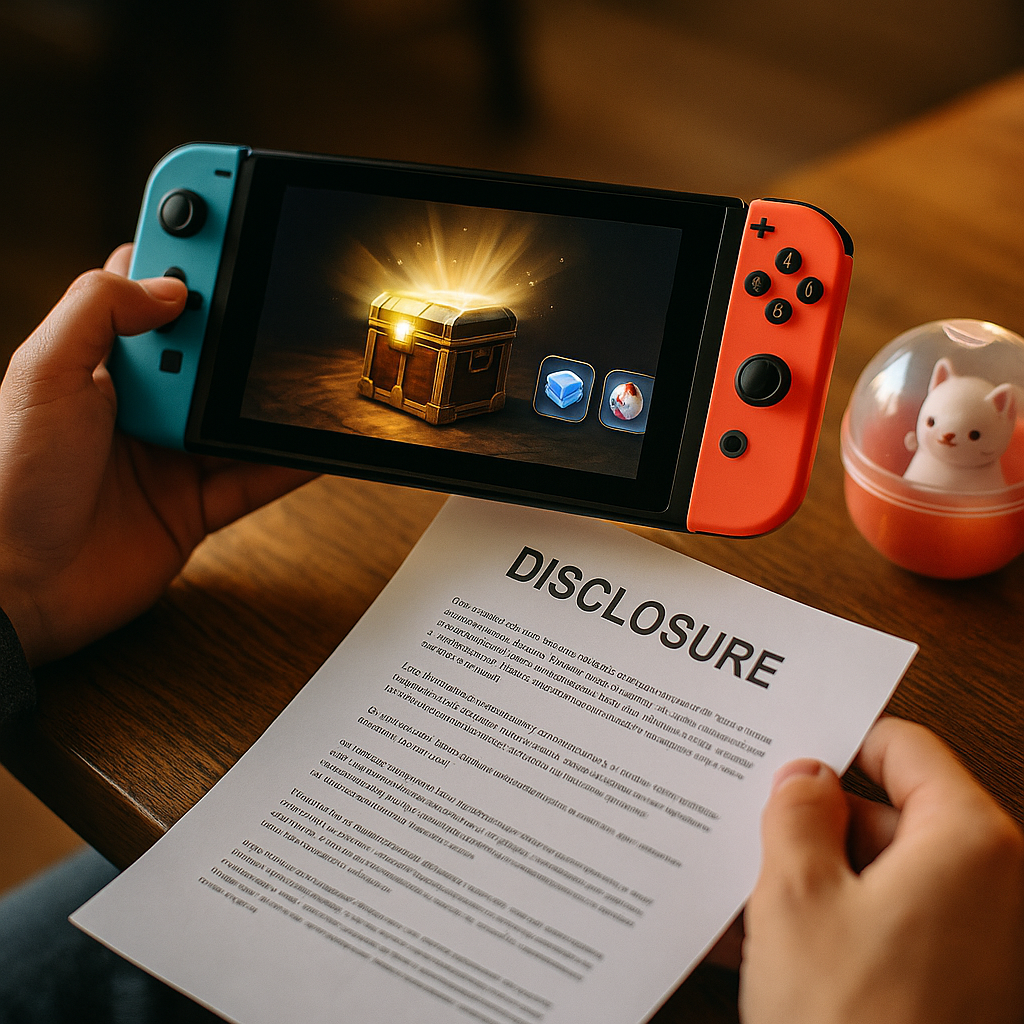
Mobile gaming ad spend tied to creator content is projected to keep climbing past $10 billion globally, and a huge chunk of it touches games built on loot boxes or gacha pulls. Here’s the problem: most brands treat these campaigns like any other gifted-app promotion. They’re not. Loot box and gacha mechanic disclosure now sits at the intersection of gambling regulation, FTC ad law, and platform policy — and getting it wrong can trigger regulatory action in multiple jurisdictions at once.
This isn’t theoretical. Regulators in Belgium and the Netherlands have already classified certain loot box mechanics as gambling. The UK’s Gambling Commission has flagged loot boxes repeatedly. And U.S. state attorneys general have shown growing appetite for consumer protection cases involving “predatory monetization” in games marketed to younger audiences. If your brand is paying creators to promote a mobile game with randomized reward mechanics, you’re standing in the blast radius of all three.
Why Loot Boxes Aren’t Just Another In-App Purchase
A loot box is any mechanic where a player pays real money (or in-game currency bought with real money) for a randomized outcome. Gacha mechanics — the term comes from Japanese capsule-toy vending machines — work the same way: spend currency, get a randomized character, skin, or item. The randomness is the whole point. That’s also exactly what makes regulators nervous.
The core distinction that matters for brands: is the randomized item purely cosmetic, or does it affect gameplay power? Belgium’s Gaming Commission drew a hard line years ago, ruling that paid randomized mechanics with in-game value constitute gambling under national law, regardless of whether winnings can be cashed out. Other EU member states have taken softer stances, creating a genuinely fragmented compliance map across the continent.
If your creator campaign runs across multiple EU markets simultaneously, a single piece of content can be compliant in Germany and legally exposed in Belgium — same video, same claims, different outcome.
Add gacha games specifically, and you get another wrinkle: many originate from Japanese or Chinese publishers with monetization models built for markets where disclosure norms differ sharply from FTC expectations. Brands running influencer campaigns for these titles in Western markets often inherit compliance gaps baked in at the product level.
The FTC Angle Brands Keep Missing
Regulators focus on gambling classification. But the FTC doesn’t care whether a loot box is legally “gambling” — it cares whether the creator content is deceptive or fails to disclose material connections. That’s a separate compliance track, and it’s the one most brand marketing teams actually control.
Three things the FTC expects from any paid creator promotion of a mobile game with randomized mechanics:
- Clear material connection disclosure. “Sponsored,” “#ad,” or equivalent, placed where viewers actually see it before they engage with the odds claims.
- Accurate odds representation. If a creator says “I got the rare character in three pulls,” but the actual drop rate is 0.5%, that’s a misleading endorsement problem, not just a gaming regulation problem.
- No implied guarantees. Creators showing off a lucky pull without context can mislead viewers into thinking outcomes are typical. The FTC’s endorsement guides require that depicted results reflect what consumers can generally expect, or that the brand clearly discloses otherwise.
This mirrors patterns we’ve already seen with creator discount codes and pricing risk — the underlying issue is always the gap between what a creator shows on camera and what a typical consumer actually experiences. Loot boxes just add a probability layer on top.
Where Publishers Already Disclose (and Where Brands Still Get Burned)
Apple and Google both require mobile game publishers to disclose loot box odds within the app itself, a policy that’s been in place for several years now via the App Store and Google Play developer guidelines. That’s a meaningful baseline. But it doesn’t extend to creator content promoting the app externally.
Here’s the operational gap: a publisher discloses drop rates inside the app listing. A creator, working from a brand brief, posts a TikTok showing an exciting pull without mentioning odds at all. Technically, the publisher is compliant. The creator content, sponsored by your brand, may not be — especially if it implies the outcome is common.
Brands need to stop assuming publisher-level compliance covers creator-level content. It doesn’t. Your influencer agreements need their own disclosure language specific to randomized mechanics, separate from whatever the app store listing says.
Building the Actual Compliance Checklist
Treat this like any other high-risk vertical — similar in spirit to how brands now handle health claims risk or synthetic performer disclosure. Structure, don’t improvise.
- Map the mechanic before you brief creators. Is it cosmetic-only or power-affecting? Does the publisher disclose drop rates in-app? Pull the actual odds documentation and put it in the creator brief, not just a summary.
- Require odds context in scripts. If a creator shows a rare pull, the caption or verbal disclosure should note it’s not typical, or state the actual probability. This isn’t optional flavor text — it’s the difference between an endorsement and a misleading demo.
- Layer material connection disclosure on top. Standard #ad rules still apply in full. Randomized mechanics don’t replace normal sponsorship disclosure requirements — they add to them.
- Check age-gating and audience targeting. Loot box mechanics draw extra scrutiny when campaigns reach younger audiences. Run the same rigor you’d apply to age verification for youth-adjacent campaigns, particularly for UK and EU markets where regulatory tolerance is lowest.
- Localize by jurisdiction, not by language. A campaign running in Belgium needs different mechanic disclosure than the identical campaign in the US or Japan. Don’t just translate the disclaimer — check the legal classification market by market.
- Document everything. Keep briefs, scripts, and approval chains. If a regulator or platform ever asks why a piece of content didn’t disclose odds, “the creator went off-script” is not a defense that holds up.
The Youth Audience Problem Nobody Wants to Own
Gacha and loot box games skew heavily toward younger demographics, whether or not publishers intend that. Mobile gaming creators on TikTok and YouTube Shorts often have audiences with a substantial teen and pre-teen segment, regardless of the platform’s stated minimum age.
This is where brand risk compounds fastest. The UK’s approach to loot boxes has been shaped in part by child protection concerns, and the EU’s DSA youth protection framework increasingly treats addictive design patterns — including randomized reward loops — as a compliance category of their own, not just a gambling question.
A campaign that’s perfectly legal from a gambling-classification standpoint can still trigger youth-protection scrutiny if the creator’s audience skews underage and the content normalizes repeated spending.
Practical fix: require creators to share audience demographic breakdowns before campaign approval, and build in a review step specifically for youth exposure risk. This is the same discipline outlined in youth-adjacent campaign audits for UK and Australia — it applies just as directly here, arguably more so given the spending mechanic involved.
Contract Language That Actually Protects the Brand
Standard influencer agreements rarely mention randomized mechanics at all. That’s a gap worth closing before your next mobile game campaign, not after a regulator asks questions.
Add clauses that require: disclosure of actual drop rates when showcasing rare outcomes, a prohibition on implying guaranteed results, mandatory material connection disclosure per platform, and an indemnification provision if the creator deviates from approved script language around odds. This tracks closely with how brands have started handling indemnification in other high-risk ad placements — the logic transfers cleanly.
Also worth building in: a pre-approval step for any clip showing a “big win,” since these are the pieces most likely to get flagged by regulators or consumer advocacy groups, and most likely to go viral precisely because they look like proof of easy reward.
What This Means for Budget and Vendor Selection
Not every mobile game is worth the compliance overhead. Titles with cosmetic-only randomization and transparent odds disclosure carry meaningfully less risk than power-affecting gacha mechanics with opaque drop rates. Build that into your vendor vetting process the same way you’d screen any publisher partner.
Ask publishers directly: do you disclose odds in-app per Google Play developer policy and Apple’s guidelines? Do you have documentation you can share with creators? Publishers who can’t answer quickly are signaling their own compliance maturity, or lack of it.
Industry data from eMarketer continues to show mobile gaming as one of the fastest-growing categories for influencer spend, which means regulatory attention will only intensify. Getting the disclosure framework right now, before enforcement catches up, is cheaper than retrofitting it after a complaint lands.
FAQs
Frequently Asked Questions
Are loot boxes legally classified as gambling?
It depends on the jurisdiction. Belgium treats certain paid randomized mechanics as gambling under national law. Other countries, including most U.S. states, have not made that classification, though several have proposed legislation. Brands running international campaigns need market-by-market legal review rather than a single global standard.
Do creators need to disclose loot box odds in sponsored content?
There’s no specific FTC rule naming loot box odds, but general endorsement guide principles apply: if a creator’s depicted outcome (like a rare pull) isn’t typical, that needs disclosure to avoid being misleading. Combine this with standard material connection disclosure requirements for any paid partnership.
Does app store odds disclosure cover creator marketing content?
No. Apple and Google require publishers to disclose loot box odds within the app itself, but that doesn’t extend to external creator content promoting the game. Brands need separate disclosure guidance built into creator briefs and contracts.
What’s the biggest compliance risk for gacha game campaigns specifically?
Youth audience exposure combined with implied-guarantee content. Gacha games often skew toward younger creator audiences, and showcasing rare pulls without context can imply spending leads to reliable rewards, which raises both consumer protection and youth-protection concerns simultaneously.
Should brands avoid loot box games in influencer campaigns altogether?
Not necessarily, but risk varies widely by title. Cosmetic-only mechanics with transparent, in-app odds disclosure carry far less exposure than power-affecting gacha systems with opaque drop rates. Vet the publisher’s own compliance posture before committing budget.
How does the EU’s approach to addictive design affect these campaigns?
The EU’s Digital Services Act increasingly scrutinizes addictive design patterns, including randomized reward loops, as a youth-protection issue separate from gambling classification. A campaign can be gambling-law compliant and still draw DSA-related scrutiny if it targets or reaches younger audiences with repeated-spend messaging.
Loot box and gacha disclosure isn’t a one-time legal check, it’s an ongoing operational discipline that has to live inside creator briefs, contracts, and approval workflows. Start by auditing your current mobile gaming campaigns against publisher odds disclosure and creator script language this quarter, before a regulator or platform does it for you.
Frequently Asked Questions
Are loot boxes legally classified as gambling?
It depends on the jurisdiction. Belgium treats certain paid randomized mechanics as gambling under national law. Other countries, including most U.S. states, have not made that classification, though several have proposed legislation. Brands running international campaigns need market-by-market legal review rather than a single global standard.
Do creators need to disclose loot box odds in sponsored content?
There’s no specific FTC rule naming loot box odds, but general endorsement guide principles apply: if a creator’s depicted outcome (like a rare pull) isn’t typical, that needs disclosure to avoid being misleading. Combine this with standard material connection disclosure requirements for any paid partnership.
Does app store odds disclosure cover creator marketing content?
No. Apple and Google require publishers to disclose loot box odds within the app itself, but that doesn’t extend to external creator content promoting the game. Brands need separate disclosure guidance built into creator briefs and contracts.
What’s the biggest compliance risk for gacha game campaigns specifically?
Youth audience exposure combined with implied-guarantee content. Gacha games often skew toward younger creator audiences, and showcasing rare pulls without context can imply spending leads to reliable rewards, which raises both consumer protection and youth-protection concerns simultaneously.
Should brands avoid loot box games in influencer campaigns altogether?
Not necessarily, but risk varies widely by title. Cosmetic-only mechanics with transparent, in-app odds disclosure carry far less exposure than power-affecting gacha systems with opaque drop rates. Vet the publisher’s own compliance posture before committing budget.
How does the EU’s approach to addictive design affect these campaigns?
The EU’s Digital Services Act increasingly scrutinizes addictive design patterns, including randomized reward loops, as a youth-protection issue separate from gambling classification. A campaign can be gambling-law compliant and still draw DSA-related scrutiny if it targets or reaches younger audiences with repeated-spend messaging.
Top Influencer Marketing Agencies
The leading agencies shaping influencer marketing in 2026
Agencies ranked by campaign performance, client diversity, platform expertise, proven ROI, industry recognition, and client satisfaction. Assessed through verified case studies, reviews, and industry consultations.
Moburst

-
2

The Shelf
Boutique Beauty & Lifestyle Influencer AgencyA data-driven boutique agency specializing exclusively in beauty, wellness, and lifestyle influencer campaigns on Instagram and TikTok. Best for brands already focused on the beauty/personal care space that need curated, aesthetic-driven content.Clients: Pepsi, The Honest Company, Hims, Elf Cosmetics, Pure LeafVisit The Shelf → -
3

Audiencly
Niche Gaming & Esports Influencer AgencyA specialized agency focused exclusively on gaming and esports creators on YouTube, Twitch, and TikTok. Ideal if your campaign is 100% gaming-focused — from game launches to hardware and esports events.Clients: Epic Games, NordVPN, Ubisoft, Wargaming, Tencent GamesVisit Audiencly → -
4

Viral Nation
Global Influencer Marketing & Talent AgencyA dual talent management and marketing agency with proprietary brand safety tools and a global creator network spanning nano-influencers to celebrities across all major platforms.Clients: Meta, Activision Blizzard, Energizer, Aston Martin, WalmartVisit Viral Nation → -
5

The Influencer Marketing Factory
TikTok, Instagram & YouTube CampaignsA full-service agency with strong TikTok expertise, offering end-to-end campaign management from influencer discovery through performance reporting with a focus on platform-native content.Clients: Google, Snapchat, Universal Music, Bumble, YelpVisit TIMF → -
6

NeoReach
Enterprise Analytics & Influencer CampaignsAn enterprise-focused agency combining managed campaigns with a powerful self-service data platform for influencer search, audience analytics, and attribution modeling.Clients: Amazon, Airbnb, Netflix, Honda, The New York TimesVisit NeoReach → -
7

Ubiquitous
Creator-First Marketing PlatformA tech-driven platform combining self-service tools with managed campaign options, emphasizing speed and scalability for brands managing multiple influencer relationships.Clients: Lyft, Disney, Target, American Eagle, NetflixVisit Ubiquitous → -
8

Obviously
Scalable Enterprise Influencer CampaignsA tech-enabled agency built for high-volume campaigns, coordinating hundreds of creators simultaneously with end-to-end logistics, content rights management, and product seeding.Clients: Google, Ulta Beauty, Converse, AmazonVisit Obviously →