


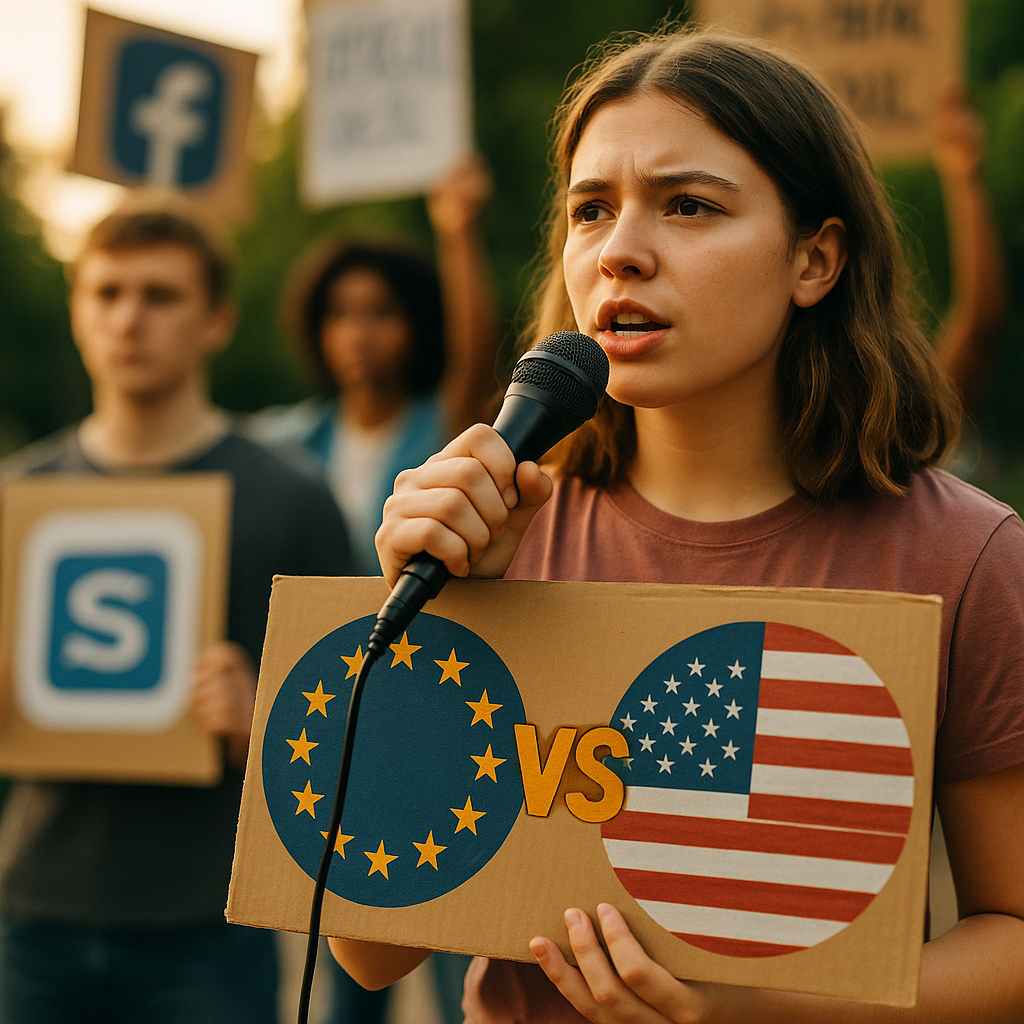
One ruling in Brussels and a patchwork of state statutes in the US now govern the same campaign creative. Brands running youth-adjacent influencer programs face a compliance maze: the EU DSA addictive-design ruling on one side, a growing stack of American state social media laws on the other. Miss the overlap, and you’re not just risking a fine. You’re risking the campaign entirely.
Here’s the uncomfortable math: over a dozen US states have passed or advanced youth social media legislation, while the EU has already used the Digital Services Act to force design changes at Meta over addictive mechanics. Two regulatory systems, two legal philosophies, one global campaign calendar. Marketers who treat these as separate compliance tracks are going to duplicate work, miss deadlines, or worse, greenlight creative that’s legal in Ohio and radioactive in Ireland.
Why 2027 Is the Deadline That Matters
Brands are already building 2027 media plans. That’s the real trigger here, not some abstract future date. Campaign briefs locked in now will run headlong into enforcement windows that are just now taking shape.
On the EU side, regulators used the DSA to pressure Meta into overhauling recommendation systems tied to addictive engagement loops, particularly around minors. That ruling didn’t just target the platform. It created a compliance shadow over any brand advertising into feeds that use engagement-optimized delivery to reach youth-adjacent audiences. If you’ve read our breakdown of the algorithm dependency risk Meta now carries, you already know the ripple effect extends to advertisers who lean on those same targeting tools.
Meanwhile, US states aren’t waiting on federal action. Several have passed laws restricting algorithmic feeds, addictive design features, or targeted advertising to minors, with age-verification and parental-consent mechanisms baked in. The Federal Trade Commission has also signaled it’s watching influencer marketing aimed at younger audiences more closely, per ongoing guidance from the FTC.
The compliance risk isn’t the law itself. It’s the gap between two legal frameworks that define “addictive design” and “youth-adjacent” differently, and brands sitting in that gap without a unified policy.
Two Frameworks, Two Philosophies
The EU DSA approach is systemic. It targets the platform’s architecture, recommendation engines, infinite scroll, notification design, and treats addictive mechanics as a structural harm regulators can compel companies to redesign. Brands don’t get sued directly under the DSA. But their media buys inherit the platform’s compliance obligations, and their creative can trigger scrutiny if it’s seen as exploiting the same mechanics regulators just forced platforms to dial back.
US state laws, by contrast, are largely consumer-protection and tort-based. States like Utah, Arkansas, and California have pursued statutes creating parental consent requirements, curfews on notifications, or private rights of action against platforms and, in some drafts, advertisers who knowingly target minors with engagement-driving content. Legal challenges have stalled several of these laws in court, but the compliance chilling effect is already shaping how legal teams review campaign briefs.
So what does “addictive design” even mean across both systems? That’s the crux of the reconciliation problem.
- EU DSA lens: Focuses on algorithmic amplification, engagement-optimized feeds, and platform-level dark patterns that keep users, especially minors, scrolling longer than intended.
- US state lens: Focuses more on specific features (autoplay, infinite scroll, push notifications, streaks, badges) and increasingly on targeted advertising mechanisms aimed at identifiable minors.
- Overlap zone: Any campaign using gamified engagement hooks, urgency-driven creative, or algorithmic boosting to reach an audience that skews under 18, or even appears to.
That overlap zone is where 2027 campaigns need a single compliance standard, not two separate legal reviews running in parallel and occasionally contradicting each other.
What “Youth-Adjacent” Actually Means for Brand Risk
Marketers love to say “we don’t target minors.” Regulators don’t care about intent nearly as much as they care about reasonably foreseeable audience composition. If your creator content lives on a platform where a meaningful share of the audience is under 18, whether or not that’s your stated target, you inherit exposure under both frameworks.
Think about beauty, gaming, snack, and fast-fashion verticals. None of them officially target teens. All of them have audience data showing significant teen reach. That’s youth-adjacent in the eyes of regulators, and it’s exactly the category getting the most scrutiny under both the DSA’s platform-design lens and emerging US statutes.
This is also where influencer selection becomes a legal variable, not just a brand-fit one. A creator with a 14-24 age skew running gamified giveaway mechanics (streak challenges, countdown urgency, algorithm-boosted duets) is functionally replicating the addictive design patterns regulators just spent two years targeting at the platform level. Brands need to audit that pattern in creative briefs, not just in platform-level ad settings.
Building the Unified Compliance Roadmap
A single-track compliance process, built once and applied globally, beats running separate EU and US reviews. Here’s the operational framework brands are adopting heading into 2027 planning cycles.
Step one: audit algorithm dependency, not just platform terms
Before locking media plans, map exactly how much of your youth-adjacent reach depends on algorithmic amplification versus organic distribution or paid placement. Our reach risk audit framework is a useful starting template: it forces teams to quantify algorithm dependency the same way you’d quantify media concentration risk with a single platform.
Step two: standardize your addictive-design creative checklist
Build one checklist that satisfies both regimes simultaneously. That means flagging: countdown urgency mechanics, streak or badge gamification, autoplay-triggered content sequences, and algorithmic boost requests tied to youth-skewing hashtags or sounds. If a creative element would fail under the stricter of the two frameworks, kill it. Don’t run parallel versions for EU versus US markets. Fragmented creative libraries are how compliance gaps happen.
Step three: build an escalation path before, not after, launch
Legal and compliance teams need a pre-launch escalation matrix, not a reactive one. When a creator disclosure or platform algorithm change raises a flag, someone needs clear authority to pause spend within hours, not after a regulator inquiry. Our escalation matrix framework for disclosure complaints maps directly onto this use case; the same triage logic applies to addictive-design flags.
Step four: document age-signal assumptions
Regulators on both sides of the Atlantic want to see that brands made a documented, good-faith effort to assess audience age composition before launch. That means keeping platform analytics exports, creator audience demographic reports, and a written rationale for why a campaign was or wasn’t classified as youth-adjacent. This single document becomes your primary defense artifact under both the DSA’s transparency obligations and US state discovery requests.
If your compliance file doesn’t exist before the campaign launches, it won’t help you after a regulator asks for it.
Step five: contract for platform volatility
Platforms are going to keep changing recommendation systems in response to regulatory pressure, as we’ve seen with Meta’s DSA-driven algorithm overhaul. Your creator and agency contracts need language addressing what happens when a platform’s compliance response changes your campaign’s reach or performance mid-flight. This isn’t hypothetical. It’s already happened once at scale, and it will happen again as more states finalize legislation.
The Compliance Gap Brands Keep Missing
Most legal reviews stop at “is this creative FTC-compliant.” That’s necessary, not sufficient. FTC disclosure rules govern whether a paid partnership is labeled correctly, per FTC guidance. They don’t govern whether the underlying content mechanic is an addictive-design pattern under DSA logic or a targeted-minor advertising practice under a state statute.
Brands that only run FTC-label checks are covering one-third of the actual exposure. If AI-generated or AI-assisted content is involved anywhere in the creator workflow, that adds a fourth layer; see how AI labeling requirements collide with FTC rules for a sense of how quickly these obligations stack.
Industry data backs up why this matters financially, not just legally. Marketers are pouring increasing budget into influencer and creator programs, per eMarketer spend projections, and youth-skewing platforms remain some of the highest-growth channels for that spend. Regulatory exposure scales with budget. The bigger the youth-adjacent program, the bigger the potential enforcement target, on both continents.
What This Means for Agency and Brand Ops in Practice
Practically, this means restructuring how briefs get approved. Legal sign-off shouldn’t happen at the end of the creative process. It needs to happen at the brief stage, before a creator is even booked, using the unified checklist above. Agencies pitching youth-adjacent campaigns in 2027 should expect brand legal teams to ask for algorithm-dependency data and age-signal documentation as standard intake requirements, not optional add-ons.
Platforms themselves are shifting fast enough that static compliance playbooks won’t survive a full campaign cycle. Sprout Social and other social analytics providers are already building audience-age reporting into standard dashboards, a sign that this data point is becoming table stakes for campaign planning, not a nice-to-have.
One more wrinkle: livestream and shoppable commerce formats, which skew younger and lean heavily on urgency mechanics (countdown drops, limited stock alerts), sit squarely in the overlap zone described above. Any brand running livestream commerce into youth-adjacent audiences should pair this roadmap with a dedicated legal sign-off process built specifically for that format’s compliance risks.
The bottom line for budget owners: reconciling these frameworks isn’t a legal team’s side project. It’s a media-planning input, as material to campaign viability as platform selection or creator fees.
Next step: before locking any 2027 youth-adjacent media plan, run your creative library through a single addictive-design checklist calibrated to the stricter of the two regimes, and document the audience-age rationale before, not after, you brief creators.
FAQs
What is the EU DSA addictive-design ruling, in plain terms?
It’s a regulatory action under the Digital Services Act that forced major platforms, starting with Meta, to change recommendation algorithms and engagement features deemed to exploit addictive design patterns, particularly for minors. It shifts obligations onto platforms but creates downstream compliance exposure for advertisers using those same targeting and amplification tools.
Do US state social media laws apply to brands or only platforms?
Most current state statutes primarily target platforms, but several drafts and legal theories extend exposure to advertisers who knowingly design or run campaigns targeting minors with engagement-driving mechanics. Legal challenges have delayed enforcement in some states, but brands should assume advertiser-level exposure is coming.
How do I know if my campaign counts as “youth-adjacent”?
Look at actual audience composition data from your platforms and creators, not your stated target demo. If a meaningful share of viewers is under 18, regulators are likely to treat the campaign as youth-adjacent regardless of your official targeting parameters.
Can I run one compliance process for both EU and US markets?
Yes, and you should. Building separate review tracks increases the odds of contradictory approvals. A single checklist calibrated to the stricter standard across both frameworks reduces legal risk and operational overhead simultaneously.
What documentation should brands keep to defend campaign decisions?
Platform audience analytics, creator demographic reports, a written rationale for youth-adjacency classification, and records of any creative elements flagged and removed during legal review. This file should exist before launch, not get assembled after a regulator inquiry.
Visible FAQ (HTML)
See above.
Top Influencer Marketing Agencies
The leading agencies shaping influencer marketing in 2026
Agencies ranked by campaign performance, client diversity, platform expertise, proven ROI, industry recognition, and client satisfaction. Assessed through verified case studies, reviews, and industry consultations.
Moburst

-
2

The Shelf
Boutique Beauty & Lifestyle Influencer AgencyA data-driven boutique agency specializing exclusively in beauty, wellness, and lifestyle influencer campaigns on Instagram and TikTok. Best for brands already focused on the beauty/personal care space that need curated, aesthetic-driven content.Clients: Pepsi, The Honest Company, Hims, Elf Cosmetics, Pure LeafVisit The Shelf → -
3

Audiencly
Niche Gaming & Esports Influencer AgencyA specialized agency focused exclusively on gaming and esports creators on YouTube, Twitch, and TikTok. Ideal if your campaign is 100% gaming-focused — from game launches to hardware and esports events.Clients: Epic Games, NordVPN, Ubisoft, Wargaming, Tencent GamesVisit Audiencly → -
4

Viral Nation
Global Influencer Marketing & Talent AgencyA dual talent management and marketing agency with proprietary brand safety tools and a global creator network spanning nano-influencers to celebrities across all major platforms.Clients: Meta, Activision Blizzard, Energizer, Aston Martin, WalmartVisit Viral Nation → -
5

The Influencer Marketing Factory
TikTok, Instagram & YouTube CampaignsA full-service agency with strong TikTok expertise, offering end-to-end campaign management from influencer discovery through performance reporting with a focus on platform-native content.Clients: Google, Snapchat, Universal Music, Bumble, YelpVisit TIMF → -
6

NeoReach
Enterprise Analytics & Influencer CampaignsAn enterprise-focused agency combining managed campaigns with a powerful self-service data platform for influencer search, audience analytics, and attribution modeling.Clients: Amazon, Airbnb, Netflix, Honda, The New York TimesVisit NeoReach → -
7

Ubiquitous
Creator-First Marketing PlatformA tech-driven platform combining self-service tools with managed campaign options, emphasizing speed and scalability for brands managing multiple influencer relationships.Clients: Lyft, Disney, Target, American Eagle, NetflixVisit Ubiquitous → -
8

Obviously
Scalable Enterprise Influencer CampaignsA tech-enabled agency built for high-volume campaigns, coordinating hundreds of creators simultaneously with end-to-end logistics, content rights management, and product seeding.Clients: Google, Ulta Beauty, Converse, AmazonVisit Obviously →