


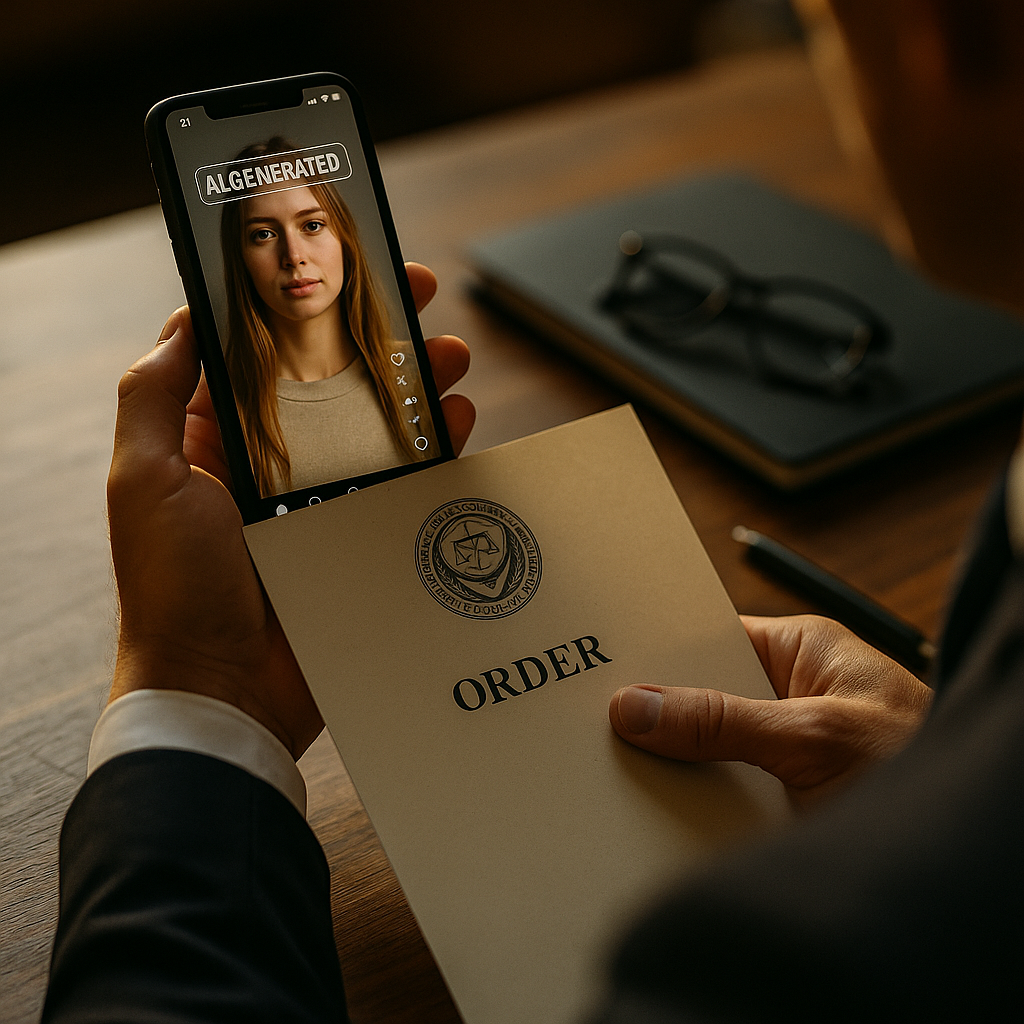
Picture this: TikTok slaps an “AI-generated” tag on your creator’s video. The creator, following your brand guidelines, also writes “#ad” in the caption but never mentions AI at all. Is that FTC clear-and-conspicuous disclosure compliance, or a contradiction waiting to be flagged? A growing share of legal teams are discovering the answer isn’t obvious — and the FTC doesn’t care whose label came first.
Roughly a third of branded social content now involves some AI-assisted production step, from script generation to voice cloning to full synthetic avatars, according to recent industry estimates from eMarketer. Platforms are racing to slap their own AI labels on that content. The FTC, meanwhile, is holding brands to a decades-old standard that was never designed for dueling disclosure systems. When the two signals disagree on the same post, somebody has to decide which one governs. That somebody is you.
Two Rulebooks, One Post, Zero Coordination
Platform AI labels and FTC disclosure requirements were built by different people, for different reasons, at different times. Platforms label AI content to manage authenticity concerns and comply with their own transparency commitments to users and regulators. The FTC requires clear-and-conspicuous disclosure to protect consumers from deceptive advertising, full stop. Nobody designed these two systems to talk to each other.
That’s how you end up with contradictions. Meta might auto-tag a video as “Made with AI” based on metadata detection, while the creator’s own caption disclosure focuses only on the paid partnership, not the synthetic content. TikTok’s branded content tools might apply an AI overlay tag that appears for three seconds and disappears, while the FTC’s standard demands a disclosure that’s “unavoidable” regardless of how a viewer scrolls or watches on mute.
A platform label confirming AI use is not the same as an FTC-compliant disclosure. One is a content classification. The other is a legal obligation. Treating them as interchangeable is the single most common compliance mistake brands make in this space.
The confusion compounds when the platform label and the human disclosure send mixed messages. If TikTok tags a post “AI-generated” but the creator’s caption says “this is 100% me, no AI,” you don’t have a labeling inconsistency. You have a potential deception claim, and the FTC has made clear it will pursue exactly that kind of gap. Our earlier breakdown of TikTok’s AI overlay tags covers how these platform-side flags get triggered, often without creator or brand input.
Why the FTC Doesn’t Recognize Platform Labels as a Substitute
The FTC’s Endorsement Guides set a standard that has nothing to do with what any given platform decides to display. Clear-and-conspicuous means a disclosure that’s difficult to miss, understandable at a glance, and present in the same place a consumer is looking, not buried in a settings menu or a metadata tag most viewers never see.
A platform-generated “AI content” badge fails that test on several counts. It’s often small, easy to swipe past, and inconsistently applied across formats (Stories versus feed posts versus Reels, for example). It’s also controlled entirely by the platform’s detection systems, not by the advertiser making the claim. The FTC has been explicit that advertisers can’t outsource their disclosure obligations to a third party’s UI decisions.
This matters more than most brands realize. If your legal team assumes a platform’s AI label satisfies FTC scrutiny, you’re building your compliance program on a foundation the agency has already rejected. For a deeper look at where AI scriptwriting specifically creates exposure, see our piece on undisclosed AI scriptwriting risk.
When the Signals Actually Contradict
There are three common scenarios where platform labels and FTC-standard disclosures collide, and each requires a different fix.
Scenario one: the platform label appears, but no human-readable disclosure does. This happens constantly with AI voice dubbing and avatar tools. The platform detects synthetic media and tags it automatically. The creator never adds a caption disclosure because they assume the tag covers it. It doesn’t. You need both, and the human disclosure carries the legal weight.
Scenario two: the human disclosure exists, but contradicts the platform label. A creator writes “authentic, unscripted reaction” while the platform flags the content as AI-assisted because an editing tool used generative fill on the background. Technically the creator is telling the truth about the narration, but the contradiction reads badly to any regulator doing a spot check, and it reads worse to consumers who feel misled.
Scenario three: both disclosures exist but disagree on scope. The platform label says “AI-generated,” implying full synthetic production. The actual disclosure clarifies that only the voiceover was AI-assisted, human talent appears on camera. This is arguably the trickiest case because neither party is lying, but the combined effect confuses the average viewer, which is exactly what clear-and-conspicuous standards are meant to prevent.
Each of these scenarios points to the same root problem: nobody on the brand side reviewed how the two labels would appear together before the post went live. That’s a workflow failure, not a legal mystery.
A Reconciliation Clause Should Live in Every Creator Contract
The fix starts upstream, in the contract, not downstream, in a crisis response. Brands need language that explicitly states platform AI labels do not substitute for FTC-standard disclosure, and that creators must add their own clear disclosure regardless of what a platform’s detection system displays.
We’ve written previously about building this into a standing reconciliation clause for exactly this reason. The clause should specify: who reviews the final post before publish, what happens if the platform label and creator disclosure conflict, and who bears responsibility for the fix if a conflict slips through.
Without that clause, you’re relying on individual creators to understand a regulatory nuance most of them have never been trained on. That’s not a strategy. That’s hoping.
Building an Actual Review Workflow
Legal teams love a clause. Marketing teams need a workflow. Here’s what a functional pre-publish check looks like for content where AI involvement is likely:
- Flag AI touchpoints at the brief stage. If the campaign brief allows AI scriptwriting, voice cloning, generative editing, or synthetic avatars, mark it before production starts, not after the platform flags it.
- Draft the human disclosure independently of the platform label. Write the caption or overlay disclosure as if the platform tag doesn’t exist. It should stand on its own and meet clear-and-conspicuous standards regardless of what badge the platform adds later.
- Preview on the actual platform before approval. A disclosure that reads fine in a Google Doc can disappear entirely once TikTok’s UI truncates a caption or Meta’s AI label overlaps with a text placement.
- Check for contradiction, not just presence. Confirm the platform label and the creator’s disclosure tell the same story. If the platform says “AI-generated” and the creator says “no AI used,” stop the post.
- Document the review. Keep a timestamped record of what was checked and approved. If the FTC ever asks, “we had a process” is a materially better answer than silence.
This isn’t complicated. It’s five steps. But it requires someone to own it, and in most influencer programs, nobody currently does. Compliance sits with legal, creative sits with marketing, and platform labeling sits with whatever automated system the platform runs. Nobody’s job description says “reconcile the three.”
If your review workflow doesn’t include a step where someone checks the platform label against the human disclosure side by side, you don’t have a compliance process. You have a hope that nothing goes wrong.
What This Means for Escalation and Complaint Handling
Contradictory labels don’t just create legal exposure, they create customer confusion, and confused customers complain. When a viewer flags a post as misleading because the platform tag and caption don’t match, your team needs a clear escalation path, not an improvised one.
This is where a standing disclosure complaint matrix earns its keep. Define in advance who reviews the complaint, how fast a correction gets made, and whether the post needs to come down while it’s fixed. Waiting until the complaint arrives to figure this out guarantees a slower, messier response.
Platform-by-Platform, the Rules Keep Shifting
Part of what makes reconciliation hard is that platform labeling isn’t static. Meta has expanded its AI content disclosure requirements multiple times in the past year, and TikTok’s provenance and labeling tools continue to evolve alongside state-level AI disclosure laws that don’t always align with platform policy. Our comparison of AI ad labels across Google, Meta, and TikTok is worth revisiting each quarter, because what counted as sufficient labeling six months ago may not hold today.
State laws add another layer. Some jurisdictions now require disclosure language that goes further than platform tags or even FTC guidance, and platform-level provenance coalitions won’t automatically satisfy those state requirements either, a gap we detailed in our look at the TikTok provenance coalition limitations.
The practical takeaway: don’t build your compliance program around any single platform’s current labeling behavior. Build it around the FTC standard as the floor, and treat every platform label as an additional signal to check against it, not a substitute for it.
Training Creators to Stop Assuming the Platform Has It Covered
Most disclosure failures aren’t malicious. They’re the result of a creator assuming the platform’s automated tag does the legal work for them. It doesn’t, and creators need to hear that directly, not infer it from a contract clause buried on page twelve.
Build a short, plain-language brief for creators: platform AI labels are automatic and inconsistent. Your own disclosure is the one that protects you and the brand. Say it every time, in your own words, where people can actually see it. This is a five-minute training conversation that prevents a much longer legal one. For creators working across scripted content specifically, our guide on closing the AI scriptwriting compliance gap offers language brands can adapt directly into briefs.
None of this requires a legal department to review every single post. It requires a workflow that catches contradictions before they publish, a contract clause that assigns responsibility, and a creator training habit that treats platform labels as background noise, not a compliance shield.
Next step: Audit your last ten AI-assisted posts this week. Check whether the platform label and the human disclosure agree. If even two of them contradict each other, that’s your signal to build the reconciliation clause and review workflow now, before the FTC or a state regulator does the audit for you.
FAQs
Does a platform’s AI content label count as FTC disclosure?
No. Platform AI labels are automated content classifications controlled by the platform, not advertiser-controlled disclosures. The FTC requires disclosures that are clear, conspicuous, and placed where the advertiser controls the message, so a platform tag alone doesn’t meet that standard.
What should a brand do if the platform label contradicts the creator’s caption?
Stop the post before publish if possible, and if it’s already live, correct it immediately. Contradictory signals about AI use can constitute a deceptive practice under FTC guidance, regardless of intent.
Who is legally responsible when a platform label and disclosure conflict?
The brand typically carries primary liability under FTC Endorsement Guide enforcement, even when the creator wrote the disclosure. That’s why contract language assigning review responsibility matters so much.
Can a single disclosure cover both AI use and paid partnership?
Yes, but it must clearly communicate both facts, not just one. A “#ad” tag alone doesn’t disclose AI involvement, and an AI disclosure alone doesn’t disclose material connection. Both need to be present and unambiguous.
How often do platform AI labeling policies change?
Frequently enough that brands should review policies quarterly. Meta, TikTok, and other platforms have each updated AI disclosure requirements multiple times recently, often in response to regulatory pressure or new state disclosure laws.
Top Influencer Marketing Agencies
The leading agencies shaping influencer marketing in 2026
Agencies ranked by campaign performance, client diversity, platform expertise, proven ROI, industry recognition, and client satisfaction. Assessed through verified case studies, reviews, and industry consultations.
Moburst

-
2

The Shelf
Boutique Beauty & Lifestyle Influencer AgencyA data-driven boutique agency specializing exclusively in beauty, wellness, and lifestyle influencer campaigns on Instagram and TikTok. Best for brands already focused on the beauty/personal care space that need curated, aesthetic-driven content.Clients: Pepsi, The Honest Company, Hims, Elf Cosmetics, Pure LeafVisit The Shelf → -
3

Audiencly
Niche Gaming & Esports Influencer AgencyA specialized agency focused exclusively on gaming and esports creators on YouTube, Twitch, and TikTok. Ideal if your campaign is 100% gaming-focused — from game launches to hardware and esports events.Clients: Epic Games, NordVPN, Ubisoft, Wargaming, Tencent GamesVisit Audiencly → -
4

Viral Nation
Global Influencer Marketing & Talent AgencyA dual talent management and marketing agency with proprietary brand safety tools and a global creator network spanning nano-influencers to celebrities across all major platforms.Clients: Meta, Activision Blizzard, Energizer, Aston Martin, WalmartVisit Viral Nation → -
5

The Influencer Marketing Factory
TikTok, Instagram & YouTube CampaignsA full-service agency with strong TikTok expertise, offering end-to-end campaign management from influencer discovery through performance reporting with a focus on platform-native content.Clients: Google, Snapchat, Universal Music, Bumble, YelpVisit TIMF → -
6

NeoReach
Enterprise Analytics & Influencer CampaignsAn enterprise-focused agency combining managed campaigns with a powerful self-service data platform for influencer search, audience analytics, and attribution modeling.Clients: Amazon, Airbnb, Netflix, Honda, The New York TimesVisit NeoReach → -
7

Ubiquitous
Creator-First Marketing PlatformA tech-driven platform combining self-service tools with managed campaign options, emphasizing speed and scalability for brands managing multiple influencer relationships.Clients: Lyft, Disney, Target, American Eagle, NetflixVisit Ubiquitous → -
8

Obviously
Scalable Enterprise Influencer CampaignsA tech-enabled agency built for high-volume campaigns, coordinating hundreds of creators simultaneously with end-to-end logistics, content rights management, and product seeding.Clients: Google, Ulta Beauty, Converse, AmazonVisit Obviously →