


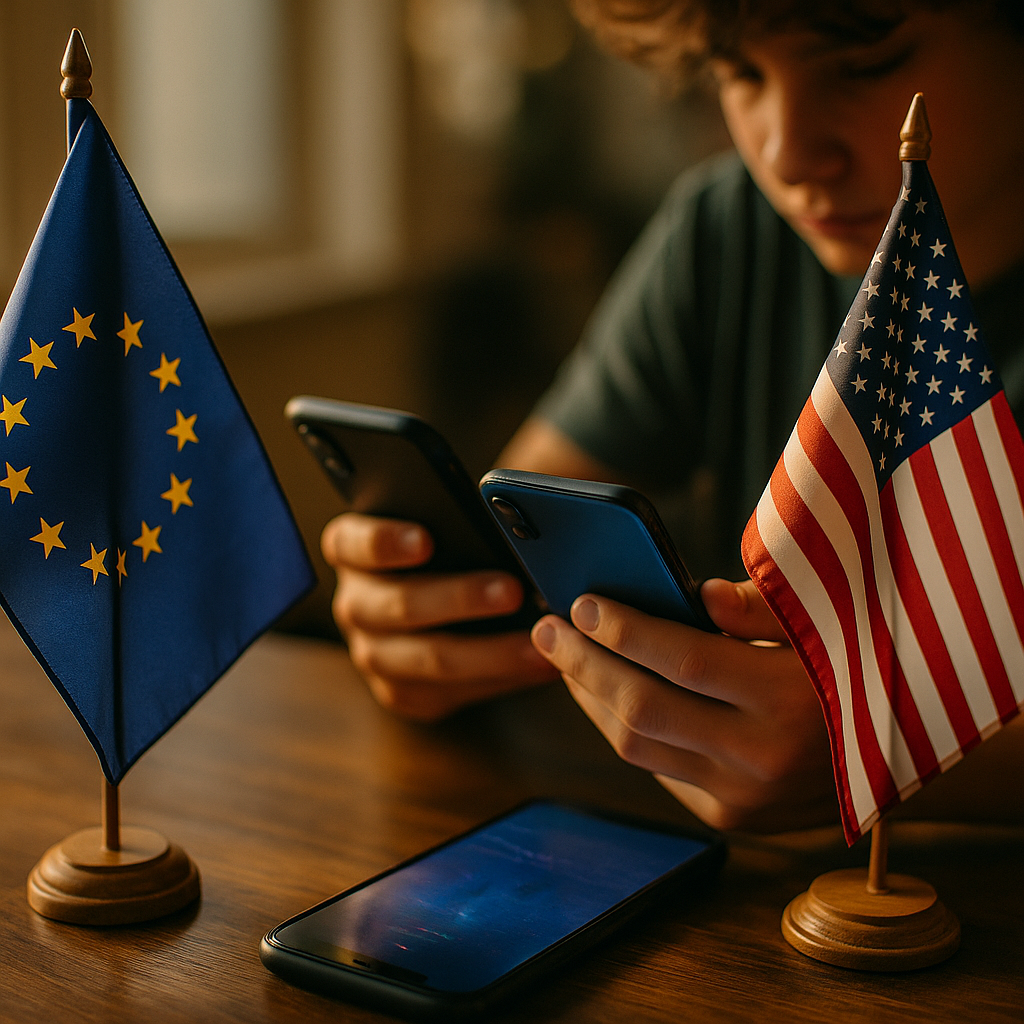
One ruling in Brussels. Nine-plus state laws in the US, each with different age thresholds, consent mechanics, and design bans. If your brand runs youth-adjacent campaigns across both markets, you’re not managing one compliance problem — you’re managing a patchwork that doesn’t talk to itself. The EU DSA addictive-design ruling was supposed to bring clarity. Instead, it’s forcing marketers to build a second rulebook just to keep campaigns legal on both sides of the Atlantic.
This isn’t a legal-team problem you can hand off and forget. Campaign timing, creator selection, platform features, even the hashtags you approve, all sit inside this new compliance zone. Here’s how to build one roadmap that satisfies both regimes without slowing your 2027 launch calendar to a crawl.
What the DSA Ruling Actually Changed
The EU’s addictive-design enforcement action, most visibly aimed at Meta’s engagement-optimized feeds, established something brands can’t ignore: platforms can be held liable for design choices that exploit minors’ psychological vulnerabilities, and advertisers running campaigns into those environments inherit adjacent risk. Infinite scroll, autoplay, variable reward notifications, these aren’t just UX patterns anymore. They’re regulatory exhibits.
Our earlier coverage broke down how this ruling directly affects paid media planning — see audit your paid social risk for the mechanics. The short version: if your ad appears inside a feed environment flagged for addictive design targeting minors, your brand’s due-diligence posture matters when regulators come looking.
Brands that treated the DSA ruling as “a Meta problem” in its first year are now discovering it’s actually a media-planning problem, a creator-vetting problem, and a documentation problem — all three, simultaneously.
The US State Patchwork Nobody Fully Mapped Yet
Meanwhile, American state legislatures didn’t wait for federal action. Utah, Arkansas, California, and a growing list of others have passed or advanced laws touching age verification, parental consent, curfew-style access restrictions, and design features deemed addictive for minors. Some overlap with DSA logic. Many don’t.
The problem for brands: these laws define “minor,” “addictive design,” and “consent” differently state to state. A campaign compliant in Texas might trip a wire in California. A creator partnership cleared for a national US rollout might still violate a specific state’s parental-notice requirement if your audience targeting isn’t segmented precisely.
- Age verification thresholds vary — some states use 16, others 18, and definitions of “actual knowledge” of a minor user differ meaningfully.
- Design feature bans target autoplay, push notifications, and infinite scroll with different enforcement triggers.
- Parental consent mechanics range from opt-in verification to notice-and-object models.
- Private right of action exists in some states, meaning individual plaintiffs (not just AGs) can sue — a materially different risk profile than EU enforcement.
That last point deserves its own paragraph. Private right of action changes everything about how legal teams price risk. It’s not “will the regulator notice,” it’s “will a plaintiff’s attorney build a class around our campaign.” That’s a different threat model entirely, and most brand compliance checklists built for DSA readiness don’t account for it.
Where the Two Regimes Actually Overlap
Despite the differences, there’s real convergence worth building your roadmap around:
- Both regimes scrutinize algorithmic amplification aimed at minors, not just content itself.
- Both increasingly expect documented due diligence — records showing you assessed platform risk before flighting, not after a complaint.
- Both treat creator-audience demographics as a compliance input, not just a targeting metric.
- Both are moving toward design-feature scrutiny (autoplay, infinite scroll, notification cadence) as a proxy for addictiveness, rather than relying solely on content review.
That overlap is your leverage point. Build compliance infrastructure around the shared logic — documented risk assessment, platform feature audits, demographic verification — and you get roughly 70% of the way to satisfying both regimes with one system. The remaining 30% is jurisdiction-specific tuning.
A Unified Compliance Roadmap for 2027 Campaigns
Step 1: Build a Platform Risk Tier List
Not every platform carries equal exposure. Score each platform you use against both DSA design-feature criteria and the strictest applicable US state law. Instagram Reels, TikTok’s For You feed, and YouTube Shorts should sit in your highest-scrutiny tier given their algorithmic amplification models. Our breakdown on algorithm dependency risk is a useful starting template for scoring methodology.
Step 2: Segment Campaigns by Audience Age Signal, Not Just Targeting Intent
“We didn’t target minors” is no longer a sufficient defense under either regime. Both frameworks are moving toward actual or constructive knowledge standards — meaning if your analytics show a meaningful minor audience share, ignorance stops being a defense. Pull audience composition reports quarterly, not annually. If a creator’s following skews younger than your campaign brief assumes, that’s a red flag requiring documented review, not a footnote.
Step 3: Standardize Creator Vetting Around Design-Adjacent Disclosures
Creator contracts need updated language addressing platform feature use, not just content claims. Does the creator’s content format rely on autoplay chains or notification-driving hooks (serialized content, cliffhanger posting)? That’s now a compliance-relevant question, not just a creative one. Pair this with existing disclosure frameworks — see compliance escalation matrix for how to structure the review chain when a creator flags a concern.
Step 4: Document Everything Before Launch, Not After a Complaint
Regulators and plaintiffs’ attorneys on both sides of the Atlantic increasingly ask the same question first: what did you know, and when? A pre-flight compliance memo, dated and version-controlled, showing you assessed platform design risk, audience age composition, and creator format before launch is worth more than any post-hoc legal defense. This is the single highest-leverage habit brands can build for 2027.
If your compliance documentation only exists after a regulator’s letter arrives, you’ve already lost the argument that due diligence happened.
Step 5: Build a Jurisdiction Overlay, Not a Jurisdiction Silo
Don’t build separate EU and US playbooks. Build one core compliance framework (documented risk assessment, platform tiering, creator vetting) and layer jurisdiction-specific rules on top as an overlay — a checklist addendum, not a parallel process. This keeps your ops team from duplicating work and reduces the odds of a campaign passing US review but failing EU review, or vice versa.
What This Means for Budget and Timing
Compliance friction has a cost, and pretending otherwise just pushes the cost downstream into legal fees or campaign delays. Build in a two-week compliance buffer before any youth-adjacent campaign launch. That’s enough time to run platform tiering, audience composition checks, and creator format review without rushing sign-off. Brands skipping this step in the last cycle saw average campaign delays of three to four weeks once a compliance issue surfaced post-launch, according to industry legal counsel tracking creator campaign disputes — far more expensive than building the buffer upfront.
Agencies should also revisit indemnification language now. If a platform’s design choices trigger liability, who eats the cost — brand, agency, or platform? Get this documented in your media-buying contracts before the next renewal cycle, following the same logic outlined in indemnification clauses explained.
Where This Is Headed
Expect more state laws in the next legislative cycle, and expect the EU to extend addictive-design enforcement beyond Meta to TikTok and other high-engagement platforms. The direction of travel is unmistakable: less tolerance for “the algorithm did it,” more expectation that brands actively vet the environments they buy into. For context on how this same enforcement logic is playing out on Instagram specifically, see reach risk audit.
Industry data from eMarketer shows youth-adjacent ad spend continuing to climb even as regulatory scrutiny intensifies, a mismatch that won’t resolve itself without brands building better internal controls. Meanwhile, resources from the FTC and the UK’s ICO both signal growing alignment on algorithmic accountability, even without formal cross-border coordination.
The brands that win in 2027 won’t be the ones with the cleverest legal workarounds. They’ll be the ones who built compliance into campaign planning early enough that it never became a bottleneck.
Next step: pull your current youth-adjacent campaign calendar and run every planned placement through the platform risk tier list this week — not after your next legal review cycle. The gap between “we assumed we were fine” and “we documented that we checked” is the entire compliance argument in 2027.
Frequently Asked Questions
Does the EU DSA addictive-design ruling apply to US-based brands running EU campaigns?
Yes. If your campaign reaches EU users through a platform subject to DSA obligations, geographic origin of your brand doesn’t exempt you. The ruling attaches to the platform and the audience reached, not the advertiser’s headquarters.
Which US states currently have the strictest youth social media design laws?
Utah, Arkansas, and California have moved earliest and most aggressively, though the details differ significantly. California’s approach leans toward design-feature restrictions, while others emphasize age verification and parental consent mechanics. Always check current state legislative status before campaign launch, as this area is changing quickly.
Can a brand rely on platform-level compliance instead of its own audit?
No. Platform terms of service address the platform’s obligations, not the advertiser’s. Regulators and plaintiffs increasingly expect brands to conduct independent due diligence on the environments they buy media in, separate from whatever the platform claims about its own compliance.
What’s the biggest compliance gap brands are missing right now?
Documentation timing. Most brands only create compliance records after a complaint or regulatory inquiry. Pre-launch, dated documentation showing risk assessment happened before flighting is far more defensible and increasingly expected under both regimes.
How often should audience age composition be reviewed for ongoing campaigns?
Quarterly at minimum for always-on campaigns, and immediately before launch for new flights. Audience composition shifts, especially on creator-driven content, and a campaign compliant at launch can drift into higher-risk territory within months.
Top Influencer Marketing Agencies
The leading agencies shaping influencer marketing in 2026
Agencies ranked by campaign performance, client diversity, platform expertise, proven ROI, industry recognition, and client satisfaction. Assessed through verified case studies, reviews, and industry consultations.
Moburst

-
2

The Shelf
Boutique Beauty & Lifestyle Influencer AgencyA data-driven boutique agency specializing exclusively in beauty, wellness, and lifestyle influencer campaigns on Instagram and TikTok. Best for brands already focused on the beauty/personal care space that need curated, aesthetic-driven content.Clients: Pepsi, The Honest Company, Hims, Elf Cosmetics, Pure LeafVisit The Shelf → -
3

Audiencly
Niche Gaming & Esports Influencer AgencyA specialized agency focused exclusively on gaming and esports creators on YouTube, Twitch, and TikTok. Ideal if your campaign is 100% gaming-focused — from game launches to hardware and esports events.Clients: Epic Games, NordVPN, Ubisoft, Wargaming, Tencent GamesVisit Audiencly → -
4

Viral Nation
Global Influencer Marketing & Talent AgencyA dual talent management and marketing agency with proprietary brand safety tools and a global creator network spanning nano-influencers to celebrities across all major platforms.Clients: Meta, Activision Blizzard, Energizer, Aston Martin, WalmartVisit Viral Nation → -
5

The Influencer Marketing Factory
TikTok, Instagram & YouTube CampaignsA full-service agency with strong TikTok expertise, offering end-to-end campaign management from influencer discovery through performance reporting with a focus on platform-native content.Clients: Google, Snapchat, Universal Music, Bumble, YelpVisit TIMF → -
6

NeoReach
Enterprise Analytics & Influencer CampaignsAn enterprise-focused agency combining managed campaigns with a powerful self-service data platform for influencer search, audience analytics, and attribution modeling.Clients: Amazon, Airbnb, Netflix, Honda, The New York TimesVisit NeoReach → -
7

Ubiquitous
Creator-First Marketing PlatformA tech-driven platform combining self-service tools with managed campaign options, emphasizing speed and scalability for brands managing multiple influencer relationships.Clients: Lyft, Disney, Target, American Eagle, NetflixVisit Ubiquitous → -
8

Obviously
Scalable Enterprise Influencer CampaignsA tech-enabled agency built for high-volume campaigns, coordinating hundreds of creators simultaneously with end-to-end logistics, content rights management, and product seeding.Clients: Google, Ulta Beauty, Converse, AmazonVisit Obviously →