


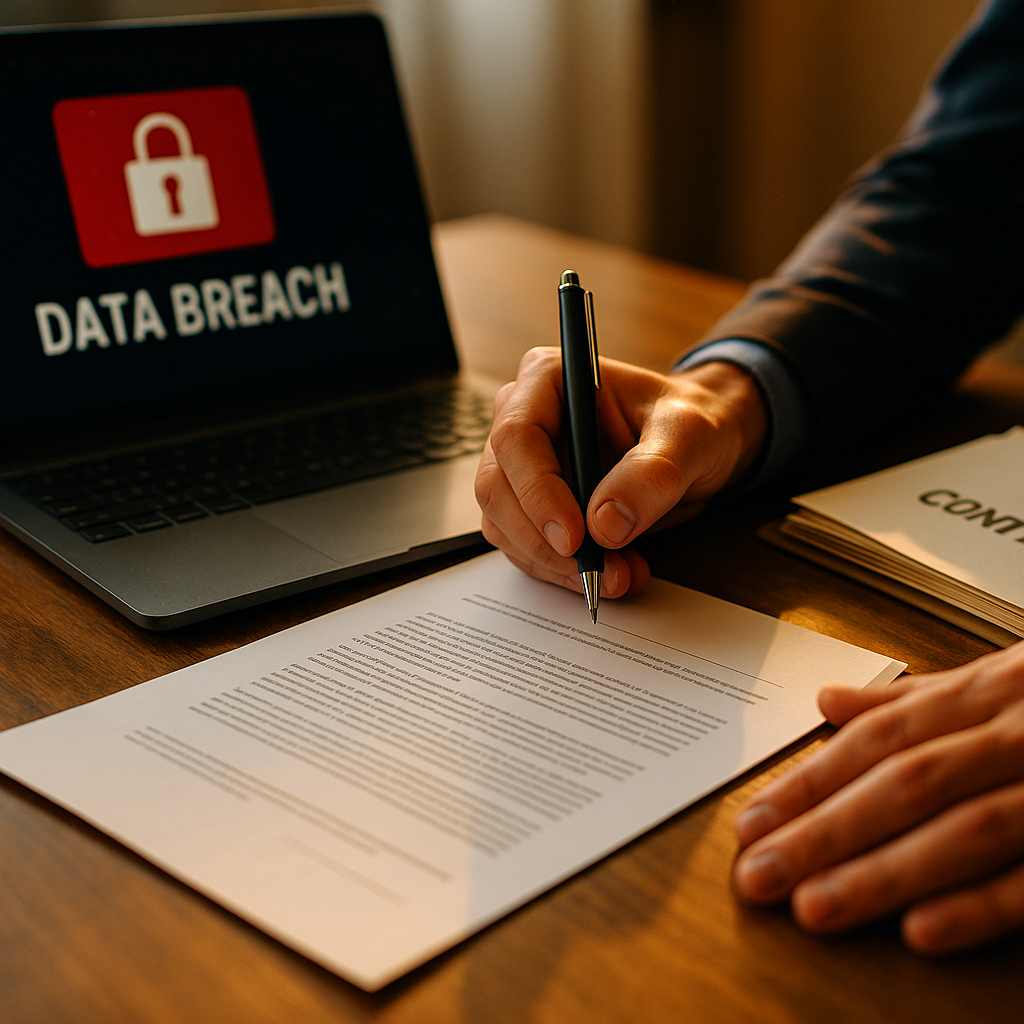
Twenty-two U.S. states will have amended data breach notification laws in effect by the time your next creator platform renewal comes up. Most brand-creator agreements still treat a “data breach” like an IT footnote. That’s a mistake with a price tag. A data breach notification clause isn’t boilerplate anymore — it’s the difference between a 24-hour disclosure and a six-figure regulatory fine.
Marketing teams have spent the last two years bolting AI disclosure language and FTC endorsement rules onto creator contracts. Data breach provisions are the next retrofit, and the runway is shorter than most legal teams realize.
Why This Suddenly Matters to Marketing, Not Just Legal
Creator platforms sit on a mountain of personal data: creator payment details, follower analytics, campaign performance tied to consumer behavior, sometimes even minors’ engagement data if you run youth-adjacent campaigns. When a creator management platform, an affiliate network, or a whitelisting tool gets breached, the brand is often named alongside the platform in state attorney general inquiries — even if the brand never touched the server.
That’s the part marketing leaders miss. You don’t need to own the infrastructure to own the liability.
States have been tightening breach notification windows for years. What’s changing now is scope and timing convergence. Several state laws are updating definitions of “personal information” to include biometric data, precise geolocation, and — critically for influencer marketing — data collected through creator affiliate links and pixel tracking. States are also compressing notification windows, with some now requiring disclosure within 30 days of discovery rather than the “reasonable time” language older statutes used.
If your creator contracts don’t specify who notifies whom, within how many hours, and who pays for the resulting compliance costs, you’re negotiating breach response in real time — during the worst possible week to be negotiating anything.
What a Real Breach Notification Clause Actually Covers
Most creator agreements have a generic “confidentiality” section that mentions data protection in passing. That’s not a breach notification clause. A functional one needs five specific components:
- Trigger definition: What counts as a “breach” under the contract — unauthorized access, not just confirmed misuse. Courts and regulators increasingly treat “reasonable belief of exposure” as sufficient trigger, so your contract language should match that lower bar.
- Notification timeline: Specify hours, not “promptly.” Sixty to 72 hours from discovery is becoming the de facto standard among platforms that take this seriously.
- Notification method and content: Who contacts whom, what information must be included (scope of data affected, remediation steps taken), and in what format.
- Cost allocation: Who pays for forensic investigation, consumer notification mailings, credit monitoring services, and regulatory fines if the platform’s negligence caused the breach.
- Indemnification scope: Whether the platform indemnifies the brand for third-party claims arising from the breach, and any caps on that liability.
Skip any one of these and you’re relying on goodwill during a crisis. Goodwill doesn’t hold up well when a platform’s PR team is managing their own fallout.
The 2027 Deadline Problem, Explained Simply
Several state legislatures have set updated breach notification requirements to take full effect by 2027 — some layering new consumer data categories onto existing frameworks, others introducing stricter timelines for breaches involving third-party vendors (which is exactly what most creator platforms legally are). The practical effect: contracts signed or renewed now, in 2026, will likely still be active when these deadlines hit.
That means brands negotiating creator platform agreements today need forward-dated compliance language, not just current-state compliance.
Here’s the operational trap: legal teams often draft to today’s requirements because that’s what’s enforceable right now. But a two-year creator platform contract signed this quarter needs to anticipate the stricter standard, or you’re looking at a mid-contract renegotiation under worse leverage conditions — after the platform already has your data.
This mirrors what we’ve seen with other compliance deadlines in the creator space. The Vermont pre-cure notification framework forced brands to build audit habits ahead of enforcement, not after the first violation notice arrived. Data breach clauses deserve the same anticipatory posture.
Where Brands Get This Wrong
Three recurring mistakes show up in creator platform contracts we’ve reviewed across the industry:
Mistake one: treating all creator platforms the same. A TikTok Shop affiliate tool handling payment data carries different breach exposure than a UGC licensing platform that only stores content rights metadata. Blanket clauses miss this. Your data minimization addendum should already be scoping what data each platform actually touches — use that scoping exercise to calibrate breach notification severity tiers too.
Mistake two: no clause for subcontracted data processors. Creator platforms routinely use third-party analytics tools, payment processors, and CRM integrations. If your contract only covers the primary platform and not their downstream vendors, you have a gap. Ask platforms directly: who else touches this data, and does your breach clause flow down to them contractually?
Mistake three: assuming the platform’s privacy policy covers you. A privacy policy is a unilateral document the platform can amend. It’s not a negotiated contractual obligation. If your legal team is pointing to a platform’s public-facing policy as sufficient breach coverage, push back. That’s not enforceable the way a contract clause is.
A privacy policy protects the platform’s users in general. A negotiated breach clause protects your brand specifically. Those are not interchangeable.
Building the Clause: A Practical Template Structure
Rather than starting from a blank page, structure the clause around this sequence:
- Definition section establishing what constitutes a “security incident” versus a confirmed “breach” (many state laws now distinguish these separately)
- Discovery-to-notification timeline, stated in hours
- Scope of information the platform must disclose to the brand upon notification
- Joint response protocol — who leads consumer communication if both parties are named
- Cost and liability allocation, including caps and carve-outs for gross negligence
- Audit rights allowing the brand to review the platform’s security practices periodically, not just after an incident
That last point connects directly to broader contract hygiene. If you already have right-to-audit clauses in your whitelisting agreements, extend that same audit logic to data security practices, not just usage rights and spend verification.
How This Intersects With Existing Compliance Work
Brands running influencer programs already juggle FTC disclosure requirements, state-specific synthetic performer rules, and international age verification standards. Data breach clauses aren’t a separate workstream — they’re part of the same contract hardening exercise.
If your team has already built a escalation protocol for compliance gaps, breach notification failures should trigger the same internal alarm. Treat a missed 72-hour window the same way you’d treat an undisclosed sponsorship: as a compliance failure requiring documented escalation, not a one-off apology email.
Cross-border programs add another layer. If you’re running campaigns through creator platforms with EU or UK operations, breach notification obligations under GDPR (via the ICO) already require 72-hour reporting to regulators. Many U.S. state laws are converging toward that same window, which is at least good news for standardization. One clause, aligned to the strictest applicable jurisdiction, can often satisfy multiple regulatory regimes simultaneously.
According to Statista research on data breach costs, the average breach now takes weeks to fully contain, and notification delays are consistently cited by regulators as an aggravating factor in enforcement decisions. Speed isn’t just good practice. It’s the difference between a manageable disclosure and a punitive one.
What to Ask Before You Sign the Next Renewal
Before renewing any creator platform contract this year, run through this checklist with legal and procurement:
- Does the contract specify a notification window in hours, and is it 72 hours or fewer?
- Are subcontractors and downstream data processors covered under the same breach obligations?
- Who bears the cost of forensic investigation and consumer notification if the platform is at fault?
- Does the clause anticipate stricter 2027 state requirements, or only current law?
- Do you have audit rights to verify the platform’s security posture before an incident occurs, not just after?
If procurement can’t answer these five questions about your current creator platform stack, that’s the actual starting point — not the contract redline itself.
FAQs
FAQ
What is a data breach notification clause in a creator platform contract?
It’s a contractual provision specifying how, when, and by whom a brand must be notified if a creator platform experiences unauthorized access to data, including creator payment details, campaign data, or consumer information collected through affiliate links and tracking pixels.
Why are 2027 state law deadlines relevant to contracts signed now?
Many multi-year creator platform contracts signed or renewed this year will still be active when updated state breach notification requirements take effect. Brands need to negotiate forward-compatible language now rather than renegotiate under weaker leverage later.
What notification timeline should brands require from creator platforms?
Sixty to 72 hours from discovery is becoming the practical standard, aligning with GDPR’s existing 72-hour requirement and the direction most updated state laws are heading.
Are brands liable if a third-party creator platform gets breached?
Often yes, particularly if the brand’s customer or campaign data was exposed. Regulators and plaintiffs frequently name brands alongside platforms, regardless of who controlled the infrastructure.
Does a platform’s privacy policy substitute for a breach notification clause?
No. A privacy policy is a unilateral document the platform can change at any time. A negotiated contract clause creates an enforceable obligation specific to your brand relationship.
Should breach clauses cover subcontractors and downstream vendors?
Yes. Most creator platforms rely on third-party analytics, payment, and CRM tools. Contracts should require breach obligations to flow down to any subcontractor with access to relevant data.
Start with your three highest-spend creator platforms this quarter: pull the current contracts, check for a notification timeline stated in hours, and flag any without one for renegotiation before renewal. That’s the fastest way to close real exposure before 2027 makes it mandatory.
Top Influencer Marketing Agencies
The leading agencies shaping influencer marketing in 2026
Agencies ranked by campaign performance, client diversity, platform expertise, proven ROI, industry recognition, and client satisfaction. Assessed through verified case studies, reviews, and industry consultations.
Moburst

-
2

The Shelf
Boutique Beauty & Lifestyle Influencer AgencyA data-driven boutique agency specializing exclusively in beauty, wellness, and lifestyle influencer campaigns on Instagram and TikTok. Best for brands already focused on the beauty/personal care space that need curated, aesthetic-driven content.Clients: Pepsi, The Honest Company, Hims, Elf Cosmetics, Pure LeafVisit The Shelf → -
3

Audiencly
Niche Gaming & Esports Influencer AgencyA specialized agency focused exclusively on gaming and esports creators on YouTube, Twitch, and TikTok. Ideal if your campaign is 100% gaming-focused — from game launches to hardware and esports events.Clients: Epic Games, NordVPN, Ubisoft, Wargaming, Tencent GamesVisit Audiencly → -
4

Viral Nation
Global Influencer Marketing & Talent AgencyA dual talent management and marketing agency with proprietary brand safety tools and a global creator network spanning nano-influencers to celebrities across all major platforms.Clients: Meta, Activision Blizzard, Energizer, Aston Martin, WalmartVisit Viral Nation → -
5

The Influencer Marketing Factory
TikTok, Instagram & YouTube CampaignsA full-service agency with strong TikTok expertise, offering end-to-end campaign management from influencer discovery through performance reporting with a focus on platform-native content.Clients: Google, Snapchat, Universal Music, Bumble, YelpVisit TIMF → -
6

NeoReach
Enterprise Analytics & Influencer CampaignsAn enterprise-focused agency combining managed campaigns with a powerful self-service data platform for influencer search, audience analytics, and attribution modeling.Clients: Amazon, Airbnb, Netflix, Honda, The New York TimesVisit NeoReach → -
7

Ubiquitous
Creator-First Marketing PlatformA tech-driven platform combining self-service tools with managed campaign options, emphasizing speed and scalability for brands managing multiple influencer relationships.Clients: Lyft, Disney, Target, American Eagle, NetflixVisit Ubiquitous → -
8

Obviously
Scalable Enterprise Influencer CampaignsA tech-enabled agency built for high-volume campaigns, coordinating hundreds of creators simultaneously with end-to-end logistics, content rights management, and product seeding.Clients: Google, Ulta Beauty, Converse, AmazonVisit Obviously →