


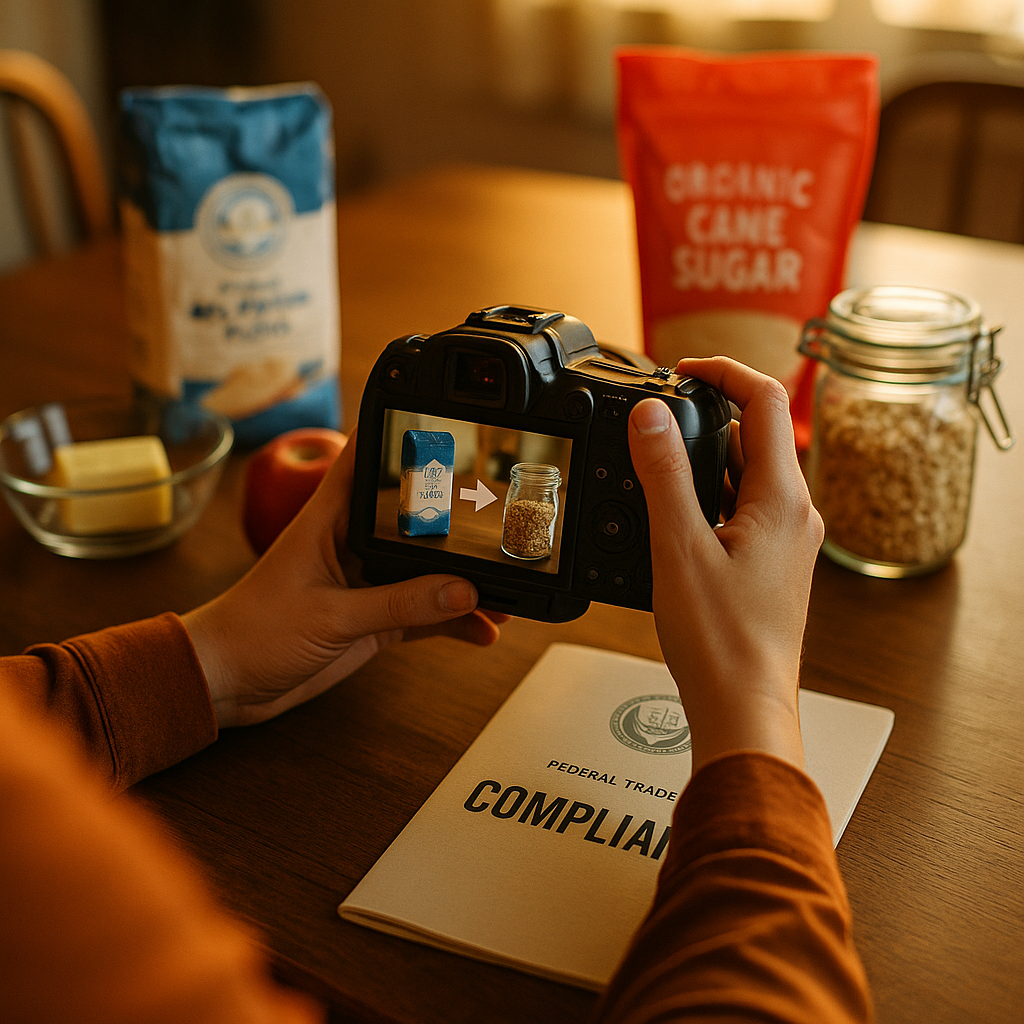
Seventy-three percent of grocery shoppers say they’ve switched brands after watching a creator swap one ingredient for another on video, according to recent emarketer consumer research on food content behavior. That’s not a niche trend anymore. The ingredient swap challenge format has quietly become one of the highest-converting content structures in CPG and food marketing, and most brands are briefing it wrong.
This piece breaks down how to build a creative brief that actually works: one that gets honest product testing, protects you legally, and still produces content people want to watch.
Why the Ingredient Swap Format Works (When Most Food Content Doesn’t)
Food content is oversaturated. Recipe videos, “what I eat in a day,” pantry hauls — viewers scroll past most of it in under two seconds. The ingredient swap challenge cuts through because it has built-in tension. Will the substitute work? Will it taste worse, better, the same? That question keeps people watching to the end, which is exactly the retention signal platforms reward.
The format also does something most branded content can’t: it demonstrates product performance without sounding like an ad. A creator swapping butter for your plant-based spread in a cookie recipe, live on camera, with a visible texture and taste test, reads as research. Not promotion. That distinction matters enormously for trust, and it’s why food brands are shifting budget toward this structure over standard product placement.
The ingredient swap format works because the outcome isn’t scripted-looking, even when it’s fully briefed. Viewers trust a test they can watch unfold in real time far more than a finished, polished claim.
There’s also a practical commerce angle. Swap content maps directly onto a purchase decision moment: “can I use this instead of what I normally buy?” That’s bottom-funnel intent, not top-funnel awareness. Compare that to something like recipe-remix creator briefs, which build discovery and inspiration but ask less of the viewer’s immediate wallet.
What Goes Wrong Without a Real Brief
Most brands hand creators a product and a vague ask: “show a swap, keep it fun.” That’s how you end up with three problems.
First, inconsistent testing conditions. One creator tests your oat-milk substitute in coffee, another in a béchamel sauce, a third in baked goods. None of the results are comparable, and none of them tell a coherent brand story across a campaign.
Second, unintentional negative claims. If a creator says your product “doesn’t rise the same” or “tastes a bit off,” that’s now public content with your brand tag on it. Fine if it’s honest and disclosed as such. Disastrous if it reads as a paid endorsement making an implicit performance claim you can’t back up.
Third, no repeatable structure. Without a brief template, every campaign starts from scratch. That’s expensive and slow, and it makes performance benchmarking nearly impossible.
The Fix: Standardize the Test, Not the Opinion
The brief should lock down the testing methodology while leaving the creator’s honest reaction unscripted. This is the same principle used in product claims content generally: control the conditions, not the conclusion.
Building the Creative Brief: Core Components
A working ingredient swap brief needs six sections. Skip any of them and you’re improvising.
- Swap definition: Name the exact original ingredient and your product substitute. Vague briefs (“try our product instead of dairy”) produce inconsistent tests. Specific briefs (“swap whole milk 1:1 for our oat creamer in a basic pancake batter”) produce comparable results across creators.
- Recipe or use-case parameters: Give creators 2-3 approved recipe contexts, not open choice. This keeps results comparable and prevents someone testing your product in an application it was never designed for.
- Testing structure: Side-by-side (control batch vs. swap batch) or single-batch honest reaction? Side-by-side is more expensive to produce but far more credible. It’s the same logic behind split-screen proof formats that have worked well in beauty and household categories.
- Disclosure language: Non-negotiable. Spell out exact hashtag and verbal disclosure requirements per FTC endorsement guidelines.
- Reaction guardrails: You can’t script “it tastes amazing.” But you can require that any negative feedback be specific and constructive rather than a blanket dismissal, and you can require a follow-up sentence like “results may vary by recipe.” That’s honest, not restrictive.
- Usage rights and format specs: Vertical video, minimum 30 seconds, raw b-roll of both batches included for potential paid amplification.
Sample Brief Language You Can Actually Use
Here’s a condensed template structure worth adapting:
“Swap Objective: Test [Product] as a 1:1 substitute for [ingredient] in [specific recipe]. Film both a control batch and swap batch, side by side, showing prep, cook/bake process, and final result. Taste-test on camera, unscripted reaction required. If texture or taste differs, describe specifically (e.g., ‘denser crumb’ rather than ‘worse’). Include verbal and on-screen disclosure per brand guidelines. Do not claim the swap is ‘healthier’ or ‘better’ unless referencing specific, approved nutritional claims provided in the product one-sheet.”
Notice what this does. It locks the test method, requires specificity in feedback, and pre-empts FTC risk around comparative and health claims. That last point matters more than most brand teams realize; the FTC has been increasingly active on unsubstantiated comparative food claims, and a single “healthier than butter” line from an unvetted creator can trigger real regulatory exposure.
A brief that only says “be authentic” isn’t a brief. It’s a liability waiting for a bad take.
Casting: Who Actually Makes This Format Work
Not every food creator is right for swap content. You want people who already cook regularly on camera, ideally with some baking or scratch-cooking credibility, because viewers can tell when someone’s faking kitchen competence. Nano and micro creators with tight, engaged food audiences often outperform bigger names here. This mirrors what’s worked in nano-creator grocery content: smaller audiences, higher trust, better conversion per view.
Avoid creators whose entire feed is sponsored content. Swap challenges live or die on perceived objectivity. If a creator’s last ten posts are all paid partnerships, the “honest test” framing collapses immediately for viewers who’ve seen the pattern before.
How Many Creators Per Test?
Run the same swap brief across 8-15 creators minimum before drawing conclusions about product performance messaging. One creator’s oat creamer pancakes rising slightly flat could be a fluke of their oven, their measuring, their brand of flour. A pattern across a dozen creators is data. This is also useful internally: if 80% of creators report a consistent minor texture difference, that’s product feedback for R&D, not just a content risk to manage.
Where the Format Goes Wrong Legally
Three risk areas come up constantly with food swap content specifically.
Health and nutrition claims are the biggest one. “Better for you,” “healthier,” “lower calorie” — these all require substantiation the FTC can request. Keep approved claim language in the one-sheet and prohibit improvisation on this front specifically, even though you’re allowing improvisation on taste and texture reactions.
Allergen and dietary claims are the second. If a creator says your product is “gluten-free” or “dairy-free” and that’s not accurately labeled or verified, you’ve got a real problem, not just a content one. Build this verification into legal review before the brief goes out, not after content is filmed.
Comparative brand claims are the third. If the “original” ingredient in the test is a competitor’s named product, get legal sign-off on comparative advertising rules in your specific market before filming. Generic “regular butter” is safer than naming a specific national brand.
For a broader look at how to structure creator content that survives legal review without losing authenticity, the same discipline applies as in FTC-safe UGC briefing more generally — control process, not opinion.
Measuring Whether It Actually Worked
Track three things beyond standard engagement rate: save rate (people bookmarking to try the swap themselves), comment sentiment specifically about product performance (not just “cute video”), and, if you can get retail data access, basket lift in stores or markets where the content ran alongside promotional pricing. Save rate is the strongest early signal for food content; per Sprout Social’s platform benchmarks, saves correlate more tightly with purchase intent than likes or shares in the food and beverage category.
Run this format quarterly rather than as a one-off. Seasonal ingredient swaps (holiday baking substitutes, summer grilling swaps) give you recurring content moments and let you build a library of comparable test data across the year.
Start with one recipe, one clear swap claim, and ten creators before scaling the format across your full roster. Get the brief right on a small test and the version that scales will already be legally sound and creatively proven.
FAQs
What is the ingredient swap challenge format in influencer marketing?
It’s a content format where creators substitute one ingredient for a brand’s product in a recipe on camera, testing and reacting to the result. It works well for food and CPG brands because it demonstrates real product performance rather than relying on scripted claims.
How do you keep ingredient swap content FTC-compliant?
Require clear disclosure language, restrict health and nutrition claims to pre-approved copy, and avoid naming specific competitor products in comparisons unless legal has reviewed the claim. Let creators improvise their taste reaction, not their claims language.
How many creators should run the same swap test?
Aim for at least 8-15 creators running an identical brief before treating results as a pattern. A single creator’s results could reflect an oven, technique, or measurement issue rather than actual product performance.
What metrics matter most for this format?
Save rate, comment sentiment specifically about product performance, and downstream basket lift where retail data is available. Save rate tends to correlate most closely with purchase intent for food content.
Should the brief allow negative reactions?
Yes. Scripted-only positive reactions undermine the format’s credibility. The brief should require specificity in any negative feedback rather than banning it outright, which keeps the content honest and legally defensible.
FAQs
What is the ingredient swap challenge format in influencer marketing?
It’s a content format where creators substitute one ingredient for a brand’s product in a recipe on camera, testing and reacting to the result. It works well for food and CPG brands because it demonstrates real product performance rather than relying on scripted claims.
How do you keep ingredient swap content FTC-compliant?
Require clear disclosure language, restrict health and nutrition claims to pre-approved copy, and avoid naming specific competitor products in comparisons unless legal has reviewed the claim. Let creators improvise their taste reaction, not their claims language.
How many creators should run the same swap test?
Aim for at least 8-15 creators running an identical brief before treating results as a pattern. A single creator’s results could reflect an oven, technique, or measurement issue rather than actual product performance.
What metrics matter most for this format?
Save rate, comment sentiment specifically about product performance, and downstream basket lift where retail data is available. Save rate tends to correlate most closely with purchase intent for food content.
Should the brief allow negative reactions?
Yes. Scripted-only positive reactions undermine the format’s credibility. The brief should require specificity in any negative feedback rather than banning it outright, which keeps the content honest and legally defensible.
Top Influencer Marketing Agencies
The leading agencies shaping influencer marketing in 2026
Agencies ranked by campaign performance, client diversity, platform expertise, proven ROI, industry recognition, and client satisfaction. Assessed through verified case studies, reviews, and industry consultations.
Moburst

-
2

The Shelf
Boutique Beauty & Lifestyle Influencer AgencyA data-driven boutique agency specializing exclusively in beauty, wellness, and lifestyle influencer campaigns on Instagram and TikTok. Best for brands already focused on the beauty/personal care space that need curated, aesthetic-driven content.Clients: Pepsi, The Honest Company, Hims, Elf Cosmetics, Pure LeafVisit The Shelf → -
3

Audiencly
Niche Gaming & Esports Influencer AgencyA specialized agency focused exclusively on gaming and esports creators on YouTube, Twitch, and TikTok. Ideal if your campaign is 100% gaming-focused — from game launches to hardware and esports events.Clients: Epic Games, NordVPN, Ubisoft, Wargaming, Tencent GamesVisit Audiencly → -
4

Viral Nation
Global Influencer Marketing & Talent AgencyA dual talent management and marketing agency with proprietary brand safety tools and a global creator network spanning nano-influencers to celebrities across all major platforms.Clients: Meta, Activision Blizzard, Energizer, Aston Martin, WalmartVisit Viral Nation → -
5

The Influencer Marketing Factory
TikTok, Instagram & YouTube CampaignsA full-service agency with strong TikTok expertise, offering end-to-end campaign management from influencer discovery through performance reporting with a focus on platform-native content.Clients: Google, Snapchat, Universal Music, Bumble, YelpVisit TIMF → -
6

NeoReach
Enterprise Analytics & Influencer CampaignsAn enterprise-focused agency combining managed campaigns with a powerful self-service data platform for influencer search, audience analytics, and attribution modeling.Clients: Amazon, Airbnb, Netflix, Honda, The New York TimesVisit NeoReach → -
7

Ubiquitous
Creator-First Marketing PlatformA tech-driven platform combining self-service tools with managed campaign options, emphasizing speed and scalability for brands managing multiple influencer relationships.Clients: Lyft, Disney, Target, American Eagle, NetflixVisit Ubiquitous → -
8

Obviously
Scalable Enterprise Influencer CampaignsA tech-enabled agency built for high-volume campaigns, coordinating hundreds of creators simultaneously with end-to-end logistics, content rights management, and product seeding.Clients: Google, Ulta Beauty, Converse, AmazonVisit Obviously →