


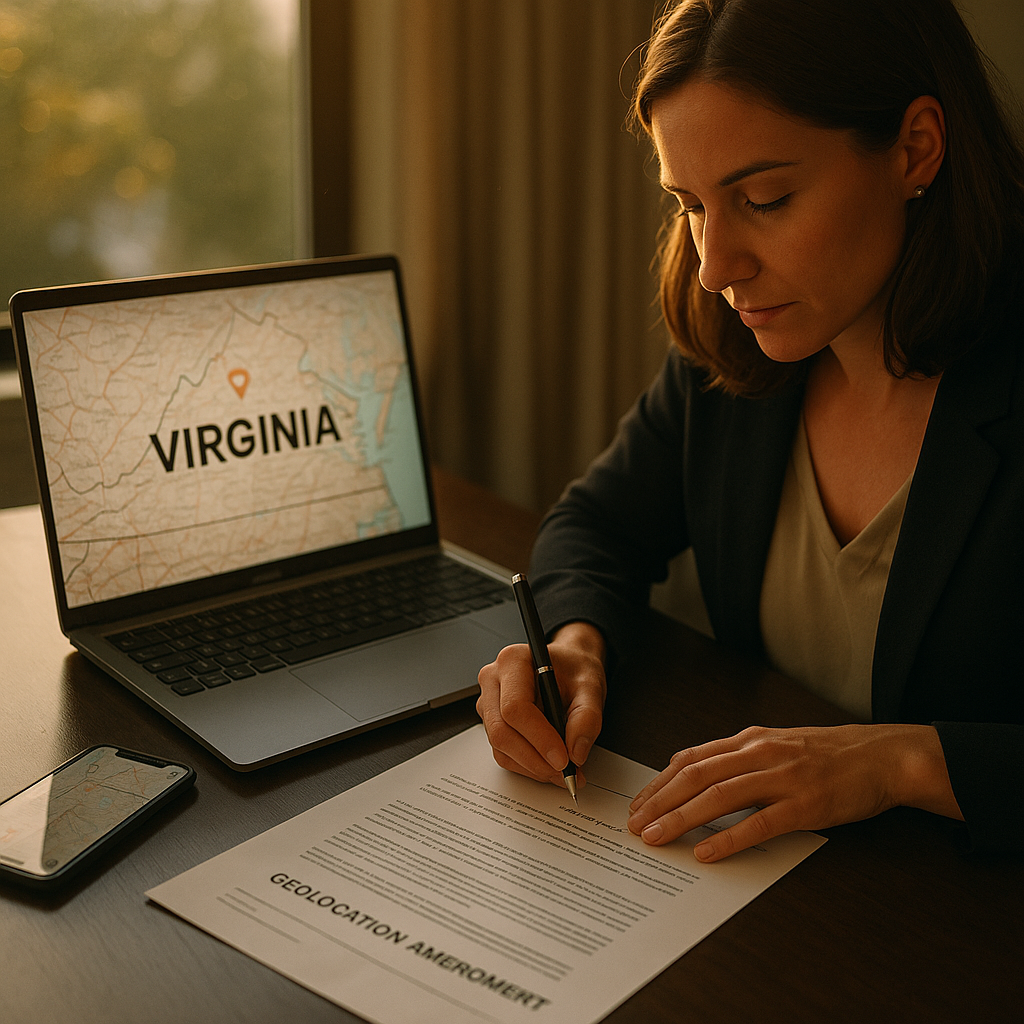
Precise geolocation data now carries the same legal weight as biometric data in Virginia — and most brand-creator platform contracts weren’t written for that reality. If your influencer program touches location-based targeting, in-store attribution, or geofenced creator content, your existing data processing agreements are probably out of date. The Virginia Consumer Data Protection Act’s geolocation amendment isn’t a minor tweak. It’s a redefinition that pulls a huge chunk of influencer marketing tech stacks into “sensitive data” territory, with all the consent friction that entails.
Brands that run creator campaigns with location-triggered content, local affiliate codes, or store-visit measurement need to look hard at their vendor paperwork. This piece breaks down what changed, why it matters for creator platform relationships specifically, and how to actually fix your DPAs before regulators or plaintiffs’ attorneys come looking.
What the Amendment Actually Changes
Virginia’s original VCDPA treated “precise geolocation data” as sensitive when it could identify a specific location within a radius of roughly 1,750 feet. The amendment tightens the definition, narrows exemptions, and explicitly folds in data derived from device signals commonly used by ad tech and influencer platforms — think geofenced push notifications, location-tagged UGC, and store-visit attribution tied to creator promo codes.
Practically, this means any creator platform that collects or processes location signals tied to a Virginia resident now needs affirmative opt-in consent, not just a privacy policy disclosure buried in terms of service. That’s a meaningfully higher bar than the “notice and opt-out” model most brands have relied on.
If your creator platform vendor can’t tell you exactly what location data it collects and why, you don’t have a compliance gap — you have a liability generator waiting for its first plaintiff.
For context, other states are moving in the same direction. Colorado and Connecticut already classify precise geolocation as sensitive data requiring consent, and California’s CPRA regulations under the FTC’s broader privacy enforcement posture keep pushing toward stricter location-data standards nationally. Virginia’s amendment is a bellwether, not an outlier.
Why Creator Platforms Are the Weak Link
Most brand privacy teams focus their DPA reviews on ad networks, CDPs, and analytics vendors. Creator platforms often get waved through because marketing treats them as “content” tools rather than data processors. That’s a mistake, and an increasingly expensive one.
Here’s the reality: influencer marketing platforms routinely process location data through several channels most legal teams never audit:
- Geofenced briefing tools that trigger different creative or CTAs based on a creator’s or audience’s location
- Store-visit attribution connecting a creator’s promo code to in-person foot traffic via mobile ad IDs
- Local affiliate and marketplace features that surface nearby retailers based on precise location
- UGC clipping and repurposing tools that ingest metadata, including geotags, from creator-submitted content
- Event and appearance platforms that verify creator attendance via location pings
Any one of these can trigger sensitive-data obligations under the amended VCDPA. Combine two or three, and you’ve got a platform processing far more regulated data than its standard DPA template accounts for. This is the same blind spot we flagged in our review of UGC clipping network compliance — vendors move fast on features, slower on paperwork.
The DPA Gaps Brands Keep Missing
Pull your current creator platform DPA and check it against these five gaps. Most agreements signed before this year won’t clear the bar.
1. Outdated Sensitive Data Definitions
If your DPA still defines “sensitive personal data” using language copied from the original VCDPA text or a generic multistate template, it likely underweights geolocation. You need language that explicitly incorporates the amended definition, including the narrowed radius threshold and derived-data language covering inferred location.
2. No Consent Verification Mechanism
Opt-in consent only matters if you can prove it happened. Does your DPA require the creator platform to maintain auditable consent records, timestamped and tied to the specific data use? Many platforms currently rely on blanket app permissions rather than granular, purpose-specific consent — which won’t satisfy the amendment’s requirements.
3. Missing Sub-Processor Location Disclosures
Creator platforms often route geolocation data through third-party attribution vendors (think retail media measurement partners or mobile SDK providers). Your DPA needs a current, accessible sub-processor list and a contractual right to object to new ones — especially any that touch location signals.
4. Vague Data Minimization Clauses
The amendment favors purpose limitation. A DPA that lets the platform use geolocation data for “product improvement” or “platform analytics” in addition to the campaign purpose is now a bigger liability than it used to be. Tighten the permitted-use language.
5. Breach Notification Timelines That Don’t Match Risk
Sensitive data breaches carry heavier regulatory scrutiny. If your DPA still gives the vendor 30, 45, or 60 days to notify you of a breach involving geolocation data, that’s too slow relative to Virginia’s enforcement posture and your own downstream obligations to consumers. For a deeper look at getting these clauses right, see our breakdown of breach notification clauses for creator contracts.
What an Updated DPA Should Actually Include
Don’t just patch the old document. Rebuild the geolocation provisions from scratch with your legal and privacy teams, then run it past whoever manages your creator platform relationships day to day — because operational reality matters more than boilerplate here.
- Precise definitions. Adopt the amended VCDPA language verbatim, plus a catch-all for “location data derived from device or network signals.”
- Consent attestation. Require the platform to warrant that opt-in consent was obtained before processing, with records available on request.
- Purpose limitation with teeth. Location data collected for a campaign cannot be repurposed for platform-wide model training or resold to data brokers, full stop.
- Audit rights. Build in the ability to request a data flow map showing exactly where geolocation signals travel, including sub-processors. This mirrors the approach we recommend in right-to-audit clauses for whitelisting deals.
- Deletion and portability guarantees. Confirm the platform can delete location data tied to a specific consumer request within a defined window, not “commercially reasonable efforts.”
- Indemnification aligned to sensitive-data risk. Standard indemnification caps often don’t reflect the elevated penalties tied to sensitive data mishandling. Revisit them, similar to the logic in our piece on indemnification for AI creator-matching platforms.
A DPA that treats geolocation like ordinary behavioral data is now a contract written for a regulatory environment that no longer exists.
Multistate Complexity Is the Real Headache
Virginia doesn’t operate in isolation. Brands running national creator campaigns are juggling VCDPA, Colorado’s CPA, Connecticut’s CTDPA, and California’s evolving CPRA regulations simultaneously — each with slightly different sensitive-data thresholds and consent mechanics. A DPA drafted only to Virginia’s standard will likely fall short elsewhere, and rewriting five separate agreements per vendor isn’t realistic for most marketing ops teams.
The more efficient path: negotiate one DPA addendum that meets the strictest applicable standard across your active states, then map exceptions where a state is more permissive. Most enterprise creator platforms — Grin, CreatorIQ, Aspire, and similar — already have compliance teams accustomed to this multistate patchwork, so don’t assume you’re asking for something unprecedented. You’re asking them to catch up to where the law already is.
This is also a good moment to loop in your data protection officer or outside privacy counsel on cross-border implications, particularly if creator content touches EU audiences too. The consent and processing standards under GDPR are stricter still, and platforms operating internationally should already have infrastructure that can flex toward Virginia’s new bar without much friction. For teams also managing AI-driven creator tools, it’s worth cross-referencing the consent frameworks discussed in creator contract audits for AI training data consent, since geolocation and AI training data gaps often originate from the same vendor blind spots.
A Practical Rollout Timeline
Don’t try to fix everything in one legal sprint. Sequence it:
- Weeks one and two: Inventory every creator platform, tool, or plug-in that touches location data, even indirectly. Include affiliate tools and store-locator widgets.
- Weeks three and four: Request current sub-processor lists and data flow diagrams from each vendor. Flag any that can’t produce them quickly — that’s a signal worth escalating.
- Month two: Draft and negotiate updated DPA addenda, prioritizing vendors with the highest data volume or highest-risk use cases (store attribution, geofenced targeting).
- Month three: Roll out updated consent capture mechanisms with creators and confirm platform-side implementation before your next campaign cycle launches.
Marketing teams often underestimate how long vendor legal negotiations take. Start now, not after your Q3 campaign calendar is locked. According to eMarketer’s influencer marketing forecasts, spend on location-based and localized creator campaigns keeps climbing, which means the volume of exposed data — and your negotiating leverage with vendors — will only grow from here.
Frequently Asked Questions
FAQs
Does Virginia’s geolocation amendment apply to brands outside Virginia?
Yes, if you have Virginia consumers in your audience or campaign targeting. The VCDPA applies based on where consumers are located and the volume of data processed, not where your company is headquartered.
What counts as “precise geolocation data” under the amendment?
Data that can identify a specific location within the amended radius threshold, plus data reasonably derived from device or network signals that reveal that level of precision, even if not explicitly labeled as GPS coordinates.
Do I need to update DPAs with every creator platform, or just ones using location targeting?
Prioritize platforms that touch location data in any form: geofencing, store-visit attribution, geotagged UGC, or local affiliate tools. Platforms with no location data processing carry lower urgency but should still confirm that in writing.
Can creator platforms rely on their existing privacy policy consent instead of a new opt-in flow?
No. The amendment requires affirmative, specific consent for sensitive data processing. General privacy policy acknowledgment or browser-level opt-out mechanisms don’t meet that standard.
What happens if a creator platform vendor refuses to update its DPA?
That’s a strong signal to escalate internally and consider pausing location-data-dependent features with that vendor until compliant terms are in place. Continuing to process sensitive data under outdated terms shifts liability back onto the brand.
How does this amendment interact with FTC disclosure rules for creators?
They’re separate but related obligations. FTC rules govern disclosure of material connections between brands and creators; the VCDPA amendment governs consumer data handling. Both require updated contract language, and brands managing one should audit the other simultaneously.
Next step: Pull your top five creator platform contracts this week and check them against the sensitive-data definition and consent-verification gaps outlined above. The vendors that can’t answer basic questions about geolocation data flows are the ones creating your next compliance headline.
FAQs
Does Virginia’s geolocation amendment apply to brands outside Virginia?
Yes, if you have Virginia consumers in your audience or campaign targeting. The VCDPA applies based on where consumers are located and the volume of data processed, not where your company is headquartered.
What counts as “precise geolocation data” under the amendment?
Data that can identify a specific location within the amended radius threshold, plus data reasonably derived from device or network signals that reveal that level of precision, even if not explicitly labeled as GPS coordinates.
Do I need to update DPAs with every creator platform, or just ones using location targeting?
Prioritize platforms that touch location data in any form: geofencing, store-visit attribution, geotagged UGC, or local affiliate tools. Platforms with no location data processing carry lower urgency but should still confirm that in writing.
Can creator platforms rely on their existing privacy policy consent instead of a new opt-in flow?
No. The amendment requires affirmative, specific consent for sensitive data processing. General privacy policy acknowledgment or browser-level opt-out mechanisms don’t meet that standard.
What happens if a creator platform vendor refuses to update its DPA?
That’s a strong signal to escalate internally and consider pausing location-data-dependent features with that vendor until compliant terms are in place. Continuing to process sensitive data under outdated terms shifts liability back onto the brand.
How does this amendment interact with FTC disclosure rules for creators?
They’re separate but related obligations. FTC rules govern disclosure of material connections between brands and creators; the VCDPA amendment governs consumer data handling. Both require updated contract language, and brands managing one should audit the other simultaneously.
Top Influencer Marketing Agencies
The leading agencies shaping influencer marketing in 2026
Agencies ranked by campaign performance, client diversity, platform expertise, proven ROI, industry recognition, and client satisfaction. Assessed through verified case studies, reviews, and industry consultations.
Moburst

-
2

The Shelf
Boutique Beauty & Lifestyle Influencer AgencyA data-driven boutique agency specializing exclusively in beauty, wellness, and lifestyle influencer campaigns on Instagram and TikTok. Best for brands already focused on the beauty/personal care space that need curated, aesthetic-driven content.Clients: Pepsi, The Honest Company, Hims, Elf Cosmetics, Pure LeafVisit The Shelf → -
3

Audiencly
Niche Gaming & Esports Influencer AgencyA specialized agency focused exclusively on gaming and esports creators on YouTube, Twitch, and TikTok. Ideal if your campaign is 100% gaming-focused — from game launches to hardware and esports events.Clients: Epic Games, NordVPN, Ubisoft, Wargaming, Tencent GamesVisit Audiencly → -
4

Viral Nation
Global Influencer Marketing & Talent AgencyA dual talent management and marketing agency with proprietary brand safety tools and a global creator network spanning nano-influencers to celebrities across all major platforms.Clients: Meta, Activision Blizzard, Energizer, Aston Martin, WalmartVisit Viral Nation → -
5

The Influencer Marketing Factory
TikTok, Instagram & YouTube CampaignsA full-service agency with strong TikTok expertise, offering end-to-end campaign management from influencer discovery through performance reporting with a focus on platform-native content.Clients: Google, Snapchat, Universal Music, Bumble, YelpVisit TIMF → -
6

NeoReach
Enterprise Analytics & Influencer CampaignsAn enterprise-focused agency combining managed campaigns with a powerful self-service data platform for influencer search, audience analytics, and attribution modeling.Clients: Amazon, Airbnb, Netflix, Honda, The New York TimesVisit NeoReach → -
7

Ubiquitous
Creator-First Marketing PlatformA tech-driven platform combining self-service tools with managed campaign options, emphasizing speed and scalability for brands managing multiple influencer relationships.Clients: Lyft, Disney, Target, American Eagle, NetflixVisit Ubiquitous → -
8

Obviously
Scalable Enterprise Influencer CampaignsA tech-enabled agency built for high-volume campaigns, coordinating hundreds of creators simultaneously with end-to-end logistics, content rights management, and product seeding.Clients: Google, Ulta Beauty, Converse, AmazonVisit Obviously →