


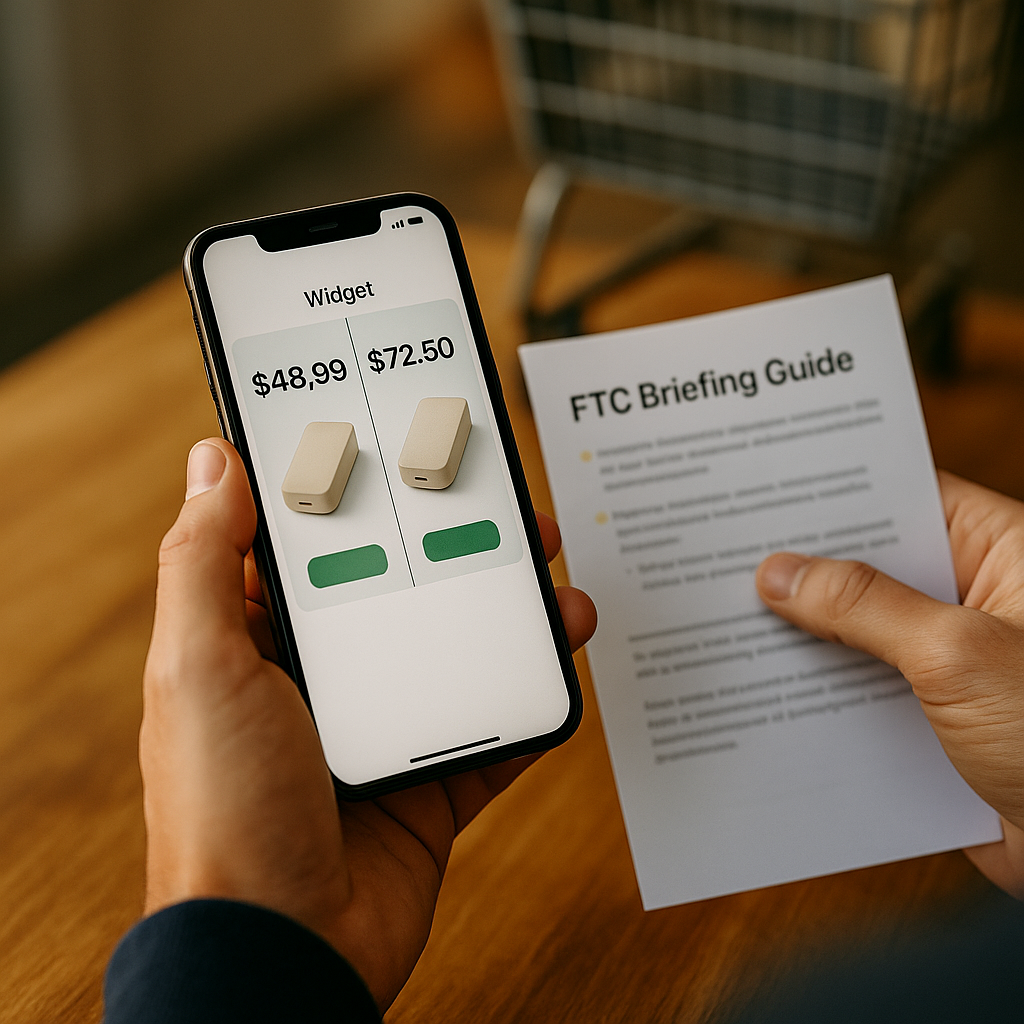
Same product, two phones, two prices. That’s the entire hook of the split-screen price comparison format, and it’s quietly becoming one of the most-requested creator briefs in retail and travel marketing. Why? Because 78% of consumers believe companies use personal data to charge different prices, according to consumer research cited widely across pricing studies — and creators who prove it (or debunk it) earn outsized trust. The catch: this format sits closer to the FTC’s crosshairs than most brand teams realize.
What This Format Actually Shows
The mechanics are simple. A creator opens two devices — say, an iPhone with a loyalty account logged in and an older Android with a cleared cache — and pulls up the same flight, hotel room, or product listing side by side. The screen splits down the middle. Viewers watch prices load in real time. Sometimes they match. Sometimes they don’t. That gap is the entire payoff.
It works because it answers a question every online shopper has silently asked: am I getting the same deal as everyone else? Dynamic pricing, personalized offers, and algorithmic markups aren’t new, but they’ve historically been invisible. This format makes them visible, which is exactly why it performs — and exactly why brands need a tighter brief than usual.
The split-screen price comparison format turns an invisible backend process into a six-second visual proof point — which is precisely what makes it both persuasive and legally sensitive.
Why Brands Are Greenlighting It
Travel booking platforms, e-commerce marketplaces, and subscription services are the biggest adopters right now. Retail media budgets are shifting toward formats that feel like consumer investigation rather than advertising, and this one delivers that in spades. It’s essentially a trust demonstration dressed up as entertainment.
- Transparency positioning: Brands that come out ahead in the comparison (same price, no games) get a credibility halo that traditional ad copy can’t buy.
- Competitive contrast: Some briefs quietly encourage creators to compare the brand’s pricing consistency against a competitor’s fluctuating algorithm.
- Retention hook: When the comparison shows loyalty members getting better rates, it reinforces the value of signing up or staying subscribed.
It pairs naturally with other proof-driven formats too. Brands already running split-screen proof content or a split-screen debate format often fold this pricing angle into the same production cycle, since the visual grammar is already familiar to their audience.
The Compliance Problem Nobody Wants to Talk About
Here’s where marketing teams get nervous, and rightly so. If a creator demonstrates a price difference and implies it’s due to “the algorithm knowing you’re desperate” or “punishing loyal customers,” and that claim isn’t substantiated by the brand’s actual pricing logic, you’ve got an unsubstantiated claims problem. The FTC has been explicit that endorsements and demonstrations need to reflect typical, honest experiences, not staged narratives. Guidance from the Federal Trade Commission makes clear that a demonstration implying a general truth about pricing behavior needs to actually be true, generally, not just true in the one screen recording that got the best B-roll.
There’s also a device-fingerprinting wrinkle. Some of the “price differences” creators capture aren’t algorithmic personalization at all — they’re caused by browser cache, VPN location, currency defaults, or app-versus-web pricing structures that have nothing to do with user profiling. If a creator’s video implies malicious personalization when the real cause was a stale session cookie, that’s a factual misrepresentation, not just a disclosure gap.
A price difference on screen is not proof of algorithmic discrimination — it might just be geolocation, currency conversion, or app-versus-browser pricing. Brands need to verify the cause before creators frame the narrative.
This is the same discipline brands have had to build for other data-driven formats. Teams that have already built briefing muscle around the algorithmic pricing explainer approach will recognize the pattern: explain the mechanism honestly, don’t let the creator freelance a conspiracy theory for views.
Building the Brief: What Goes In It
A workable brief for this format needs to do more legwork upfront than a typical UGC brief. You’re not just approving hooks and CTAs — you’re pre-verifying the claim the video is going to make.
- Confirm the pricing mechanism first. Talk to your pricing or revenue management team before you talk to the creator. Is the difference driven by loyalty tier, regional tax, device-specific app promotions, or genuine algorithmic personalization? Document it.
- Script the causal explanation, not just the visual. The creator’s voiceover should state the actual reason for any price gap. “This price is different because I’m logged into the app, which has its own promo tier” is compliant. “The algorithm charges you more if it thinks you’re rich” is not, unless you can prove it.
- Require a disclosed partnership tag. This is sponsored content demonstrating your product or platform. #ad or #partner needs to appear in the first frame, not buried in a caption, per FTC endorsement guidance.
- Standardize the testing conditions. Same city, same time window, same connection type where possible. Inconsistent testing conditions make the “reveal” feel manipulated, and eagle-eyed commenters will call it out.
- Pre-approve the on-screen price data. Screenshots of real prices are your brand’s factual claims now. Legal should see them before publish, not after.
Brands that already run structured claims overlays for other product categories will find this translates well — the discipline of “show the data, cite the source” applies just as much to pricing screens as ingredient labels.
What Happens When You Skip the Verification Step
Picture a travel creator filming a split-screen showing a $340 flight on one phone and a $410 flight on another, captioned “airlines know when you’re desperate.” Compelling. Shareable. Also potentially false, if the real cause was that one device had a saved companion pass discount. Once that video hits 2 million views and a journalist or competitor calls out the discrepancy, the brand is now defending a claim it never verified. That’s not a hypothetical risk profile — it’s the exact pattern that’s burned brands running unverified demonstration content in other categories.
This is why legal and comms should be in the brief-approval loop from day one, not brought in after a script is written. Marketing teams under pressure to hit a content calendar often skip this step. Don’t.
Where It Fits in the Broader Content Mix
This format shouldn’t run alone. It works best as one entry in a portfolio of trust-building creator content, paired with formats that show process rather than just outcome. Consider sequencing it alongside a countdown-timer livestream for urgency-based bookings, or a shoppable live-commerce brief if the goal is direct conversion rather than pure trust-signaling.
For travel and hospitality brands specifically, the format slots naturally next to origin-to-departure documentary content, since both rely on showing rather than telling. Consumers are fatigued by claims. They respond to demonstrations, even (especially) when the demonstration reveals something slightly uncomfortable about how pricing works.
Measurement-wise, track save rate and comment sentiment more closely than raw views. This format tends to spike shares when it validates a suspicion viewers already had, per patterns documented in eMarketer research on trust-driven content formats. Watch for comment threads debating the cause of the price gap — that’s your signal the explanation in the video wasn’t clear enough, and a pinned comment or caption edit may be needed post-publish.
Platforms are also starting to build native tools around price transparency, following broader retail media shifts documented by Statista on personalized pricing perception. Expect TikTok Shop and Instagram Shopping to eventually surface price-history data natively, which will make creator-led comparisons even more scrutinized for accuracy, not less.
Frequently Asked Questions
Is the split-screen price comparison format legally risky for brands?
It carries more risk than a standard UGC review video because it makes a factual claim about how pricing works. The risk isn’t the format itself, it’s failing to verify the cause of any price difference before the creator narrates it as algorithmic discrimination.
Do creators need to disclose partnership on this type of video?
Yes. If the brand commissioned, gifted, or compensated the creator in any way, standard FTC endorsement disclosure rules apply, including a clear #ad or #partner tag in the first frame, not just the caption.
What’s the difference between algorithmic pricing and device-based pricing quirks?
Algorithmic pricing personalizes offers based on user data and behavior signals. Device-based quirks (app-only promos, cached currency settings, VPN-detected regions) look identical on screen but stem from entirely different, non-personalized causes. Brands must confirm which one is actually happening before approving a script.
How is this format different from a general split-screen debate video?
A split-screen debate typically pits two creators’ opinions against each other. This format uses the split screen to show data, specifically live pricing, making it closer to a demonstration ad than an opinion piece, which raises the substantiation bar.
Which brands benefit most from this format?
Travel booking platforms, e-commerce marketplaces, subscription services, and any brand with a loyalty tier or app-exclusive pricing structure benefit most, since they can showcase consistent or favorable pricing as a trust signal.
What metrics should brands track beyond views?
Save rate, share rate, and comment sentiment matter more than raw views. Comments debating or questioning the cause of a price gap are an early signal that the video’s explanation needs clarification or a pinned follow-up.
Frequently Asked Questions
Before you greenlight a single split-screen script, get pricing, legal, and creative in the same room to confirm what’s actually causing the number on screen to change. If you can’t explain the gap in one honest sentence, don’t let a creator explain it in a viral one.
Top Influencer Marketing Agencies
The leading agencies shaping influencer marketing in 2026
Agencies ranked by campaign performance, client diversity, platform expertise, proven ROI, industry recognition, and client satisfaction. Assessed through verified case studies, reviews, and industry consultations.
Moburst

-
2

The Shelf
Boutique Beauty & Lifestyle Influencer AgencyA data-driven boutique agency specializing exclusively in beauty, wellness, and lifestyle influencer campaigns on Instagram and TikTok. Best for brands already focused on the beauty/personal care space that need curated, aesthetic-driven content.Clients: Pepsi, The Honest Company, Hims, Elf Cosmetics, Pure LeafVisit The Shelf → -
3

Audiencly
Niche Gaming & Esports Influencer AgencyA specialized agency focused exclusively on gaming and esports creators on YouTube, Twitch, and TikTok. Ideal if your campaign is 100% gaming-focused — from game launches to hardware and esports events.Clients: Epic Games, NordVPN, Ubisoft, Wargaming, Tencent GamesVisit Audiencly → -
4

Viral Nation
Global Influencer Marketing & Talent AgencyA dual talent management and marketing agency with proprietary brand safety tools and a global creator network spanning nano-influencers to celebrities across all major platforms.Clients: Meta, Activision Blizzard, Energizer, Aston Martin, WalmartVisit Viral Nation → -
5

The Influencer Marketing Factory
TikTok, Instagram & YouTube CampaignsA full-service agency with strong TikTok expertise, offering end-to-end campaign management from influencer discovery through performance reporting with a focus on platform-native content.Clients: Google, Snapchat, Universal Music, Bumble, YelpVisit TIMF → -
6

NeoReach
Enterprise Analytics & Influencer CampaignsAn enterprise-focused agency combining managed campaigns with a powerful self-service data platform for influencer search, audience analytics, and attribution modeling.Clients: Amazon, Airbnb, Netflix, Honda, The New York TimesVisit NeoReach → -
7

Ubiquitous
Creator-First Marketing PlatformA tech-driven platform combining self-service tools with managed campaign options, emphasizing speed and scalability for brands managing multiple influencer relationships.Clients: Lyft, Disney, Target, American Eagle, NetflixVisit Ubiquitous → -
8

Obviously
Scalable Enterprise Influencer CampaignsA tech-enabled agency built for high-volume campaigns, coordinating hundreds of creators simultaneously with end-to-end logistics, content rights management, and product seeding.Clients: Google, Ulta Beauty, Converse, AmazonVisit Obviously →