


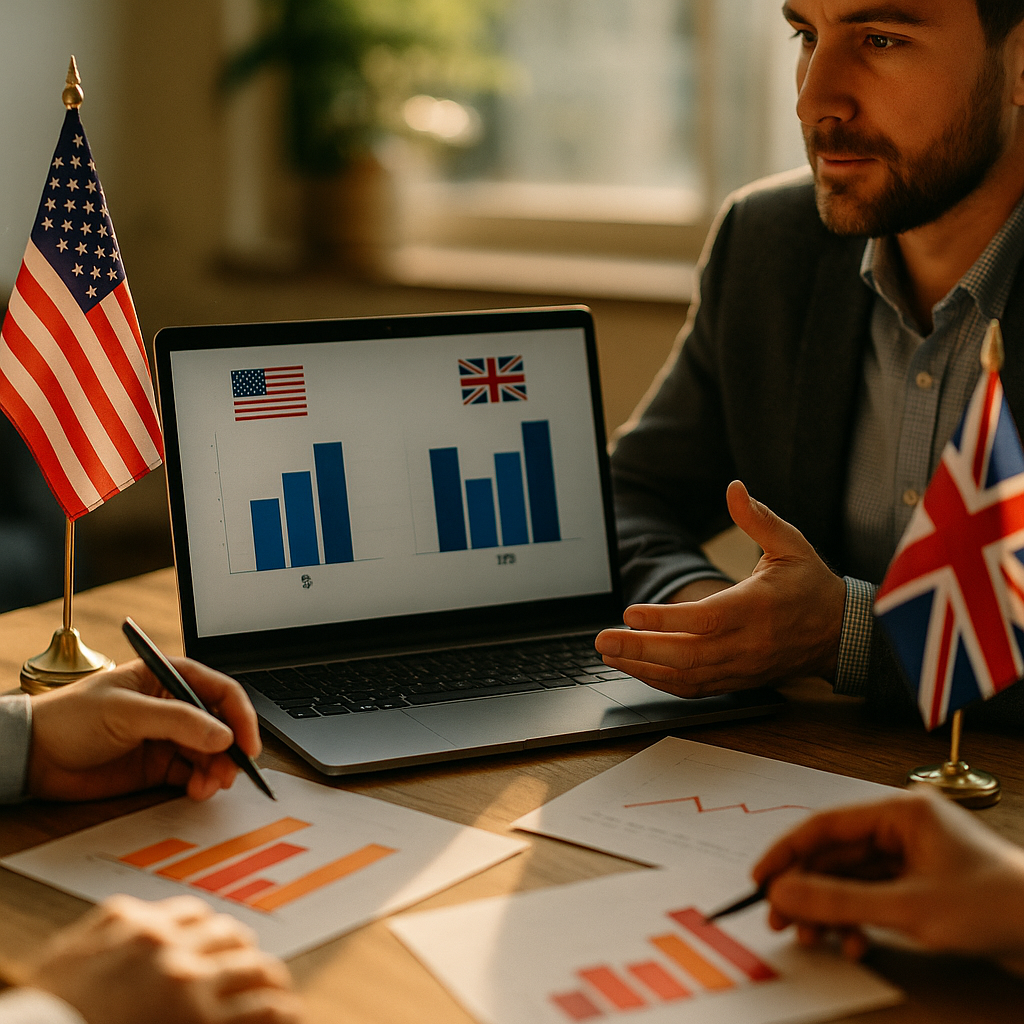
Roughly 60% of Google searches now end without a click, and generative answers are eating the rest. So when a plumber in Leeds or a dentist in Ohio asks “do I need AI search optimization?” the honest answer is: probably, but the market building answer engine optimization frameworks for local businesses is still wildly inconsistent — and that inconsistency is costing clients money.
Some agencies are selling glorified schema markup as “AEO strategy.” Others have built genuinely rigorous, multi-layered deliverables that track citation share across ChatGPT, Gemini, and Perplexity. The gap between the two is enormous, and most local business owners can’t tell the difference until they’ve already signed a retainer.
Why Local Businesses Became the AEO Battleground
Local intent queries — “best HVAC repair near me,” “emergency dentist open now” — are exactly the kind of questions AI assistants love answering directly. No click required. Google’s AI Overviews, ChatGPT’s browsing mode, and Perplexity’s local business cards all compete to surface a single trusted answer instead of ten blue links.
That shift terrifies independent operators who built their entire acquisition strategy on ranking in the Google Map Pack. It’s also created a gold rush for consultancies rebranding traditional local SEO as “AEO” without changing much beyond the invoice header. We’ve covered the broader distinction in AEO vs GEO frameworks, but the local business context adds another layer: these clients typically lack in-house marketing teams, have thin budgets, and need deliverables that are simple to understand but still defensible against churn.
The consultancies winning local AEO contracts aren’t the ones with the fanciest dashboards — they’re the ones who can explain, in one sentence, why a business appeared (or didn’t) in an AI-generated answer.
UK Consultancies: Compliance-First, Citation-Heavy
UK-based AI-SEO shops tend to build their frameworks around structured data hygiene and citation consistency across trusted directories — Companies House listings, Trustpilot, industry bodies, local press mentions. This isn’t accidental. UK consultancies operate under tighter data protection expectations, and many have internalized ICO guidance on transparency in ways that shape how they talk about AI training data and scraping consent.
A typical UK deliverable package looks like this:
- An initial “AI visibility audit” benchmarking the client’s current presence across ChatGPT, Gemini, and Perplexity for 15-30 branded and category queries
- Schema.org markup implementation (LocalBusiness, FAQPage, Review) validated against Google’s structured data guidelines
- A citation consistency sweep across UK-specific directories (Yell, Checkatrade, industry regulators)
- Monthly reporting on “answer inclusion rate” rather than traditional keyword rank
What’s notable is the restraint. UK firms are generally more conservative about promising specific AI Overview placements, likely because overpromising in a regulated advertising environment carries real reputational risk. Several consultancies we’ve reviewed frame their pricing around audit tiers rather than results guarantees — a structure we broke down in detail in the AI visibility audit buyers guide, which remains one of the clearest ways to compare what you’re actually paying for.
US Consultancies: Speed, Volume, and Aggressive KPIs
American AI-SEO shops, by contrast, lean into speed and scale. Many have absorbed the “growth marketing” mindset from the broader digital agency world — ship fast, test constantly, report weekly. Deliverables often include:
- Automated share-of-voice tracking across dozens of AI assistants simultaneously, often built on top of tools originally designed for enterprise brand monitoring
- Aggressive content velocity targets — sometimes 10-20 new FAQ-style pages per month designed specifically to answer long-tail conversational queries
- Google Business Profile optimization bundled directly into the AEO retainer, since local packs still feed a meaningful chunk of AI-generated local answers
- Competitive citation gap analysis, showing exactly which directories a competitor is listed on that the client isn’t
The US model tends to be more willing to promise measurable lift, sometimes citing specific percentage increases in “AI mention share” within 90 days. That’s a bolder claim than most UK firms will make, and it’s not always backed by methodology that would survive scrutiny. Some of this mirrors patterns we’ve seen in eMarketer’s coverage of AI search adoption, where US brands generally move faster on emerging channels but also churn vendors faster when results lag.
Pricing Tells the Real Story
UK local AEO retainers commonly sit between £500-£1,500/month for small businesses, scaling toward £3,000+ for multi-location operators. US pricing runs noticeably higher — often $1,000-$4,000/month — partly reflecting higher agency overhead, and partly reflecting the volume-heavy content production model baked into most US packages.
Neither market has settled on standardized pricing, which is itself a signal. AEO is young enough that consultancies are still testing what the market will bear, not what the work actually costs to deliver well.
Where Both Models Fall Short
Here’s the uncomfortable truth: most local AEO frameworks, UK and US alike, still measure success using proxies rather than direct outcomes. “Answer inclusion rate” and “AI mention share” are useful directional signals, but they’re not the same as tracking whether a real customer called the business after seeing it referenced in a Perplexity answer.
Attribution remains the industry’s biggest unsolved problem. Unlike traditional SEO, there’s no equivalent of Google Search Console for most AI assistants — no first-party click data, no impression logs a small business owner can independently verify. Consultancies are largely relying on third-party scraping tools or manual query sampling, which introduces sampling bias at scale.
This is where the parallel to broader marketing AI governance becomes relevant. Just as brands are learning to audit AI systems embedded in their CRM and marketing automation stacks, local business clients need a way to verify AEO claims independently rather than trusting a single agency’s self-reported dashboard.
If your AEO consultancy can’t tell you which specific query triggered a citation, on which model, on which date — you’re buying a promise, not a measurement.
A Practical Framework Comparison
Strip away the branding and most credible AEO frameworks, regardless of country, converge on four pillars:
- Entity clarity: Is the business unambiguously identifiable to a language model, with consistent NAP (name, address, phone) data across every indexed source?
- Structured data completeness: Schema markup that gives AI crawlers explicit, machine-readable facts instead of forcing inference from prose
- Third-party corroboration: Reviews, press mentions, and directory listings that reinforce claims made on the business’s own site — AI models weight independent confirmation heavily
- Conversational content coverage: Pages that directly answer the phrasing real customers use when talking to an assistant, not just keyword-stuffed service pages
The consultancies doing this well, on either side of the Atlantic, treat these four pillars as sequential, not simultaneous. Fix entity clarity before you chase content volume. It’s the same discipline that shows up in enterprise-level work like RAG-based product data governance — get the underlying facts right before optimizing the presentation layer.
What Should a Local Business Actually Ask Before Signing?
A few blunt questions separate credible AEO consultancies from repackaged SEO retainers:
- Can you show me the exact prompts you used to benchmark our current AI visibility?
- How do you distinguish between Google AI Overviews performance and answers generated by ChatGPT, Gemini, or Perplexity specifically?
- What happens to my reporting if a model updates its training data or retrieval method mid-contract?
- Is structured data implementation included, or billed as a separate project?
If a consultancy can’t answer the first question with specifics, walk away. Vague benchmarking is the clearest tell that “AEO” is marketing language layered over an unchanged service.
Next Step
Local business marketers evaluating AEO consultancies should demand a documented query-level benchmark before signing anything, and revisit it quarterly against a fixed prompt set — that’s the only way to separate genuine visibility gains from agency storytelling.
Frequently Asked Questions
What is answer engine optimization for local businesses?
Answer engine optimization (AEO) for local businesses involves structuring website content, data, and third-party citations so AI assistants like ChatGPT, Gemini, and Perplexity can accurately surface and recommend the business in conversational answers, rather than relying solely on traditional search rankings.
How is AEO different from traditional local SEO?
Traditional local SEO optimizes for ranking in search engine results pages and the Google Map Pack. AEO optimizes for being cited or recommended directly within AI-generated answers, which requires stronger structured data, consistent entity information, and third-party corroboration that language models can trust.
Why do UK and US AEO consultancies structure deliverables differently?
UK consultancies tend to prioritize compliance, structured data hygiene, and conservative reporting influenced by data protection expectations. US consultancies typically emphasize speed, content volume, and more aggressive visibility guarantees, reflecting broader differences in agency culture and client risk tolerance.
How much should a local business expect to pay for AEO services?
UK retainers commonly range from £500 to £1,500 per month for small businesses, scaling higher for multi-location operators. US pricing tends to run higher, often between $1,000 and $4,000 per month, partly due to more content-heavy service models.
Can AEO results be measured reliably?
Measurement remains imperfect industry-wide. Most consultancies rely on manual or automated query sampling since AI assistants don’t offer the equivalent of Google Search Console. Businesses should insist on documented, query-level benchmarking rather than accepting vague visibility claims.
Top Influencer Marketing Agencies
The leading agencies shaping influencer marketing in 2026
Agencies ranked by campaign performance, client diversity, platform expertise, proven ROI, industry recognition, and client satisfaction. Assessed through verified case studies, reviews, and industry consultations.
Moburst

-
2

The Shelf
Boutique Beauty & Lifestyle Influencer AgencyA data-driven boutique agency specializing exclusively in beauty, wellness, and lifestyle influencer campaigns on Instagram and TikTok. Best for brands already focused on the beauty/personal care space that need curated, aesthetic-driven content.Clients: Pepsi, The Honest Company, Hims, Elf Cosmetics, Pure LeafVisit The Shelf → -
3

Audiencly
Niche Gaming & Esports Influencer AgencyA specialized agency focused exclusively on gaming and esports creators on YouTube, Twitch, and TikTok. Ideal if your campaign is 100% gaming-focused — from game launches to hardware and esports events.Clients: Epic Games, NordVPN, Ubisoft, Wargaming, Tencent GamesVisit Audiencly → -
4

Viral Nation
Global Influencer Marketing & Talent AgencyA dual talent management and marketing agency with proprietary brand safety tools and a global creator network spanning nano-influencers to celebrities across all major platforms.Clients: Meta, Activision Blizzard, Energizer, Aston Martin, WalmartVisit Viral Nation → -
5

The Influencer Marketing Factory
TikTok, Instagram & YouTube CampaignsA full-service agency with strong TikTok expertise, offering end-to-end campaign management from influencer discovery through performance reporting with a focus on platform-native content.Clients: Google, Snapchat, Universal Music, Bumble, YelpVisit TIMF → -
6

NeoReach
Enterprise Analytics & Influencer CampaignsAn enterprise-focused agency combining managed campaigns with a powerful self-service data platform for influencer search, audience analytics, and attribution modeling.Clients: Amazon, Airbnb, Netflix, Honda, The New York TimesVisit NeoReach → -
7

Ubiquitous
Creator-First Marketing PlatformA tech-driven platform combining self-service tools with managed campaign options, emphasizing speed and scalability for brands managing multiple influencer relationships.Clients: Lyft, Disney, Target, American Eagle, NetflixVisit Ubiquitous → -
8

Obviously
Scalable Enterprise Influencer CampaignsA tech-enabled agency built for high-volume campaigns, coordinating hundreds of creators simultaneously with end-to-end logistics, content rights management, and product seeding.Clients: Google, Ulta Beauty, Converse, AmazonVisit Obviously →