


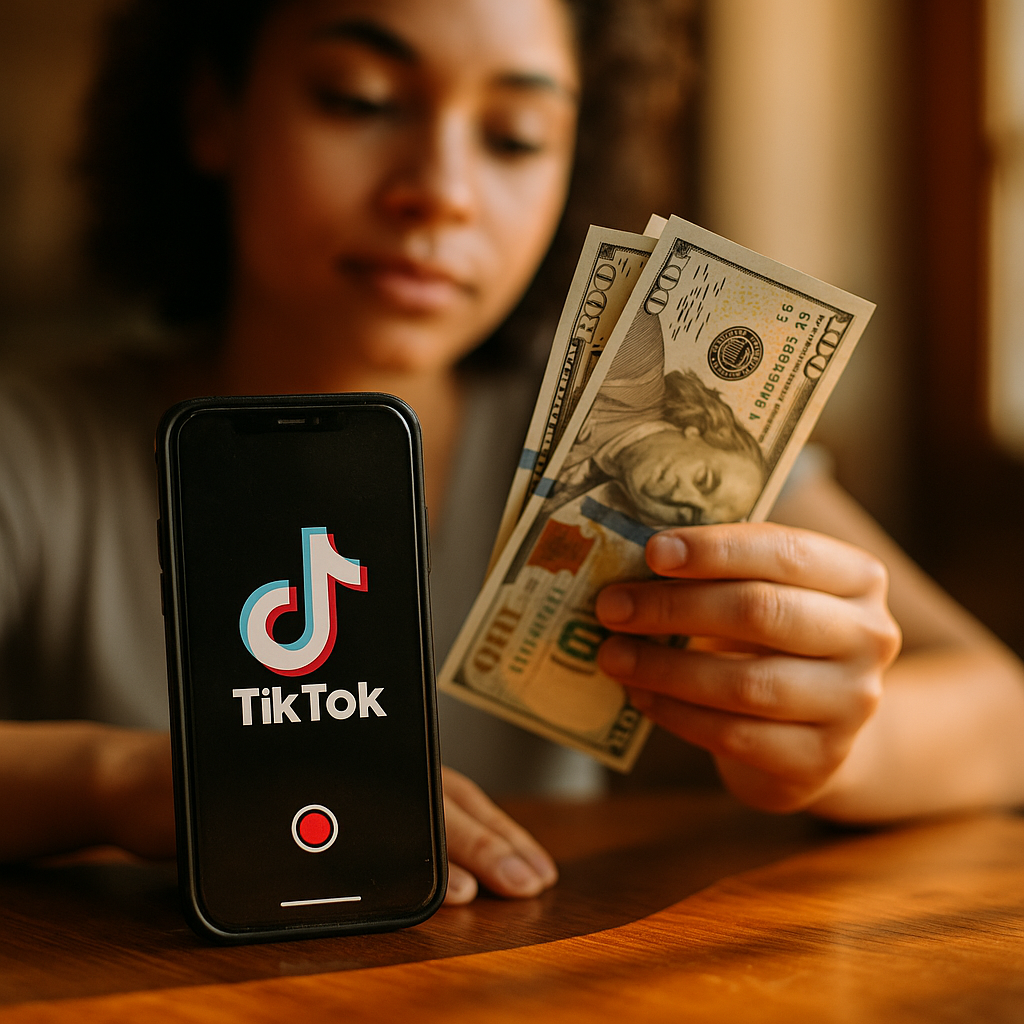
A creator with 8,000 followers is out-earning one with 800,000 — and it’s not a fluke. Micro-creator pricing power has become the defining budget story of the year, as TikTok’s algorithmic distribution model decouples reach from audience size. If your media plan still allocates the biggest checks to the biggest follower counts, you’re already behind.
The Follower Count Lie
For years, influencer pricing followed a simple rule: more followers, more money. That logic is breaking down fast. TikTok’s For You Page doesn’t care how many people follow an account — it cares whether the content performs in the first few hundred views. A creator with 12,000 followers can post a video that reaches 4 million people if the hook lands and completion rates hold. A creator with 2 million followers can post something that dies at 8,000 views because the algorithm decided it wasn’t worth amplifying further.
This is the mechanism reshaping creator economy budgets right now. Brands paying flat rates based on follower tiers are essentially pricing blind. Meanwhile, savvy media buyers have figured out that a $400 micro-creator post can outperform a $15,000 macro placement on cost-per-engagement, cost-per-view, and increasingly, cost-per-conversion.
Micro-creators aren’t cheap because they’re less valuable. They’re cheap because pricing hasn’t caught up to what the algorithm already knows.
Why TikTok’s Long-Tail Model Changes the Math
TikTok’s distribution architecture is fundamentally different from Instagram’s follower-graph model or YouTube’s subscription-driven feed. It’s a content-graph system: every video gets tested against a small sample audience first, then scaled based on signals like watch time, shares, and re-watches. This means distribution is decoupled from audience size in a way that simply doesn’t happen on other platforms.
The result? A long tail of micro and nano creators who can generate outsized reach without an existing large following. eMarketer and other analysts have repeatedly flagged rising creator ad spend as brands chase this efficiency (eMarketer tracks these shifts closely). The pattern shows up in the data: our own coverage of creator ad spend growth found budgets moving toward volume-based micro deals rather than single-hero macro placements.
Here’s the uncomfortable truth for brand teams still building talent rosters around celebrity creators: virality on TikTok is not an audience-size problem. It’s a content-quality and hook-strength problem. That’s a different skill set, and it’s one micro-creators — often hungrier, more niche, more responsive to briefs — tend to have in spades.
What “Pricing Power” Actually Means Here
Pricing power for micro-creators doesn’t mean they’re suddenly charging macro rates. It means their negotiating leverage per-dollar-spent has improved dramatically. A micro-creator earning $250 per branded video who consistently drives 300,000+ organic views has a stronger ROI case than a macro-creator charging $20,000 for a post that reaches their existing (often saturated) follower base.
Brands are responding by restructuring deals: smaller base fees, performance bonuses tied to view thresholds, and multi-creator “swarm” campaigns instead of single-influencer hero content. This mirrors the shift toward creator equity deals and hybrid compensation models we’ve tracked across the industry — flat fees are increasingly seen as a blunt, outdated instrument.
Budget Reallocation: What the Numbers Show
The shift isn’t theoretical. Marketing teams running TikTok-heavy programs report allocating 40-60% of influencer budgets to creators under 50,000 followers, up from roughly 15-20% just a couple of cycles ago. That’s not a marginal rebalancing. That’s a structural bet that long-tail amplification beats concentrated reach.
Why does this matter for CFOs and CMOs signing off on budgets? Because it changes the risk profile of influencer spend entirely. A macro deal concentrates risk in one creator, one post, one moment of algorithmic luck. A distributed micro-creator strategy spreads that risk across dozens of creators, each with lower individual cost and lower individual downside if a single video underperforms.
Spreading spend across 30 micro-creators isn’t just cheaper — it’s a risk-mitigation strategy dressed up as a media plan.
This is also why our coverage of the creator middle class outperforming top talent on ROI and retention keeps resurfacing in budget conversations. It’s not an anomaly. It’s the new baseline expectation for TikTok-first programs.
The Supply Glut Complicates Things
There’s a wrinkle, though. With over 100 million people worldwide now identifying as creators in some capacity, brands face a discovery problem, not a scarcity problem. Finding the right micro-creators at scale requires tooling — TikTok’s own Creator Marketplace, plus third-party platforms — because manual vetting doesn’t scale past a handful of partnerships. We covered this supply-side pressure in depth in our piece on the creator supply glut, and the operational implications are real: more creators to vet means more fraud risk, more inconsistent quality, and more time spent on compliance review.
Compliance Doesn’t Get Easier at Volume
Running 40 micro-creator partnerships instead of 3 macro deals multiplies your FTC disclosure exposure, not shrinks it. Every creator needs clear #ad or #sponsored labeling, every contract needs usage rights spelled out, and every brief needs to account for platform-specific disclosure rules. The FTC’s endorsement guidelines apply regardless of follower count — a nano-creator with 6,000 followers carries the same legal disclosure obligation as a celebrity with 6 million.
Brands scaling micro-creator programs need standardized contract templates, automated disclosure checks, and ideally a centralized dashboard tracking which creators have signed what. This is where a lot of in-house teams get burned: they treat micro-creator deals as informal or low-stakes because the dollar amounts are small, then discover a compliance gap across 25 simultaneous partnerships. The administrative overhead of volume-based creator strategy is real, and it needs headcount or tooling investment to match.
There’s also the platform concentration risk to consider. Building an entire budget reallocation strategy around TikTok’s specific algorithmic behavior is a bet on one platform’s product decisions staying stable. We’ve written before about why platform risk should factor into any creator strategy — TikTok’s regulatory situation in the US remains unsettled, and any brand over-indexing on TikTok-specific amplification mechanics should have a contingency plan for Instagram Reels or YouTube Shorts distribution.
How Should Brands Actually Restructure Deals?
A few operational shifts are worth adopting now, based on what’s working across TikTok-first influencer programs:
- Shift base fees down, add performance tiers. Pay a modest flat rate, then bonus creators for hitting view or engagement thresholds. This aligns incentives with actual algorithmic performance rather than follower-count promises.
- Run creator swarms, not hero campaigns. Fifteen micro-creators posting variations of the same concept generates more algorithmic surface area than one expensive macro post.
- Build in usage rights for whitelisting. Micro-creator content often performs well as paid social when boosted through the brand’s own ad account — negotiate that upfront, cheaply, rather than renegotiating later.
- Invest in discovery tooling. Manual scouting doesn’t scale. Platforms like TikTok’s Creator Marketplace (TikTok for Business) and third-party influencer platforms are becoming essential infrastructure, not nice-to-haves.
- Standardize compliance workflows. Template contracts, automated disclosure reminders, and a single source of truth for creator agreements prevent volume from becoming a liability.
None of this means macro creators are dead. Celebrity and mega-influencer partnerships still serve brand awareness and prestige positioning in ways micro-creators can’t replicate. But for performance marketing, conversion-driven campaigns, and cost-efficient reach, the math increasingly favors the long tail. Brands running TikTok Shop programs are seeing this play out directly — our analysis of TikTok Shop conversion rates shows live-selling and micro-creator content consistently outperforming static, macro-driven placements on actual purchase behavior.
Where This Leaves Budget Planning
The brands winning right now aren’t the ones with the biggest influencer names on their roster. They’re the ones who’ve rebuilt their pricing models around algorithmic reality instead of vanity metrics. That requires new contract structures, new discovery tooling, and a compliance function that can handle volume — but the ROI case is already proven out in the data.
Frequently Asked Questions
What counts as a micro-creator in the current market?
Most brands define micro-creators as accounts with 10,000 to 100,000 followers, though the more useful distinction is engagement-to-reach ratio rather than a hard follower threshold. Nano-creators, typically under 10,000 followers, are increasingly folded into the same budget conversation because TikTok’s algorithm treats them similarly.
Why does TikTok favor micro-creators over macro talent?
TikTok’s For You Page distributes content based on performance signals like watch time and shares, tested against small audience samples first, rather than relying on existing follower graphs. This means a video’s reach depends on content quality and hook strength, not the creator’s total audience size.
Is micro-creator pricing power sustainable long-term?
It’s tied directly to TikTok’s current algorithmic model, so any major platform changes could shift the economics again. Brands should treat this as the current market reality while building diversified strategies across platforms to hedge against single-platform dependency.
How should brands structure micro-creator contracts differently?
Lower base fees paired with performance bonuses, clear usage rights for paid whitelisting, and standardized disclosure language work best at scale. Because volume increases compliance exposure, contracts need to be templated and tracked centrally rather than negotiated ad hoc.
Does working with more micro-creators increase compliance risk?
Yes. Every creator, regardless of follower count, must meet FTC disclosure requirements, so running dozens of simultaneous partnerships multiplies administrative and legal exposure compared to a handful of macro deals. Brands need dedicated tracking systems to manage this at volume.
Frequently Asked Questions
What counts as a micro-creator in the current market? Most brands define micro-creators as accounts with 10,000 to 100,000 followers, though the more useful distinction is engagement-to-reach ratio rather than a hard follower threshold. Nano-creators, typically under 10,000 followers, are increasingly folded into the same budget conversation because TikTok’s algorithm treats them similarly.
Why does TikTok favor micro-creators over macro talent? TikTok’s For You Page distributes content based on performance signals like watch time and shares, tested against small audience samples first, rather than relying on existing follower graphs. This means a video’s reach depends on content quality and hook strength, not the creator’s total audience size.
Is micro-creator pricing power sustainable long-term? It’s tied directly to TikTok’s current algorithmic model, so any major platform changes could shift the economics again. Brands should treat this as the current market reality while building diversified strategies across platforms to hedge against single-platform dependency.
How should brands structure micro-creator contracts differently? Lower base fees paired with performance bonuses, clear usage rights for paid whitelisting, and standardized disclosure language work best at scale. Because volume increases compliance exposure, contracts need to be templated and tracked centrally rather than negotiated ad hoc.
Does working with more micro-creators increase compliance risk? Yes. Every creator, regardless of follower count, must meet FTC disclosure requirements, so running dozens of simultaneous partnerships multiplies administrative and legal exposure compared to a handful of macro deals. Brands need dedicated tracking systems to manage this at volume.
Top Influencer Marketing Agencies
The leading agencies shaping influencer marketing in 2026
Agencies ranked by campaign performance, client diversity, platform expertise, proven ROI, industry recognition, and client satisfaction. Assessed through verified case studies, reviews, and industry consultations.
Moburst

-
2

The Shelf
Boutique Beauty & Lifestyle Influencer AgencyA data-driven boutique agency specializing exclusively in beauty, wellness, and lifestyle influencer campaigns on Instagram and TikTok. Best for brands already focused on the beauty/personal care space that need curated, aesthetic-driven content.Clients: Pepsi, The Honest Company, Hims, Elf Cosmetics, Pure LeafVisit The Shelf → -
3

Audiencly
Niche Gaming & Esports Influencer AgencyA specialized agency focused exclusively on gaming and esports creators on YouTube, Twitch, and TikTok. Ideal if your campaign is 100% gaming-focused — from game launches to hardware and esports events.Clients: Epic Games, NordVPN, Ubisoft, Wargaming, Tencent GamesVisit Audiencly → -
4

Viral Nation
Global Influencer Marketing & Talent AgencyA dual talent management and marketing agency with proprietary brand safety tools and a global creator network spanning nano-influencers to celebrities across all major platforms.Clients: Meta, Activision Blizzard, Energizer, Aston Martin, WalmartVisit Viral Nation → -
5

The Influencer Marketing Factory
TikTok, Instagram & YouTube CampaignsA full-service agency with strong TikTok expertise, offering end-to-end campaign management from influencer discovery through performance reporting with a focus on platform-native content.Clients: Google, Snapchat, Universal Music, Bumble, YelpVisit TIMF → -
6

NeoReach
Enterprise Analytics & Influencer CampaignsAn enterprise-focused agency combining managed campaigns with a powerful self-service data platform for influencer search, audience analytics, and attribution modeling.Clients: Amazon, Airbnb, Netflix, Honda, The New York TimesVisit NeoReach → -
7

Ubiquitous
Creator-First Marketing PlatformA tech-driven platform combining self-service tools with managed campaign options, emphasizing speed and scalability for brands managing multiple influencer relationships.Clients: Lyft, Disney, Target, American Eagle, NetflixVisit Ubiquitous → -
8

Obviously
Scalable Enterprise Influencer CampaignsA tech-enabled agency built for high-volume campaigns, coordinating hundreds of creators simultaneously with end-to-end logistics, content rights management, and product seeding.Clients: Google, Ulta Beauty, Converse, AmazonVisit Obviously →