


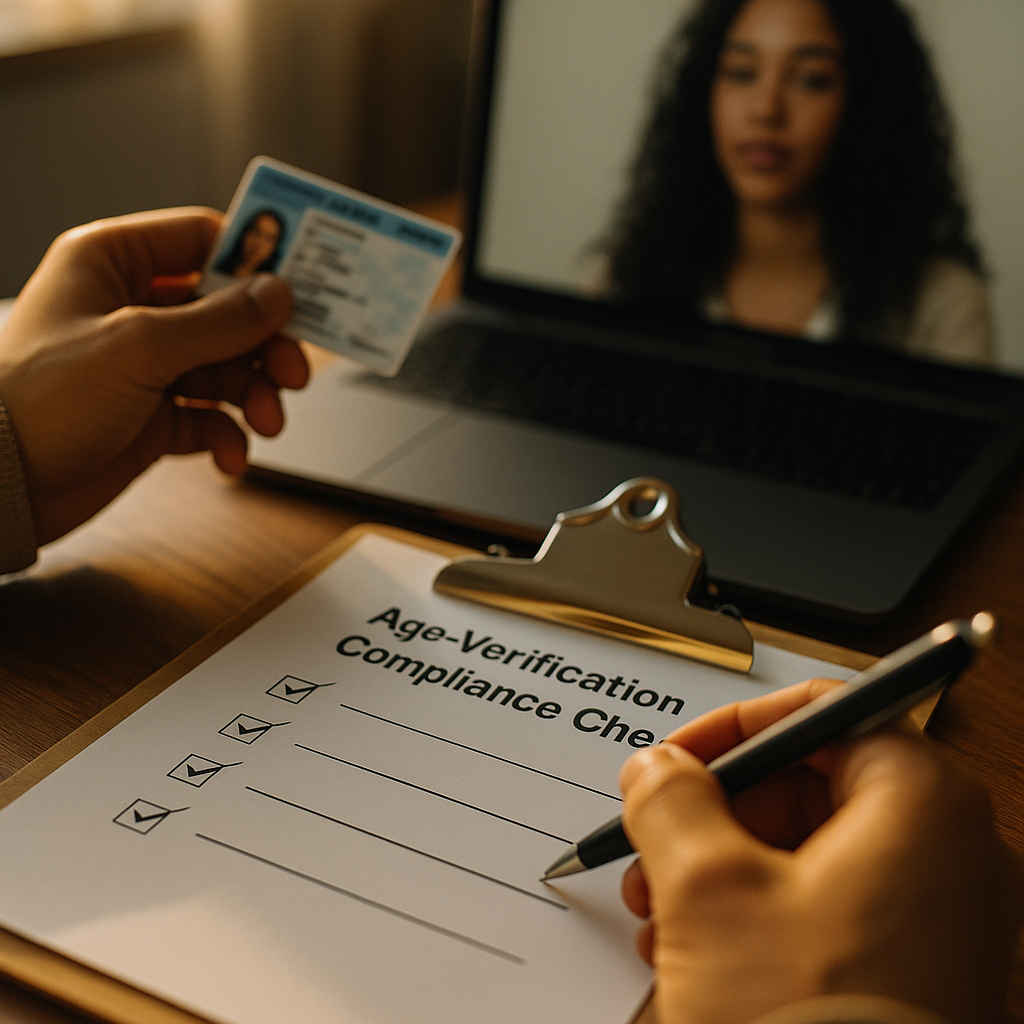
Nineteen states now have age-verification or app-store parental consent laws on the books, and roughly a dozen more have bills moving through committee. If your national creator campaign reaches a single under-16 follower in Utah, Texas, or Louisiana, you’re already subject to rules your national media plan probably never accounted for. Age-verification statutes weren’t written with influencer marketing in mind, but they apply to it anyway, and the patchwork is getting messier by the quarter.
This isn’t a hypothetical compliance exercise for the legal team to handle “eventually.” It’s an operational problem sitting inside your media plan right now, and it needs a checklist, not a memo.
Why One National Campaign Now Means Fifty Different Legal Postures
Here’s the uncomfortable math: a creator with 2 million followers on TikTok or YouTube almost certainly has audience members under 16 in every state, even if the brand’s target demo is 25-to-34-year-old parents. Platforms know this. Regulators know this. Brands, frequently, do not build for it.
Utah’s Minor Protection in Social Media Act, Texas’s App Store Accountability Act, and Louisiana’s parental consent requirements each define “minor,” “consent,” and “verifiable parental knowledge” slightly differently. Add California’s Age-Appropriate Design Code, Connecticut’s data privacy amendments, and the FTC’s ongoing COPPA enforcement posture, and you get a compliance surface with no single national standard. Meanwhile, the platforms themselves are shifting under you — see how recent platform privacy changes have already forced brands to rethink consent flows mid-campaign.
A campaign compliant in New York can be a legal liability in Louisiana the moment the same asset runs against the same creator’s followers there. Geography doesn’t stop content from traveling — but liability follows the audience, not the media buy.
The result: legal and media teams that used to coordinate quarterly now need a live, continuously updated compliance map. Not a PDF. A process.
The Core Compliance Checklist
Treat this as your baseline audit before any creator brief with mixed-age reach goes live.
- Map creator audience age distribution by state, not just by platform. TikTok’s Creator Marketplace and YouTube’s analytics dashboards both offer geographic and (estimated) age breakdowns. Pull these before booking, not after a complaint.
- Identify which of the creator’s top ten audience states have active age-verification or parental consent statutes. Texas, Utah, Louisiana, Arkansas, Virginia, and Florida currently lead in enforcement activity; treat these as your “hot zone” states requiring extra review.
- Confirm the legal basis for any data collection tied to the campaign — quizzes, giveaways, email capture, app downloads — against COPPA and the relevant state statute’s parental consent threshold.
- Segment paid amplification by age-targeting parameters where the platform allows it, and document the segmentation logic in the media plan itself, not a side email.
- Require creators to disclose known audience skew in the contract, with a clause obligating notice if a video “breaks out” to a younger demographic post-publish.
- Build a state-by-state escalation matrix so legal, not media buying, decides whether a campaign pauses in a specific state when verification gaps appear.
- Retain records for at least the statute of limitations window in your most conservative state — often three years — covering targeting logic, consent flows, and creator briefs.
None of this is exotic. It’s the same rigor brands already apply to Texas and Florida parental consent segmentation, just extended to a broader state list and tied directly to creator selection rather than paid media alone.
Where TikTok Shop and Livestream Formats Raise the Stakes
Shoppable content complicates everything. A standard branded video is one thing; a TikTok Shop livestream with real-time purchasing, comment-driven upsells, and impulse-buy mechanics is another entirely. If under-16 viewers can tap through to checkout, you’ve moved from a disclosure problem into a transaction-consent problem — and that’s a different statute entirely in most states.
TikTok’s own TikTok for Business platform has tightened seller verification requirements over the past year, partly in response to this exact exposure. Brands running supplement, beauty, or financial-product livestreams should already be familiar with the TikTok Shop verification freeze rule and how it interacts with age-gating at checkout. The gap most teams miss: verification at the platform account level does not equal verification at the individual purchase level. A 14-year-old can still be logged into a parent’s verified account.
For supplement and wellness brands specifically, the supplement brief checklist for age verification is worth building into your creator onboarding regardless of category — the underlying consent logic transfers even if you’re selling apparel or electronics.
What About Disclosure Language Itself?
Age-verification compliance doesn’t replace FTC disclosure obligations — it stacks on top of them. A campaign can nail its age-gating and still get flagged if the sponsorship disclosure itself is inadequate for a younger audience’s comprehension level. The FTC has been explicit that disclosures must be clear “to the intended audience,” which raises the bar when that audience skews younger than intended. Review your disclosure standard for gifted and affiliate posts against a simpler comprehension threshold if any meaningful share of reach is under 16.
Build a State Tiering System — Don’t Treat All 50 States the Same
Trying to build one national policy that satisfies every state’s strictest requirement is tempting but usually wasteful. It slows every campaign down to the pace of your most regulated market. Instead, tier states by enforcement risk and statutory clarity:
- Tier 1 (active enforcement, clear statutes): Texas, Utah, Louisiana, Arkansas. Require full checklist compliance, legal sign-off, and documented audience segmentation before launch.
- Tier 2 (statute passed, enforcement pending or narrow): Florida, Virginia, Connecticut, California AADC provisions. Require checklist compliance but allow marketing ops (not legal) to sign off using pre-approved templates.
- Tier 3 (no statute yet, but bill activity): Monitor quarterly, no operational change required yet, but flag creators with heavy audience concentration here for future review.
This tiering approach mirrors how smart teams already handle notice-and-cure obligations under Vermont’s data law — triaging by actual enforcement risk rather than treating every jurisdiction identically. It’s the only way to keep campaign velocity while still closing the real gaps.
Compliance debt compounds the same way technical debt does. Skip the audience mapping on one campaign, and by the third quarter you’re reconciling six overlapping creator contracts with no consistent age-verification record between them.
Contract Language That Actually Protects You
Most influencer contracts still treat age-verification as a platform responsibility, not a brand one. That’s a mistake regulators are increasingly unwilling to accept. Build these provisions into every creator agreement where under-16 reach is plausible:
- A warranty from the creator regarding known audience age composition, updated quarterly for always-on partnerships.
- An indemnification clause specific to age-verification failures, distinct from general FTC disclosure indemnification — these are different risk categories and shouldn’t be bundled into one boilerplate paragraph.
- A right to audit, allowing the brand to pull platform analytics directly rather than relying solely on creator self-reporting.
- A pause clause, giving the brand unilateral authority to halt distribution in a specific state without breaching the broader contract.
Brands already building layered liability language for AI-driven media buying should recognize the pattern — it’s the same logic behind liability riders for automated media buying, just applied to human creators instead of bidding agents. The underlying principle: liability should sit with whoever controls the variable that creates risk, and audience composition is controlled more by the creator’s historical content than by the brand’s targeting.
Who Actually Owns This Inside the Organization?
In most brands, no one does — yet. Legal assumes marketing is tracking audience demographics. Marketing assumes legal is tracking statutes. Media buying assumes the platform is handling verification. Everyone’s technically right, and the gap between them is exactly where the exposure lives.
The fix isn’t another department. It’s a single owned checklist, reviewed at brief approval, not after launch. Assign it to whoever already owns FTC disclosure review — usually a compliance lead sitting between legal and marketing ops — and fold age-verification into the same pre-flight process. Duplicating review structures for every new regulation is how compliance teams burn out and start rubber-stamping instead of actually checking.
Industry benchmarking from eMarketer’s creator economy research suggests influencer spend continues to outpace traditional digital ad growth, which means more dollars flowing through exactly this unregulated seam every quarter. The brands treating this as a checklist item now will simply spend less time firefighting later.
The Takeaway
Build your state tiering system this quarter, assign single ownership of the age-verification checklist, and require audience-age mapping at brief approval — not after a campaign goes live and a Tier 1 state notices first.
FAQs
Do age-verification statutes apply to organic influencer content, or only paid campaigns?
Most current statutes focus on data collection, account creation, and transactional features rather than organic content viewing itself. However, if organic posts drive traffic to age-gated purchases, quizzes, or app downloads, the statute’s consent requirements typically apply regardless of whether the post was paid or organic.
Can we rely on the platform’s age verification instead of building our own process?
No. Platform-level verification confirms the account holder’s age, not the actual viewer’s age at the moment of engagement. Regulators have signaled that brands and advertisers carry independent responsibility for reasonable diligence, separate from platform-level controls.
What’s the practical difference between COPPA and state age-verification laws?
COPPA is a federal law focused specifically on data collection from children under 13, enforced by the Federal Trade Commission. State statutes like those in Texas, Utah, and Louisiana often extend protections to under-16 or under-18 audiences and cover broader areas like app store consent and design features, not just data collection.
How often should we re-audit a creator’s audience age composition?
Quarterly at minimum for always-on partnerships, and immediately before any campaign that includes shoppable features, giveaways, or data capture. Audience composition shifts faster than most contracts anticipate, especially after a creator’s content goes viral outside its original demographic.
Does this affect brands running campaigns only in low-enforcement states?
Yes, because creator content isn’t geographically contained. A creator based in a low-enforcement state can still have significant follower concentrations in Texas or Utah, and the applicable law follows the audience location, not the brand’s home state or the creator’s location.
FAQs
Do age-verification statutes apply to organic influencer content, or only paid campaigns?
Most current statutes focus on data collection, account creation, and transactional features rather than organic content viewing itself. However, if organic posts drive traffic to age-gated purchases, quizzes, or app downloads, the statute’s consent requirements typically apply regardless of whether the post was paid or organic.
Can we rely on the platform’s age verification instead of building our own process?
No. Platform-level verification confirms the account holder’s age, not the actual viewer’s age at the moment of engagement. Regulators have signaled that brands and advertisers carry independent responsibility for reasonable diligence, separate from platform-level controls.
What’s the practical difference between COPPA and state age-verification laws?
COPPA is a federal law focused specifically on data collection from children under 13, enforced by the Federal Trade Commission. State statutes like those in Texas, Utah, and Louisiana often extend protections to under-16 or under-18 audiences and cover broader areas like app store consent and design features, not just data collection.
How often should we re-audit a creator’s audience age composition?
Quarterly at minimum for always-on partnerships, and immediately before any campaign that includes shoppable features, giveaways, or data capture. Audience composition shifts faster than most contracts anticipate, especially after a creator’s content goes viral outside its original demographic.
Does this affect brands running campaigns only in low-enforcement states?
Yes, because creator content isn’t geographically contained. A creator based in a low-enforcement state can still have significant follower concentrations in Texas or Utah, and the applicable law follows the audience location, not the brand’s home state or the creator’s location.
Top Influencer Marketing Agencies
The leading agencies shaping influencer marketing in 2026
Agencies ranked by campaign performance, client diversity, platform expertise, proven ROI, industry recognition, and client satisfaction. Assessed through verified case studies, reviews, and industry consultations.
Moburst

-
2

The Shelf
Boutique Beauty & Lifestyle Influencer AgencyA data-driven boutique agency specializing exclusively in beauty, wellness, and lifestyle influencer campaigns on Instagram and TikTok. Best for brands already focused on the beauty/personal care space that need curated, aesthetic-driven content.Clients: Pepsi, The Honest Company, Hims, Elf Cosmetics, Pure LeafVisit The Shelf → -
3

Audiencly
Niche Gaming & Esports Influencer AgencyA specialized agency focused exclusively on gaming and esports creators on YouTube, Twitch, and TikTok. Ideal if your campaign is 100% gaming-focused — from game launches to hardware and esports events.Clients: Epic Games, NordVPN, Ubisoft, Wargaming, Tencent GamesVisit Audiencly → -
4

Viral Nation
Global Influencer Marketing & Talent AgencyA dual talent management and marketing agency with proprietary brand safety tools and a global creator network spanning nano-influencers to celebrities across all major platforms.Clients: Meta, Activision Blizzard, Energizer, Aston Martin, WalmartVisit Viral Nation → -
5

The Influencer Marketing Factory
TikTok, Instagram & YouTube CampaignsA full-service agency with strong TikTok expertise, offering end-to-end campaign management from influencer discovery through performance reporting with a focus on platform-native content.Clients: Google, Snapchat, Universal Music, Bumble, YelpVisit TIMF → -
6

NeoReach
Enterprise Analytics & Influencer CampaignsAn enterprise-focused agency combining managed campaigns with a powerful self-service data platform for influencer search, audience analytics, and attribution modeling.Clients: Amazon, Airbnb, Netflix, Honda, The New York TimesVisit NeoReach → -
7

Ubiquitous
Creator-First Marketing PlatformA tech-driven platform combining self-service tools with managed campaign options, emphasizing speed and scalability for brands managing multiple influencer relationships.Clients: Lyft, Disney, Target, American Eagle, NetflixVisit Ubiquitous → -
8

Obviously
Scalable Enterprise Influencer CampaignsA tech-enabled agency built for high-volume campaigns, coordinating hundreds of creators simultaneously with end-to-end logistics, content rights management, and product seeding.Clients: Google, Ulta Beauty, Converse, AmazonVisit Obviously →