


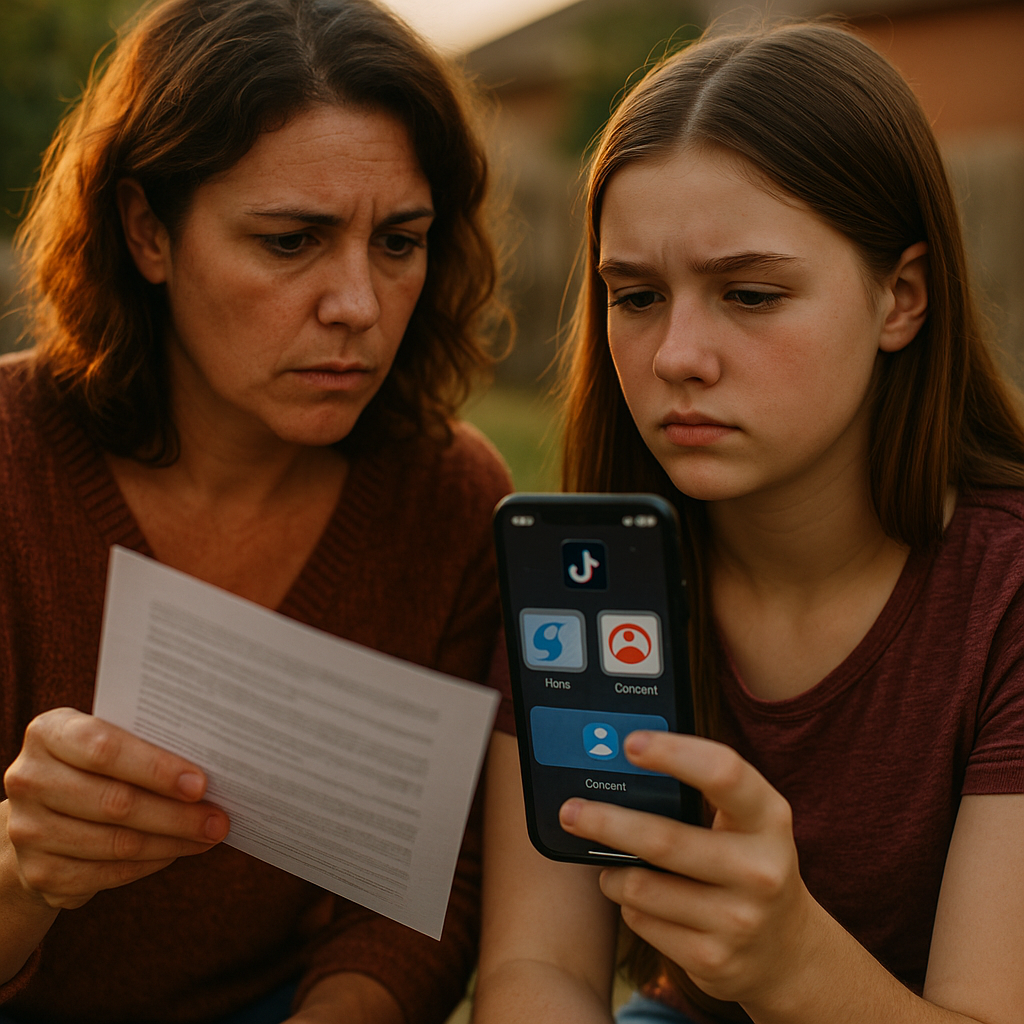
Twenty-one states now require some form of age verification or parental consent for minors on social platforms. Texas and Florida just made theirs the strictest in the country. If your creator campaign runs the same brief nationally, you’re probably already out of compliance somewhere — and you may not even know it.
That’s not a scare tactic. It’s the operational reality brands face heading into 2026 media planning cycles. Texas and Florida’s new social media parental consent laws don’t just affect platforms — they reach into how brands target, cast, and activate creator campaigns involving minors, teen-adjacent audiences, or family content verticals.
What Texas and Florida Actually Require
Texas’s HB 18 (the App Store Accountability-adjacent framework) and its updated SCOPE Act provisions require platforms to verify age and obtain verifiable parental consent before minors under 18 can create accounts, receive targeted ads, or engage with certain algorithmic recommendation features. Florida’s HB 3, meanwhile, bars minors under 14 from holding social media accounts at all and requires parental consent for 14- and 15-year-olds, with stiff penalties for platforms that don’t enforce it.
Neither law targets brands directly. That’s the trap. Both laws shift enforcement burden to platforms, but the downstream effect hits every advertiser running youth-adjacent creator campaigns through those platforms.
Here’s the practical problem: if TikTok or Instagram can’t verify a Florida 15-year-old’s parental consent status in real time, they may simply suppress ad delivery to that segment entirely, or worse, misclassify adjacent age brackets out of caution. Your national campaign’s reach in two of the largest ad markets in the country just got unpredictable.
Texas and Florida together represent roughly 9% of the U.S. population under 18 — but their compliance requirements can effectively reshape platform-wide targeting logic, not just in-state delivery.
Why “National Campaign” Is Becoming a Misnomer
Marketers love the efficiency of one brief, one creative package, one media plan, fifty states. That model is cracking.
Platforms are responding to state-level parental consent laws by building geofenced consent flows rather than maintaining fifty separate compliance systems. Meta and TikTok have both signaled — through public policy statements and developer documentation — that age-assurance mechanisms will vary by jurisdiction. That means your creator content, even if identical, may render differently, get throttled differently, or require different disclosure treatment depending on where the viewer sits.
For brands running influencer campaigns that include teen or family-skewing creators — think back-to-school retail, gaming, beauty for teens, youth sports apparel — this isn’t a hypothetical. It’s a targeting and measurement problem happening right now.
The Compliance Gap Nobody’s Pricing In
Ask your media buying team this: can you currently segment campaign delivery by state-specific minor-consent status? Most can’t. Most ad tech stacks were built for demographic and interest targeting, not regulatory-tier targeting.
This is the same structural gap we’ve seen with data minimization requirements in platform vendor agreements — see our breakdown of data minimization clauses for TikTok Shop and IG vendors for how that played out on the commerce side. Parental consent law is the audience-targeting equivalent.
Reconciling State Law With Campaign Reach: Four Moves
- Segment creative briefs by consent-tier states. Texas, Florida, Utah, and Louisiana now form a de facto “high-scrutiny” bloc. Treat them as a distinct targeting segment, not an afterthought footnote in your national plan.
- Push age-assurance verification upstream, not downstream. Don’t wait for the platform to catch a compliance gap. Build creator casting and campaign targeting decisions around verified audience composition data before launch, not after a state AG inquiry.
- Audit your platform’s consent architecture per campaign, not per year. Platform policies are shifting quarterly right now. What was compliant in Q1 may not hold by Q3.
- Contractually shift disclosure and age-representation obligations to creators where appropriate. This mirrors the approach brands have taken with brand script approval and FTC liability lines — the more specific the contractual language, the less ambiguity in an enforcement scenario.
None of this is glamorous work. But it’s cheaper than a state AG letter.
The Age-Verification Domino Effect on Targeting Data
Here’s where it gets uncomfortable for performance marketers: age verification isn’t just a gate at sign-up. It changes the data available for lookalike modeling, retargeting, and creator affinity scoring.
If Texas and Florida require verified parental consent before a minor’s data can be used for ad personalization, platforms may need to strip or anonymize that data from training sets used to build audience models — even for adult lookalike audiences that were partially seeded from teen behavioral data. This is a quieter version of the same structural issue we’ve covered in GDPR Article 22 risk in AI creator affinity scoring. Different regulatory trigger, same downstream modeling degradation.
Brands running influencer-driven acquisition campaigns that lean on platform-native lookalike audiences should expect some erosion in targeting precision in these states through the next few quarters, as platforms rebuild compliant data pipelines.
Is that a reason to panic? No. But it’s a reason to revisit your CPA benchmarks for Texas and Florida specifically, rather than assuming national averages hold.
What This Means for Creator Casting
Casting decisions now carry regulatory weight they didn’t carry two years ago. A 16-year-old creator with a large Texas or Florida following isn’t just a content risk — they’re a targeting-and-consent risk if your campaign involves any ad amplification, boosted posts, or paid partnership tools that touch that creator’s underage or teen-heavy audience.
Brands should ask creators directly: what’s your audience age breakdown by state? Most creators can pull this from platform analytics. If they can’t, that’s a red flag worth escalating before contract signature, not after.
If your creator vetting process doesn’t include state-level audience age composition, you’re flying blind in exactly the two states with the toughest enforcement posture in the country.
Escalation Planning: Who Owns This Risk?
Most brand-side compliance failures aren’t caused by ignorance of the law. They’re caused by nobody owning the decision. Legal assumes marketing is tracking platform policy changes. Marketing assumes legal will flag state law updates. Media buying assumes the platform’s targeting tools are already compliant by design.
This is precisely the failure mode we’ve documented in aligning FTC, state AG, and platform risk. Build an actual escalation matrix: who reviews new state parental consent laws, who translates them into targeting restrictions, and who has authority to pause a campaign if a platform’s compliance posture changes mid-flight.
For campaigns with insurance-backed activations — influencer tours, live events, high-budget creator partnerships — this also intersects with the coverage conversation. Check whether your insurance riders for high-risk creator activations account for regulatory suspension scenarios, not just content or reputational risk.
Practical Targeting Adjustments for 2026 Planning
A few concrete adjustments worth making now, before Q1 media plans lock:
- Build state-tier targeting logic into your media plan template, treating Texas, Florida, and similarly strict states as a separate line item with its own approval workflow.
- Request platform-level documentation on how age-assurance changes affect ad delivery and reporting in affected states — don’t assume your rep will proactively flag this.
- Re-run creator audience audits quarterly, not annually. Age composition and platform verification status shift faster than most brands’ review cadence.
- Loop procurement and legal into vendor contract renewals to ensure platform partners contractually commit to compliance updates as state laws evolve.
According to eMarketer, youth and teen-targeted ad spend continues to grow faster than overall digital ad spend, which means the exposure here isn’t shrinking — it’s compounding. Brands that treat this as a one-time legal review rather than an ongoing operational process will find themselves reworking campaigns mid-flight, which is far more expensive than building the guardrails up front.
FAQs
Visible FAQ Section
Do Texas and Florida’s parental consent laws apply directly to brands, or only platforms?
The laws are written to regulate platforms, but brands feel the effect indirectly through changed ad targeting capabilities, audience data restrictions, and creator content delivery in those states.
How can brands verify a creator’s audience age composition by state?
Most creators can pull state-level and age-bracket analytics from native platform tools like TikTok Creator Marketplace or Meta Business Suite. Brands should request this data as part of standard vetting before contract signature.
Will these state laws reduce the effectiveness of national ad campaigns?
They can, particularly for campaigns relying on lookalike audiences or algorithmic targeting that draws on teen behavioral data. Expect some reach and precision erosion in Texas and Florida until platforms fully rebuild compliant data pipelines.
What’s the biggest operational mistake brands make with these laws?
Treating parental consent compliance as a single legal review rather than an ongoing process. Platform compliance mechanisms and state enforcement postures are both changing quarterly, not annually.
Should influencer contracts be updated to address these laws?
Yes. Contracts should specify creator disclosure obligations, audience composition reporting, and clear escalation triggers if a creator’s audience skews into a high-scrutiny consent-law state.
Next step: Pull your Texas and Florida campaign data from the last quarter, compare delivery and CPA against national benchmarks, and flag any unexplained variance to legal before you lock 2026 media plans. If you can’t run that segmentation today, that’s your first fix.
Top Influencer Marketing Agencies
The leading agencies shaping influencer marketing in 2026
Agencies ranked by campaign performance, client diversity, platform expertise, proven ROI, industry recognition, and client satisfaction. Assessed through verified case studies, reviews, and industry consultations.
Moburst

-
2

The Shelf
Boutique Beauty & Lifestyle Influencer AgencyA data-driven boutique agency specializing exclusively in beauty, wellness, and lifestyle influencer campaigns on Instagram and TikTok. Best for brands already focused on the beauty/personal care space that need curated, aesthetic-driven content.Clients: Pepsi, The Honest Company, Hims, Elf Cosmetics, Pure LeafVisit The Shelf → -
3

Audiencly
Niche Gaming & Esports Influencer AgencyA specialized agency focused exclusively on gaming and esports creators on YouTube, Twitch, and TikTok. Ideal if your campaign is 100% gaming-focused — from game launches to hardware and esports events.Clients: Epic Games, NordVPN, Ubisoft, Wargaming, Tencent GamesVisit Audiencly → -
4

Viral Nation
Global Influencer Marketing & Talent AgencyA dual talent management and marketing agency with proprietary brand safety tools and a global creator network spanning nano-influencers to celebrities across all major platforms.Clients: Meta, Activision Blizzard, Energizer, Aston Martin, WalmartVisit Viral Nation → -
5

The Influencer Marketing Factory
TikTok, Instagram & YouTube CampaignsA full-service agency with strong TikTok expertise, offering end-to-end campaign management from influencer discovery through performance reporting with a focus on platform-native content.Clients: Google, Snapchat, Universal Music, Bumble, YelpVisit TIMF → -
6

NeoReach
Enterprise Analytics & Influencer CampaignsAn enterprise-focused agency combining managed campaigns with a powerful self-service data platform for influencer search, audience analytics, and attribution modeling.Clients: Amazon, Airbnb, Netflix, Honda, The New York TimesVisit NeoReach → -
7

Ubiquitous
Creator-First Marketing PlatformA tech-driven platform combining self-service tools with managed campaign options, emphasizing speed and scalability for brands managing multiple influencer relationships.Clients: Lyft, Disney, Target, American Eagle, NetflixVisit Ubiquitous → -
8

Obviously
Scalable Enterprise Influencer CampaignsA tech-enabled agency built for high-volume campaigns, coordinating hundreds of creators simultaneously with end-to-end logistics, content rights management, and product seeding.Clients: Google, Ulta Beauty, Converse, AmazonVisit Obviously →