


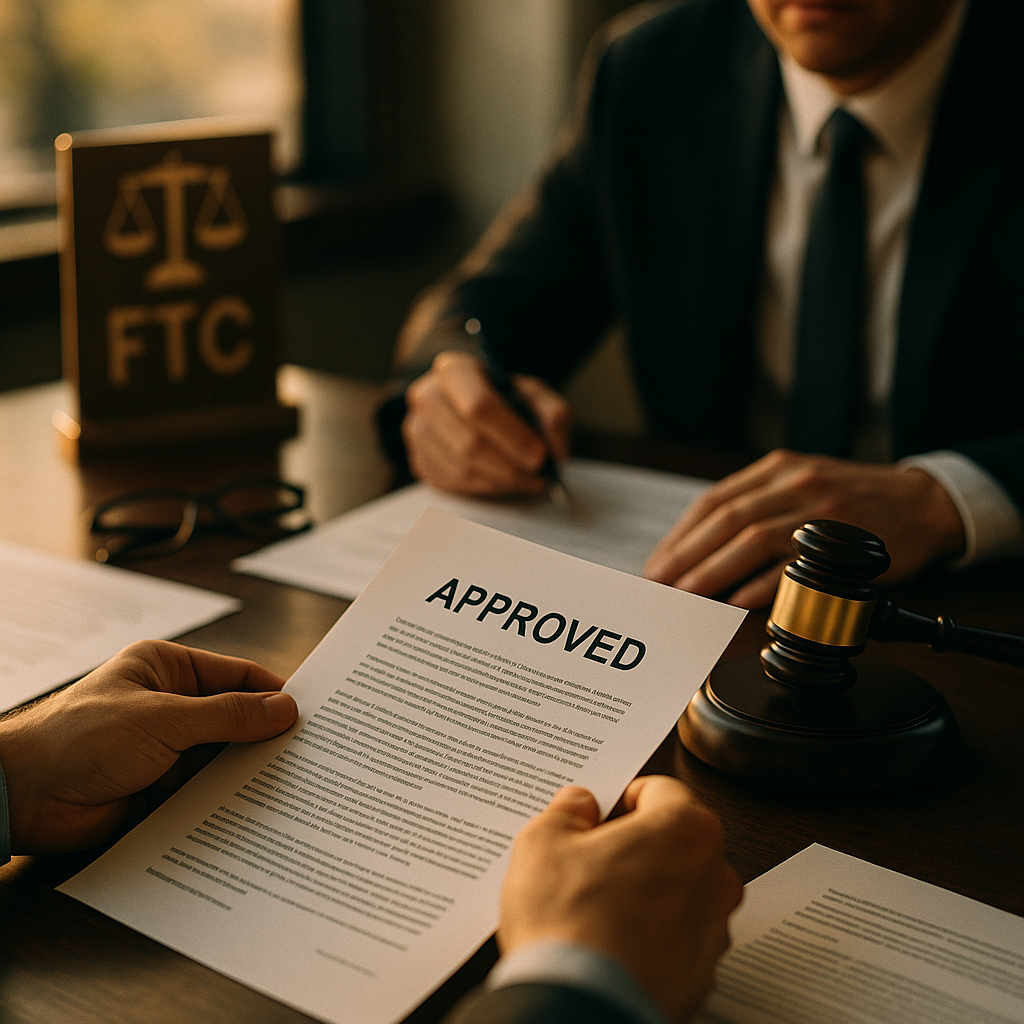
Here’s a stat that should make every brand legal team nervous: the FTC doesn’t need a signed contract to find you liable for a creator’s disclosure failure. It just needs evidence that you controlled the message. And brand script approval depth — the granular, line-by-line editing so many marketing teams treat as routine quality control — is quietly becoming Exhibit A in that argument.
Marketing teams love control. Legal teams should be terrified of it.
The Paradox Nobody Wants to Talk About
Brands approve creator scripts to protect the brand. Makes sense on its face. You don’t want a creator mispronouncing your product name, misstating a claim, or forgetting the hashtag. So you build approval workflows: draft, redline, revise, approve, post. Some brands go further, supplying near-verbatim scripts and requiring word-for-word delivery.
That’s where it gets legally interesting. The more a brand dictates exact language, the more it starts to look less like “sponsorship” and more like the brand’s own speech, delivered through a human mouthpiece. And once the FTC views the creator’s words as effectively the brand’s words, the brand’s exposure changes entirely. It’s no longer just about whether the creator disclosed the relationship correctly. It’s about whether the brand itself made a false or unsubstantiated claim.
Script control that goes beyond disclosure compliance and into substantive claim-drafting can convert a brand from “advertiser” to co-author of the endorsement — with direct liability attached.
What the FTC Actually Looks At
The FTC’s Endorsement Guides don’t set a bright-line word count or approval-round threshold. Instead, enforcement actions and guidance tend to look at a cluster of factors:
- Who authored the substantive claims — was the health, safety, or performance claim brand-written or creator-written?
- Degree of mandatory language — did the creator have any real discretion, or was the script effectively a teleprompter feed?
- Approval chain formality — is there a documented, repeatable process where legal or regulatory reviewed the specific claims (not just the vibe)?
- Payment structure tied to compliance — does the creator get penalized for deviating from brand language, even on the disclosure itself?
This isn’t theoretical. The FTC has repeatedly signaled that it views the “who controls the message” question as central to liability apportionment, not a footnote. If your brand’s approval process reads more like a producer’s shot list than a compliance checklist, you’ve shifted the risk calculus.
Where Brands Get This Wrong
Most legal teams draft disclosure clauses and stop there. They miss that approval workflows themselves generate discoverable evidence. Slack threads. Google Docs comment history. Email chains showing three rounds of “change this claim to X.” All of that becomes a paper trail showing exactly how much creative and substantive control the brand exercised — and plaintiffs’ attorneys and FTC investigators know how to subpoena for it.
Compare this to the disclosure-clash problems covered in when AI labels clash with FTC disclosure — same regulator, same underlying theory, different mechanism. In both cases, the brand’s operational choices (labeling systems, approval depth) end up mattering more than the marketing copy itself.
Building a Tiered Approval Framework That Limits Exposure
You don’t have to abandon script review. You need to segment it. Here’s a framework that’s been gaining traction among brand legal teams handling high creator volume:
Tier 1 — Disclosure and Compliance Review Only. Legal or compliance checks for required hashtags, FTC-compliant placement, platform-specific disclosure tools, and prohibited claims (drug, medical, financial). No editorial input on tone, story, or creative framing. This is the lowest-risk tier and should cover the vast majority of standard UGC and affiliate content.
Tier 2 — Substantiated Claims Review. Reserved for campaigns making performance, efficacy, or comparative claims (skincare results, supplement benefits, “faster than X competitor”). Here, legal review of the specific claim language is appropriate and necessary — but the brand should document why the review happened (substantiation, not stylistic control) and keep records showing the creator retained authorship of surrounding context. This mirrors the discipline outlined in the FTC substantiation checklist for GLP-1 campaigns, where claim-level scrutiny is unavoidable but should stay narrowly scoped.
Tier 3 — Full Script Provision. The brand writes some or all of the script verbatim. This is the highest-risk tier and should trigger a different legal posture entirely: treat the creator as functionally equivalent to a paid actor in a brand-produced ad, run it through the same legal review as a traditional TV or digital ad, and don’t rely on creator-side disclosure practices to cover the brand.
The mistake most brands make is running every campaign through Tier 3-level control while operating under Tier 1-level legal assumptions. That mismatch is exactly where FTC-actionable exposure lives.
Contract Language That Actually Reflects Reality
A lot of creator contracts still contain boilerplate stating the creator is “solely responsible for all claims made” — while the accompanying brief hands the creator a fully scripted paragraph. Courts and regulators aren’t naive to this. If your contract says one thing and your operational behavior says another, the contract loses weight fast.
Instead, contracts should reflect the actual tier of control being exercised, campaign by campaign. That means:
- Explicit documentation of which tier applies to each deliverable
- Sign-off logs showing who approved what and on what basis (compliance vs. substantiation vs. full script)
- Indemnification language calibrated to the tier — a brand providing full scripts has much weaker grounds to fully shift liability downstream to the creator
This connects directly to the liability-gap work covered in sign-off matrices for creator contracts and the broader indemnification questions in AI liability clauses for creator contracts. The same logic applies whether the “over-control” comes from a human legal team red-lining scripts or an AI drafting tool auto-generating claim language for creators to read verbatim.
The AI Complication
Generative tools have made Tier 3 behavior much easier to fall into by accident. A brand uses an AI copywriting tool to draft “suggested talking points,” a creator lifts them nearly verbatim, and suddenly the brand has authored substantive claims without anyone treating it as a Tier 3 situation. The pre-flight checklist for AI-generated ad assets is worth running specifically because AI drafting tools don’t understand tiering. They’ll happily generate a fully scripted, claim-dense paragraph regardless of whether your legal process expects Tier 1 oversight or Tier 3.
Same goes for auto-negotiation and matching tools that increasingly bundle in creative brief generation. If you’re using an AI agent for auto-negotiation, check whether it’s also outputting script language — because that output needs the same tiering discipline as anything a human copywriter produces.
Operationalizing This Without Slowing Down Campaigns
Legal teams often resist tiering frameworks because they assume it means more review, not less. It’s actually the opposite when built correctly. Most campaigns should live comfortably in Tier 1, moving fast with lightweight compliance checks. Only claims-heavy or fully-scripted campaigns should hit the slower, more resource-intensive Tier 2 or Tier 3 review.
A few operational moves that make this workable at scale:
- Tag campaigns at brief stage, not after content is submitted. Waiting until review time to figure out which tier applies defeats the purpose.
- Build tier-specific templates in your creator management platform so the right checklist auto-populates.
- Escalate ambiguous cases using a documented matrix rather than ad hoc Slack decisions — the escalation matrix approach for FTC, state AG, and platform risk applies just as well here.
- Audit your own approval history quarterly. Pull a sample of “Tier 1” campaigns and check whether the actual edit history matches that classification. Scope creep is the norm, not the exception.
Industry data backs up why this matters operationally, not just legally. Creator-driven commerce continues to scale fast — eMarketer and Statista both track creator/influencer marketing spend climbing year over year, which means more campaigns, more scripts, more approval touchpoints, and more surface area for this exact liability question to surface. The brands running the highest volume of scripted content are, by definition, sitting on the highest concentration of risk.
Where This Intersects Platform Compliance
It’s not just an FTC question in isolation. Livestream shopping formats, where hosts often read from brand-provided scripts in real time, raise the stakes further because there’s less opportunity for a creator to naturally reframe brand language in their own voice. The livestream shopping compliance protocol is a useful companion framework here, since livestream formats are essentially Tier 3 by default unless brands deliberately build in creator discretion.
Platform-level AI labeling adds another wrinkle. If a platform auto-labels content as “sponsored” or “AI-generated” in a way that conflicts with how tightly a brand controlled the script, that mismatch itself can draw scrutiny, as explored in platform AI labels clashing with FTC disclosure.
Next Step
Pull your last quarter’s creator campaigns and sort them by actual script control, not assumed risk category. If more than a handful land in Tier 3 territory without Tier 3-level legal review, that’s your immediate fix — before a regulator sorts them for you.
FAQs
Does editing a creator’s script for grammar or brand voice create FTC liability?
Not on its own. Light editing for tone, clarity, or brand voice is standard practice and generally low-risk. Liability concerns increase when edits touch substantive claims — efficacy, safety, comparative performance — rather than style or delivery.
What’s the safest approval structure for high-volume UGC campaigns?
Tier 1: compliance-only review focused on disclosure placement and prohibited claims, with no editorial control over substance. This keeps creators as the clear authors of their own endorsements while still catching disclosure errors before publish.
Can indemnification clauses fully shift FTC liability to the creator?
No. Indemnification can allocate financial responsibility between brand and creator contractually, but it doesn’t bind the FTC, which can pursue the brand directly regardless of private contract terms, especially when the brand exercised substantial script control.
How does AI-generated script content change this risk?
AI drafting tools tend to produce fully-formed, claim-dense scripts by default, which pushes campaigns into higher-risk tiers without anyone intending it. Brands need explicit review steps to catch this before creators receive AI-drafted talking points as if they were low-risk suggestions.
Should legal review every creator script before posting?
Only for claims-heavy or fully-scripted campaigns. Blanket legal review of every UGC post is rarely feasible at scale and often unnecessary. Tiering lets legal focus resources where substantiation risk is real.
Top Influencer Marketing Agencies
The leading agencies shaping influencer marketing in 2026
Agencies ranked by campaign performance, client diversity, platform expertise, proven ROI, industry recognition, and client satisfaction. Assessed through verified case studies, reviews, and industry consultations.
Moburst

-
2

The Shelf
Boutique Beauty & Lifestyle Influencer AgencyA data-driven boutique agency specializing exclusively in beauty, wellness, and lifestyle influencer campaigns on Instagram and TikTok. Best for brands already focused on the beauty/personal care space that need curated, aesthetic-driven content.Clients: Pepsi, The Honest Company, Hims, Elf Cosmetics, Pure LeafVisit The Shelf → -
3

Audiencly
Niche Gaming & Esports Influencer AgencyA specialized agency focused exclusively on gaming and esports creators on YouTube, Twitch, and TikTok. Ideal if your campaign is 100% gaming-focused — from game launches to hardware and esports events.Clients: Epic Games, NordVPN, Ubisoft, Wargaming, Tencent GamesVisit Audiencly → -
4

Viral Nation
Global Influencer Marketing & Talent AgencyA dual talent management and marketing agency with proprietary brand safety tools and a global creator network spanning nano-influencers to celebrities across all major platforms.Clients: Meta, Activision Blizzard, Energizer, Aston Martin, WalmartVisit Viral Nation → -
5

The Influencer Marketing Factory
TikTok, Instagram & YouTube CampaignsA full-service agency with strong TikTok expertise, offering end-to-end campaign management from influencer discovery through performance reporting with a focus on platform-native content.Clients: Google, Snapchat, Universal Music, Bumble, YelpVisit TIMF → -
6

NeoReach
Enterprise Analytics & Influencer CampaignsAn enterprise-focused agency combining managed campaigns with a powerful self-service data platform for influencer search, audience analytics, and attribution modeling.Clients: Amazon, Airbnb, Netflix, Honda, The New York TimesVisit NeoReach → -
7

Ubiquitous
Creator-First Marketing PlatformA tech-driven platform combining self-service tools with managed campaign options, emphasizing speed and scalability for brands managing multiple influencer relationships.Clients: Lyft, Disney, Target, American Eagle, NetflixVisit Ubiquitous → -
8

Obviously
Scalable Enterprise Influencer CampaignsA tech-enabled agency built for high-volume campaigns, coordinating hundreds of creators simultaneously with end-to-end logistics, content rights management, and product seeding.Clients: Google, Ulta Beauty, Converse, AmazonVisit Obviously →