


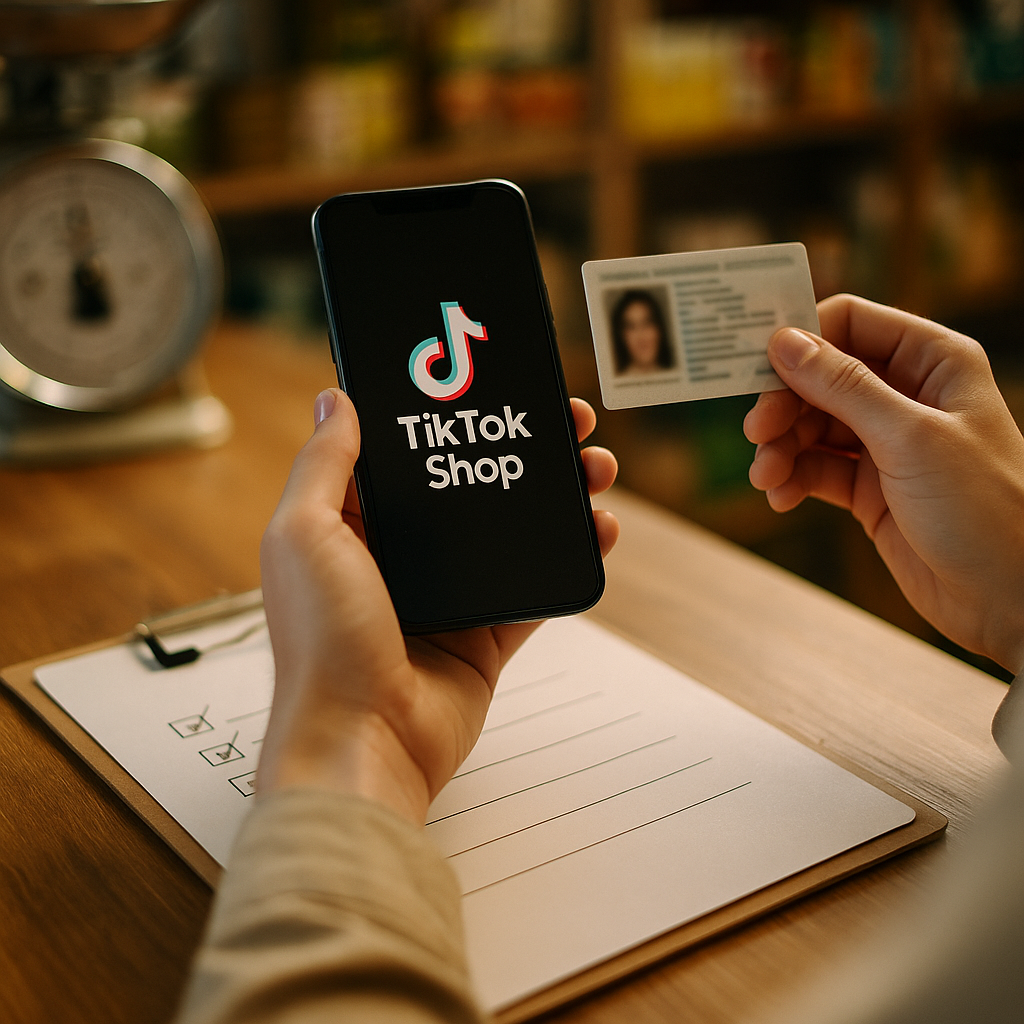
One flagged livestream. One underage viewer who slipped past a weak gate. One FTC inquiry that follows. That’s the new liability chain brands face now that TikTok Shop age verification for supplement sales has moved from a checkbox to a full compliance gate. If your creator briefs still treat age-gating as a platform-side problem, you’re already behind.
TikTok Shop quietly rewrote the rules for how supplement, nootropic, and wellness-adjacent products get sold through creator content. The platform now requires stronger identity signals before a viewer can even see certain product cards, let alone check out. That sounds like a TikTok problem to solve. It isn’t. Brands and agencies that brief creators without updating their compliance checklists are the ones who’ll eat the penalty, the delisting, or the state AG letter.
What Actually Changed With TikTok Shop’s Age Rules
TikTok expanded its restricted-category framework to treat most ingestible supplements — weight management, sexual wellness, sleep aids, and cognitive enhancers especially — as age-gated commerce. Previously, a lot of this sat in a gray zone: sellers self-attested, creators posted, and enforcement was reactive. Now the platform is requiring stronger verification signals before checkout completes on flagged SKUs, and it’s applying stricter content review to livestreams and shoppable videos that feature them.
This isn’t happening in isolation. It mirrors a broader regulatory mood. State-level consent laws, FTC scrutiny of health claims, and platform self-policing are converging on the same target: content that reaches minors with unverified health or supplement claims. Brands running influencer programs in this category should already be familiar with the pattern from state parental consent laws forcing ad segmentation — this is the same regulatory logic, just applied at the platform-commerce layer instead of the ad layer.
The shift matters because liability doesn’t stay with the platform. When a creator’s shoppable content skips the new verification flow, the brand’s name is on the product page — and that’s what regulators and plaintiffs’ attorneys look at first.
Why Your Existing Creator Brief Is Already Out of Date
Most creator briefs for supplement campaigns were written for a pre-verification world. They cover claims language, disclosure hashtags, and maybe a note about FTC substantiation. Age-gating rarely gets more than a passing mention, if it appears at all.
That gap is now a liability surface. Here’s what typically falls through:
- Creators using generic “shop now” CTAs that route around the new verification prompts instead of through them.
- Livestream hosts pinning supplement products without confirming the stream itself carries the correct age-restricted tag.
- Briefs that specify claims language but say nothing about which product SKUs are subject to the new gating rules.
- No requirement for creators to screenshot or confirm the verification flow before going live.
None of these are exotic failure modes. They’re the default behavior of a creator who wasn’t told anything changed. And that’s on the brand’s brief, not the creator’s judgment.
The New Checklist: What Belongs in Every Supplement Brief Now
Think of the brief as the first line of compliance defense, not a creative reference doc. For supplement and wellness campaigns running through TikTok Shop, add these sections explicitly:
- SKU-level restriction flags. Tell creators which specific products are age-gated under the new rules. Don’t assume they’ll check the seller dashboard themselves.
- Verification flow confirmation. Require a pre-post check that the shoppable tag triggers the correct age gate, with a screenshot or screen recording as proof of compliance.
- Livestream-specific protocol. Livestreams need separate handling from static video because moderation and real-time checkout behave differently. This is where a tiered escalation protocol earns its keep — someone needs authority to pull a stream mid-broadcast if the gate fails.
- Claims-to-restriction mapping. Cross-reference every claim in the script against both FTC substantiation standards and the platform’s restricted-category list, since a product can trigger age-gating for reasons unrelated to its marketing claims.
- Fallback CTA language. If verification fails or the product gets flagged mid-campaign, creators need pre-approved fallback copy rather than improvising.
This isn’t bureaucratic bloat. It’s the difference between a campaign that survives a platform audit and one that gets yanked mid-flight.
Where Brands Get This Wrong: The Livestream Blind Spot
Static shoppable videos are relatively easy to audit before publish. Livestreams are not. A host can go off-script, pin an unapproved product, or take audience questions that veer into unsubstantiated claims territory — all in real time, all unrecoverable once broadcast. Add age-verification requirements on top, and livestream commerce becomes the highest-risk format in the supplement category.
Brands running beauty and wellness livestreams have already had to adapt to similar pressure. The playbook from beauty brand livestream age-verification compliance translates almost directly: pre-stream checklists, a designated compliance monitor watching the feed, and a kill switch if the gate isn’t holding. Supplement brands that haven’t built this muscle yet are behind their beauty-category peers, and the enforcement gap will close fast.
There’s also a data dimension worth flagging. Age verification often means collecting more identity signals from shoppers, which raises its own privacy questions. Any brand relying on TikTok Shop or Instagram-integrated commerce should already be applying data minimization clauses for shop vendors so the verification requirement doesn’t quietly become a data-hoarding exercise that creates its own compliance exposure.
How This Intersects With FTC and FDA Exposure
Age verification doesn’t replace substantiation requirements — it stacks on top of them. A supplement ad that passes the age gate but makes an unsupported cognitive-enhancement claim is still exposed to FTC enforcement action. The FTC substantiation checklist built for GLP-1 campaigns is a useful model here: every claim needs a documented evidence trail before a creator ever records a take.
Supplement marketers should also be watching how AI-generated content plays into this. If creators or brands are using AI tools to draft claims language or generate product copy, that content needs the same scrutiny as human-written scripts — arguably more, given how easily generative tools invent plausible-sounding health claims. The process outlined in auditing AI-generated supplement claims before FDA letters arrive is directly relevant: run every AI-assisted claim through the same substantiation gate as human copy, no exceptions.
Age verification is a platform mechanism. Claims substantiation is a legal obligation. Treat them as one compliance workflow, and you close the two biggest exposure points in supplement influencer marketing simultaneously.
Building the Escalation Path Before You Need It
The worst time to figure out who has authority to pull a campaign is during a live crisis. Every supplement brief running through TikTok Shop needs a clear escalation path: who monitors for verification failures, who has authority to pause a livestream, and who talks to legal if a state attorney general’s office sends an inquiry.
This is where a lot of mid-size brands underinvest. They’ll spend weeks on creative approval workflows and five minutes on the compliance escalation chain. The escalation matrix aligning FTC, state AG, and platform risk is a useful starting template — it forces you to name names and set response-time expectations before the first campaign launches, not after the first violation notice.
Agencies managing multiple brand clients in the supplement space should standardize this across accounts. A single escalation protocol, adapted per client, beats reinventing crisis response every time a new campaign goes sideways.
Practical Steps for the Next Briefing Cycle
Here’s the sequence that actually moves the needle before your next supplement campaign brief goes out:
- Pull the current TikTok Shop restricted-category list and flag every SKU in your active catalog against it.
- Rewrite the brief template to include SKU-level gating notes, not just general disclosure language.
- Add a pre-publish verification screenshot requirement for both static and livestream content.
- Name a compliance monitor for every livestream with kill-switch authority.
- Cross-check claims language against FTC substantiation standards before creative approval, not after.
None of this requires new headcount necessarily. It requires treating the brief as a legal document with creative flexibility, not a creative document with a legal footnote. According to industry data from eMarketer, social commerce spend continues climbing year over year, and supplement categories are among the fastest-growing verticals on shoppable platforms — which means the volume of at-risk content is only going to increase from here.
Brands that get ahead of this now will spend less time firefighting platform strikes and more time actually growing the channel. Brands that don’t will keep learning the rules one delisted campaign at a time.
Next step: Audit one active supplement campaign against the checklist above this week. If your current brief doesn’t mention SKU-level age gating by name, it’s already outdated — fix that document before your next livestream goes live.
FAQs
What products does TikTok Shop’s expanded age-verification rule cover?
It primarily targets ingestible supplements including weight-management products, sexual wellness items, sleep aids, and cognitive-enhancement or nootropic supplements. Brands should check their current SKU list against TikTok’s restricted-category documentation directly, since the list is updated periodically.
Who is liable if a creator bypasses the age-verification flow?
Liability typically lands on the brand and, in some cases, the agency managing the campaign, since the product listing and claims originate with the brand. Platform enforcement actions like delisting hit the brand’s shop, and regulatory scrutiny follows the product manufacturer or marketer, not the creator.
Does age verification replace the need for FTC claims substantiation?
No. Age verification and claims substantiation are separate compliance obligations that both apply to the same content. A properly age-gated product with an unsupported health claim is still exposed to FTC enforcement.
How should livestream compliance differ from static video compliance?
Livestreams need real-time monitoring and a designated person with authority to pause or end a broadcast if the age gate fails or a creator makes an unapproved claim. Static video can be reviewed and approved before it ever publishes, which makes it inherently lower-risk.
What should brands do if they discover a past campaign didn’t follow the new verification requirements?
Document the gap, correct the brief template immediately, and consult legal or compliance counsel about disclosure obligations before running further campaigns in the category. Retroactive fixes matter less than demonstrating a documented, immediate correction going forward.
FAQs
What products does TikTok Shop’s expanded age-verification rule cover?
It primarily targets ingestible supplements including weight-management products, sexual wellness items, sleep aids, and cognitive-enhancement or nootropic supplements. Brands should check their current SKU list against TikTok’s restricted-category documentation directly, since the list is updated periodically.
Who is liable if a creator bypasses the age-verification flow?
Liability typically lands on the brand and, in some cases, the agency managing the campaign, since the product listing and claims originate with the brand. Platform enforcement actions like delisting hit the brand’s shop, and regulatory scrutiny follows the product manufacturer or marketer, not the creator.
Does age verification replace the need for FTC claims substantiation?
No. Age verification and claims substantiation are separate compliance obligations that both apply to the same content. A properly age-gated product with an unsupported health claim is still exposed to FTC enforcement.
How should livestream compliance differ from static video compliance?
Livestreams need real-time monitoring and a designated person with authority to pause or end a broadcast if the age gate fails or a creator makes an unapproved claim. Static video can be reviewed and approved before it ever publishes, which makes it inherently lower-risk.
What should brands do if they discover a past campaign didn’t follow the new verification requirements?
Document the gap, correct the brief template immediately, and consult legal or compliance counsel about disclosure obligations before running further campaigns in the category. Retroactive fixes matter less than demonstrating a documented, immediate correction going forward.
Top Influencer Marketing Agencies
The leading agencies shaping influencer marketing in 2026
Agencies ranked by campaign performance, client diversity, platform expertise, proven ROI, industry recognition, and client satisfaction. Assessed through verified case studies, reviews, and industry consultations.
Moburst

-
2

The Shelf
Boutique Beauty & Lifestyle Influencer AgencyA data-driven boutique agency specializing exclusively in beauty, wellness, and lifestyle influencer campaigns on Instagram and TikTok. Best for brands already focused on the beauty/personal care space that need curated, aesthetic-driven content.Clients: Pepsi, The Honest Company, Hims, Elf Cosmetics, Pure LeafVisit The Shelf → -
3

Audiencly
Niche Gaming & Esports Influencer AgencyA specialized agency focused exclusively on gaming and esports creators on YouTube, Twitch, and TikTok. Ideal if your campaign is 100% gaming-focused — from game launches to hardware and esports events.Clients: Epic Games, NordVPN, Ubisoft, Wargaming, Tencent GamesVisit Audiencly → -
4

Viral Nation
Global Influencer Marketing & Talent AgencyA dual talent management and marketing agency with proprietary brand safety tools and a global creator network spanning nano-influencers to celebrities across all major platforms.Clients: Meta, Activision Blizzard, Energizer, Aston Martin, WalmartVisit Viral Nation → -
5

The Influencer Marketing Factory
TikTok, Instagram & YouTube CampaignsA full-service agency with strong TikTok expertise, offering end-to-end campaign management from influencer discovery through performance reporting with a focus on platform-native content.Clients: Google, Snapchat, Universal Music, Bumble, YelpVisit TIMF → -
6

NeoReach
Enterprise Analytics & Influencer CampaignsAn enterprise-focused agency combining managed campaigns with a powerful self-service data platform for influencer search, audience analytics, and attribution modeling.Clients: Amazon, Airbnb, Netflix, Honda, The New York TimesVisit NeoReach → -
7

Ubiquitous
Creator-First Marketing PlatformA tech-driven platform combining self-service tools with managed campaign options, emphasizing speed and scalability for brands managing multiple influencer relationships.Clients: Lyft, Disney, Target, American Eagle, NetflixVisit Ubiquitous → -
8

Obviously
Scalable Enterprise Influencer CampaignsA tech-enabled agency built for high-volume campaigns, coordinating hundreds of creators simultaneously with end-to-end logistics, content rights management, and product seeding.Clients: Google, Ulta Beauty, Converse, AmazonVisit Obviously →