


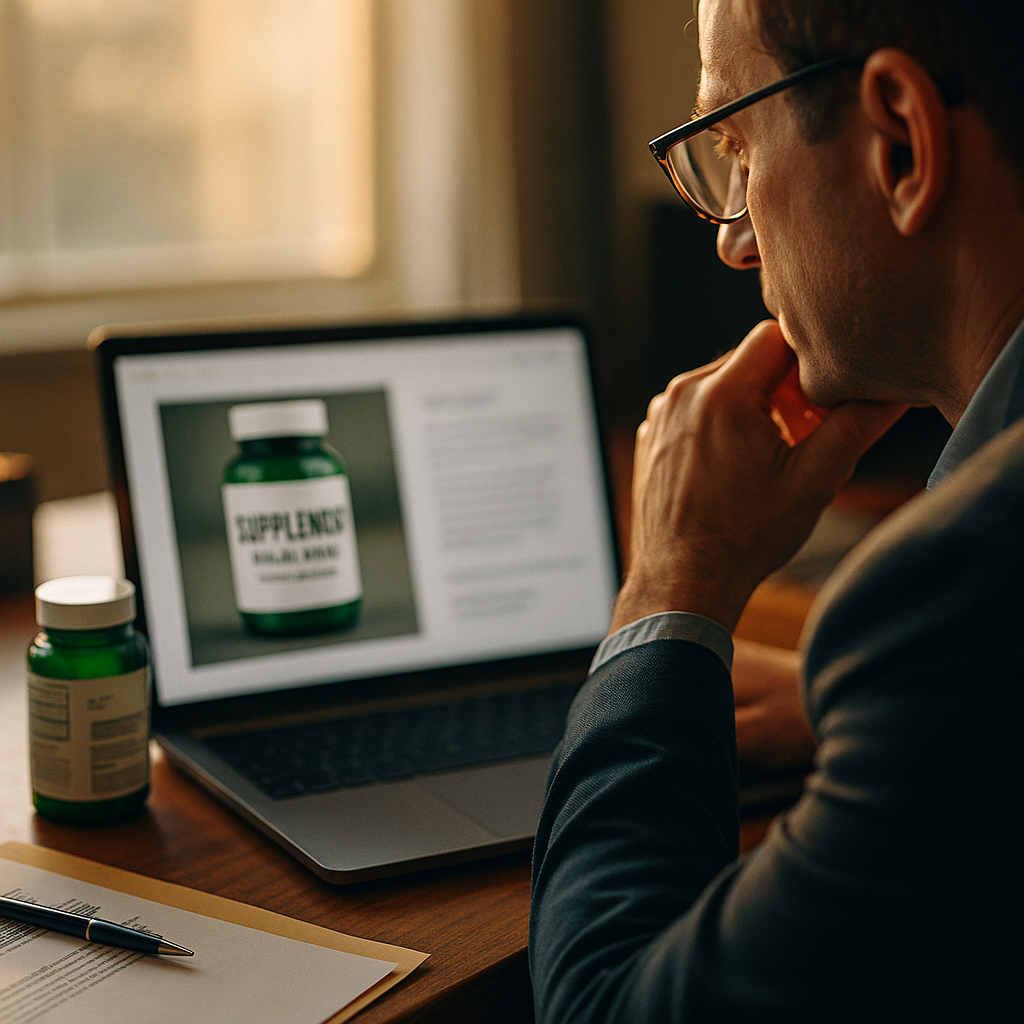
The FDA sent more warning letters over supplement marketing claims last year than in the previous three years combined. Now add generative AI to the mix, spitting out creator scripts with “clinically proven” language nobody fact-checked. If your brand doesn’t have a legal framework for auditing AI-generated nutrition claims before content goes live, you’re not managing risk. You’re waiting for a letter.
Here’s the uncomfortable truth: most brands treat AI-generated creator content like a productivity hack, not a regulatory exposure point. That’s backwards. The FDA doesn’t care whether a claim came from a copywriter, a chatbot, or a creator riffing off a brand brief. It cares whether the claim is substantiated, whether it crosses into disease-claim territory, and whether it’s disclosed properly. AI just makes bad claims faster and at higher volume.
Why AI-Generated Supplement Claims Are a Different Animal
Generative tools trained on wellness content absorb every unsubstantiated claim ever published — the “boosts immunity,” the “detoxifies your liver,” the “cures inflammation.” Ask an AI model to write ten hooks for a magnesium supplement, and at least two or three will wander into disease-claim language without any prompt asking it to. That’s not a bug. It’s how these models were trained: on a corpus saturated with structure-function claims dressed up as medical fact.
Creators using AI writing assistants to speed up their content calendars often don’t know the difference between a permissible structure-function claim (“supports healthy joints”) and an illegal disease claim (“reverses arthritis”). Why would they? Most creators aren’t regulatory lawyers. They’re trusting the tool, and the tool doesn’t know FDA law either — it knows patterns.
A single AI-generated script reused across fifty creator posts doesn’t create fifty separate risks. It creates one risk, replicated fifty times, each one a potential warning letter trigger.
What the FDA Actually Looks For
The FDA’s warning letter process for dietary supplements typically targets three things: unauthorized disease claims, misleading efficacy language, and lack of the mandatory disclaimer (“This statement has not been evaluated by the Food and Drug Administration…”). Under 21 CFR 101.93, any structure-function claim on a supplement label or in its marketing requires that disclaimer, plus a notification filed with the FDA within 30 days of first use.
Creator content counts as marketing. That’s settled. The FDA has issued letters citing Instagram posts, TikTok videos, and even creator livestreams as evidence of misbranding. If your influencer says a probiotic “cures IBS” in a fifteen-second Reel, that’s the same regulatory exposure as if it appeared on the bottle.
The FTC layers on top of this. Even if a claim technically qualifies as a structure-function claim, the FTC still requires “competent and reliable scientific evidence” to back it up under Section 5 of the FTC Act. Two agencies, two thresholds, one piece of AI-drafted content that satisfied neither.
The Overlap Nobody Plans For
Marketing and legal teams often assume FDA and FTC compliance are handled by the same review. They’re not always aligned. A claim can pass an internal FTC-influenced disclosure check and still trip an FDA disease-claim wire, especially when AI tools generate language that sounds like a personal testimonial (“this fixed my anxiety”) rather than a brand claim. Testimonials don’t get a pass — the FTC’s endorsement guides make clear that a creator’s personal claim about a health outcome is still subject to substantiation requirements, and if it implies treatment of a disease, FDA rules apply too.
This is the same layered-risk problem brands are dealing with in adjacent categories, as covered in our breakdown of wellness creator campaigns facing FTC and state rules. Supplements just add an extra regulator to the stack.
Building the Audit Framework: Four Gates Before Publish
A workable legal framework doesn’t need to be a fifty-page policy manual. It needs four gates, applied consistently, with someone accountable at each one.
- Gate 1 — Claim extraction. Before any AI-drafted script or caption goes to a creator, run it through a claim-extraction pass. Pull every sentence that references a health outcome, body function, or comparative benefit. Tag each one as structure-function, disease claim, or ambiguous.
- Gate 2 — Substantiation check. Every structure-function claim needs a citation trail back to actual clinical or scientific support the brand can produce if the FDA or FTC asks. If your AI tool generated “clinically studied to reduce cortisol” and nobody can point to the study, that claim doesn’t ship.
- Gate 3 — Disclaimer and disclosure pairing. Confirm the mandatory FDA disclaimer appears where required, and that FTC material connection disclosures (#ad, #sponsored) are present and not buried in a caption dump. This is the same discipline outlined in our creator contract audit checklist for FTC disclosure updates.
- Gate 4 — Human sign-off with named accountability. Someone with regulatory training signs off, by name, before publish. Not a Slack thumbs-up. A logged approval tied to the specific asset version.
Notice what’s missing from this list: banning AI outright. That’s not realistic, and it’s not necessary. The framework isn’t anti-AI. It’s pro-verification. Speed is fine. Unverified speed is the problem.
Where Most Brands Skip a Step
Gate 4 is the one everyone shortcuts. Marketing teams under deadline pressure treat sign-off as a formality, a rubber stamp on the way to publish. But an audit trail with a named, accountable reviewer is exactly what regulators and plaintiffs’ attorneys look for when things go sideways. No sign-off record means no evidence of due diligence. That’s the difference between “we made a mistake and caught it” and “we never checked at all” in the eyes of an FDA investigator or a class-action lawyer.
This mirrors the logic in our sign-off matrix for AI creator scripts — the same structure applies here, just with an added FDA layer on top of FTC disclosure risk.
Contract Language That Actually Protects You
Auditing content is only half the job. The other half is making sure your creator contracts assign responsibility clearly when AI tools are involved in drafting. Specific clauses worth adding:
- A representation that the creator has not used AI-generated health claims without brand review, or a disclosure requirement if AI tools were used to draft any portion of sponsored content.
- A right-of-audit clause giving the brand access to draft versions and AI prompt history, similar to the audit provisions discussed in right-of-audit clauses for clipping networks.
- An indemnification carve-out specific to unsubstantiated health claims, distinct from general FTC disclosure indemnification.
- A morality/compliance clause that extends to reposts and clips, not just the original asset — because a compliant original video can spawn a dozen non-compliant clips once it’s cut up by fan accounts or clipping farms.
Generic AI-content contract language isn’t enough here. The risk in AI-drafted creator contracts generally is about fairness and enforceability. In the supplement category, you need claim-specific language layered on top, because the downside isn’t just a bad ad — it’s a federal warning letter with your brand name on it.
Escalation: What Happens When a Claim Slips Through
Even a good audit framework won’t catch everything. Build an escalation path before you need it. Who reviews a flagged post within 24 hours? Who has authority to pull it down without waiting for a committee meeting? Who contacts the creator? This is the same operational thinking behind our escalation matrix for FTC, state AG, and platform risk — except with supplement claims, the clock moves faster because FDA warning letters often follow a period of monitoring, not a first-offense reaction.
Real-world pattern: the FDA typically doesn’t send a warning letter after one bad post. It monitors, builds a file, then acts once a pattern of claims across multiple posts or multiple creators supports enforcement. That means brands often have a window, weeks or months, to self-correct before a letter arrives. Waste that window and the letter becomes a matter of when, not if.
Self-correction inside the monitoring window is the cheapest compliance move a brand will ever make. A public warning letter costs far more in retracted claims, retailer delisting risk, and reputational damage than any internal audit process.
Practical Tools and Documentation
You don’t need enterprise legal software to run this. A shared claim-tracking spreadsheet, a labeled document library of substantiation studies, and a version-controlled sign-off log will cover most mid-size programs. Larger brands running high creator volume should look at the same kind of pre-flight review process described in our pre-flight checklist for AI-generated ad assets, adapted with an FDA-specific claim category.
Track everything. Regulators and courts favor documented process over good intentions. According to the FTC’s guidance on endorsements, brands remain responsible for monitoring influencer content even after publication, not just before. That obligation doesn’t disappear because AI wrote the first draft.
Industry benchmarking data from eMarketer shows creator-driven commerce in wellness and supplements growing faster than nearly any other vertical, which means claim volume is only going up. Pair that growth with tools tracked by Statista on generative AI adoption in content production, and the exposure math gets obvious fast: more AI drafts, more creators, more claims, same regulatory scrutiny.
FAQs
Frequently Asked Questions
Does the FDA treat AI-generated claims differently than human-written ones?
No. The FDA regulates the claim itself, not how it was produced. An AI-generated disease claim in creator content carries the same enforcement risk as one written by a human copywriter or stated spontaneously by a creator on camera.
What’s the difference between a structure-function claim and a disease claim?
A structure-function claim describes how a nutrient affects the body’s normal structure or function, like “supports bone health.” A disease claim states or implies treatment, prevention, or cure of a specific disease, like “reduces symptoms of osteoporosis.” Structure-function claims are permitted with proper disclaimers and FDA notification; disease claims on supplements generally are not, absent drug approval.
Who is liable if a creator posts an AI-drafted claim the brand never reviewed?
Both parties can face exposure, but brands typically bear the greater regulatory risk because FTC and FDA enforcement often targets the sponsoring company, not just the individual creator. Contractual indemnification helps allocate financial responsibility, but it doesn’t eliminate the brand’s regulatory exposure.
How much time does a brand typically have between a flagged claim and an FDA warning letter?
There’s no fixed timeline, but the FDA often monitors marketing patterns before issuing a warning letter, giving brands a practical window to self-correct. Relying on that window as a compliance strategy is risky; proactive auditing is safer than reactive cleanup.
Can a right-of-audit clause cover AI prompt history, not just final content?
Yes, and it should. Requiring visibility into the AI tools and prompts used to draft sponsored content helps brands verify how a claim originated and whether it was reviewed before publication, strengthening the brand’s due-diligence record.
FAQs
Next step: Pick one live supplement campaign this week, run its AI-generated scripts through the four-gate audit, and document what you find. If you can’t produce a substantiation file for every structure-function claim in that campaign right now, that’s your answer on where to start.
Top Influencer Marketing Agencies
The leading agencies shaping influencer marketing in 2026
Agencies ranked by campaign performance, client diversity, platform expertise, proven ROI, industry recognition, and client satisfaction. Assessed through verified case studies, reviews, and industry consultations.
Moburst

-
2

The Shelf
Boutique Beauty & Lifestyle Influencer AgencyA data-driven boutique agency specializing exclusively in beauty, wellness, and lifestyle influencer campaigns on Instagram and TikTok. Best for brands already focused on the beauty/personal care space that need curated, aesthetic-driven content.Clients: Pepsi, The Honest Company, Hims, Elf Cosmetics, Pure LeafVisit The Shelf → -
3

Audiencly
Niche Gaming & Esports Influencer AgencyA specialized agency focused exclusively on gaming and esports creators on YouTube, Twitch, and TikTok. Ideal if your campaign is 100% gaming-focused — from game launches to hardware and esports events.Clients: Epic Games, NordVPN, Ubisoft, Wargaming, Tencent GamesVisit Audiencly → -
4

Viral Nation
Global Influencer Marketing & Talent AgencyA dual talent management and marketing agency with proprietary brand safety tools and a global creator network spanning nano-influencers to celebrities across all major platforms.Clients: Meta, Activision Blizzard, Energizer, Aston Martin, WalmartVisit Viral Nation → -
5

The Influencer Marketing Factory
TikTok, Instagram & YouTube CampaignsA full-service agency with strong TikTok expertise, offering end-to-end campaign management from influencer discovery through performance reporting with a focus on platform-native content.Clients: Google, Snapchat, Universal Music, Bumble, YelpVisit TIMF → -
6

NeoReach
Enterprise Analytics & Influencer CampaignsAn enterprise-focused agency combining managed campaigns with a powerful self-service data platform for influencer search, audience analytics, and attribution modeling.Clients: Amazon, Airbnb, Netflix, Honda, The New York TimesVisit NeoReach → -
7

Ubiquitous
Creator-First Marketing PlatformA tech-driven platform combining self-service tools with managed campaign options, emphasizing speed and scalability for brands managing multiple influencer relationships.Clients: Lyft, Disney, Target, American Eagle, NetflixVisit Ubiquitous → -
8

Obviously
Scalable Enterprise Influencer CampaignsA tech-enabled agency built for high-volume campaigns, coordinating hundreds of creators simultaneously with end-to-end logistics, content rights management, and product seeding.Clients: Google, Ulta Beauty, Converse, AmazonVisit Obviously →