


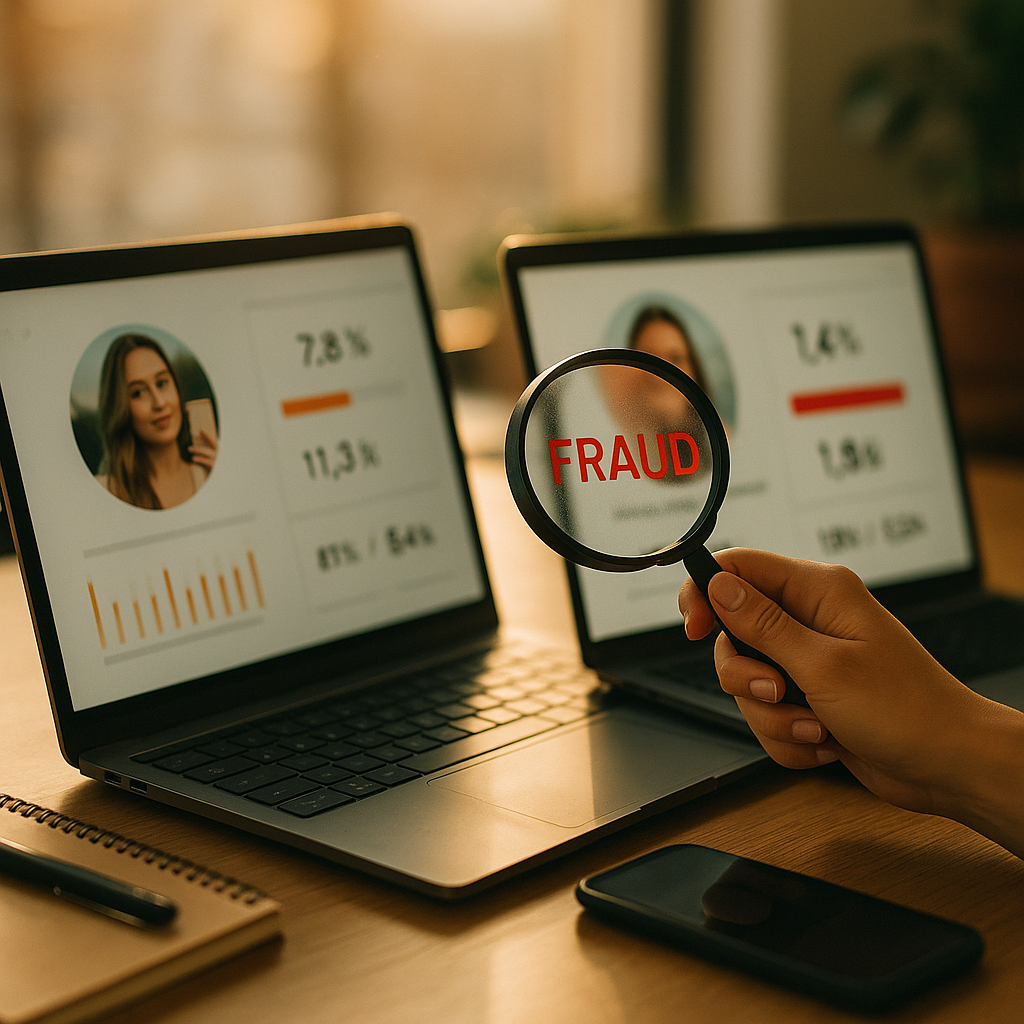
Roughly half of micro-influencer followings contain suspicious or bot-driven accounts, according to fraud analyses cited across the influencer marketing space in recent years. That single fact should make any brand pause before greenlighting a micro-influencer campaign. Two platforms built specifically to solve this problem — trendHERO and Openinfluence — take very different approaches to micro-influencer discovery, and the gap between them matters more than most procurement teams realize.
This isn’t a feature checklist comparison. It’s an operational question: which platform actually reduces the risk of paying real money to influence fake audiences?
Why Micro-Influencer Vetting Is Harder Than It Looks
Micro-influencers (typically 10K–100K followers) are the backbone of most modern influencer programs. They’re cheaper, they convert better on trust, and they scale into portfolios that feel less risky than a single celebrity bet. But that same fragmentation is exactly what makes fraud detection difficult.
A macro-influencer with a bought following is a scandal waiting to happen — someone eventually notices. A micro-influencer with 20% bot followers just looks… fine. Nobody’s auditing them closely enough to catch it, unless the brand builds that scrutiny into the discovery process itself. This is the gap trendHERO and Openinfluence both claim to close, but from opposite directions.
The real cost of skipping fraud vetting isn’t the wasted media spend — it’s the compounding effect of building a “lookalike audience” strategy on a foundation of fake followers.
trendHERO: Purpose-Built for Fraud Forensics
trendHERO started as an Instagram audit tool and has stayed narrowly focused on that mission, even as it expanded into TikTok and YouTube. Its core value proposition is blunt: tell me, in numbers, how fake this audience is.
The platform’s audience quality report breaks followers into categories — real, influencers, mass followers, suspicious, and bots — using engagement pattern analysis, follower growth anomalies, and comment authenticity scoring. It also flags sudden follower spikes, a classic tell for purchased growth, and shows historical engagement rate trends so you can spot a creator whose numbers cratered after a bot purge (a good sign, ironically) versus one whose fake following has been stable for years (a red flag suggesting ongoing purchase behavior).
Where trendHERO gets genuinely useful for brand teams is comment analysis. It doesn’t just count comments, it evaluates whether they read like genuine human reactions or generic bot filler (“Nice pic!” “Love this!” repeated across dozens of posts from accounts with no other activity). That’s the kind of nuance that separates real fraud detection from vanity-metric window dressing.
The tradeoff: trendHERO’s discovery and campaign management tools are thinner. It’s built to answer “is this creator’s audience real?” — not “help me build and manage a 40-creator micro-influencer program end to end.” Brands running lean vetting checks before onboarding creators from other sourcing channels tend to like it. Brands wanting a single platform for discovery-to-payment often find it incomplete.
Openinfluence: Discovery-First, Fraud-Second
Openinfluence approaches the problem from the opposite end. It’s fundamentally a discovery and campaign management platform — searchable database, AI-matching, outreach workflows, content licensing — with fraud detection layered in as a filtering mechanism rather than a standalone audit product.
Its matching algorithm leans heavily on AI-driven audience overlap analysis and content affinity scoring, aiming to surface creators whose actual content themes and audience demographics align with a brand’s target customer, not just creators who post in the right general category. For teams tired of “beauty influencer” searches returning skincare, makeup, and wellness accounts indiscriminately, this granularity is a real time-saver.
Fraud filtering within Openinfluence works more like a gate than a deep audit. Suspicious accounts get flagged and can be excluded from search results automatically, which speeds up shortlisting. But the depth of forensic detail — the kind of granular bot-versus-real breakdown trendHERO provides — isn’t the centerpiece here. It’s a background check, not a forensic report.
This matters practically: if your team needs to justify creator selection to a finance or legal stakeholder with hard fraud percentages, Openinfluence’s summary flags may not carry the same evidentiary weight as trendHERO’s detailed audience composition reports.
Match Accuracy: Two Different Definitions of “Match”
Here’s where the comparison gets genuinely interesting, because “match accuracy” means different things depending on which platform you ask.
Openinfluence defines match accuracy as relevance — does this creator’s content, audience demo, and engagement style align with the brand’s target customer profile? Its AI models weigh factors like content category consistency, audience age/location distribution, and historical brand-partnership performance to rank creators by fit.
trendHERO defines match accuracy closer to authenticity — is the audience this creator claims to have actually real, human, and engaged? It’s less concerned with whether a creator’s niche fits your brand and more concerned with whether the follower count means anything at all.
Both are legitimate definitions. Both are incomplete on their own. A creator can be a perfect demographic match with a heavily botted audience (Openinfluence might miss the depth of that problem). A creator can have a squeaky-clean, 98% real audience that has nothing to do with your brand category (trendHERO won’t tell you that’s a bad fit).
The smartest teams treat “match” and “authenticity” as two separate filters applied in sequence, not one blended score — because a platform that optimizes for both simultaneously tends to do neither particularly well.
This split mirrors a broader pattern across the AI creator discovery space. Our stress-test of match accuracy claims found that most platforms overstate precision when relevance and authenticity scoring get conflated into a single number. Treat any single “match score” with healthy skepticism regardless of vendor.
Fraud Detection Depth, Side by Side
- Audience authenticity breakdown: trendHERO provides granular bot/real/suspicious percentages; Openinfluence provides a pass/fail-style flag.
- Historical growth analysis: trendHERO shows follower growth charts to detect purchase spikes; Openinfluence’s historical data is thinner and less forensic.
- Comment authenticity scoring: trendHERO evaluates comment quality and repetition patterns; Openinfluence does not surface this at the same depth.
- Engagement rate normalization: Both platforms calculate engagement rate, but trendHERO contextualizes it against audience quality, while Openinfluence more often presents it as a raw metric within search results.
- Campaign workflow integration: Openinfluence wins clearly here, with outreach, contracting, and content licensing built into the same platform.
If your organization already has a separate influencer relationship management stack and just needs a rigorous fraud-screening layer, trendHERO slots in cleanly. If you need one platform to handle sourcing, vetting, and campaign execution without stitching tools together, Openinfluence’s breadth is the more efficient operational choice — provided your team supplements its fraud flags with occasional manual audits on higher-spend creators.
What This Means for Budget and Risk Sign-Off
Procurement and legal teams increasingly want documented proof of vetting before releasing influencer marketing budgets, particularly as the FTC continues to sharpen disclosure enforcement and platforms face growing scrutiny over bot networks. A tool that generates exportable, detailed fraud reports (trendHERO’s strength) gives you something concrete to attach to a campaign brief or contract file. A tool that simply excludes flagged accounts from a search (Openinfluence’s approach) gives you less of a paper trail, even if the underlying decision was sound.
This is a real consideration for regulated industries, or any brand that’s been burned before and now needs sign-off documentation as a matter of internal policy. It’s worth asking your legal team which they’d rather see in an audit: a percentage breakdown of suspicious followers, or a “verified” checkmark with no supporting detail.
For brands building out a broader creator vetting stack, it’s also worth benchmarking these two against dedicated fraud-detection specialists. Our comparison of AI fraud detection tools for creator vetting covers platforms built exclusively around this problem, some of which integrate with discovery tools like Openinfluence via API rather than replacing them.
Broader context matters too. Influencer marketing spend continues climbing — eMarketer and Statista both track double-digit annual growth in creator economy ad budgets — which means the absolute dollar exposure to fraud is growing even if fraud rates stay flat. Getting vetting infrastructure right isn’t a nice-to-have anymore; it’s budget protection.
Beyond Follower Count: The Bigger Discovery Question
Both trendHERO and Openinfluence represent a shift away from follower-count-as-proxy-for-value, which has been the industry’s laziest habit for a decade. But neither tool exists in a vacuum. Brands evaluating micro-influencer platforms should read them alongside broader category research, including our buyer’s guide to AI creator discovery tools and the head-to-head audit of GRIN, Upfluence, and Aspire, which covers platforms with different pricing and integration tradeoffs entirely.
The honest answer for most mid-market teams: neither trendHERO nor Openinfluence alone is a complete solution. The pragmatic setup pairs Openinfluence (or a similar discovery platform) for sourcing and workflow with a dedicated audit layer, whether that’s trendHERO itself or an API-based fraud detection service, run before any contract gets signed.
FAQs
Frequently Asked Questions
Is trendHERO or Openinfluence better for detecting fake followers?
trendHERO offers deeper, more granular fraud forensics, including bot percentage breakdowns, comment authenticity scoring, and historical growth analysis. Openinfluence includes fraud filtering but treats it as a background screening step rather than a standalone forensic report.
Can these platforms replace a dedicated fraud detection tool?
Not entirely. trendHERO is closer to a dedicated fraud tool, but brands running high-stakes or high-spend campaigns often supplement either platform with specialist fraud detection services, especially for documentation and compliance purposes.
Which platform is better for full campaign management?
Openinfluence, by a clear margin. It includes discovery, outreach, contracting, and content licensing workflows, while trendHERO focuses narrowly on audience auditing.
How accurate are AI match scores for micro-influencers?
Match accuracy varies significantly depending on how a platform defines “match.” Relevance-based scoring (audience fit, content category) and authenticity-based scoring (real vs. bot followers) are different metrics that shouldn’t be blended into a single number without scrutiny.
Do these tools work across platforms beyond Instagram?
trendHERO covers Instagram, TikTok, and YouTube. Openinfluence supports a broader multi-platform database as part of its discovery-focused positioning, though depth of fraud analysis varies by platform within each tool.
What should brands document for compliance when vetting micro-influencers?
At minimum, keep exportable fraud/authenticity reports, engagement rate context, and disclosure compliance notes on file for each contracted creator, particularly given increasing regulatory attention from bodies like the FTC.
The practical move: run trendHERO or an equivalent forensic audit on any micro-influencer shortlist Openinfluence surfaces before a single contract gets signed. Treat match accuracy and authenticity as separate approvals, not one score, and your fraud exposure drops dramatically without slowing down sourcing.
Top Influencer Marketing Agencies
The leading agencies shaping influencer marketing in 2026
Agencies ranked by campaign performance, client diversity, platform expertise, proven ROI, industry recognition, and client satisfaction. Assessed through verified case studies, reviews, and industry consultations.
Moburst

-
2

The Shelf
Boutique Beauty & Lifestyle Influencer AgencyA data-driven boutique agency specializing exclusively in beauty, wellness, and lifestyle influencer campaigns on Instagram and TikTok. Best for brands already focused on the beauty/personal care space that need curated, aesthetic-driven content.Clients: Pepsi, The Honest Company, Hims, Elf Cosmetics, Pure LeafVisit The Shelf → -
3

Audiencly
Niche Gaming & Esports Influencer AgencyA specialized agency focused exclusively on gaming and esports creators on YouTube, Twitch, and TikTok. Ideal if your campaign is 100% gaming-focused — from game launches to hardware and esports events.Clients: Epic Games, NordVPN, Ubisoft, Wargaming, Tencent GamesVisit Audiencly → -
4

Viral Nation
Global Influencer Marketing & Talent AgencyA dual talent management and marketing agency with proprietary brand safety tools and a global creator network spanning nano-influencers to celebrities across all major platforms.Clients: Meta, Activision Blizzard, Energizer, Aston Martin, WalmartVisit Viral Nation → -
5

The Influencer Marketing Factory
TikTok, Instagram & YouTube CampaignsA full-service agency with strong TikTok expertise, offering end-to-end campaign management from influencer discovery through performance reporting with a focus on platform-native content.Clients: Google, Snapchat, Universal Music, Bumble, YelpVisit TIMF → -
6

NeoReach
Enterprise Analytics & Influencer CampaignsAn enterprise-focused agency combining managed campaigns with a powerful self-service data platform for influencer search, audience analytics, and attribution modeling.Clients: Amazon, Airbnb, Netflix, Honda, The New York TimesVisit NeoReach → -
7

Ubiquitous
Creator-First Marketing PlatformA tech-driven platform combining self-service tools with managed campaign options, emphasizing speed and scalability for brands managing multiple influencer relationships.Clients: Lyft, Disney, Target, American Eagle, NetflixVisit Ubiquitous → -
8

Obviously
Scalable Enterprise Influencer CampaignsA tech-enabled agency built for high-volume campaigns, coordinating hundreds of creators simultaneously with end-to-end logistics, content rights management, and product seeding.Clients: Google, Ulta Beauty, Converse, AmazonVisit Obviously →