


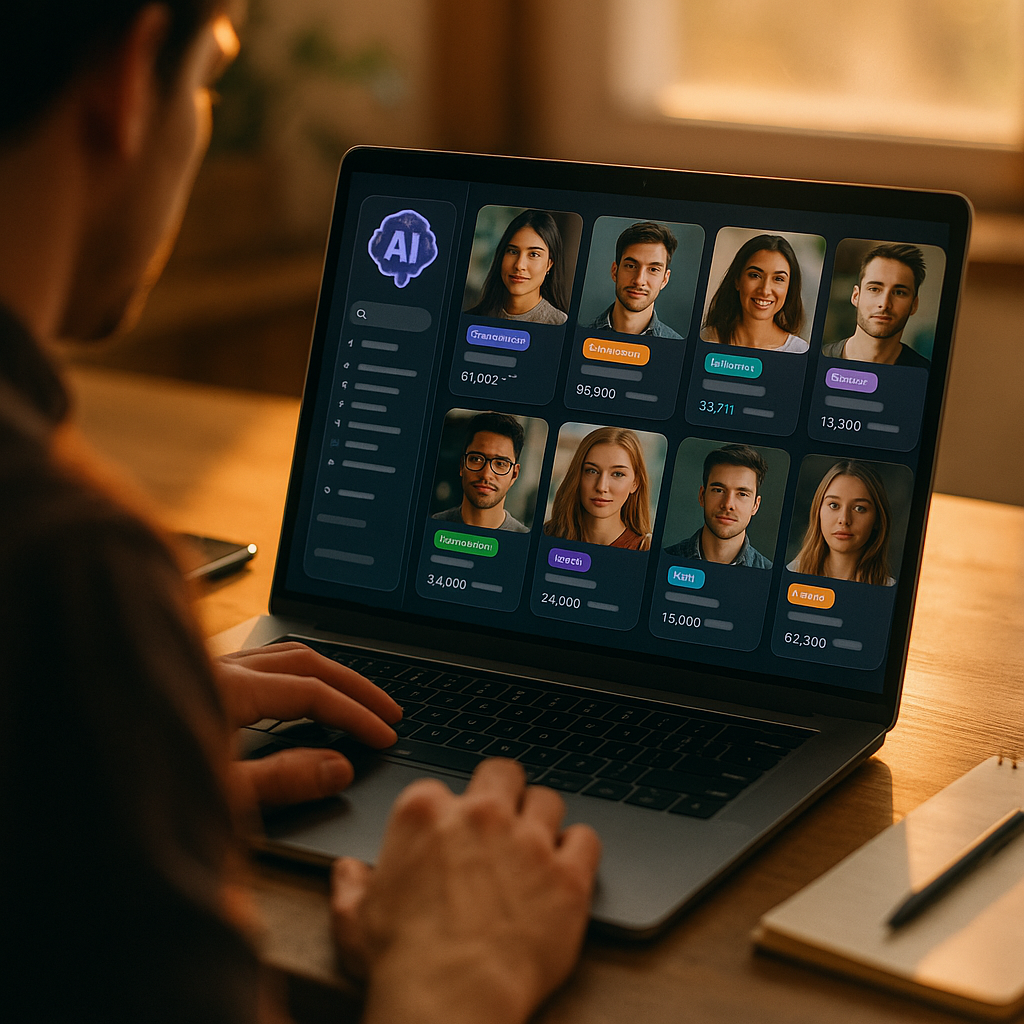
Here’s an uncomfortable stat: an estimated 15% of Instagram followers across major accounts are fake or inactive, according to industry fraud audits, and that number climbs higher on platforms with looser verification. Yet most brands still shortlist creators by scrolling follower counts. In this AI-powered creator discovery buyer’s guide, we break down what actually separates the tools worth paying for from the ones selling you a prettier spreadsheet.
Follower count was always a vanity metric. Now it’s a liability. Bots, engagement pods, and follower-buying services have gotten sophisticated enough that a quick manual scan won’t catch them anymore. Brands need tools that can see through the noise — and in 2026, “AI-powered” is stamped on nearly every discovery platform’s homepage. The question buyers should be asking isn’t whether a tool uses AI. It’s what that AI actually does, how it was validated, and whether it holds up under real campaign pressure.
Why Follower Count Stopped Mattering (If It Ever Did)
Marketers have known for years that engagement rate tells a better story than reach. But even engagement rate can be gamed. Comment pods, purchased likes, and reciprocal engagement rings inflate numbers just enough to pass a casual glance. A creator with 200,000 followers and a 6% engagement rate looks better on paper than one with 50,000 followers and 4% engagement — until you learn the larger account’s audience is 40% bots concentrated in countries that don’t match your target market.
This is where AI-powered creator discovery tools earn their keep. The good ones cross-reference audience demographics, engagement authenticity, historical brand-safety flags, and content performance patterns simultaneously. The mediocre ones just add a machine-learning label to the same follower-and-engagement dashboard brands have used since 2018.
A creator’s follower count tells you their reach. It tells you nothing about whether that reach converts, whether the audience is real, or whether the content will survive a compliance review.
What “Vetting Beyond Follower Count” Actually Requires
Real vetting means answering four questions a spreadsheet can’t: Is the audience real? Does it match your target demo? Has this creator been flagged for brand safety issues before? And will their content style actually move product, not just impressions?
Modern platforms tackle this with layered AI models. Audience authenticity scoring uses behavioral signals — posting patterns, follower growth velocity, comment sentiment diversity — to flag inorganic activity. Some vendors, per our stress-tested match accuracy analysis, claim 90%+ audience authenticity detection, but independent testing often finds meaningful gaps between marketing claims and real-world performance.
Brand-fit scoring is the newer frontier. Instead of just matching category tags (beauty, fitness, tech), leading tools now analyze actual content sentiment, past brand partnerships, and even comment-section tone to predict how a creator’s audience will react to your specific product. That’s a meaningfully different signal than “has 50K followers in the lifestyle niche.”
The Fraud Detection Layer Nobody Talks About Enough
Ask any procurement lead who’s been burned: the scariest risk in influencer marketing isn’t a bad creative brief. It’s paying a five-figure fee to a creator whose audience is 60% purchased followers. That’s not just wasted spend — it’s a reportable issue if you’re a publicly traded brand disclosing marketing efficiency to investors.
Fraud detection AI has matured considerably. Tools now analyze follower growth curves (a sudden 20,000-follower spike in 48 hours is a red flag), geographic distribution mismatches, and engagement timing patterns that suggest bot networks. For a deeper technical breakdown of how these systems are priced and what they actually catch, see our fraud detection tools comparison and the related platform buyer’s guide.
Comparing the Major Players: Where the Real Differences Live
Most buyer’s guides list feature checkboxes. That’s not very useful when every vendor checks the same boxes on their sales deck. Here’s what actually differentiates platforms once you get past the marketing copy:
- Data freshness: Some tools refresh creator audience data monthly; others claim real-time updates but actually batch-process weekly. Ask for the exact refresh cadence in writing before signing.
- Cross-platform coverage: A tool that only vets Instagram and TikTok is increasingly a liability as YouTube Shorts, LinkedIn creators, and even Discord communities become viable channels. Verify coverage matches your actual media mix.
- Historical brand-safety database depth: How far back does the tool scan for controversial content, past brand controversies, or platform violations? Some only look at the trailing 12 months.
- Match accuracy transparency: Does the vendor publish methodology for their AI scoring, or just a black-box percentage? Transparency here correlates strongly with actual reliability.
Platforms like those benchmarked in eMarketer’s creator economy research increasingly separate “discovery” tools (finding creators) from “vetting” tools (validating them). Buying both from one vendor is convenient but occasionally means neither function gets built to best-in-class standard.
Pricing: What Should You Actually Pay?
Pricing models vary wildly, and that’s partly because vendors know enterprise buyers rarely comparison-shop line by line. Expect three tiers in the market:
- Self-serve/SMB tools: Roughly $500–$2,500/month, usually with capped creator searches and basic fraud scoring.
- Mid-market platforms: $3,000–$12,000/month, typically bundling discovery, vetting, campaign management, and basic reporting.
- Enterprise suites: Custom pricing, often $50,000+ annually, with dedicated account management, API access, and deeper historical data.
Here’s the trap: brands often overpay for enterprise tiers when a mid-market tool with strong fraud detection would cover 90% of use cases. Conversely, brands running programs at scale (500+ creator relationships) frequently underinvest in vetting infrastructure and pay for it later in wasted spend or PR incidents. If your organization already runs AI tools elsewhere in the martech stack, it’s worth reviewing our vendor consolidation checklist before adding another standalone subscription.
A Quick Gut-Check Before You Sign
Before any contract, run a 30-day pilot on creators you already know well — ideally a mix of high performers and ones you suspect had inflated metrics. If the tool’s AI scoring matches your own institutional knowledge, that’s a good signal. If it doesn’t flag creators you already know are problematic, walk away. No amount of sales-deck polish should override a failed pilot.
The best vetting tool isn’t the one with the most features. It’s the one whose scoring matches what your team already knows from hard experience, then extends that knowledge at scale.
Compliance Is Not Optional Anymore
Regulators have caught up to influencer marketing, and the FTC’s disclosure guidelines now get enforced with real penalties, not just warning letters. In the UK, the ICO has similarly tightened expectations around data handling in influencer partnerships, particularly where audience data crosses borders.
AI discovery tools that ignore compliance flagging are a growing liability. Some platforms now build FTC disclosure history directly into creator scoring, flagging repeat offenders before you sign a contract. This matters more than it sounds. A creator who’s been previously fined or warned for undisclosed sponsorships carries reputational risk that transfers directly to your brand the moment the partnership goes live.
This is also where identity resolution and fraud detection increasingly overlap. Brands managing attribution across paid and organic influencer content should look at how vetting tools integrate with broader identity resolution infrastructure, since siloed vetting data rarely talks to campaign attribution systems without manual work.
Making the Final Call
There’s no universal “best” tool here. A DTC beauty brand running micro-influencer programs at volume needs different capabilities than an enterprise CPG brand running fewer, higher-stakes celebrity-adjacent partnerships. What matters is matching the tool’s strengths to your program’s actual risk profile.
If fraud exposure is your biggest concern, prioritize platforms with published, third-party-audited fraud detection accuracy rates. If brand-fit and content quality matter more than raw fraud risk, prioritize tools with deeper content-sentiment AI. And if you’re running programs across five or more platforms, cross-platform coverage should outweigh almost every other feature on your checklist.
Smaller brands with limited budgets shouldn’t assume they need enterprise tooling either. Our look at how a lean AI stack helped beauty brands grow market share is a useful reminder that disciplined tool selection often beats bigger budgets.
One more thing worth naming plainly: no AI tool replaces human judgment entirely. The best-performing brand teams use AI vetting to narrow a list from thousands to dozens, then apply human review, direct conversation, and content audits before final selection. Full automation sounds efficient. It’s also how brands end up blindsided by a creator’s old tweets three weeks into a campaign.
The Bottom Line
Buy the tool whose fraud detection you can independently verify, whose data refresh rate matches your campaign velocity, and whose scoring survives a 30-day pilot against creators you already know. Everything else — dashboards, integrations, seat counts — is negotiable. Fraud exposure and brand safety are not.
FAQs
What makes an AI creator discovery tool different from a basic influencer database?
Basic databases index creators by category and follower count. AI-powered tools layer in audience authenticity scoring, fraud detection, brand-fit prediction, and historical compliance flagging, generating a risk-adjusted recommendation rather than a raw list.
How accurate are AI fraud detection claims from vendors?
Vendor-claimed accuracy rates often exceed 90%, but independent testing frequently shows lower real-world performance, particularly against sophisticated bot networks. Always request a pilot period against creators your team already knows well before trusting published accuracy figures.
Should small and mid-size brands invest in enterprise-tier vetting tools?
Not necessarily. Mid-market platforms often cover core fraud detection and audience authenticity needs at a fraction of enterprise pricing. Enterprise tiers make more sense once a brand manages hundreds of concurrent creator relationships or needs deep API integration.
Can AI vetting tools guarantee FTC compliance?
No tool can guarantee compliance, but leading platforms now incorporate disclosure history and prior FTC flags into creator scoring, helping brands avoid partnering with repeat offenders. Legal review remains necessary for high-stakes campaigns.
How often should audience authenticity data be refreshed?
Ideally monthly at minimum, though real-time or weekly refresh is preferable for fast-moving campaigns. Follower fraud can be purchased quickly, so stale data creates blind spots between vetting and campaign launch.
FAQs
Top Influencer Marketing Agencies
The leading agencies shaping influencer marketing in 2026
Agencies ranked by campaign performance, client diversity, platform expertise, proven ROI, industry recognition, and client satisfaction. Assessed through verified case studies, reviews, and industry consultations.
Moburst

-
2

The Shelf
Boutique Beauty & Lifestyle Influencer AgencyA data-driven boutique agency specializing exclusively in beauty, wellness, and lifestyle influencer campaigns on Instagram and TikTok. Best for brands already focused on the beauty/personal care space that need curated, aesthetic-driven content.Clients: Pepsi, The Honest Company, Hims, Elf Cosmetics, Pure LeafVisit The Shelf → -
3

Audiencly
Niche Gaming & Esports Influencer AgencyA specialized agency focused exclusively on gaming and esports creators on YouTube, Twitch, and TikTok. Ideal if your campaign is 100% gaming-focused — from game launches to hardware and esports events.Clients: Epic Games, NordVPN, Ubisoft, Wargaming, Tencent GamesVisit Audiencly → -
4

Viral Nation
Global Influencer Marketing & Talent AgencyA dual talent management and marketing agency with proprietary brand safety tools and a global creator network spanning nano-influencers to celebrities across all major platforms.Clients: Meta, Activision Blizzard, Energizer, Aston Martin, WalmartVisit Viral Nation → -
5

The Influencer Marketing Factory
TikTok, Instagram & YouTube CampaignsA full-service agency with strong TikTok expertise, offering end-to-end campaign management from influencer discovery through performance reporting with a focus on platform-native content.Clients: Google, Snapchat, Universal Music, Bumble, YelpVisit TIMF → -
6

NeoReach
Enterprise Analytics & Influencer CampaignsAn enterprise-focused agency combining managed campaigns with a powerful self-service data platform for influencer search, audience analytics, and attribution modeling.Clients: Amazon, Airbnb, Netflix, Honda, The New York TimesVisit NeoReach → -
7

Ubiquitous
Creator-First Marketing PlatformA tech-driven platform combining self-service tools with managed campaign options, emphasizing speed and scalability for brands managing multiple influencer relationships.Clients: Lyft, Disney, Target, American Eagle, NetflixVisit Ubiquitous → -
8

Obviously
Scalable Enterprise Influencer CampaignsA tech-enabled agency built for high-volume campaigns, coordinating hundreds of creators simultaneously with end-to-end logistics, content rights management, and product seeding.Clients: Google, Ulta Beauty, Converse, AmazonVisit Obviously →