


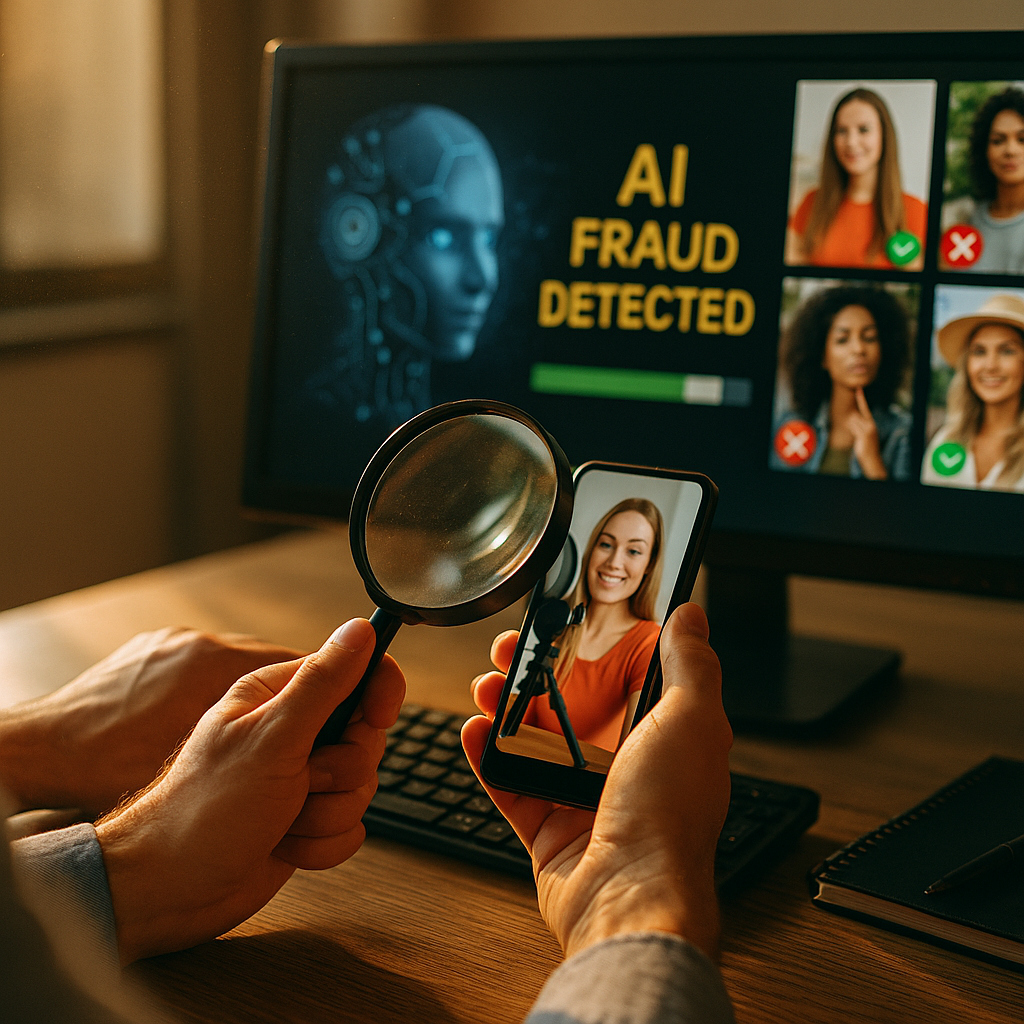
Roughly 15% of Instagram accounts are estimated to be fake or bot-driven, and engagement pods have gotten sophisticated enough to fool basic audit tools entirely. If your brand is still relying on a manual spot-check of follower counts before signing a creator contract, you’re gambling with budget. AI fraud-detection for influencer vetting isn’t a nice-to-have anymore. It’s the line between a campaign that converts and one that quietly burns spend on ghost audiences.
The vendor landscape has split into two camps: platforms built for scale (agencies running hundreds of creator relationships) and lightweight tools built for speed (in-house teams that need a yes/no answer in minutes). Picking wrong means either overpaying for enterprise features you won’t use, or under-provisioning for a fraud problem that’s more sophisticated than your tool can catch.
Why Fake Follower Scoring Got Harder, Not Easier
Bot farms used to be lazy. Egg avatars, no bio, following 10,000 accounts, posting nothing. Any halfway-decent detection script caught them in seconds.
That era is over. Generative AI now populates fake profiles with plausible bios, stock-adjacent photos run through style transfer, and posting histories scraped and reworded from real accounts. Engagement pods have evolved too — instead of obvious comment-for-comment exchanges (“Nice pic! Follow for follow!”), some now use LLM-generated comments tailored to post content, making them nearly indistinguishable from organic engagement at a glance.
The fraud-detection arms race has flipped: vendors are no longer just counting followers, they’re modeling behavioral authenticity over time — and the ones still relying on static snapshots are already behind.
This is why a growing share of vetting vendors have shifted from one-time audits to continuous monitoring. A creator who looked clean during onboarding can pick up a pod membership or buy a follower bump mid-contract. If your tool only checks once, you’re blind to that drift.
What the Best Vendors Are Actually Measuring
Follower ratios are table stakes now. The vendors worth paying for in 2026 layer in several additional signals:
- Engagement velocity patterns — sudden, unnatural spikes in likes/comments within minutes of posting (a classic pod signature)
- Audience geography mismatch — a “US lifestyle creator” with 40% of engagement from follower farms in unrelated regions
- Comment sentiment clustering — repetitive phrasing, generic praise, or comment timing that clusters in bursts rather than organic distribution
- Cross-platform consistency — does follower growth on Instagram correlate with growth on TikTok and YouTube, or does one platform show suspicious spikes in isolation?
- Historical volatility — has this account had follower count crashes consistent with platform purges of bought followers?
Vendors like HypeAuditor, Modash, and IZEA-backed tools have built scoring models around these signals, but accuracy varies wildly depending on how frequently they refresh their bot-detection ML models. Ask any vendor directly: how often is the fraud model retrained? If they can’t answer with a specific cadence, that’s a red flag.
Bot Farms vs. Engagement Pods: Different Problems, Different Detection
These get lumped together constantly, but they require different detection logic.
Bot farms are about fake follower volume — inflating the top-line number. Detection here is comparatively straightforward: analyze follower account age, posting activity, profile completeness, and network overlap with known bot clusters.
Engagement pods are about fake engagement authenticity — real human accounts, often real influencers themselves, mutually inflating each other’s likes and comments through coordinated groups (often organized in private Telegram or Discord channels). This is harder to catch because the accounts are real. Detection requires behavioral graph analysis: does this creator’s engagement come disproportionately from the same 200-300 accounts across every single post? That pattern is a pod signature that static follower audits miss entirely.
A vendor strong on bot-farm detection but weak on pod detection will give you a false sense of security. You’ll see a “clean” fraud score while the creator’s actual engagement is 30% recycled pod activity. This is precisely why our fraud-detection tools comparison weighs pod-detection capability as a separate line item, not a footnote.
Vendor Comparison: Who’s Actually Built for 2026’s Fraud Tactics
Here’s how the major players stack up on the dimensions that matter for brand-side buyers:
HypeAuditor remains strong on breadth — it covers Instagram, TikTok, YouTube, and X with decent audience quality scoring. Its weakness is refresh speed on smaller accounts; nano and micro creators sometimes get stale data because the crawl frequency deprioritizes low-follower profiles. If your program leans heavily nano-to-micro, cross-reference with a tool that prioritizes that segment, like the ones covered in our nano-creator scaling comparison.
Modash has leaned into API-first architecture, which matters if you’re piping fraud scores directly into a CRM or discovery workflow rather than checking creators one at a time in a dashboard. Good for agencies running high creator volume.
trendHERO has carved out a niche specifically in micro-influencer fraud detection, with granular audience quality breakdowns that go deeper than most competitors on comment authenticity. Worth comparing directly against Openinfluence’s approach — we’ve broken down the differences in our micro-influencer fraud detection comparison, which is essential reading if your budget concentrates on sub-100K creators.
IZEA and Upfluence both bundle fraud scoring into broader discovery and campaign management suites. That’s convenient if you want one platform, but the fraud detection is rarely best-in-class when it’s a feature bolted onto a discovery tool rather than the core product. Worth checking how these stack up in a broader creator discovery audit before deciding if bundled fraud scoring meets your bar.
The Cost of Getting This Wrong
A mid-size DTC brand running $200K/quarter in influencer spend, with even 20% of that going to creators with inflated audiences, is burning $40K a quarter on impressions nobody real is seeing. That’s not a hypothetical. It’s the math behind why procurement teams increasingly demand fraud-detection reports as a contract condition, not a courtesy check.
There’s also a reputational angle. FTC guidance on endorsement disclosures increasingly intersects with fraud concerns — a creator running bought followers alongside undisclosed paid content is a compounding compliance risk, not just a wasted-spend problem. Brands that can’t demonstrate due diligence on creator vetting are exposed on both fronts.
Agencies feel this pressure most acutely. If you’re pitching a client on influencer strategy and can’t show a fraud-vetting methodology, you’re one bad campaign away from losing the account. This is increasingly table stakes in RFPs, alongside the kind of pre-campaign vetting rigor clients now expect as standard practice.
Building the Vetting Stack: Beyond a Single Tool
No single vendor catches everything. The pragmatic approach, increasingly common among sophisticated buyers, is layering:
- Automated first-pass screening — run every prospective creator through a fraud-detection tool before outreach even starts, cutting obvious bad actors before they enter the pipeline
- Manual spot-check on borderline scores — a human reviewer examining comment quality and engagement patterns for anything scoring in a gray zone (not clean, not obviously fraudulent)
- Ongoing monitoring during active contracts — quarterly or campaign-cycle re-checks, since fraud can be introduced after initial vetting
- Contractual fraud clauses — language allowing clawback or contract termination if fraud is detected post-signing, which shifts risk back onto the creator/agency relationship
Our tracking software buyer’s checklist covers how to build this into procurement workflows without adding weeks to your creator onboarding timeline. The goal isn’t perfection. It’s reducing exposure to a level your finance team can live with.
Worth noting: platforms themselves are getting more aggressive about bot purges, which is good news but creates its own headache. A creator who legitimately built an audience over years can see a follower count drop 10-15% overnight during a platform-wide bot purge, and that shouldn’t automatically read as a fraud red flag if the drop matches known purge events. Good vendors timestamp these events and flag them separately from organic fraud indicators. Lesser tools just show a scary graph and let you panic.
What to Ask Before You Sign a Vendor Contract
A few questions separate serious fraud-detection vendors from marketing decks dressed up as products:
- What’s the false-positive rate on your fraud scoring, and how is it validated?
- Do you detect engagement pods specifically, or only follower-count anomalies?
- How frequently is data refreshed for accounts under 50K followers?
- Can fraud scores be exported via API for integration with our CRM or discovery tool?
- Do you flag platform-wide purge events separately from organic account crashes?
Vendors that dodge the false-positive question specifically are worth deprioritizing. A tool that’s overly aggressive in flagging real creators as fraudulent is nearly as costly as one that misses actual fraud, because it burns relationship capital with legitimate creators who get wrongly rejected.
Data on industry benchmarks for these metrics is still thin, which is itself telling. Research bodies like eMarketer and Statista track influencer marketing spend broadly, but standardized fraud-rate reporting across vendors doesn’t exist yet. That means buyer diligence, not industry consensus, is still doing most of the work.
Next step: before your next campaign cycle, run your top five current creator partners through two different fraud-detection vendors and compare scores side by side. Discrepancies bigger than 10-15% tell you exactly which tool to trust going forward, and which one’s been giving you a false sense of security.
FAQs
What’s the difference between bot farms and engagement pods in influencer fraud?
Bot farms inflate follower counts using fake or automated accounts. Engagement pods involve real accounts, often other creators, coordinating to mutually boost likes and comments. Bot farms are easier to detect through account-age and activity analysis; pods require behavioral graph analysis since the accounts themselves are legitimate.
How accurate are AI fraud-detection tools for influencer vetting?
Accuracy varies significantly by vendor and by how often their detection models are retrained. Tools that only check follower ratios tend to miss engagement pods entirely, while tools with behavioral pattern analysis catch more sophisticated fraud but may carry higher false-positive rates on legitimate niche creators.
Should brands re-vet creators mid-contract, or is one-time screening enough?
One-time screening is insufficient. Creators can join engagement pods or purchase followers after initial vetting. Ongoing monitoring, ideally tied to campaign or quarterly cycles, catches fraud introduced after the contract is signed.
Does a sudden drop in a creator’s follower count always indicate fraud?
No. Platform-wide bot purges can cause legitimate creators to lose followers overnight. Quality fraud-detection tools timestamp known purge events and distinguish them from organic red flags, so a drop alone shouldn’t be treated as proof of prior fraud.
How much can influencer fraud actually cost a brand?
It scales directly with spend. A brand running $200K in quarterly influencer spend with 20% going to inflated-audience creators is effectively wasting roughly $40K a quarter on impressions that don’t reach real people, before accounting for reputational or compliance risk.
FAQs
What’s the difference between bot farms and engagement pods in influencer fraud?
Bot farms inflate follower counts using fake or automated accounts. Engagement pods involve real accounts, often other creators, coordinating to mutually boost likes and comments. Bot farms are easier to detect through account-age and activity analysis; pods require behavioral graph analysis since the accounts themselves are legitimate.
How accurate are AI fraud-detection tools for influencer vetting?
Accuracy varies significantly by vendor and by how often their detection models are retrained. Tools that only check follower ratios tend to miss engagement pods entirely, while tools with behavioral pattern analysis catch more sophisticated fraud but may carry higher false-positive rates on legitimate niche creators.
Should brands re-vet creators mid-contract, or is one-time screening enough?
One-time screening is insufficient. Creators can join engagement pods or purchase followers after initial vetting. Ongoing monitoring, ideally tied to campaign or quarterly cycles, catches fraud introduced after the contract is signed.
Does a sudden drop in a creator’s follower count always indicate fraud?
No. Platform-wide bot purges can cause legitimate creators to lose followers overnight. Quality fraud-detection tools timestamp known purge events and distinguish them from organic red flags, so a drop alone shouldn’t be treated as proof of prior fraud.
How much can influencer fraud actually cost a brand?
It scales directly with spend. A brand running $200K in quarterly influencer spend with 20% going to inflated-audience creators is effectively wasting roughly $40K a quarter on impressions that don’t reach real people, before accounting for reputational or compliance risk.
Top Influencer Marketing Agencies
The leading agencies shaping influencer marketing in 2026
Agencies ranked by campaign performance, client diversity, platform expertise, proven ROI, industry recognition, and client satisfaction. Assessed through verified case studies, reviews, and industry consultations.
Moburst

-
2

The Shelf
Boutique Beauty & Lifestyle Influencer AgencyA data-driven boutique agency specializing exclusively in beauty, wellness, and lifestyle influencer campaigns on Instagram and TikTok. Best for brands already focused on the beauty/personal care space that need curated, aesthetic-driven content.Clients: Pepsi, The Honest Company, Hims, Elf Cosmetics, Pure LeafVisit The Shelf → -
3

Audiencly
Niche Gaming & Esports Influencer AgencyA specialized agency focused exclusively on gaming and esports creators on YouTube, Twitch, and TikTok. Ideal if your campaign is 100% gaming-focused — from game launches to hardware and esports events.Clients: Epic Games, NordVPN, Ubisoft, Wargaming, Tencent GamesVisit Audiencly → -
4

Viral Nation
Global Influencer Marketing & Talent AgencyA dual talent management and marketing agency with proprietary brand safety tools and a global creator network spanning nano-influencers to celebrities across all major platforms.Clients: Meta, Activision Blizzard, Energizer, Aston Martin, WalmartVisit Viral Nation → -
5

The Influencer Marketing Factory
TikTok, Instagram & YouTube CampaignsA full-service agency with strong TikTok expertise, offering end-to-end campaign management from influencer discovery through performance reporting with a focus on platform-native content.Clients: Google, Snapchat, Universal Music, Bumble, YelpVisit TIMF → -
6

NeoReach
Enterprise Analytics & Influencer CampaignsAn enterprise-focused agency combining managed campaigns with a powerful self-service data platform for influencer search, audience analytics, and attribution modeling.Clients: Amazon, Airbnb, Netflix, Honda, The New York TimesVisit NeoReach → -
7

Ubiquitous
Creator-First Marketing PlatformA tech-driven platform combining self-service tools with managed campaign options, emphasizing speed and scalability for brands managing multiple influencer relationships.Clients: Lyft, Disney, Target, American Eagle, NetflixVisit Ubiquitous → -
8

Obviously
Scalable Enterprise Influencer CampaignsA tech-enabled agency built for high-volume campaigns, coordinating hundreds of creators simultaneously with end-to-end logistics, content rights management, and product seeding.Clients: Google, Ulta Beauty, Converse, AmazonVisit Obviously →