


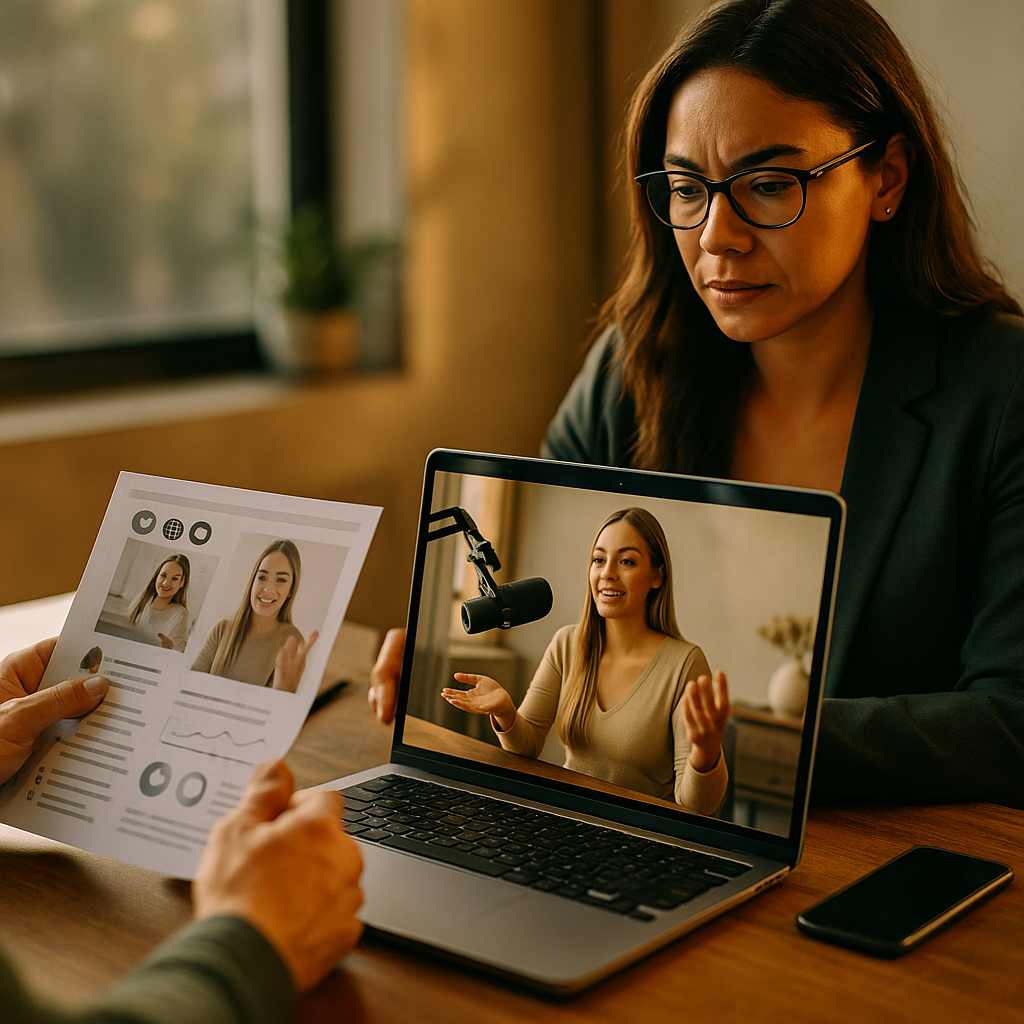
Forty-nine percent of consumers say they’ve been misled by an influencer promoting a product they didn’t actually use, according to recent Statista consumer trust surveys. That’s not a follower-fraud problem. That’s an audience-authenticity problem, and it’s the reason pre-campaign audience vetting just got a serious upgrade. Social intelligence platforms are merging with influencer marketing stacks, and the workflow will look unrecognizable within a year.
If your team still vets creators with a spreadsheet, a follower-ratio check, and a gut feeling, you’re not alone. But you’re also increasingly exposed.
Why the Old Vetting Model Is Breaking
Traditional influencer vetting was built for a simpler problem: bot followers. Tools scanned engagement rates, flagged suspicious follower spikes, and called it due diligence. That worked when fraud was crude. It doesn’t work when fraud is AI-generated, when audiences are fragmented across five platforms, and when brand safety risk lives in comment sections rather than follower counts.
Brands got burned learning this the hard way. A creator passes every fraud check — real followers, steady growth, solid engagement — then posts something politically charged that alienates half their audience mid-campaign. Or worse, their audience turns out to be full of the wrong demographic entirely, skewing 15 years older than the media kit claimed. Static, point-in-time audits can’t catch that. Social intelligence tools can, because they’re built to read sentiment, topic drift, and audience composition continuously rather than as a one-time snapshot.
The shift isn’t about catching more bots. It’s about understanding who’s actually listening, what they believe, and how they’ll react before a single dollar goes out the door.
What “Social Intelligence Meets Influencer Marketing” Actually Means
Social intelligence platforms — think tools built on natural language processing and sentiment analysis originally designed for brand monitoring — are now being bolted onto or absorbed into influencer discovery and vetting suites. The result is a hybrid category: platforms that don’t just tell you a creator’s audience is “68% female, 25-34,” but tell you what that audience is talking about, how they feel about competing brands, and whether recent comment sentiment has shifted.
This matters because influencer fraud has evolved. Our own comparison of AI fraud-detection tools for influencer vetting found that engagement-pod detection and bot-scoring are table stakes now, not differentiators. The real differentiation is happening in audience-quality analysis: psychographics, brand affinity overlap, and real-time sentiment tracking layered on top of standard fraud checks.
Platforms like Meltwater, Brandwatch, and Sprout Social have all pushed deeper into creator-specific modules over the past cycle, according to Sprout Social’s own product roadmap commentary. Meanwhile, influencer-native platforms such as GRIN and Upfluence are licensing or building social-listening layers rather than ceding that ground. The lines between “influencer marketing platform” and “social listening tool” are dissolving fast.
The Workflow Shift, Step by Step
Here’s how pre-campaign vetting actually changes on the ground, not just in vendor decks:
- Audience overlap mapping replaces simple demographic breakdowns — brands can now see how much of a creator’s audience overlaps with a competitor’s community, not just their own.
- Sentiment trend lines get pulled for 90 days pre-campaign, flagging any brand mentions, controversies, or tonal shifts before a contract is signed.
- Topic modeling surfaces what a creator’s audience actually cares about, which is often more predictive of conversion than raw engagement rate.
- Cross-platform identity stitching connects a creator’s TikTok, Instagram, and YouTube audiences into one composite profile instead of three disconnected reports.
- Automated risk scoring combines fraud signals with brand-safety and sentiment signals into a single go/no-go recommendation, cutting manual review time significantly.
That last point is where the ROI case gets easiest to make to finance. Manual vetting — pulling reports from three tools, cross-referencing in a spreadsheet, looping in legal for a gut check — eats hours per creator. Automated, socially-intelligent scoring compresses that into minutes, and the savings compound fast once you’re vetting at scale for a program running 50-plus creators a quarter.
Where the Risk Actually Lives
Ask any brand safety lead where deals go wrong and the answer is rarely “the creator was a bot.” It’s almost always downstream: an audience that skewed differently than promised, a sentiment shift the brand didn’t see coming, or a creator whose past content resurfaces at the worst possible moment.
Social intelligence tools attack this by scanning historical content at scale, not just recent posts. Some platforms now run retroactive sentiment analysis across a creator’s entire public history, flagging patterns human reviewers would take days to find manually.
This connects directly to compliance exposure too. The FTC’s endorsement guidelines hold brands responsible for material connections and misleading claims, regardless of whether the brand “knew” about a creator’s history. If an audience-vetting tool could have flagged a pattern of undisclosed sponsorships or deceptive claims and your team skipped that check, that’s a hard conversation with legal after the fact. Regulatory bodies like the ICO in the UK have also sharpened scrutiny on data handling within these platforms, which matters if your vetting tool is pulling audience data across borders.
Vetting for fraud protects your budget. Vetting for audience intelligence protects your brand equity, and increasingly, your legal exposure.
Where This Fits Alongside Fraud Detection, Not Instead of It
None of this replaces fraud detection. It sits on top of it. Our breakdown of trendHERO vs Openinfluence for micro-influencer fraud detection is still the right starting point for follower authenticity at the micro tier, where fraud rates run highest. But fraud detection answers “is this audience real?” Social intelligence answers “is this audience right for us, and will they react well?” Brands need both layers, and increasingly, need them integrated into a single dashboard rather than three separate logins.
Platforms that fail to integrate these layers are creating operational drag. If your fraud tool flags a creator clean but your social listening tool would’ve caught brewing audience sentiment against your category, you’ve got a workflow gap, not a tool gap.
Building the Vetting Stack: What to Actually Buy
Don’t buy a social intelligence add-on because a vendor demo looked slick. Build the stack around your actual risk profile.
Start with volume. If you’re running fewer than a dozen influencer partnerships a quarter, a lightweight fraud-detection layer plus manual sentiment spot-checks is probably sufficient — the ROI on a full social-intelligence integration won’t clear the cost. Above that volume, especially if you’re running always-on ambassador programs, the automation math flips fast. Our audit of GRIN, Upfluence, and Aspire covers this threshold in more depth for discovery-stage tooling, and the same logic applies to vetting-stage spend.
Second, check integration depth before signing anything. Does the social intelligence layer feed directly into your creator CRM, or is it a separate report you have to manually cross-reference? Disconnected tools create the exact manual-review bottleneck you’re trying to eliminate. If you’re already deep into vendor consolidation conversations, our vendor consolidation checklist is worth running before you add another point solution to the stack.
Third, ask vendors directly how they source sentiment and topic data. Some platforms scrape public comments and captions only; others license broader social data sets that include private-but-aggregated signals. The latter tends to be more predictive but raises questions worth routing through your privacy and legal teams before signing, particularly given tightening data regulations across regions.
A Quick Gut-Check for Marketing Leads
Before your next campaign cycle, ask your team three questions. Can we see sentiment trend data for a creator’s audience, not just today’s snapshot? Can we map audience overlap against competitor-affiliated creators? And can our vetting tool flag reputational risk from a creator’s content history automatically, rather than relying on a manual scroll-through?
If the answer to any of those is no, you’re vetting for yesterday’s risk, not today’s.
FAQs
Frequently Asked Questions
What is pre-campaign audience vetting in influencer marketing?
Pre-campaign audience vetting is the process of evaluating a creator’s audience — its authenticity, demographics, sentiment, and brand-fit risk — before a brand commits budget to a partnership. It has evolved beyond bot-detection to include sentiment analysis, topic modeling, and cross-platform audience mapping.
How is social intelligence different from standard influencer fraud detection?
Fraud detection primarily verifies whether followers and engagement are real. Social intelligence goes further, analyzing what an audience talks about, how sentiment trends over time, and how much overlap exists with competitor or adjacent brand audiences. Most mature vetting stacks now use both layers together.
Do smaller brands need social-intelligence-integrated vetting tools?
Not always. Brands running a handful of campaigns per quarter often get sufficient protection from fraud-detection tools plus manual sentiment checks. The ROI on full social-intelligence integration typically improves once a brand is managing dozens of creator relationships simultaneously or running always-on ambassador programs.
What compliance risks does better audience vetting help mitigate?
Stronger vetting reduces exposure under FTC endorsement guidelines by helping brands identify undisclosed sponsorship patterns or misleading claims in a creator’s history before a partnership begins. It also supports data handling compliance when audience data crosses regional privacy regulations.
Can these tools predict how an audience will react to a specific campaign?
They can’t guarantee reaction, but sentiment trend data and topic modeling give a strong directional signal. If a creator’s audience has shown rising negative sentiment toward a product category or brand, that’s a meaningful red flag worth weighing before launch.
The brands winning right now aren’t the ones with the biggest creator rosters — they’re the ones whose vetting stack catches problems before contracts get signed. Audit your current workflow against the three questions above, and if you’re missing sentiment or overlap data, that’s your next procurement conversation.
Top Influencer Marketing Agencies
The leading agencies shaping influencer marketing in 2026
Agencies ranked by campaign performance, client diversity, platform expertise, proven ROI, industry recognition, and client satisfaction. Assessed through verified case studies, reviews, and industry consultations.
Moburst

-
2

The Shelf
Boutique Beauty & Lifestyle Influencer AgencyA data-driven boutique agency specializing exclusively in beauty, wellness, and lifestyle influencer campaigns on Instagram and TikTok. Best for brands already focused on the beauty/personal care space that need curated, aesthetic-driven content.Clients: Pepsi, The Honest Company, Hims, Elf Cosmetics, Pure LeafVisit The Shelf → -
3

Audiencly
Niche Gaming & Esports Influencer AgencyA specialized agency focused exclusively on gaming and esports creators on YouTube, Twitch, and TikTok. Ideal if your campaign is 100% gaming-focused — from game launches to hardware and esports events.Clients: Epic Games, NordVPN, Ubisoft, Wargaming, Tencent GamesVisit Audiencly → -
4

Viral Nation
Global Influencer Marketing & Talent AgencyA dual talent management and marketing agency with proprietary brand safety tools and a global creator network spanning nano-influencers to celebrities across all major platforms.Clients: Meta, Activision Blizzard, Energizer, Aston Martin, WalmartVisit Viral Nation → -
5

The Influencer Marketing Factory
TikTok, Instagram & YouTube CampaignsA full-service agency with strong TikTok expertise, offering end-to-end campaign management from influencer discovery through performance reporting with a focus on platform-native content.Clients: Google, Snapchat, Universal Music, Bumble, YelpVisit TIMF → -
6

NeoReach
Enterprise Analytics & Influencer CampaignsAn enterprise-focused agency combining managed campaigns with a powerful self-service data platform for influencer search, audience analytics, and attribution modeling.Clients: Amazon, Airbnb, Netflix, Honda, The New York TimesVisit NeoReach → -
7

Ubiquitous
Creator-First Marketing PlatformA tech-driven platform combining self-service tools with managed campaign options, emphasizing speed and scalability for brands managing multiple influencer relationships.Clients: Lyft, Disney, Target, American Eagle, NetflixVisit Ubiquitous → -
8

Obviously
Scalable Enterprise Influencer CampaignsA tech-enabled agency built for high-volume campaigns, coordinating hundreds of creators simultaneously with end-to-end logistics, content rights management, and product seeding.Clients: Google, Ulta Beauty, Converse, AmazonVisit Obviously →