


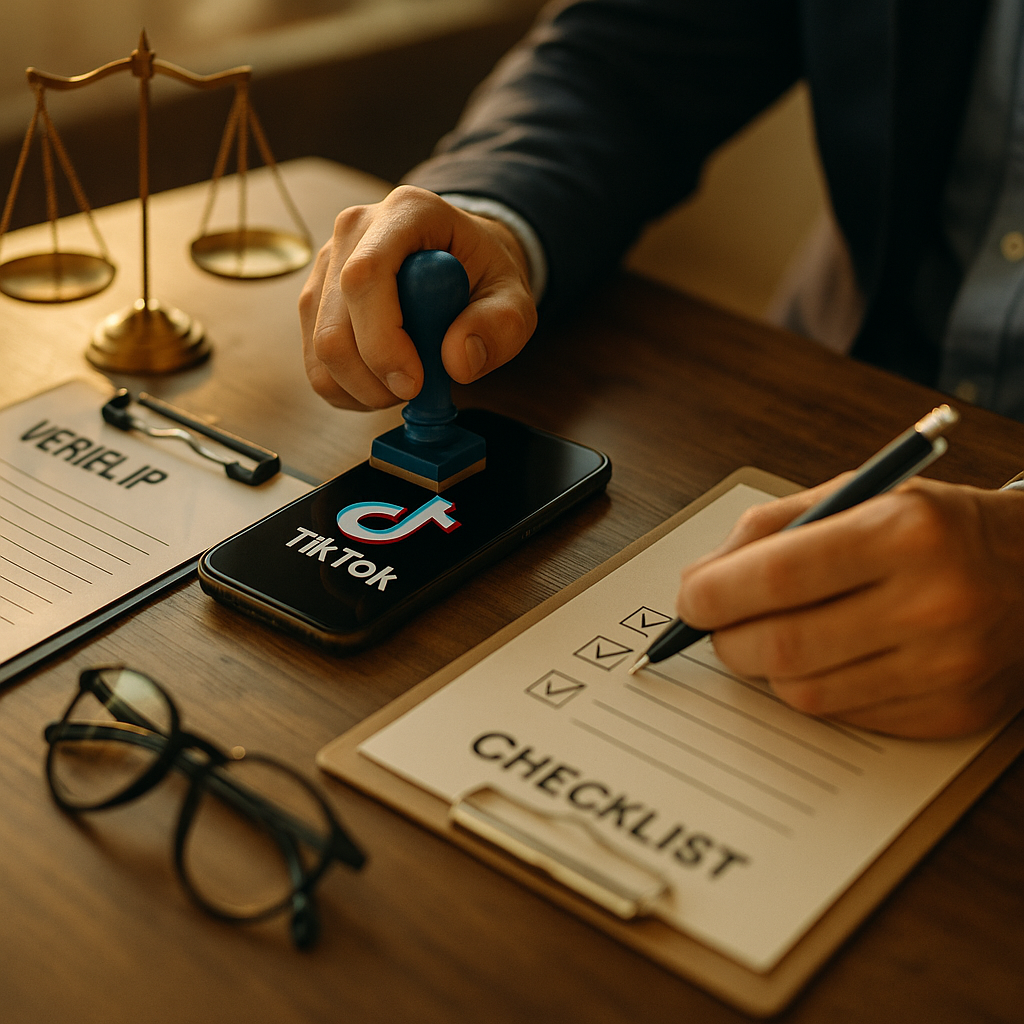
One overlooked field in a seller dashboard can now trigger account suspension. TikTok Shop’s Real IP Verification program has moved from quiet pilot to active enforcement, and merchants who treat it as a technical afterthought are getting locked out of their storefronts mid-quarter. If you’re running paid social or affiliate commerce through TikTok Shop, this is a compliance deadline, not a suggestion.
What Real IP Verification Actually Checks
TikTok Shop’s Real IP Verification program cross-references the IP address associated with a seller account, and increasingly with individual login sessions, against the business registration details on file. The goal is straightforward: stop sellers from masking their true operating location using VPNs, proxy networks, or shell entities registered in one country while fulfilling from another. TikTok has been under regulatory pressure in the US, UK, and EU to prove it knows who’s actually selling on its platform, and this program is the operational answer.
In practice, that means TikTok is now matching three data points: the IP address of account access, the registered business address, and the tax/banking documentation submitted at onboarding. A mismatch doesn’t automatically mean fraud. But it does trigger a documentation request, and merchants who can’t respond fast lose selling privileges while the review runs.
Merchants who wait for a suspension notice to start gathering documentation are already behind. The enforcement window for most flagged accounts is 7 to 14 days, and incomplete submissions restart the clock.
Why This Matters More for Cross-Border and Agency-Managed Stores
If you’re a US-based brand running a TikTok Shop through a regional agency, or a merchant with fulfillment split across multiple countries, you’re in the highest-risk category. TikTok’s verification logic doesn’t easily distinguish between “legitimate outsourced operations” and “identity obfuscation.” A brand’s marketing team logging in from New York while an agency partner in Manila manages daily storefront operations looks, algorithmically, a lot like account-sharing fraud.
This is the same pattern we’ve seen with other TikTok Shop enforcement waves. The platform tightens a rule, sweeps broadly, and lets appeals sort out the false positives. Compare it to how TikTok rolled out enforcement around countdown timer compliance last cycle: broad automated flags first, manual review second, and merchants without documentation ready lost weeks of sales velocity during peak shopping windows.
The Documentation Merchants Actually Need
Legal and compliance teams should treat this like any regulatory audit prep, not a customer service ticket. Here’s the baseline file every merchant needs assembled before enforcement hits their account tier:
- Business registration certificate matching the exact legal entity name on the TikTok Shop seller account, not a DBA or parent company variant.
- Proof of operating address — utility bill, lease agreement, or government-issued document dated within the last 90 days.
- Authorized user list naming every individual or agency with login access, including their geographic location and role.
- IP access logs or VPN disclosure statement if any authorized user regularly accesses the account from a location different than the registered business address.
- Fulfillment and warehousing documentation showing where inventory physically sits, especially for dropship or 3PL arrangements.
- Bank account verification tying payout details to the same legal entity named in the business registration.
Notice what’s missing from that list: marketing content, creator contracts, ad spend records. This program isn’t checking your influencer compliance. It’s checking whether you are who you say you are. Those are two separate legal exposures, and treating them as one is how brands miss deadlines.
Building an Internal Access Log Before You Need One
Most merchants don’t know who has logged into their TikTok Shop account in the past six months. That’s a problem the moment a verification flag lands. Start building an internal access audit now, even if you haven’t been flagged.
Practically, this means: pull login history from TikTok Shop’s seller center, cross-reference against your team roster and any agency or freelancer contracts, and flag any access point that doesn’t have a documented business reason. If a former employee’s credentials were never revoked, that’s a live liability. If your agency partner logs in from a co-working space with a rotating IP, get that documented in writing now, not after a suspension notice.
This is also where indemnification language in your agency and vendor contracts starts to matter. If a third-party manager’s access pattern triggers your account suspension, who eats the revenue loss? Most standard TikTok Shop management agreements don’t address this at all. It’s worth reviewing the same way brands have had to rethink indemnification clauses for AI-selected creator contracts — the liability logic is nearly identical: a third-party action creates platform risk, and someone needs to own the fallout contractually.
How Enforcement Deadlines Actually Play Out
TikTok doesn’t publish a universal enforcement calendar. Instead, deadlines are account-specific and triggered by risk signals: login from a new country, a mismatch between banking and registration details, or a spike in customer disputes tied to fulfillment location claims. Once flagged, sellers typically get an in-dashboard notification and an email, both with a countdown to submit documentation.
Miss the window, and the consequences scale by severity. First-tier enforcement usually restricts new listing creation. Second-tier freezes payouts. Third-tier suspends the storefront entirely. Reinstatement after a full suspension can take 30 to 45 days, based on seller reports circulating in TikTok Shop merchant communities, and during that window your organic reach and ad account standing typically degrade too, since TikTok’s ad platform ties performance signals to shop account health.
A frozen payout doesn’t just stop revenue today. It stalls the working capital brands need for next month’s inventory buy and creator payments, creating a compounding cash-flow problem that outlasts the original compliance issue.
Where This Overlaps With Existing Compliance Work
Smart legal and compliance teams are folding Real IP Verification prep into audits they’re already running. If you’ve recently done a whitelisted creator ads audit or reviewed livestream disclosure practices, you already have most of the internal documentation infrastructure needed here — access logs, vendor contracts, entity records. The gap most teams have is treating platform identity verification as a separate, lower-priority workstream from FTC-facing disclosure compliance.
It shouldn’t be separate. Both are about proving to a regulator or platform that your operation is what it claims to be, and both carry account-level and revenue-level consequences if you can’t produce the paper trail fast. Teams that already track livestream disclosure obligations systematically tend to move faster on IP verification requests too, because the documentation muscle already exists.
Practical Steps for the Next Sprint
- Audit your current TikTok Shop authorized user list against actual login activity for the past 90 days.
- Confirm your business registration name matches your seller account name exactly, including punctuation and entity suffix.
- Document every agency, freelancer, or contractor with account access, including their typical login location.
- Request written IP or VPN usage disclosure from any remote team member with shop access.
- Build a standing folder with registration certificates, address proof, and banking verification refreshed quarterly, not annually.
- Add a platform-compliance indemnification clause to agency management agreements if one doesn’t already exist.
According to eMarketer, social commerce continues to be one of the fastest-growing retail channels globally, which is precisely why platforms like TikTok are under pressure to tighten seller identity controls. Regulatory scrutiny on platform accountability has intensified too; the FTC has signaled ongoing interest in how commerce platforms verify seller legitimacy, particularly around cross-border fulfillment claims. Brands operating in the UK should also track guidance from the ICO on data handling tied to identity verification programs, since access logs and business documentation often qualify as personal data requiring its own handling protocol.
For teams managing multiple regional storefronts, tools referenced in broader social commerce reporting from Sprout Social and HubSpot increasingly include compliance-tracking features worth evaluating alongside your legal team’s audit process, especially if your access logs currently live in scattered spreadsheets rather than a centralized system.
Frequently Asked Questions
What triggers a TikTok Shop Real IP Verification flag?
Common triggers include login access from a country different than the registered business address, banking details that don’t match the business registration name, sudden changes in fulfillment location claims, or customer disputes referencing inconsistent shipping origins.
How long do merchants have to respond to a verification request?
Most flagged accounts get a 7 to 14 day window based on seller reports, though TikTok doesn’t publish a fixed universal timeline. Incomplete submissions typically restart the countdown, so submitting a complete file the first time matters more than submitting quickly.
Does using an agency to manage TikTok Shop increase verification risk?
Yes, particularly if the agency team logs in from a different country than the brand’s registered business address without documentation explaining the arrangement. Written authorization and access disclosure reduce this risk significantly.
What happens if a merchant fails verification?
Enforcement escalates by tier: first restricting new listings, then freezing payouts, then suspending the storefront entirely. Reinstatement after full suspension has reportedly taken 30 to 45 days for affected sellers.
Is Real IP Verification connected to FTC disclosure compliance?
Not directly. Real IP Verification confirms seller identity and business legitimacy, while FTC rules govern advertising disclosure and endorsement practices. They’re separate legal exposures, though the documentation habits needed for one often support the other.
Pull your access logs this week, not after a suspension notice arrives. The merchants who treat Real IP Verification as routine documentation hygiene will barely notice enforcement; the ones who wait will lose a sales cycle proving what should already be on file.
Top Influencer Marketing Agencies
The leading agencies shaping influencer marketing in 2026
Agencies ranked by campaign performance, client diversity, platform expertise, proven ROI, industry recognition, and client satisfaction. Assessed through verified case studies, reviews, and industry consultations.
Moburst

-
2

The Shelf
Boutique Beauty & Lifestyle Influencer AgencyA data-driven boutique agency specializing exclusively in beauty, wellness, and lifestyle influencer campaigns on Instagram and TikTok. Best for brands already focused on the beauty/personal care space that need curated, aesthetic-driven content.Clients: Pepsi, The Honest Company, Hims, Elf Cosmetics, Pure LeafVisit The Shelf → -
3

Audiencly
Niche Gaming & Esports Influencer AgencyA specialized agency focused exclusively on gaming and esports creators on YouTube, Twitch, and TikTok. Ideal if your campaign is 100% gaming-focused — from game launches to hardware and esports events.Clients: Epic Games, NordVPN, Ubisoft, Wargaming, Tencent GamesVisit Audiencly → -
4

Viral Nation
Global Influencer Marketing & Talent AgencyA dual talent management and marketing agency with proprietary brand safety tools and a global creator network spanning nano-influencers to celebrities across all major platforms.Clients: Meta, Activision Blizzard, Energizer, Aston Martin, WalmartVisit Viral Nation → -
5

The Influencer Marketing Factory
TikTok, Instagram & YouTube CampaignsA full-service agency with strong TikTok expertise, offering end-to-end campaign management from influencer discovery through performance reporting with a focus on platform-native content.Clients: Google, Snapchat, Universal Music, Bumble, YelpVisit TIMF → -
6

NeoReach
Enterprise Analytics & Influencer CampaignsAn enterprise-focused agency combining managed campaigns with a powerful self-service data platform for influencer search, audience analytics, and attribution modeling.Clients: Amazon, Airbnb, Netflix, Honda, The New York TimesVisit NeoReach → -
7

Ubiquitous
Creator-First Marketing PlatformA tech-driven platform combining self-service tools with managed campaign options, emphasizing speed and scalability for brands managing multiple influencer relationships.Clients: Lyft, Disney, Target, American Eagle, NetflixVisit Ubiquitous → -
8

Obviously
Scalable Enterprise Influencer CampaignsA tech-enabled agency built for high-volume campaigns, coordinating hundreds of creators simultaneously with end-to-end logistics, content rights management, and product seeding.Clients: Google, Ulta Beauty, Converse, AmazonVisit Obviously →