


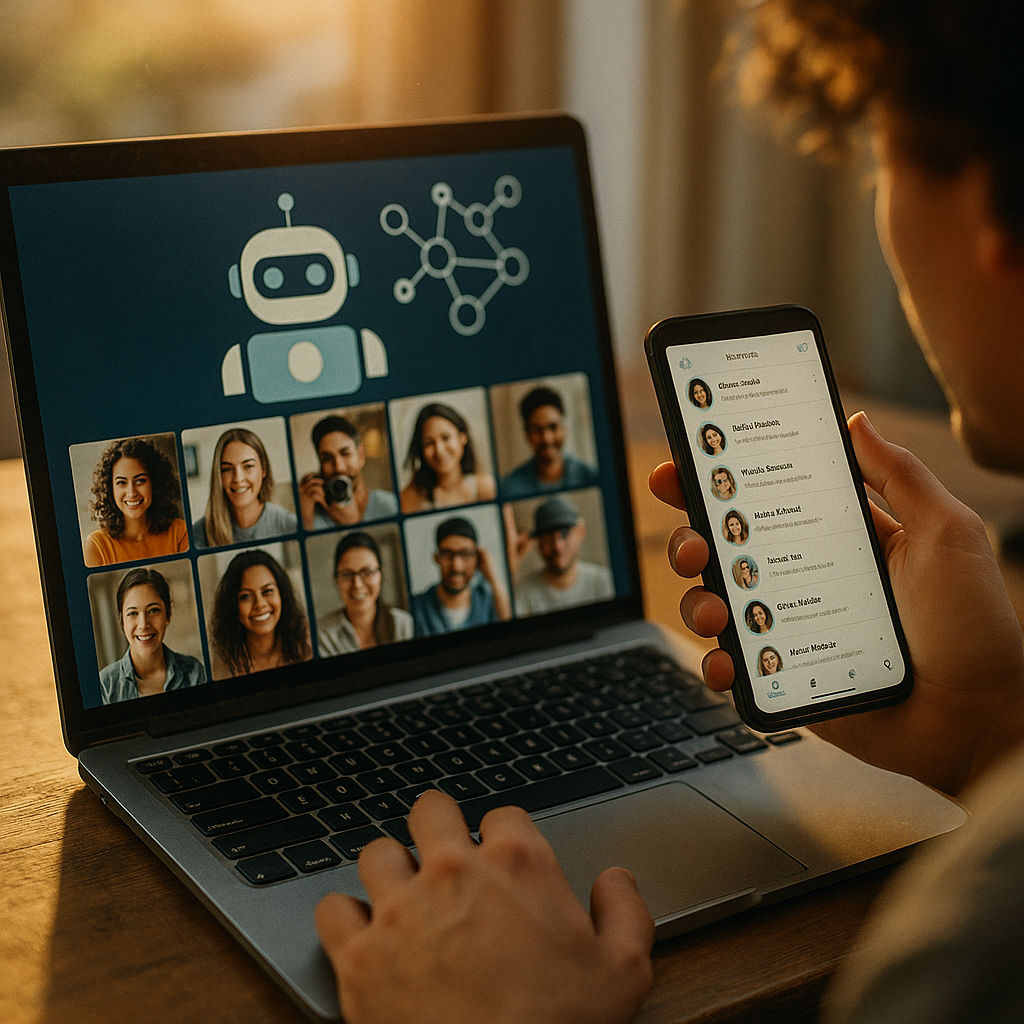
Sixty-seven creators shortlisted, vetted, and scored before lunch. That’s not a hypothetical — it’s what an AI agent discovery tool did for a mid-size DTC beauty brand last quarter, a task that used to eat two weeks of an agency’s time. If your team is still building creator lists in spreadsheets, you’re not just slow. You’re leaving money on the table.
The Old Discovery Model Was Never Built for Scale
Manual creator sourcing has always been a bottleneck dressed up as due diligence. A brand manager types keywords into a platform search bar, scrolls a few hundred profiles, opens ten browser tabs, and manually checks engagement rates against follower counts. Multiply that by every micro-niche a campaign needs to cover, and you understand why sourcing has historically taken two to four weeks for a mid-size influencer program.
It’s not that marketers were bad at their jobs. The tools simply weren’t built for the volume of creators now active across TikTok, Instagram, YouTube Shorts, and emerging platforms. There are millions of viable creators globally, and follower count alone tells you almost nothing about whether someone will convert for your specific product category.
That gap between “who’s popular” and “who actually performs” is exactly where AI agents have started to earn their keep.
What Are AI Agent Discovery Tools, Exactly?
AI agent discovery tools are autonomous or semi-autonomous systems that search, filter, score, and shortlist creators against a brand’s specific criteria, without a human manually clicking through each profile. Unlike static databases that just let you filter by follower range and location, agents can chain together multiple tasks: pull audience demographic data, cross-reference past brand mentions, flag suspicious engagement patterns, and rank candidates by predicted performance.
Think of it less as a search engine and more as a junior analyst who never sleeps and never gets bored scrolling profile 400.
The distinction matters. A search tool returns a list. An agent returns a *recommendation*, with reasoning attached. That reasoning layer is what’s compressing timelines from weeks to hours, a shift covered in depth in AI agents for creator vetting.
The real unlock isn’t speed for speed’s sake — it’s that agents let brands evaluate ten times more candidates in the same time budget, which means better-fit creators surface instead of just the first ones that show up in a hashtag search.
Where the Speed Actually Comes From
Three mechanical shifts explain most of the time savings:
- Parallel processing: Agents evaluate hundreds of profiles simultaneously instead of sequentially, the way a human researcher would.
- Pre-trained scoring models: Rather than starting from scratch, agents apply affinity and fraud-detection models trained on prior campaign outcomes.
- Structured handoffs: Once an agent flags a shortlist, it hands off structured data (engagement history, audience overlap, brand-safety flags) directly into a brief or CRM, skipping the manual data-entry step entirely.
None of this is magic. It’s workflow automation applied to a genuinely messy dataset — creator profiles — that resisted automation for years because the signals were scattered across platforms.
Follower Count Was Always the Wrong Filter
Here’s an uncomfortable truth agencies rarely say out loud: a huge share of “creator vetting” for the last decade was really just follower-count sorting with extra steps. It felt rigorous. It wasn’t.
AI-driven affinity scoring changes the equation by weighing audience relevance, historical conversion signals, and content-category alignment far more heavily than raw reach. According to research covered in affinity scoring versus follower count comparisons, affinity-based models consistently outperform follower-based shortlists on downstream conversion metrics, even when the follower-based list has “bigger” names.
That’s the quiet revolution here. It’s not that AI found creators humans couldn’t find. It’s that AI found the *right* creators humans kept skipping because they weren’t sorting by the metrics that actually predict sales.
Adoption Is Real, But It’s Not Universal Yet
AI creator discovery adoption reportedly sits around 36.7%, according to data referenced in recent adoption tracking. That’s a meaningful chunk of the market, but it also means the majority of brands are still doing this the slow way.
Why the gap? Part of it is trust. Marketers who’ve been burned by black-box recommendation engines are understandably cautious about handing sourcing decisions to a system they can’t fully explain. Part of it is procurement inertia — swapping vetting tools mid-fiscal-year is a hard sell to finance.
And part of it, frankly, is that a lot of “AI-powered” discovery tools on the market are thin wrappers around basic filters, not genuine agentic systems. Buyers have learned to be skeptical.
The Compliance Layer Nobody Talks About Enough
Speed means nothing if the shortlist introduces brand-safety or regulatory risk. Faster discovery has to come with faster, not weaker, vetting. This is where the more sophisticated agent platforms differentiate themselves: they don’t just rank creators by performance potential, they simultaneously scan for FTC disclosure history, prior brand controversies, and sentiment volatility.
Tools built on smaller, specialized language models are proving surprisingly effective here. As explored in compliance scanning research, narrow models trained specifically on disclosure language and platform policy text often outperform general-purpose large language models at catching risk signals, and they do it cheaper and faster.
Brands should be asking vendors a pointed question: is your agent trained on general web data, or on FTC guidance, platform policies, and disclosure precedent specifically? The FTC’s endorsement guidelines haven’t gotten any more lenient, and regulators on both sides of the Atlantic, including the ICO, are paying closer attention to influencer disclosure practices than they were even two years ago.
Humans Still Own the Decision, Not Just the Risk
There’s a tempting narrative that AI agents are “replacing” influencer marketers. That’s not what’s happening, and brands that treat agent output as gospel are setting themselves up for a bad campaign story. The more accurate framing, laid out well in AI creator vetting and human oversight, is that agents compress the discovery funnel while humans still own final judgment calls, especially anything involving brand voice fit, negotiation nuance, or reputational gray areas an algorithm can’t fully weigh.
A shortlist of twenty AI-ranked creators still needs a human to watch three of their videos and ask, “would our CMO be comfortable if this person went viral for the wrong reason next month?” No model answers that reliably yet.
Practically, this means the best-performing teams use agents as a first-pass filter, not a final answer. The workflow that’s emerging looks something like:
- Agent surfaces 50-100 candidates matching campaign parameters in under an hour.
- Agent auto-scores each on affinity, fraud risk, and compliance flags.
- Human team reviews the top 10-15% manually, focusing on content quality and brand fit.
- Final negotiation and contracting proceed as normal, though even this step is being accelerated by AI contract agents handling first-draft terms.
That’s a fundamentally different time allocation than the old model, where 80% of the work was finding candidates and 20% was evaluating them. Now it flips: agents handle the finding, humans handle the evaluating, and the total cycle shrinks dramatically.
What This Means for Budgets and Attribution
Faster discovery doesn’t just save time, it changes how brands plan spend. When sourcing takes weeks, campaigns get locked into rigid, quarterly-planned rosters. When sourcing takes hours, brands can react to real-time trend shifts, swap underperforming creators mid-campaign, and test far more creator-category combinations within the same budget cycle.
That agility puts more pressure on measurement, though. If you’re testing more creators faster, your attribution model needs to keep pace, which is part of why marketing-mix modeling has seen renewed investment, as discussed in MMM revival coverage. Speed without proportional measurement rigor just creates faster chaos.
There’s also a cost angle worth flagging directly: agencies billing on a per-hour discovery basis will feel pressure as AI compresses that hourly footprint. Brands should expect, and can reasonably negotiate, pricing models that reflect this. Paying weekly retainer rates for a task that now takes an afternoon doesn’t make sense anymore, and most procurement teams are catching on.
Choosing a Discovery Agent: Questions Worth Asking Vendors
Not every tool marketed as “AI-powered discovery” deserves the label. Before signing a contract, push vendors on:
- What data trains the affinity scoring model, and how often is it refreshed?
- Can the agent explain *why* it ranked a creator highly, or is it a black box?
- How does it handle fraud detection — engagement pods, bought followers, fake audiences?
- Does it integrate compliance scanning natively, or is that a separate manual step?
- What happens when the underlying model gets deprecated or updated mid-campaign?
That last question matters more than most brands realize. Model updates can silently shift scoring criteria, which is exactly the risk flagged in the model deprecation playbook. A discovery agent that quietly changes its ranking logic mid-campaign, without notice, can undo weeks of careful roster-building overnight.
Explainability isn’t a nice-to-have here, it’s an audit requirement. Marketing leaders increasingly need to justify creator selection to finance, legal, and sometimes regulators, and “the AI picked them” is not an acceptable answer. The explainable AI framework for building audit trails is directly relevant for any team adopting these tools at scale.
The Practical Next Step
Run a pilot before you rip and replace your entire sourcing workflow. Pick one upcoming campaign, run discovery through an agent tool in parallel with your existing manual process, and compare shortlist quality, time spent, and downstream performance side by side. That controlled comparison, not a vendor’s demo deck, is what will tell you whether AI agent discovery earns a permanent seat in your stack.
FAQs
What is an AI agent discovery tool in influencer marketing?
It’s a software system that autonomously searches, scores, and shortlists creators based on criteria like audience affinity, fraud risk, and brand-safety signals, replacing much of the manual research brands used to do by hand.
How much faster is AI-powered creator discovery compared to manual sourcing?
Manual sourcing for a mid-size campaign often took two to four weeks. Brands using AI agent discovery tools report shortlisting comparable creator pools in hours, largely because agents evaluate candidates in parallel rather than one profile at a time.
Does AI creator discovery replace human judgment?
No. Agents compress the search and filtering stage, but humans still review final candidates for brand fit, content quality, and reputational risk. The most effective workflows treat AI output as a first-pass filter, not a final decision.
Is follower count still a reliable filter for creator vetting?
Not on its own. Affinity-based scoring models that weigh audience relevance and historical conversion signals consistently outperform follower-count-based shortlists, even when the latter includes larger accounts.
What compliance risks should brands watch for with AI discovery tools?
Brands should confirm the tool scans for FTC disclosure history, platform policy violations, and sentiment volatility, not just performance metrics. Some specialized smaller models actually outperform general-purpose AI at catching these compliance signals.
How should brands evaluate a new AI discovery vendor?
Ask about training data sources, scoring explainability, fraud detection methods, native compliance scanning, and how the vendor handles underlying model updates that could silently change ranking logic mid-campaign.
FAQs
Top Influencer Marketing Agencies
The leading agencies shaping influencer marketing in 2026
Agencies ranked by campaign performance, client diversity, platform expertise, proven ROI, industry recognition, and client satisfaction. Assessed through verified case studies, reviews, and industry consultations.
Moburst

-
2

The Shelf
Boutique Beauty & Lifestyle Influencer AgencyA data-driven boutique agency specializing exclusively in beauty, wellness, and lifestyle influencer campaigns on Instagram and TikTok. Best for brands already focused on the beauty/personal care space that need curated, aesthetic-driven content.Clients: Pepsi, The Honest Company, Hims, Elf Cosmetics, Pure LeafVisit The Shelf → -
3

Audiencly
Niche Gaming & Esports Influencer AgencyA specialized agency focused exclusively on gaming and esports creators on YouTube, Twitch, and TikTok. Ideal if your campaign is 100% gaming-focused — from game launches to hardware and esports events.Clients: Epic Games, NordVPN, Ubisoft, Wargaming, Tencent GamesVisit Audiencly → -
4

Viral Nation
Global Influencer Marketing & Talent AgencyA dual talent management and marketing agency with proprietary brand safety tools and a global creator network spanning nano-influencers to celebrities across all major platforms.Clients: Meta, Activision Blizzard, Energizer, Aston Martin, WalmartVisit Viral Nation → -
5

The Influencer Marketing Factory
TikTok, Instagram & YouTube CampaignsA full-service agency with strong TikTok expertise, offering end-to-end campaign management from influencer discovery through performance reporting with a focus on platform-native content.Clients: Google, Snapchat, Universal Music, Bumble, YelpVisit TIMF → -
6

NeoReach
Enterprise Analytics & Influencer CampaignsAn enterprise-focused agency combining managed campaigns with a powerful self-service data platform for influencer search, audience analytics, and attribution modeling.Clients: Amazon, Airbnb, Netflix, Honda, The New York TimesVisit NeoReach → -
7

Ubiquitous
Creator-First Marketing PlatformA tech-driven platform combining self-service tools with managed campaign options, emphasizing speed and scalability for brands managing multiple influencer relationships.Clients: Lyft, Disney, Target, American Eagle, NetflixVisit Ubiquitous → -
8

Obviously
Scalable Enterprise Influencer CampaignsA tech-enabled agency built for high-volume campaigns, coordinating hundreds of creators simultaneously with end-to-end logistics, content rights management, and product seeding.Clients: Google, Ulta Beauty, Converse, AmazonVisit Obviously →