


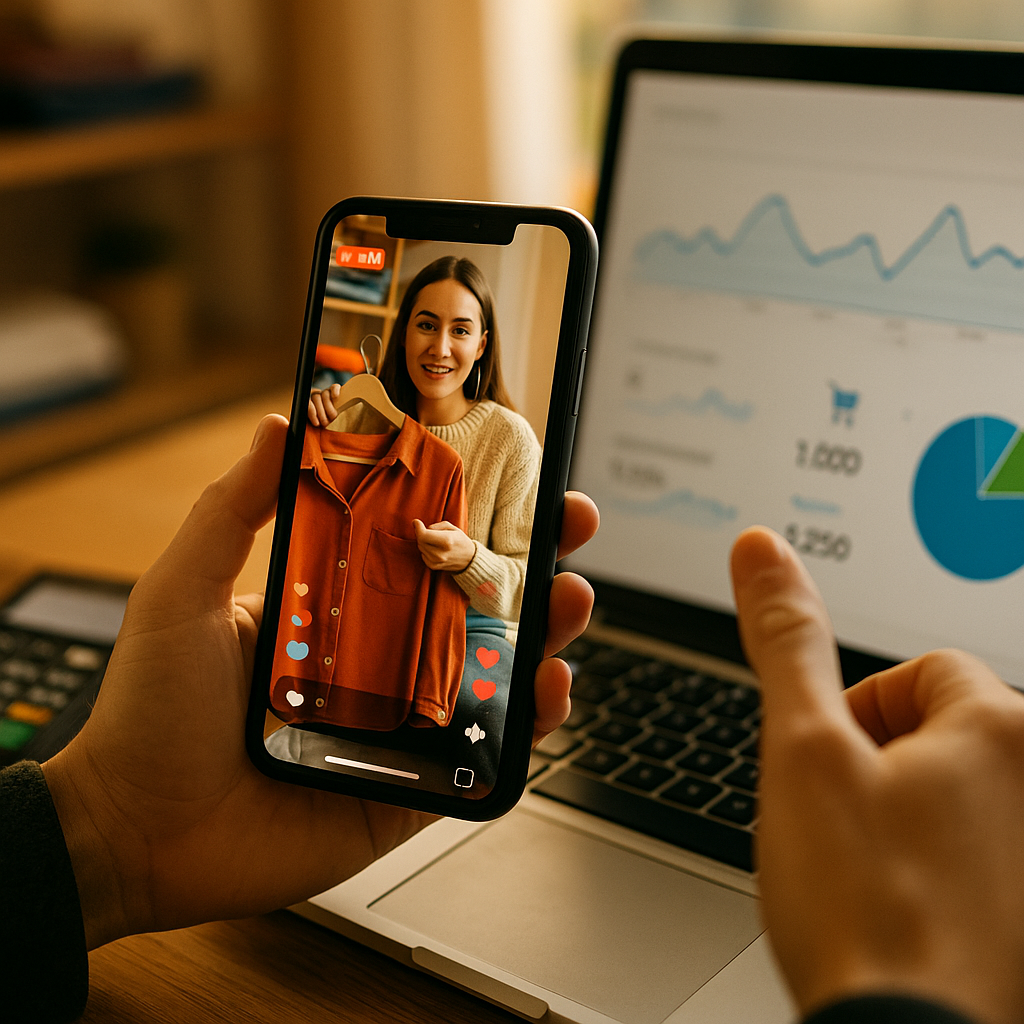
Livestream commerce moved $60 billion through TikTok Shop-style platforms last year, and most brands still can’t tell you which creator drove which sale in real time. That’s not a measurement gap. It’s a budget-allocation crisis dressed up as a reporting problem. AI-powered real-time attribution for livestream commerce is the only fix that scales — but the platforms claiming to solve it vary wildly in what they actually deliver.
If you’re running livestream programs across a dozen creators a week, you already know the pain: a spike in orders during a two-hour stream, three affiliate links in the bio, a pinned comment, and a shared coupon code. Which one closed the sale? Finance wants a number. Legal wants documentation. And your creators want to get paid on time. Guessing isn’t an option anymore.
Why Livestream Attribution Broke the Old Playbook
Traditional influencer attribution was built for static posts. A link goes up, a pixel fires, a UTM parameter gets logged. Clean, linear, boring — and mostly workable.
Livestream commerce doesn’t play by those rules. A single stream can generate hundreds of micro-conversion moments: a product callout at minute six, a flash discount at minute forty, a comment-triggered link click during a Q&A tangent. Viewers drop in and out. Some buy immediately inside the TikTok Shop checkout flow; others close the app and buy later from a saved cart. Multi-touch models built for email and display simply weren’t designed for this pace or this format.
The core challenge isn’t tracking clicks anymore — it’s reconstructing a purchase decision that happened inside a 90-second window of live video, often without any click at all.
That’s where AI enters the picture, not as a buzzword but as a necessity. Rule-based attribution assumes a predictable sequence of events. Livestream shopping is messier than that, and only probabilistic or ML-driven models can handle the noise.
What “Real-Time” Actually Needs to Mean
Vendors love the phrase “real-time attribution.” Ask them what that means operationally, and you’ll get very different answers. For brand teams evaluating platforms, real-time should mean three specific things:
- Sub-hour data latency between a sale on TikTok Shop and it appearing tagged to a creator ID in your dashboard — not next-day batch syncs.
- Session-level reconstruction of the livestream itself: timestamped product mentions, link taps, comment activity, and cart adds mapped against the video timeline.
- Creator-level granularity, not campaign-level. If ten creators worked one product drop, you need per-creator revenue splits, not a pooled total.
Miss any of these and you’re back to spreadsheet guesswork with a nicer UI. This is the same trap brands fell into with early rule-based attribution models — impressive on paper, brittle in practice.
The Identity Resolution Problem Nobody Talks About
Here’s the uncomfortable truth: TikTok Shop’s native reporting is decent for platform-level totals but weak on cross-device identity stitching. A viewer watches a livestream on mobile, gets distracted, and completes checkout later from a desktop browser via a saved link. Does that sale still get attributed to the creator who ran the stream?
It should. Whether it does depends entirely on how the attribution vendor handles identity resolution across sessions and devices. This is the same identity-matching challenge that’s plagued broader martech for years, and it’s why platforms borrowing techniques from server-side identity resolution tend to outperform those relying purely on client-side cookies or app-level session IDs.
Server-side approaches matter even more here because TikTok’s in-app browser environment limits what third-party pixels can see. If your attribution vendor is still leaning on client-side tracking alone, you’re likely undercounting delayed conversions significantly. This mirrors the broader debate covered in server-side tagging versus client-side pixels — the math favors server-side every time bandwidth and privacy restrictions tighten.
Comparing the Platform Categories
Rather than naming a single winner, it’s more useful to understand the categories these tools fall into, because the right choice depends on your existing stack.
Native TikTok Shop analytics — Free, fast to implement, but shallow. Good for order counts and basic creator leaderboards. Not built for multi-touch reconstruction or cross-platform blending. Fine for small programs, inadequate once you’re running concurrent streams across multiple creators weekly.
Livestream-specific attribution layers — Newer entrants building purpose-made tools that ingest TikTok Shop’s API data, timestamp it against stream footage, and apply ML models to weight touchpoints. These tend to be the most accurate for creator-level payouts but often lack broader cross-channel attribution (they see TikTok, not your whole paid and organic mix).
Hybrid MTA/MMM platforms — Tools built for broader marketing mix modeling that have bolted on livestream commerce connectors. Strong for finance-level reporting and budget reallocation across channels, weaker on granular per-stream, per-second detail. If you’re already comparing hybrid attribution vendors, the tradeoffs closely resemble what’s outlined in this MTA and MMM comparison, where depth trades against breadth.
Identity-stitching specialists — Platforms whose core strength is resolving the same customer across devices, sessions, and channels before attribution logic ever runs. Useful as a data layer beneath any of the above categories rather than a standalone dashboard. The identity-stitching test approach used in this vendor comparison is a good template for evaluating whether a livestream attribution tool’s underlying identity graph actually holds up.
Building an Evaluation Framework That Actually Protects Your Budget
Don’t evaluate these platforms on demo polish. Evaluate them on what happens when things get messy — because they will.
- Run a controlled multi-creator test. Book three to five creators for concurrent or back-to-back streams promoting the same SKU. See if the platform can separate revenue cleanly, including for viewers who saw more than one stream.
- Stress-test the latency claim. Ask for a live walkthrough, not a case study screenshot. Watch a sale happen and time how long it takes to appear attributed.
- Check the payout logic. Ask exactly how the platform handles split-credit scenarios (multiple creators, one purchase journey) and how disputes get resolved. This directly affects creator trust and retention — nobody wants to renegotiate rates because attribution logic looked arbitrary.
- Confirm data portability. Can you export raw event-level data, or only aggregated dashboards? If it’s the latter, you’re locked in and blind to methodology.
- Ask about compliance documentation. With FTC disclosure rules tightening around livestream shopping and affiliate promotion, your attribution data may need to double as an audit trail. Confirm the platform timestamps disclosures alongside sales data, not as a separate system.
If a livestream attribution vendor can’t show you raw, exportable, timestamped event data, treat every dashboard number as a marketing claim, not a fact.
Where This Fits in Your Broader Stack
Attribution for livestream commerce shouldn’t live in isolation. It needs to talk to your CRM, your creator payment systems, and ideally your broader martech stack without three layers of manual CSV exports. Teams that have gone through a proper stack rationalization exercise already know the danger of adding another disconnected point solution. A livestream attribution tool that can’t feed a CDP or CRM cleanly just becomes another silo your team has to reconcile manually every month.
The same logic applies to fatigue and creative performance data. If your attribution platform can show which creator drove revenue but can’t tell you whether that creator’s content is losing effectiveness over time, pair it with dedicated creative fatigue detection tools. Revenue attribution answers “who sold what.” Fatigue detection answers “how much longer will this work.” You need both to plan budget with any confidence.
Worth noting too: as TikTok Shop competitors and AI shopping assistants expand — think Perplexity Shopping or emerging AI shopping discovery layers — the attribution problem will only fragment further across platforms. Building evaluation muscle now, on TikTok Shop specifically, pays off when you’re forced to replicate the process elsewhere.
What the Data Actually Shows
Industry estimates from eMarketer put live shopping’s share of U.S. social commerce growing sharply year over year, and Statista data on China’s livestream commerce market (which remains the bellwether for what’s coming to Western platforms) shows conversion rates during live sessions running multiples higher than standard social posts. That gap between conversion volume and attribution sophistication is exactly why brands are overpaying underperforming creators and underpaying the ones actually driving revenue.
TikTok’s own advertising resources confirm the platform is investing in Shop analytics, but brands evaluating vendors should treat native reporting as a baseline, not a ceiling. For guidance on disclosure requirements that any attribution audit trail should support, the FTC’s endorsement guidance remains the reference point most legal teams cite.
FAQs
Frequently Asked Questions
What is AI-powered real-time attribution for livestream commerce?
It’s the use of machine learning models to connect individual livestream sales on platforms like TikTok Shop back to specific creator posts or streams, accounting for delayed purchases, cross-device behavior, and multiple touchpoints within a single session — something rule-based tracking can’t do accurately.
Can TikTok Shop’s native analytics handle this on its own?
Native analytics covers basic order counts and creator-level totals well, but it’s shallow on cross-session identity resolution and doesn’t reconstruct multi-touch journeys inside a stream. Most brands running more than a handful of creators need a dedicated attribution layer on top.
How accurate is real-time attribution during a livestream, really?
Accuracy depends heavily on identity resolution quality and data latency. Platforms using server-side tracking and cross-device stitching consistently outperform those relying only on client-side pixels, especially for purchases completed after the stream ends.
Does this affect how creators get paid?
Yes, directly. Split-credit logic for multi-creator campaigns determines payout fairness. Brands should confirm exactly how a vendor resolves overlapping attribution claims before signing a contract, since disputes here damage creator relationships fast.
How does livestream attribution fit with broader marketing attribution tools?
It should feed into your existing CDP, CRM, or MMM stack rather than operate as a standalone dashboard. Brands that treat it as an isolated tool end up reconciling data manually, which defeats the purpose of real-time reporting.
What compliance risks should brands watch for?
Livestream promotions still fall under FTC disclosure rules. Attribution platforms that timestamp disclosures alongside sales data give legal teams a defensible audit trail; those that don’t leave brands exposed if a disclosure dispute arises later.
Next step: before signing with any livestream attribution vendor, run the multi-creator concurrent-stream test described above. If it can’t cleanly split revenue and show its work in under an hour, it’s not ready for your budget decisions.
Frequently Asked Questions
What is AI-powered real-time attribution for livestream commerce?
It’s the use of machine learning models to connect individual livestream sales on platforms like TikTok Shop back to specific creator posts or streams, accounting for delayed purchases, cross-device behavior, and multiple touchpoints within a single session — something rule-based tracking can’t do accurately.
Can TikTok Shop’s native analytics handle this on its own?
Native analytics covers basic order counts and creator-level totals well, but it’s shallow on cross-session identity resolution and doesn’t reconstruct multi-touch journeys inside a stream. Most brands running more than a handful of creators need a dedicated attribution layer on top.
How accurate is real-time attribution during a livestream, really?
Accuracy depends heavily on identity resolution quality and data latency. Platforms using server-side tracking and cross-device stitching consistently outperform those relying only on client-side pixels, especially for purchases completed after the stream ends.
Does this affect how creators get paid?
Yes, directly. Split-credit logic for multi-creator campaigns determines payout fairness. Brands should confirm exactly how a vendor resolves overlapping attribution claims before signing a contract, since disputes here damage creator relationships fast.
How does livestream attribution fit with broader marketing attribution tools?
It should feed into your existing CDP, CRM, or MMM stack rather than operate as a standalone dashboard. Brands that treat it as an isolated tool end up reconciling data manually, which defeats the purpose of real-time reporting.
What compliance risks should brands watch for?
Livestream promotions still fall under FTC disclosure rules. Attribution platforms that timestamp disclosures alongside sales data give legal teams a defensible audit trail; those that don’t leave brands exposed if a disclosure dispute arises later.
Top Influencer Marketing Agencies
The leading agencies shaping influencer marketing in 2026
Agencies ranked by campaign performance, client diversity, platform expertise, proven ROI, industry recognition, and client satisfaction. Assessed through verified case studies, reviews, and industry consultations.
Moburst

-
2

The Shelf
Boutique Beauty & Lifestyle Influencer AgencyA data-driven boutique agency specializing exclusively in beauty, wellness, and lifestyle influencer campaigns on Instagram and TikTok. Best for brands already focused on the beauty/personal care space that need curated, aesthetic-driven content.Clients: Pepsi, The Honest Company, Hims, Elf Cosmetics, Pure LeafVisit The Shelf → -
3

Audiencly
Niche Gaming & Esports Influencer AgencyA specialized agency focused exclusively on gaming and esports creators on YouTube, Twitch, and TikTok. Ideal if your campaign is 100% gaming-focused — from game launches to hardware and esports events.Clients: Epic Games, NordVPN, Ubisoft, Wargaming, Tencent GamesVisit Audiencly → -
4

Viral Nation
Global Influencer Marketing & Talent AgencyA dual talent management and marketing agency with proprietary brand safety tools and a global creator network spanning nano-influencers to celebrities across all major platforms.Clients: Meta, Activision Blizzard, Energizer, Aston Martin, WalmartVisit Viral Nation → -
5

The Influencer Marketing Factory
TikTok, Instagram & YouTube CampaignsA full-service agency with strong TikTok expertise, offering end-to-end campaign management from influencer discovery through performance reporting with a focus on platform-native content.Clients: Google, Snapchat, Universal Music, Bumble, YelpVisit TIMF → -
6

NeoReach
Enterprise Analytics & Influencer CampaignsAn enterprise-focused agency combining managed campaigns with a powerful self-service data platform for influencer search, audience analytics, and attribution modeling.Clients: Amazon, Airbnb, Netflix, Honda, The New York TimesVisit NeoReach → -
7

Ubiquitous
Creator-First Marketing PlatformA tech-driven platform combining self-service tools with managed campaign options, emphasizing speed and scalability for brands managing multiple influencer relationships.Clients: Lyft, Disney, Target, American Eagle, NetflixVisit Ubiquitous → -
8

Obviously
Scalable Enterprise Influencer CampaignsA tech-enabled agency built for high-volume campaigns, coordinating hundreds of creators simultaneously with end-to-end logistics, content rights management, and product seeding.Clients: Google, Ulta Beauty, Converse, AmazonVisit Obviously →