


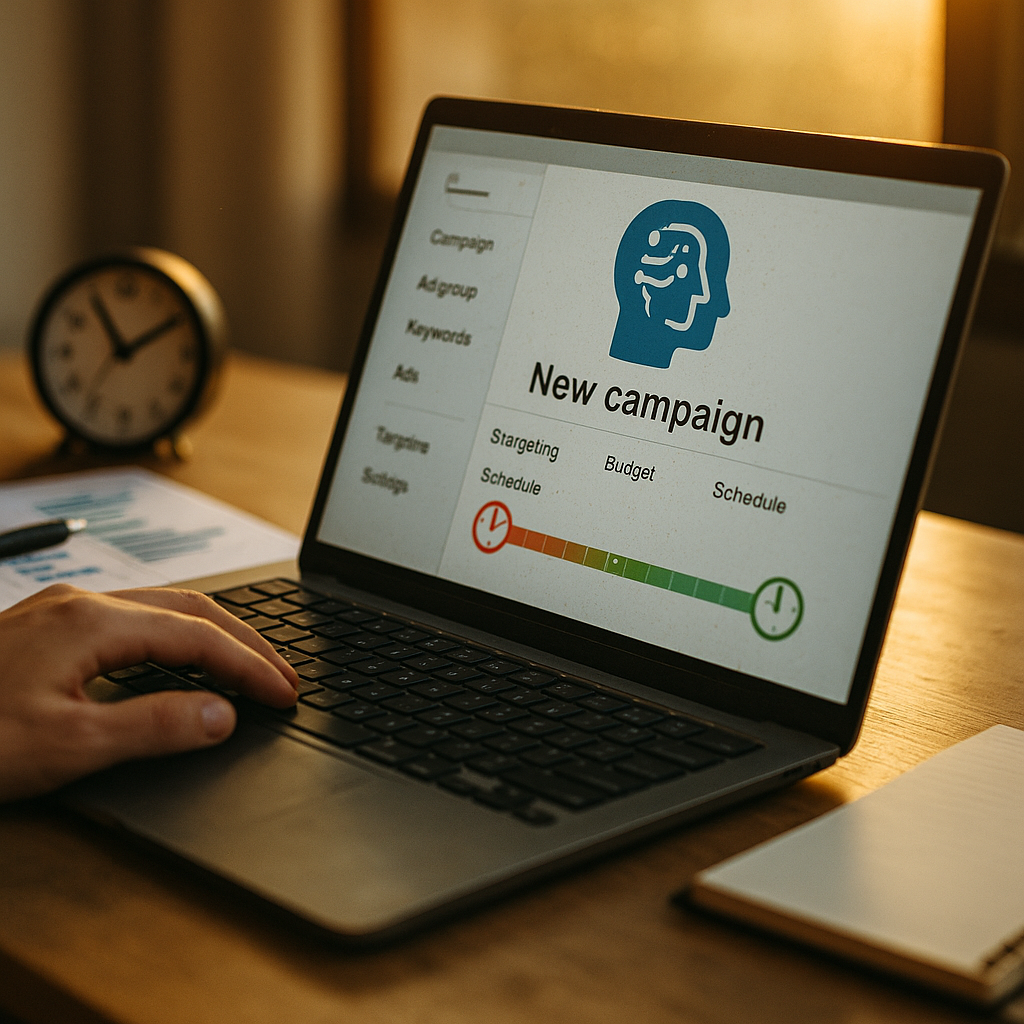
Campaign managers spend an average of 11 to 15 hours setting up a single influencer campaign, according to internal benchmarks from agencies polled across the sector. Briefing, creator shortlisting, contract drafting, platform tagging, budget allocation: all of it, done by hand, campaign after campaign. What if that workflow took twenty minutes instead? An AI-powered campaign setup workflow isn’t a hypothetical anymore. It’s live in mid-market and enterprise marketing teams right now, and the ones using it are running more campaigns with the same headcount.
The Manual Setup Tax Nobody Budgets For
Ask any brand-side campaign manager where their week actually goes and you won’t hear “strategy.” You’ll hear: chasing creator rate cards, reformatting briefs for the fifth platform this quarter, manually cross-referencing FTC disclosure requirements, and copy-pasting deliverables into a spreadsheet that three other people also maintain. None of that is strategic work. All of it is billable time.
This is the hidden tax on influencer programs. It doesn’t show up in a campaign report, but it shows up in agency retainers, in overtime, and in the six-week lead time brands quote clients before a campaign can even go live. One brand cut agency costs by 82% simply by replacing manual coordination work with AI tooling — not by cutting scope, but by cutting the administrative drag around it.
The bottleneck in influencer marketing was never creative judgment. It was the hundred small administrative decisions standing between a brief and a live campaign.
What “AI-Powered Campaign Setup” Actually Means
The term gets thrown around loosely, so let’s be precise. A real AI-powered setup workflow touches five stages: brief generation, creator discovery and vetting, contract and rate negotiation support, platform/tagging configuration, and compliance review. It’s not a single chatbot. It’s a chain of AI agents, each handling a discrete task, feeding into the next.
- Brief generation: AI drafts the creative brief from a campaign objective, brand guidelines, and past-performing content, cutting a two-hour task to fifteen minutes.
- Creator discovery: Machine learning models scan creator databases against affinity, audience overlap, and brand safety signals, rather than follower count alone.
- Vetting and fraud checks: Automated fraud detection flags fake engagement before a creator ever reaches a human reviewer.
- Contract drafting: AI populates rate cards and usage terms from templates, flagging unusual clauses for legal review.
- Platform tagging and disclosure setup: Automated compliance tagging ensures FTC and platform-specific disclosure rules are baked in before content ever goes live.
Done right, this chain compresses a process that used to span a full sprint into an afternoon. Done poorly — bolting a single AI tool onto an otherwise manual process — you get marginal time savings and a false sense of security.
Why Brief Generation Is Still the Weakest Link
Here’s the uncomfortable data point: AI brief generation adoption is stalled at just 21% across brand marketing teams, despite being one of the easiest wins in the entire workflow. Why the hesitation? Mostly trust. Marketers worry AI-generated briefs will be generic, or worse, miss brand nuance entirely.
That fear is legitimate if you’re using a general-purpose LLM with no brand context loaded in. It’s largely unfounded if you’re using a properly trained system fed with historical campaign data, tone-of-voice guides, and past creator performance. The difference between a mediocre AI brief and a genuinely useful one comes down entirely to the quality of the inputs, not the sophistication of the model.
Teams that get this right treat brief generation as a living template, refined every campaign cycle, rather than a one-off prompt. That’s the operational discipline most teams skip, and it’s exactly why adoption numbers are still stuck below a quarter of the market.
Creator Discovery: From Weeks to Hours
Creator sourcing used to be a manual slog through spreadsheets, DMs, and gut instinct. AI agent discovery tools have cut that sourcing timeline down to hours, and the mechanism is straightforward: instead of a human scrolling through hashtags, an agent queries structured creator data against your campaign’s specific audience and brand-safety parameters simultaneously.
Vetting has followed the same trajectory. Vetting agents that once took weeks now complete review cycles in hours, cross-referencing engagement authenticity, past brand partnerships, and audience demographics in a single pass. Yet fraud detection specifically remains underused: only 13.9% of brands currently deploy AI fraud detection in their vetting process, leaving the majority exposed to bot-inflated engagement metrics that a five-minute automated scan would catch.
This is worth sitting with for a second. Brands will spend weeks negotiating a $40,000 creator deal, then skip the automated fraud check that costs pennies to run. That’s not risk tolerance. That’s an operational gap.
The vetting question also isn’t purely a follower-count exercise anymore. Affinity scoring consistently outperforms follower count as a predictor of campaign performance, because it accounts for actual audience relevance rather than raw reach. Building affinity scoring into your automated setup workflow means the shortlist your team reviews is already pre-qualified for fit, not just size.
Humans Still Own the Risk Decisions
None of this means campaign managers become obsolete. It means their job shifts from data-gathering to judgment. AI speeds discovery, but humans still own the risk decision — and that distinction matters enormously for anyone worried automation means losing control of brand safety.
A useful mental model: let AI handle the “can this creator technically work” questions (audience match, fraud signals, past brand conflicts) and reserve human judgment for the “should this creator represent us” questions (tone fit, current controversy exposure, long-term brand alignment). Collapsing that distinction is where automated workflows go wrong.
Automation should compress the search space, not replace the final call. The moment a brand lets AI make the go/no-go decision on creator partnerships unsupervised, it has traded operational efficiency for uncontrolled risk.
Compliance Can’t Be an Afterthought in the Workflow
Every automated setup workflow needs a compliance layer baked in, not bolted on afterward. That means automated disclosure tagging aligned with FTC endorsement guidelines, region-specific rules where relevant (see the ICO’s guidance for UK-facing campaigns), and platform-specific ad disclosure requirements from Meta and TikTok.
Interestingly, some of the most reliable compliance tools aren’t the flashiest ones. Small language models are outperforming larger general-purpose models at compliance scanning, precisely because they’re trained narrowly and don’t hallucinate edge cases the way a broader model might. If your setup workflow includes a compliance step, don’t assume bigger model equals better result. Narrow and well-trained beats broad and general here.
Contract risk deserves the same scrutiny. Auto-renewal clauses buried in creator agreements are an underappreciated liability — AI contract agents can flag silent renewal risk before it becomes a six-figure surprise on next year’s budget.
Building the Workflow: A Practical Sequence
If you’re starting from zero, don’t try to automate everything simultaneously. Sequence it.
- Start with discovery and vetting. This has the clearest ROI and the most mature tooling. Fraud detection and affinity scoring should be table stakes before you touch anything else.
- Layer in brief generation second. Feed it real historical data from your best-performing campaigns, not generic prompts.
- Add compliance tagging third. This is non-negotiable before any campaign scales past a handful of creators.
- Automate contract and rate workflows last. These have the highest legal sensitivity, so give your team time to build trust with earlier automated stages first.
Reporting automation deserves a mention too, even though it sits downstream of setup. AI performance reporting adoption is stuck at just 10.6% industry-wide, which is a missed opportunity given how naturally it pairs with an automated setup pipeline. If your campaign data enters the system in a structured, AI-readable format from day one, the reporting layer becomes almost trivial to bolt on later.
None of this works, incidentally, if the underlying data feeding your AI agents is inconsistent. Underperforming AI agents are usually a data foundation problem, not a model problem. Before you invest in more sophisticated automation, run a basic audit: is your creator data structured consistently? Is your brief history tagged and searchable? Garbage in, garbage out applies here as much as anywhere else in marketing.
What This Actually Costs vs. What It Saves
Setup automation tools generally fall into a subscription-plus-usage pricing model, running anywhere from a few hundred to a few thousand dollars monthly depending on campaign volume. Compare that to the fully loaded cost of a campaign coordinator spending 12 hours per campaign at an internal cost rate of $60-$80/hour, and the math resolves quickly for any brand running more than a handful of campaigns per quarter.
The real savings, though, aren’t just time. They’re speed-to-market. A brand that can go from brief to live creator outreach in a day rather than two weeks can react to trends, cultural moments, and competitor moves in ways a slower workflow simply can’t. Sprout Social’s and eMarketer’s research on creator marketing consistently points to speed and relevance as the top drivers of campaign performance, above raw budget size.
Next Step
Don’t try to automate the entire campaign lifecycle in one sprint. Pick the single highest-friction stage in your current setup process, likely creator vetting, and pilot an AI workflow there for one quarter before expanding. The teams seeing the biggest time savings aren’t the ones with the most tools. They’re the ones who sequenced adoption deliberately and built trust in the system one stage at a time.
FAQs
How much time can AI actually save in campaign setup?
Teams using AI across discovery, briefing, and compliance report cutting setup time from 11-15 hours down to under two hours per campaign, though results vary based on how many stages of the workflow are automated versus manual.
Is AI-generated creative briefing reliable enough to use without heavy editing?
It depends entirely on inputs. Briefs generated from well-structured historical data and brand guidelines need light editing; briefs generated from generic prompts without brand context typically need substantial rework, which is why adoption has stalled around 21% industry-wide.
Does automating creator vetting increase brand safety risk?
No, when structured correctly it reduces risk. AI accelerates the discovery and fraud-screening stages, but final judgment calls on brand fit and reputational alignment should still sit with a human reviewer.
What’s the biggest mistake brands make when building an automated setup workflow?
Automating stages out of sequence, usually jumping straight to contract or reporting automation before fixing data consistency in creator discovery and vetting, which undermines every downstream stage.
Do smaller brands benefit from this, or is it only worth it at scale?
Smaller brands often see the biggest relative time savings, since they typically lack dedicated coordination staff and feel the manual setup tax more acutely per campaign.
Top Influencer Marketing Agencies
The leading agencies shaping influencer marketing in 2026
Agencies ranked by campaign performance, client diversity, platform expertise, proven ROI, industry recognition, and client satisfaction. Assessed through verified case studies, reviews, and industry consultations.
Moburst

-
2

The Shelf
Boutique Beauty & Lifestyle Influencer AgencyA data-driven boutique agency specializing exclusively in beauty, wellness, and lifestyle influencer campaigns on Instagram and TikTok. Best for brands already focused on the beauty/personal care space that need curated, aesthetic-driven content.Clients: Pepsi, The Honest Company, Hims, Elf Cosmetics, Pure LeafVisit The Shelf → -
3

Audiencly
Niche Gaming & Esports Influencer AgencyA specialized agency focused exclusively on gaming and esports creators on YouTube, Twitch, and TikTok. Ideal if your campaign is 100% gaming-focused — from game launches to hardware and esports events.Clients: Epic Games, NordVPN, Ubisoft, Wargaming, Tencent GamesVisit Audiencly → -
4

Viral Nation
Global Influencer Marketing & Talent AgencyA dual talent management and marketing agency with proprietary brand safety tools and a global creator network spanning nano-influencers to celebrities across all major platforms.Clients: Meta, Activision Blizzard, Energizer, Aston Martin, WalmartVisit Viral Nation → -
5

The Influencer Marketing Factory
TikTok, Instagram & YouTube CampaignsA full-service agency with strong TikTok expertise, offering end-to-end campaign management from influencer discovery through performance reporting with a focus on platform-native content.Clients: Google, Snapchat, Universal Music, Bumble, YelpVisit TIMF → -
6

NeoReach
Enterprise Analytics & Influencer CampaignsAn enterprise-focused agency combining managed campaigns with a powerful self-service data platform for influencer search, audience analytics, and attribution modeling.Clients: Amazon, Airbnb, Netflix, Honda, The New York TimesVisit NeoReach → -
7

Ubiquitous
Creator-First Marketing PlatformA tech-driven platform combining self-service tools with managed campaign options, emphasizing speed and scalability for brands managing multiple influencer relationships.Clients: Lyft, Disney, Target, American Eagle, NetflixVisit Ubiquitous → -
8

Obviously
Scalable Enterprise Influencer CampaignsA tech-enabled agency built for high-volume campaigns, coordinating hundreds of creators simultaneously with end-to-end logistics, content rights management, and product seeding.Clients: Google, Ulta Beauty, Converse, AmazonVisit Obviously →