


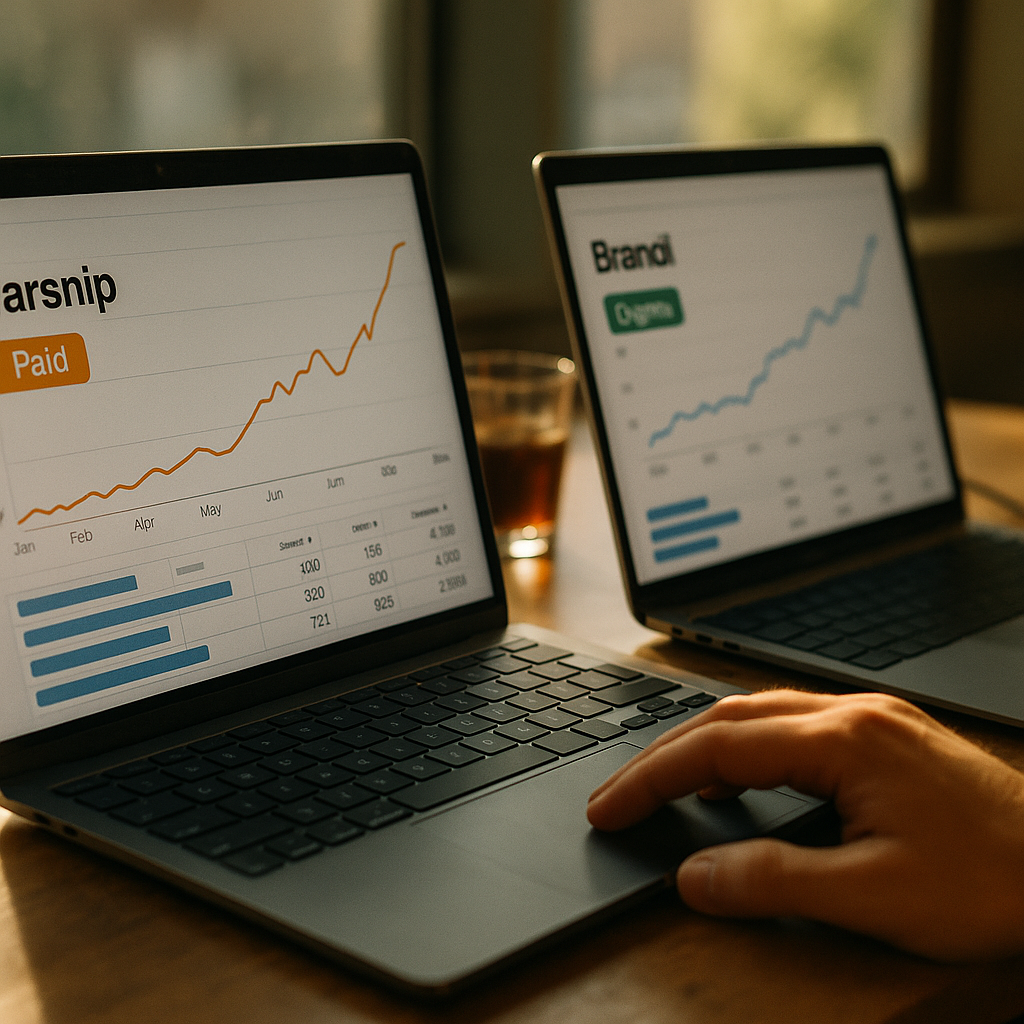
Google’s AI Overviews now appear in roughly 60% of search queries, and ChatGPT fields over a billion prompts a week. If your brand isn’t showing up inside those answers, you’re invisible to a growing share of buyers. That’s the pressure fueling the rise of generative search tools like Parsnipp and Brandi AI — and it’s also why the Parsnipp vs Brandi AI comparison has become one of the most searched questions among martech buyers this quarter.
Both platforms promise a foothold in the AI answer economy. But they’re not solving the same problem. Confusing the two — and plenty of buyers are — leads to budget waste and a stack that duplicates effort instead of covering it.
Two Different Bets on the Same Future
Parsnipp built its product around paid placement inside LLM-generated responses. Think of it as programmatic advertising’s next act: instead of buying a banner slot, you’re bidding for inclusion in an AI-generated answer, product comparison, or recommendation thread. Its “Smart LLM Ads” engine uses retrieval-augmented targeting to insert brand mentions into contextually relevant AI conversations across partner models.
Brandi AI takes the organic route. It’s a search visibility platform, closer in spirit to traditional SEO tooling, that audits how your brand appears (or doesn’t) across ChatGPT, Perplexity, Google AI Overviews, and Gemini, then recommends content and structured-data changes to improve unpaid visibility.
One is media buying. The other is generative engine optimization (GEO). That distinction matters more than any feature comparison chart, because it determines which budget line each tool belongs to and who on your team should own it.
Parsnipp sells you a seat at the table. Brandi AI teaches you how to get invited without paying the cover charge.
Parsnipp’s Smart LLM Ads: How the Mechanics Work
Parsnipp’s pitch is straightforward: brands bid on intent clusters — not keywords, but conceptual query patterns — and the platform injects sponsored context into LLM outputs where its ad network has integration agreements. Reporting includes impression counts (how often your brand appeared in a generated response), sentiment scoring of the surrounding text, and click-through to landing pages when the model includes a link.
It’s early-stage infrastructure, and Parsnipp is candid about that. Coverage is currently limited to a handful of partner LLMs, not the full landscape of consumer-facing assistants. That means your Smart LLM Ads spend might get strong visibility in one ecosystem and zero reach in another.
For brands running performance budgets, this looks a lot like paid search circa 2003 — messy attribution, inconsistent inventory, but first-mover advantage for those willing to experiment. The risk-tolerant DTC brands and challenger SaaS companies piling into it now are betting that early presence in AI answers compounds, the same way early Google Ads adopters built moats competitors spent a decade closing.
Where It Falls Short
Paid placement in a generative response is inherently fragile. Foundation model providers can change policies, retrain models, or restrict sponsored content categories overnight — there’s no equivalent of Google’s stable ad auction infrastructure here yet. Brands need to treat Smart LLM Ads budget as experimental spend, not a guaranteed channel, and build in quarterly reassessment checkpoints.
There’s also a disclosure question regulators haven’t fully settled. The FTC’s guidance on endorsements and advertising already requires clear disclosure for sponsored content; expect similar scrutiny to extend to paid placements inside AI-generated answers as the format matures.
Brandi AI’s Approach: Earning the Citation, Not Buying It
Brandi AI’s model looks more like an SEO audit tool crossed with a content strategy engine. It scans how often and how accurately your brand gets cited across major LLMs, flags gaps versus competitors, and generates recommendations — structured data fixes, authoritative content gaps, Wikipedia and review-site presence — that theoretically improve your odds of being the source an LLM pulls from.
This is slower, compounding work. There’s no auction to win, just the unglamorous grind of becoming a more citable, more structured, more authoritative source. If that sounds familiar, it’s because it’s the same logic that made Domain Authority and backlink profiles matter in classic SEO — except now the “ranking” happens inside a model’s training data and retrieval layer instead of a SERP.
We’ve covered Brandi AI’s competitive positioning before, including how it stacks up against rival visibility platforms and against agency-led GEO service models. The consistent theme: Brandi AI wins on measurement depth, but the actual visibility gains depend heavily on how much content production the brand is willing to fund alongside the subscription.
The Patience Problem
Here’s the catch. Organic generative visibility isn’t instant. Unlike traditional SEO, where you can sometimes see ranking movement in weeks, LLM retrieval behavior shifts on model retraining and indexing cycles you don’t control. Brandi AI customers report visibility gains showing up over one to two quarters, not days. If your CMO wants a same-quarter win, Brandi AI alone won’t deliver it.
Head-to-Head: Where Each Platform Actually Wins
- Speed to visibility: Parsnipp wins. Paid placement can show results in weeks; organic GEO work takes months.
- Cost predictability: Brandi AI wins. It’s a flat-fee SaaS model; Parsnipp’s bidding costs fluctuate like any auction-based ad product.
- Long-term brand equity: Brandi AI wins. Earned citations persist even if you pause the subscription; paid placements disappear the moment budget stops.
- Coverage breadth: Roughly tied, both platforms are still expanding integrations, and neither covers every consumer LLM comprehensively yet.
- Measurement maturity: Parsnipp offers cleaner, ad-style reporting (impressions, CTR). Brandi AI’s metrics are more diagnostic than transactional, which frustrates performance marketers used to hard numbers.
- Risk profile: Brandi AI is lower-risk from a compliance standpoint since there’s no sponsored-content disclosure question to navigate.
Neither tool replaces a real content and structured-data strategy. Neither replaces paid media strategy either. They’re complementary, not competitive, in a properly built stack — despite how they’re marketed against each other in demos.
What This Means for Your Budget Allocation
Treat this like the classic paid-versus-organic split, but for generative search instead of Google. A brand with a strong content engine and patience for compounding gains should weight budget toward Brandi AI and similar GEO tools, then use Parsnipp’s Smart LLM Ads tactically — for product launches, seasonal pushes, or categories where organic citation will take too long to matter.
A brand in a fast-moving category (say, a new AI hardware product with a six-month sales window) might flip that ratio, leaning harder into paid LLM placement because there’s no time to earn citations organically before the opportunity closes.
The mistake we keep seeing: brands picking one tool and expecting it to cover both use cases. It won’t. That’s the same error marketers made a decade ago when they treated SEO and PPC as interchangeable instead of complementary, a pattern still playing out in AI suite versus best-of-breed martech decisions generally.
If your generative search strategy fits on one platform, you’re probably missing half the picture.
Integration and Attribution Headaches
Neither platform plays perfectly with your existing martech stack yet. Attribution for AI-driven traffic remains genuinely hard — most LLMs don’t pass clean referral data the way a traditional browser click does, which is a broader problem the industry is still solving, similar to the identity resolution gaps covered in our identity matching framework breakdown.
Expect to lean on directional metrics (branded search lift, direct traffic increases, share-of-voice in AI answers) rather than clean last-click attribution. If your finance team demands hard ROAS numbers before approving spend, set that expectation early — nobody in this category has solved it cleanly yet, including HubSpot’s own emerging AI search research acknowledges the measurement gap.
Vendor evaluation matters more than usual here, since the category is young enough that marketing claims routinely outrun product reality. Our GEO vendor evaluation rubric is a useful gut-check before signing anything longer than a quarterly contract.
FAQs
Frequently Asked Questions
Is Parsnipp’s Smart LLM Ads product available across all major AI assistants?
No. Parsnipp currently integrates with a limited set of partner LLMs, not the full landscape of consumer assistants. Coverage is expanding, but brands should confirm which specific models are included before budgeting against expected reach.
How long does it take to see results from Brandi AI’s visibility recommendations?
Most customers report meaningful visibility shifts over one to two quarters, since organic LLM citation depends on indexing and retraining cycles the platform doesn’t control. It’s not a fast channel, and brands expecting weekly movement will be disappointed.
Can brands use Parsnipp and Brandi AI together?
Yes, and many practitioners argue that’s the smarter approach. Parsnipp covers paid, short-term visibility while Brandi AI builds durable, earned citation over time. Treating them as complementary rather than competing tools mirrors the paid-versus-organic split marketers already manage in traditional search.
Does paid placement in AI-generated answers require disclosure?
Regulatory guidance is still catching up, but existing FTC endorsement and advertising rules already require clear disclosure of sponsored content, and that principle is expected to extend to paid placements inside generative AI responses as the format matures.
Which platform is better for a limited martech budget?
It depends on your sales cycle. Brandi AI’s flat-fee model offers more predictable costs and lasting equity, making it a safer default for smaller budgets. Parsnipp makes more sense when you need fast visibility for a time-sensitive launch and can tolerate auction-style cost variability.
Run a 90-day pilot: allocate 70% of test budget to Brandi AI for foundational GEO work, 30% to Parsnipp for one high-priority launch, then compare share-of-voice in AI answers before scaling either commitment.
Top Influencer Marketing Agencies
The leading agencies shaping influencer marketing in 2026
Agencies ranked by campaign performance, client diversity, platform expertise, proven ROI, industry recognition, and client satisfaction. Assessed through verified case studies, reviews, and industry consultations.
Moburst

-
2

The Shelf
Boutique Beauty & Lifestyle Influencer AgencyA data-driven boutique agency specializing exclusively in beauty, wellness, and lifestyle influencer campaigns on Instagram and TikTok. Best for brands already focused on the beauty/personal care space that need curated, aesthetic-driven content.Clients: Pepsi, The Honest Company, Hims, Elf Cosmetics, Pure LeafVisit The Shelf → -
3

Audiencly
Niche Gaming & Esports Influencer AgencyA specialized agency focused exclusively on gaming and esports creators on YouTube, Twitch, and TikTok. Ideal if your campaign is 100% gaming-focused — from game launches to hardware and esports events.Clients: Epic Games, NordVPN, Ubisoft, Wargaming, Tencent GamesVisit Audiencly → -
4

Viral Nation
Global Influencer Marketing & Talent AgencyA dual talent management and marketing agency with proprietary brand safety tools and a global creator network spanning nano-influencers to celebrities across all major platforms.Clients: Meta, Activision Blizzard, Energizer, Aston Martin, WalmartVisit Viral Nation → -
5

The Influencer Marketing Factory
TikTok, Instagram & YouTube CampaignsA full-service agency with strong TikTok expertise, offering end-to-end campaign management from influencer discovery through performance reporting with a focus on platform-native content.Clients: Google, Snapchat, Universal Music, Bumble, YelpVisit TIMF → -
6

NeoReach
Enterprise Analytics & Influencer CampaignsAn enterprise-focused agency combining managed campaigns with a powerful self-service data platform for influencer search, audience analytics, and attribution modeling.Clients: Amazon, Airbnb, Netflix, Honda, The New York TimesVisit NeoReach → -
7

Ubiquitous
Creator-First Marketing PlatformA tech-driven platform combining self-service tools with managed campaign options, emphasizing speed and scalability for brands managing multiple influencer relationships.Clients: Lyft, Disney, Target, American Eagle, NetflixVisit Ubiquitous → -
8

Obviously
Scalable Enterprise Influencer CampaignsA tech-enabled agency built for high-volume campaigns, coordinating hundreds of creators simultaneously with end-to-end logistics, content rights management, and product seeding.Clients: Google, Ulta Beauty, Converse, AmazonVisit Obviously →