


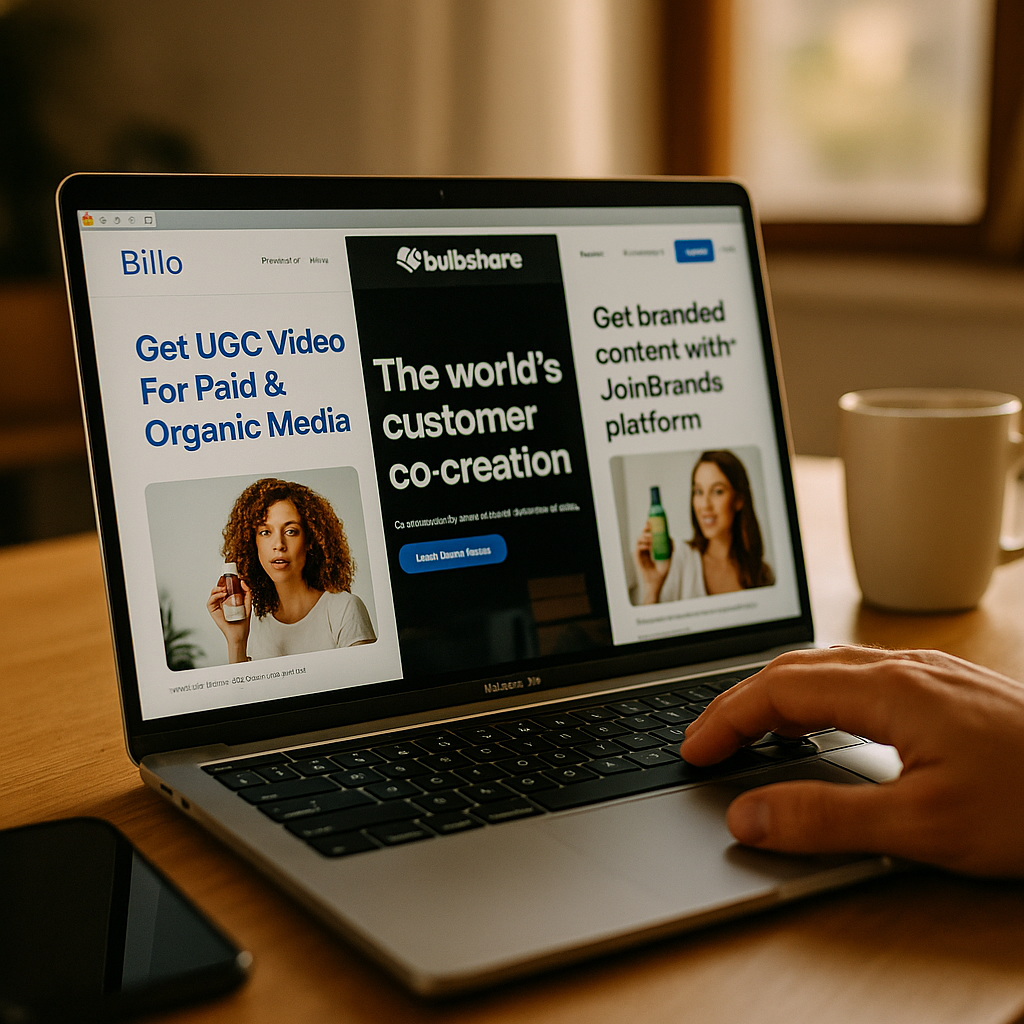
Brands now need 20, 50, sometimes 200 pieces of UGC a month just to feed paid social. That’s not a hypothetical — it’s the baseline for any performance team running TikTok Spark Ads or Meta Advantage+ at scale. A UGC-focused creator marketplace like Billo, Bulbshare, or JoinBrands promises to solve that volume problem. But each one solves it differently, and picking wrong means burning budget on content that never gets past the review stage.
Why Volume UGC Broke the Old Influencer Playbook
Traditional influencer marketing was built around reach and relationships — a handful of creators, months of negotiation, one polished deliverable each. That model doesn’t work when your media buyer needs fresh creative every week to fight ad fatigue. Performance marketing teams learned this the hard way: static hero content dies fast, and the fix isn’t better creative direction, it’s more raw supply.
UGC marketplaces emerged to answer that supply problem. They’re not influencer platforms in the traditional sense — most creators on Billo or JoinBrands have small or nonexistent followings. Nobody cares. The content isn’t meant to be posted organically by the creator; it’s meant to be licensed, edited, and pushed through your ad accounts. That distinction matters when you’re evaluating these tools against something like enterprise creator CRM platforms, which are built for relationship management, not content throughput.
The real KPI for a UGC marketplace isn’t creator quality — it’s cost per usable asset, delivered on a schedule your media buyers can actually plan around.
Billo: Built for Speed and Predictable Turnaround
Billo positions itself as the fastest way to get short-form video ads without a production crew. Brands submit a brief, creators (mostly US-based, vetted for camera presence) film against it, and you get raw or edited footage back — usually within a few days. Pricing runs on a per-video basis, with packages that scale down the unit cost as volume increases.
What Billo does well: consistency of format. If you need fifteen near-identical hook-driven video ads testing different angles on the same product, Billo’s structured brief-and-submit flow is built exactly for that. Revisions are built into the workflow, so you’re not chasing freelancers on Slack for a re-shoot.
Where it falls short: originality. Because the platform optimizes for fast matching and repeatable formats, a lot of Billo output can feel templated — the same three-second hook style, the same testimonial cadence. For commodity DTC products that’s fine. For brands trying to differentiate on tone, it can flatten everything into the same UGC ad aesthetic that’s now oversaturated on TikTok and Meta.
Bulbshare: Community-Driven, Slower, But Richer
Bulbshare takes a different angle entirely. Instead of a transactional marketplace, it runs on a community model — brands tap into a pool of engaged consumers who participate in briefs, polls, and content challenges, often with feedback loops built in. It’s closer to a hybrid of UGC production and consumer insight than a pure content vending machine.
This matters for brands that want UGC to double as research. Bulbshare’s community can surface sentiment data alongside the content itself — useful if your team is trying to validate messaging before a bigger campaign push, not just farm ad creative. That’s a meaningfully different value proposition than Billo or JoinBrands, and it shows in the pricing model, which tends to be structured around campaigns and community engagement tiers rather than flat per-asset fees.
The tradeoff is speed. Community-driven briefs take longer to populate and moderate. If your media team needs 40 assets by Friday for a launch, Bulbshare’s cadence probably won’t match that urgency. It’s a better fit for brands running ongoing community programs who want UGC as one output among several, rather than teams purely optimizing for paid social throughput.
JoinBrands: The Marketplace Playing Both Sides
JoinBrands sits somewhere between the two, with a marketplace of creators (many with modest but real social followings) who both produce UGC and, in some cases, post it organically or run it as sponsored content on their own channels. That dual function — licensed content plus optional organic distribution — is JoinBrands’ main differentiator.
For brands, this creates flexibility. You can use JoinBrands purely as a UGC factory, licensing footage for paid ads the same way you’d use Billo. Or you can layer in a distribution component, having creators post the content natively for incremental organic reach. That second option adds complexity to briefing and rights management, though — you need clear terms on usage, exclusivity, and disclosure if creators are publishing sponsored posts themselves.
JoinBrands’ creator pool is broader in style and demographic range than Billo’s, which can be an advantage if you’re testing UGC across multiple audience segments simultaneously. The tradeoff is more variance in quality; the vetting process isn’t as tightly structured as Billo’s, so brief compliance requires more active review on your end.
The Real Comparison: Cost Per Usable Asset, Not Cost Per Video
Sticker price is a trap here. A $150 Billo video that gets rejected by your media buyer and needs a reshoot costs more, in real terms, than a $200 JoinBrands video that clears review on the first pass. The metric that matters is cost per usable asset — content that actually survives creative testing and gets spend behind it.
Run the math on your own funnel before committing to a platform:
- Rejection rate — what percentage of delivered content fails brand or compliance review on first submission?
- Revision cycles — how many rounds does it typically take to get an asset to publishable quality?
- Time to first usable asset — critical if you’re backfilling a creative calendar under deadline pressure.
- Whitelisting and usage rights — does the platform’s default licensing let you run paid ads through the creator’s handle, or only via your own brand account?
Teams that skip this math tend to overspend on volume without ever measuring whether the volume converts. That’s the same trap plenty of brands fall into with broader creator attribution — a problem covered in depth in this breakdown of creator ROI measurement, which applies just as much to UGC ad creative as it does to influencer partnerships.
Compliance Is the Part Nobody Budgets For
Volume UGC production creates a compliance surface area that a lot of marketing teams underestimate. Every piece of licensed content still needs clear usage rights, and if any creator on these platforms has meaningful followers and posts organically, FTC disclosure rules still apply. The FTC’s endorsement guidelines don’t have a volume exemption — one non-compliant post among two hundred is still a liability.
This is where JoinBrands’ hybrid model needs the most scrutiny. If creators are posting sponsored UGC natively, your team needs a disclosure checklist baked into the brief, not an afterthought. Billo and Bulbshare largely sidestep this because content is licensed for brand-owned distribution, but confirm usage terms in writing regardless — verbal assurances about “unlimited usage rights” have a way of becoming disputes later.
A cheap UGC pipeline that generates a legal headache isn’t cheap. Build disclosure and rights review into your intake process before scaling volume, not after a creator flags a dispute.
Matching Platform to Production Model
There’s no universal winner here — the right pick depends on what your creative team actually needs week to week.
- Choose Billo if you need fast, formulaic hook-driven video ads at predictable per-unit cost, and you have an internal editing/testing pipeline ready to receive raw footage quickly.
- Choose Bulbshare if UGC is one part of a broader community engagement and insight strategy, and you can tolerate slower turnaround for richer, more authentic output.
- Choose JoinBrands if you want flexibility between pure licensing and creator-led organic distribution, and you’re prepared to invest more in quality review and rights management.
Plenty of larger teams end up running two platforms in parallel — one for volume, one for quality control or community insight — the same way many now blend point solutions and suites for other martech decisions, a pattern explored in this comparison of point solutions versus suites. UGC production isn’t so different: no single vendor solves speed, authenticity, and rights management all at once.
Whichever platform you choose, tie it back to attribution. Volume UGC without a measurement layer is just spend with extra steps — pair your content pipeline with the kind of attribution dashboard framework that tells you which assets, hooks, and creators are actually driving conversion, not just impressions.
For broader context on how EMV and reach metrics get misused in creator campaigns, eMarketer’s research on influencer marketing spend and Sprout Social’s social media benchmarks are worth checking against your own platform’s reporting claims before you trust a vendor’s dashboard at face value.
Visible FAQ
Frequently Asked Questions
What’s the main difference between Billo, Bulbshare, and JoinBrands?
Billo focuses on fast, formulaic video ad production with structured briefs and predictable per-unit pricing. Bulbshare runs on a community model that blends UGC production with consumer insight, trading speed for depth. JoinBrands offers a hybrid marketplace where creators can both produce licensed content and post it organically on their own channels.
Which UGC marketplace is cheapest for high-volume production?
Billo generally offers the lowest per-unit cost at scale due to its structured, repeatable production model. However, cost per usable asset (factoring in rejection and revision rates) is a more accurate comparison than sticker price alone.
Do creators on these platforms need to disclose sponsorships?
Yes, if the content is posted organically by a creator with any public following, FTC disclosure requirements apply regardless of platform. Content licensed purely for brand-owned paid distribution has different rights considerations, but usage terms should always be confirmed in writing.
Can UGC marketplace content be used in paid social ads?
Generally yes — that’s the primary use case for Billo and JoinBrands in particular. Always confirm the specific usage rights and whitelisting terms in your contract, since default licensing scope varies by platform and creator agreement.
How do I measure ROI on UGC marketplace spend?
Track cost per usable asset rather than cost per video, and connect each piece of content back to paid social performance data like CTR, conversion rate, and cost per acquisition. Attribution tooling built for creator content helps isolate which assets are actually driving results.
Visible FAQ (JSON-LD)
Test all three with the same brief and a $500 budget cap before committing to a retainer — the platform that clears review fastest with the fewest revisions is your real answer, not whichever has the slickest sales deck.
Top Influencer Marketing Agencies
The leading agencies shaping influencer marketing in 2026
Agencies ranked by campaign performance, client diversity, platform expertise, proven ROI, industry recognition, and client satisfaction. Assessed through verified case studies, reviews, and industry consultations.
Moburst

-
2

The Shelf
Boutique Beauty & Lifestyle Influencer AgencyA data-driven boutique agency specializing exclusively in beauty, wellness, and lifestyle influencer campaigns on Instagram and TikTok. Best for brands already focused on the beauty/personal care space that need curated, aesthetic-driven content.Clients: Pepsi, The Honest Company, Hims, Elf Cosmetics, Pure LeafVisit The Shelf → -
3

Audiencly
Niche Gaming & Esports Influencer AgencyA specialized agency focused exclusively on gaming and esports creators on YouTube, Twitch, and TikTok. Ideal if your campaign is 100% gaming-focused — from game launches to hardware and esports events.Clients: Epic Games, NordVPN, Ubisoft, Wargaming, Tencent GamesVisit Audiencly → -
4

Viral Nation
Global Influencer Marketing & Talent AgencyA dual talent management and marketing agency with proprietary brand safety tools and a global creator network spanning nano-influencers to celebrities across all major platforms.Clients: Meta, Activision Blizzard, Energizer, Aston Martin, WalmartVisit Viral Nation → -
5

The Influencer Marketing Factory
TikTok, Instagram & YouTube CampaignsA full-service agency with strong TikTok expertise, offering end-to-end campaign management from influencer discovery through performance reporting with a focus on platform-native content.Clients: Google, Snapchat, Universal Music, Bumble, YelpVisit TIMF → -
6

NeoReach
Enterprise Analytics & Influencer CampaignsAn enterprise-focused agency combining managed campaigns with a powerful self-service data platform for influencer search, audience analytics, and attribution modeling.Clients: Amazon, Airbnb, Netflix, Honda, The New York TimesVisit NeoReach → -
7

Ubiquitous
Creator-First Marketing PlatformA tech-driven platform combining self-service tools with managed campaign options, emphasizing speed and scalability for brands managing multiple influencer relationships.Clients: Lyft, Disney, Target, American Eagle, NetflixVisit Ubiquitous → -
8

Obviously
Scalable Enterprise Influencer CampaignsA tech-enabled agency built for high-volume campaigns, coordinating hundreds of creators simultaneously with end-to-end logistics, content rights management, and product seeding.Clients: Google, Ulta Beauty, Converse, AmazonVisit Obviously →