


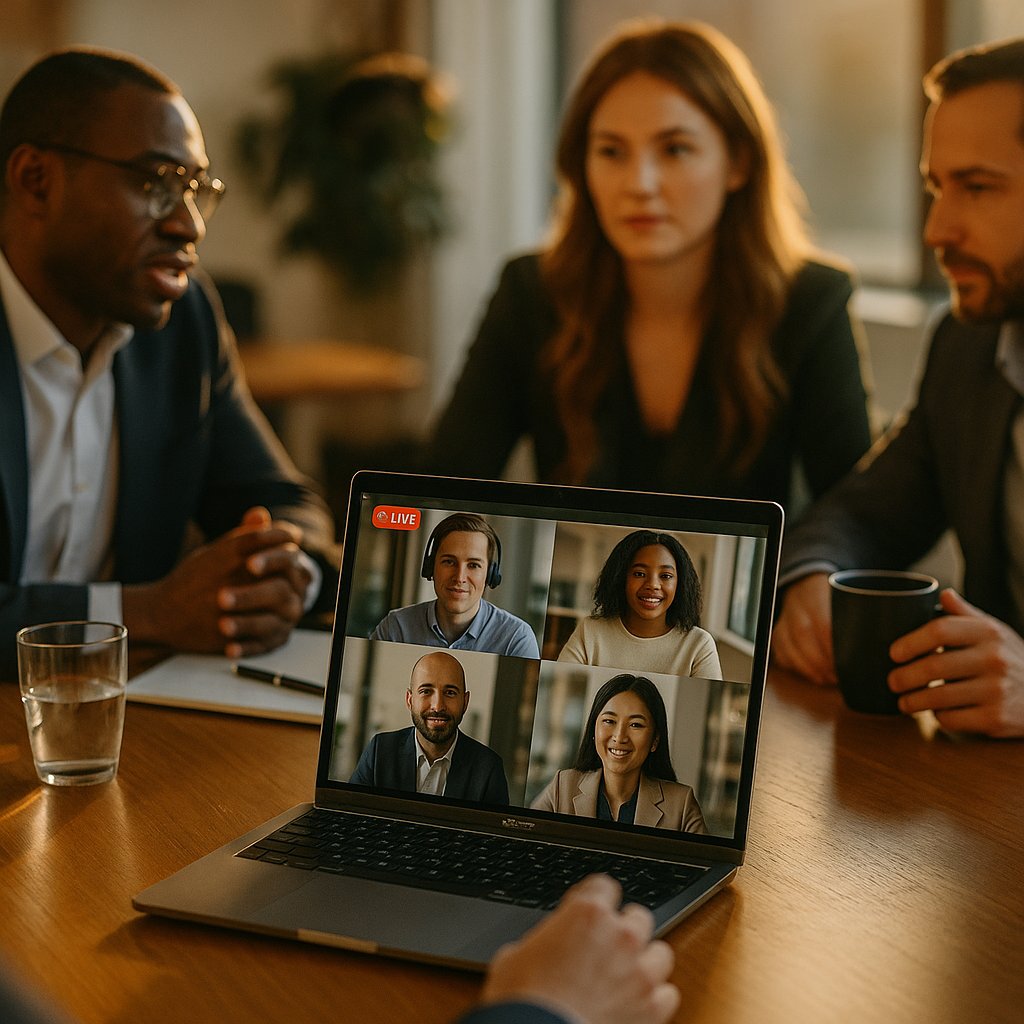
Only 3% of B2B buyers trust vendor content, according to Gartner, yet marketers keep pumping out LinkedIn Lives that read like press releases. If your LinkedIn Live strategy is optimized for concurrent viewers instead of qualified leads, you’re broadcasting to nobody who matters. Here’s how to structure executive-creator roundtables that actually move deals forward.
Why Most LinkedIn Live Roundtables Fail Before They Start
Walk into any planning meeting for a “thought leadership livestream” and you’ll hear the same brief: get an exec, get a creator, talk for 30 minutes, promote it. Nobody asks what happens to the attendee list afterward. Nobody defines what a good outcome looks like beyond “engagement.”
That’s the core problem. Most B2B marketing teams treat LinkedIn Live as a content format, not a pipeline mechanism. They measure it like a webinar-lite: views, reactions, maybe a comment count. But views don’t close deals. Sales-qualified conversations do.
A LinkedIn Live with 40 registered decision-makers and a tight follow-up sequence will outperform one with 2,000 anonymous viewers and no capture strategy, every time.
The fix isn’t a better topic or a bigger name. It’s rebuilding the format around a pipeline objective from the first planning call.
Start With the Buyer Stage, Not the Guest List
Before you book a single creator, answer this: what stage of the buying journey is this roundtable meant to influence? Top-of-funnel awareness plays and bottom-of-funnel evaluation content require completely different formats, guests, and CTAs.
If you’re targeting awareness, bring in an industry analyst or a creator with category credibility to debate a trend. If you’re targeting evaluation-stage accounts, your roundtable should feature a customer, your exec, and a specific use case that maps to objections your sales team hears weekly.
Skipping this step is why so many B2B livestreams feel generic. They’re built for “the market” instead of a defined account list.
Practical move: pull your top 50 target accounts from your CRM before you script anything. Ask your SDR team what questions keep coming up in discovery calls. Build the roundtable agenda around those actual objections, not hypothetical ones a content calendar dreamed up.
Pick Creators for Credibility With Your ICP, Not Follower Count
LinkedIn’s creator economy for B2B looks nothing like TikTok’s. A creator with 8,000 followers who happens to be a former VP of RevOps at a company your buyers respect will outperform a “LinkedIn influencer” with 200,000 followers and no domain authority.
Vet creators the way you’d vet a reference customer: relevance to your ICP, history of substantive commentary (not just hot takes), and a track record of engaging the specific job titles you’re trying to reach.
This is where a lot of budget gets wasted. Marketing teams chase LinkedIn “top voices” because they look impressive in a recap deck. But a niche RevOps creator whose audience is entirely VP-and-above at mid-market SaaS companies is worth more than a generalist with broad reach and zero ICP overlap.
For structuring longer-term creator relationships around specific product lines, the approach outlined in LinkedIn Showcase Pages: Turning Product Lines into Hubs is worth adapting here. Treat your roundtable series the same way: as a hub tied to a specific buyer segment, not a one-off event.
Structuring the Roundtable Format for Pipeline Capture
Here’s the format that consistently generates qualified leads instead of passive views:
- Pre-event gated registration. Yes, gating a “live” event feels counterintuitive on a platform built for open reach. But requiring a work email and company name upfront is how you build a real retargeting and follow-up list. Promote the live broadly for reach, but drive serious registrants through a landing page with a form.
- A named moderator with sales instincts. Your moderator (often the creator, sometimes a product marketer) should be trained to ask questions that surface pain points, not just prompt war stories. Think discovery call disguised as conversation.
- One clear “next step” CTA, delivered twice. Once mid-stream, once at close. Not five CTAs. One. Whether that’s a benchmark report, a diagnostic tool, or a calendar link, repetition without clutter is what drives action.
- Live polls tied to segmentation. LinkedIn Live’s native polling feature isn’t just an engagement gimmick. Use poll responses to tag attendees by pain point in your CRM afterward. “Which of these is your biggest blocker to scaling X?” gives your sales team a warm opening line.
- A structured 48-hour follow-up sequence. This is where most teams drop the ball entirely.
The 48-Hour Window Is Where Pipeline Actually Gets Built
The live event is the top of a funnel, not the funnel itself. What happens in the 48 hours after determines whether you generated pipeline or just a vanity metric for the quarterly report.
Segment your attendee list immediately: no-shows, live attendees, and attendees who engaged (asked a question, responded to a poll, commented). Each segment gets a different follow-up.
No-shows get the recording plus a short summary with timestamps to the most relevant section for their likely pain point. Attendees who engaged get a direct, personalized note from the SDR or AE assigned to that account, referencing the specific thing they said or asked. That personal touch is what separates a real pipeline motion from a mass email blast.
Track it properly. If your marketing automation platform can’t tell you which attendees became opportunities within 30 days, you don’t have a measurement problem, you have a tracking problem. Fix that before you run another one of these.
Compliance and Executive Risk: Don’t Skip This Part
Executives going live, unscripted, alongside external creators is a compliance exposure a lot of B2B marketing teams underestimate. Forward-looking statements about product roadmap, competitive claims, or customer results made casually in a “conversation” format can create real legal and reputational risk, especially for public companies or those in regulated industries like fintech and healthtech.
Build a lightweight pre-brief for every exec and creator: topics that are off-limits, approved language for competitive comparisons, and a clear line on what customer data can be referenced by name.
This isn’t about scripting the whole thing into lifelessness. It’s risk mitigation, the same discipline your team already applies to press interviews. The executive preparation approach used for Reddit AMAs translates directly here: brief thoroughly, but let the personality come through.
If your creator or exec makes claims about efficacy, ROI, or comparative performance, make sure whatever’s said aligns with what your legal team has cleared for paid content, per FTC endorsement guidance. LinkedIn Live blurs the line between organic conversation and sponsored content faster than people realize, especially when a paid creator partnership is involved.
Repurpose Like You Mean It
A 45-minute roundtable is a content goldmine if you treat it that way. Don’t just clip “best moments” for organic posts and call it a repurposing strategy.
Pull out the specific objection-handling segments and turn them into sales enablement clips your AEs can send directly to prospects mid-deal cycle. Turn the poll data into a benchmark report gated behind a form. Turn the most quotable exec soundbite into a LinkedIn document carousel that extends reach to people who never would have tuned in live.
The document carousel format specifically has become one of LinkedIn’s highest-performing organic formats for B2B; see the breakdown in LinkedIn Document Carousels: The B2B Creator Brief That Wins for how to brief creators on turning long-form conversation into scroll-stopping slides.
Long-form video and live formats build a specific kind of trust that shorter content can’t replicate, largely because buyers can see how an exec thinks under unscripted pressure, not just how well they present rehearsed talking points. That same principle is explored in Long-Form YouTube and Livestreams Build Brand Trust, and it applies just as much to LinkedIn’s live format as it does to YouTube.
What Good Looks Like: A Realistic Benchmark
Don’t expect LinkedIn Live for B2B to behave like a viral TikTok. A roundtable with 150-300 live viewers, 60% of whom match your ICP firmographic filters, and a 15-20% attendee-to-MQL conversion rate in the follow-up window, is a strong result for most mid-market SaaS companies. Compare that to a webinar with 500 registrants and a 2% show rate, and the live, conversational format usually wins on quality even when it loses on raw numbers.
According to LinkedIn’s own marketing solutions data, video content on the platform is seeing sustained growth in watch time among professional audiences, and live formats in particular benefit from LinkedIn’s algorithm prioritizing real-time engagement in the feed. That’s a distribution advantage worth exploiting, but only if the substance behind the stream is built for the buyer, not the algorithm.
Data from eMarketer and HubSpot’s ongoing B2B content research consistently shows that interactive, executive-led formats outperform static content for pipeline influence in complex sales cycles, precisely because buyers want to evaluate the people behind the product, not just the feature list.
The Real Differentiator Isn’t the Format
Any team can book a LinkedIn Live. Fewer teams will build the pre-event targeting, the compliance guardrails, and the 48-hour follow-up sequence that turns a livestream into a pipeline source. That operational discipline, not the guest list, is what separates a roundtable that generates a highlight reel from one that generates revenue.
Next step: before you schedule your next roundtable, write down the specific accounts you want in the room and the follow-up sequence each attendee segment will receive. If you can’t answer both, you’re not ready to hit “go live.”
FAQs
How many attendees should a B2B LinkedIn Live roundtable aim for?
Quality matters more than volume. A session with 100-300 live viewers where most match your ideal customer profile will generate more pipeline than one with thousands of untargeted viewers. Focus registration efforts on your target account list rather than broad reach.
Should we gate registration for a LinkedIn Live event?
Yes, for the serious promotion push. Gate registration through a landing page requiring work email and company, then promote the live broadly on LinkedIn’s native feed for organic reach. This gives you a trackable list for follow-up while still benefiting from platform-driven discovery.
What’s a realistic conversion rate from roundtable attendee to pipeline?
Mid-market B2B SaaS companies running well-targeted roundtables typically see 15-20% of engaged attendees convert to a marketing-qualified lead within 30 days, provided the follow-up sequence is personalized and fast.
How do we manage compliance risk with executives speaking live and unscripted?
Create a pre-brief covering off-limits topics, approved competitive language, and rules around referencing customer data by name. Treat it like press training, not a script, and ensure any performance or efficacy claims align with FTC endorsement guidance, especially if a paid creator is involved.
What should we do with the recording after the live event ends?
Repurpose aggressively. Clip objection-handling moments for sales enablement, turn poll data into a gated benchmark report, and convert key soundbites into a LinkedIn document carousel to extend reach beyond the live audience.
Top Influencer Marketing Agencies
The leading agencies shaping influencer marketing in 2026
Agencies ranked by campaign performance, client diversity, platform expertise, proven ROI, industry recognition, and client satisfaction. Assessed through verified case studies, reviews, and industry consultations.
Moburst

-
2

The Shelf
Boutique Beauty & Lifestyle Influencer AgencyA data-driven boutique agency specializing exclusively in beauty, wellness, and lifestyle influencer campaigns on Instagram and TikTok. Best for brands already focused on the beauty/personal care space that need curated, aesthetic-driven content.Clients: Pepsi, The Honest Company, Hims, Elf Cosmetics, Pure LeafVisit The Shelf → -
3

Audiencly
Niche Gaming & Esports Influencer AgencyA specialized agency focused exclusively on gaming and esports creators on YouTube, Twitch, and TikTok. Ideal if your campaign is 100% gaming-focused — from game launches to hardware and esports events.Clients: Epic Games, NordVPN, Ubisoft, Wargaming, Tencent GamesVisit Audiencly → -
4

Viral Nation
Global Influencer Marketing & Talent AgencyA dual talent management and marketing agency with proprietary brand safety tools and a global creator network spanning nano-influencers to celebrities across all major platforms.Clients: Meta, Activision Blizzard, Energizer, Aston Martin, WalmartVisit Viral Nation → -
5

The Influencer Marketing Factory
TikTok, Instagram & YouTube CampaignsA full-service agency with strong TikTok expertise, offering end-to-end campaign management from influencer discovery through performance reporting with a focus on platform-native content.Clients: Google, Snapchat, Universal Music, Bumble, YelpVisit TIMF → -
6

NeoReach
Enterprise Analytics & Influencer CampaignsAn enterprise-focused agency combining managed campaigns with a powerful self-service data platform for influencer search, audience analytics, and attribution modeling.Clients: Amazon, Airbnb, Netflix, Honda, The New York TimesVisit NeoReach → -
7

Ubiquitous
Creator-First Marketing PlatformA tech-driven platform combining self-service tools with managed campaign options, emphasizing speed and scalability for brands managing multiple influencer relationships.Clients: Lyft, Disney, Target, American Eagle, NetflixVisit Ubiquitous → -
8

Obviously
Scalable Enterprise Influencer CampaignsA tech-enabled agency built for high-volume campaigns, coordinating hundreds of creators simultaneously with end-to-end logistics, content rights management, and product seeding.Clients: Google, Ulta Beauty, Converse, AmazonVisit Obviously →