


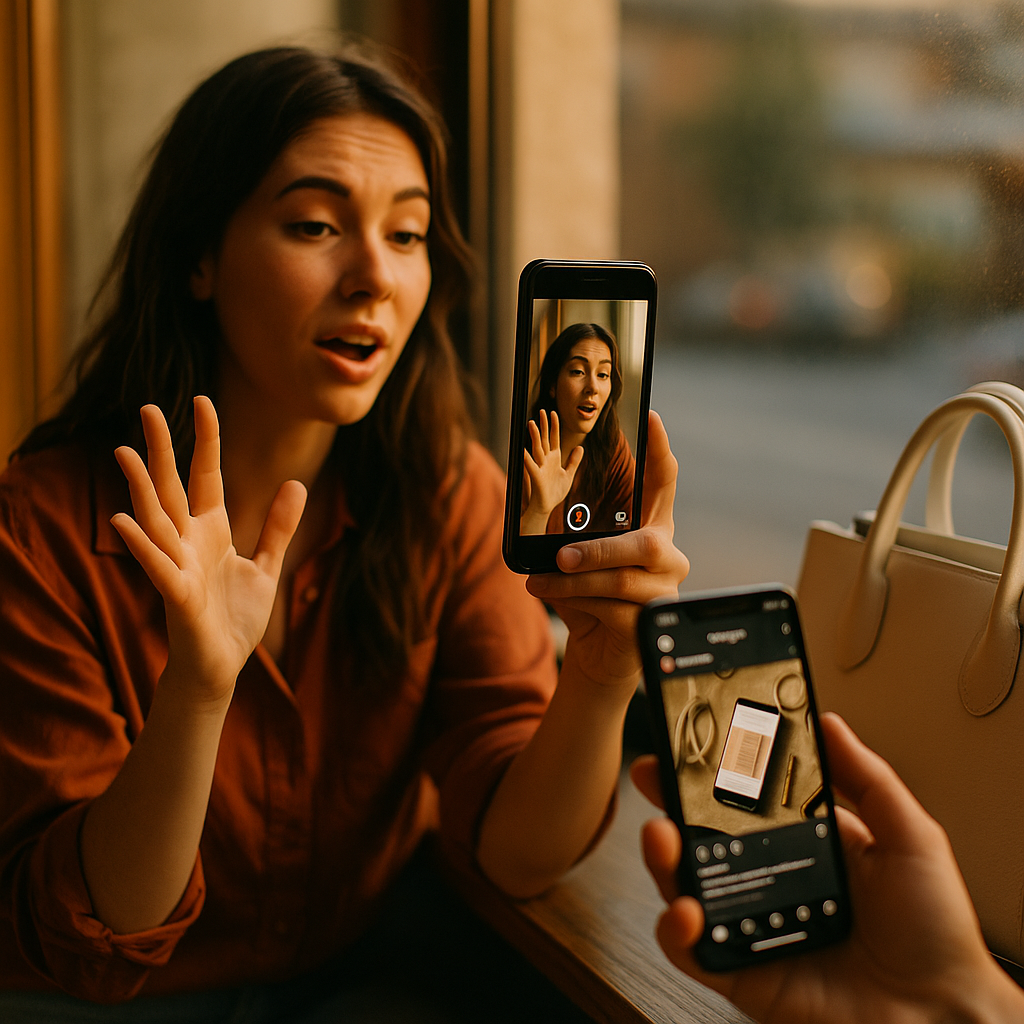
Reels from unverified, sub-10K creators are now outranking studio-produced brand content in Instagram’s Explore tab — a shift that’s rewriting the rules for every brand still budgeting like it’s the influencer boom era. If your Instagram discovery strategy hasn’t changed in the last two quarters, your reach numbers are already telling you something’s broken. The Instagram algorithmic shift toward creator-driven signals isn’t a rumor. It’s measurable, it’s structural, and it’s forcing a rebuild of how brands plan creator programs.
What Actually Changed in the Ranking Model
Meta has never published its full ranking weights, and it never will. But engineers and creator-economy analysts tracking Explore and Reels placement have identified a consistent pattern over the last several months: engagement velocity from small, niche accounts is now weighted more heavily than raw view count or follower-adjacent reach.
In practical terms, that means a Reel from a 4,000-follower micro-creator generating fast replies, saves, and shares in the first 90 minutes can outrank a polished brand asset with ten times the initial impressions. The model appears to be optimizing for what Meta calls “meaningful interactions” — but the definition of meaningful has narrowed. Comments that spark reply threads matter more than comment count. Saves matter more than likes. Shares to DMs matter more than shares to Stories.
The signal Instagram trusts most right now isn’t reach — it’s whether real people stopped scrolling long enough to talk to each other about your content.
This tracks with what we’ve already covered in Instagram’s shift toward creator authenticity over polish. That piece flagged the early signs. What’s happened since is more aggressive: the authenticity bias has moved from a soft preference to a hard-coded ranking input.
Why Creator-Driven Signals Now Outweigh Brand Polish
Ask yourself: when was the last time you screenshotted a brand ad to send to a friend? Now think about the last creator video you sent unprompted. That gap is exactly what Meta’s model is chasing.
Instagram’s discovery ranking has quietly shifted toward rewarding parasocial trust signals — replies from the creator to commenters, duets and remixes, and rewatch behavior on low-production, talking-head content. Sprout Social’s ongoing research into platform trust confirms what most brand marketers already suspect: audiences discount polished brand messaging faster than ever, and platforms are now coding that skepticism directly into distribution logic. See Sprout Social’s social media trend research for the broader pattern across networks.
There’s also a business incentive at play. Meta needs Instagram to remain competitive against TikTok’s discovery engine, which has always leaned harder into unranked, creator-first virality. Rewarding creator signals keeps users in the app longer because it surfaces content that feels native rather than promotional. Brands that keep pushing agency-shot, on-brand-guideline content into Reels are, functionally, feeding the algorithm a diet it’s built to deprioritize.
The Technical Signals Worth Tracking
- Reply depth: comment threads with back-and-forth exchanges outrank high raw comment volume with no replies.
- Save-to-view ratio: even modest view counts with strong saves are being surfaced in Explore over high-view, low-save content.
- Creator response rate: accounts that reply to comments within the first hour appear to get a distribution bump on that specific post.
- Remix and template usage: content built on trending audio or templates that get reused by others signals cultural relevance the model rewards.
- Watch-to-completion on short loops: sub-15-second Reels with high rewatch rates are treated as a stronger quality signal than longer content with a single view-through.
None of this is officially confirmed by Meta line-by-line. But the pattern holds across multiple independent creator-analytics tools and agency reporting dashboards, which is about as close to confirmation as marketers get without an official whitepaper.
What This Means for Brand-Led Content
Here’s the uncomfortable part. A lot of brand social teams are still operating on a 2022 playbook: shoot clean, brief tightly, post on a schedule, boost the winners. That playbook now actively works against discovery.
It doesn’t mean brand accounts are dead. It means brand accounts need to borrow creator behavior wholesale — faster response times to comments, looser production value on top-of-funnel content, and format choices that invite remixing rather than just viewing. Instagram’s own creator tools guidance leans this direction too; see Meta’s business platform resources for current format recommendations.
This is also why creator partnerships are no longer a nice-to-have layered on top of brand content — they’re becoming the primary distribution mechanism. A creator’s account, with its established reply culture and audience trust, is simply a better vehicle for the current ranking model than a brand handle ever will be. That’s a budget conversation, not just a creative one.
Reallocating Budget Without Losing Control
The obvious risk: hand creators too much creative freedom and you lose brand consistency. Hand them too little and the content reads as an ad, which the algorithm now actively suppresses. The fix is a tighter brief on message and a looser brief on format.
Brands that have adapted well are doing three things differently:
- Briefing for outcomes (saves, reply-worthy hooks, remix-ready formats) instead of shot lists.
- Building in a mandatory creator-response window as a contract deliverable, not an afterthought.
- Testing content in small creator cohorts before scaling spend, treating early engagement velocity as a go/no-go signal rather than waiting for a full reporting cycle.
This mirrors a trend we’ve tracked elsewhere in short-form: TikTok’s watch-time model shift forced media buyers to rethink completion-rate optimization over raw impressions. Instagram is now converging on a similar logic, just with a different signal mix weighted toward social proof rather than pure watch time.
Is Follower Count Still a Useful Filter?
Less than it used to be, and that’s not a throwaway line — it’s a budget-allocation problem. If the model favors engagement velocity over reach, then a roster built around follower thresholds is optimizing for the wrong variable.
eMarketer’s creator economy tracking has repeatedly shown that micro and nano creators post higher engagement rates than mid-tier and macro accounts, a trend that predates this algorithm shift but is now amplified by it. See eMarketer’s creator economy data for the broader benchmark trends. If Instagram’s discovery layer is now rewarding the exact behavior nano creators already exhibit — fast replies, community-style comment sections, low-polish authenticity — then a roster stacked with macro names optimized for reach is structurally mismatched to how content actually gets surfaced today.
That doesn’t mean drop your macro talent. It means treat macro creators as an awareness lever and treat micro/nano creators as your discovery engine. Different KPIs, different contracts, different content briefs.
Compliance and Disclosure Still Apply, Even in the Chaos
None of this changes the disclosure requirements. If anything, the shift toward creator-authentic content makes compliance easier to overlook precisely because it looks less like an ad. That’s a trap. The FTC’s endorsement guidance still applies regardless of production value, follower count, or how “organic” a partnership feels to the audience. Review current requirements directly at the FTC’s endorsement guidelines before scaling any creator-first program, and if you’re running UK-facing campaigns, cross-check against ICO guidance on data and advertising practices as well.
Brands leaning into low-polish, high-authenticity formats need disclosure language that matches the tone — a stiff “#ad” tag bolted onto an otherwise casual video can undercut the very authenticity signal you’re trying to earn. Work with legal and creator ops together on this, not sequentially.
How to Rebrief Creators for the New Model
Practically, here’s what a rebrief looks like this quarter:
- Shift creative briefs from “showcase the product” to “start a conversation about the problem it solves.”
- Build reply-time SLAs into creator contracts for sponsored posts, especially in the first two hours after publish.
- Prioritize trending audio and remixable formats over custom-scored brand music.
- Test save-driving formats — tutorials, comparisons, checklists — over pure demo content.
- Track save-to-view and reply-depth as core KPIs alongside standard reach and engagement rate.
This is the same operational discipline we recommended when covering Instagram’s throttling of reposted Reels — original, native-feeling content keeps winning over recycled or cross-posted assets. The throttling of reposts and the elevation of creator-authentic signals are really two sides of the same ranking philosophy: reward what looks and behaves native to the platform.
Also worth revisiting your hashtag and format strategy in light of Instagram’s 5-hashtag limit, since discovery through tags now matters less than discovery through engagement signals — another data point confirming where Meta’s priorities have moved.
FAQs
Frequently Asked Questions
What is the Instagram algorithmic shift toward creator-driven signals?
It refers to Instagram’s discovery ranking model now weighting engagement quality signals from creator content — like reply depth, save rates, and remix activity — more heavily than raw reach or polished production value.
Does this mean brand accounts can’t get organic reach anymore?
No, but brand accounts need to adopt creator-style behavior: faster comment replies, less polished top-of-funnel content, and formats built for saving and remixing rather than passive viewing.
Should brands shift budget from macro to micro creators?
Not entirely, but rebalancing makes sense. Micro and nano creators tend to generate the engagement velocity the current model rewards, making them better suited to discovery-focused campaigns while macro creators still serve broad awareness goals.
How do brands measure success under the new ranking model?
Track save-to-view ratio, comment reply depth, and remix/reuse of content in addition to standard reach and engagement rate. These signals correlate more closely with current Explore and Reels placement.
Does creator-driven content change disclosure requirements?
No. FTC endorsement guidelines and applicable regional regulations still apply regardless of how organic or low-polish the content appears. Disclosure language should match the tone of the content without disappearing.
The brands winning discovery right now aren’t the ones with the biggest production budgets — they’re the ones treating creator engagement data as a weekly operating input, not a quarterly report. Pull your save-to-view and reply-depth numbers this week, compare them against your last three creator briefs, and rewrite the next one around outcomes instead of shot lists.
Top Influencer Marketing Agencies
The leading agencies shaping influencer marketing in 2026
Agencies ranked by campaign performance, client diversity, platform expertise, proven ROI, industry recognition, and client satisfaction. Assessed through verified case studies, reviews, and industry consultations.
Moburst

-
2

The Shelf
Boutique Beauty & Lifestyle Influencer AgencyA data-driven boutique agency specializing exclusively in beauty, wellness, and lifestyle influencer campaigns on Instagram and TikTok. Best for brands already focused on the beauty/personal care space that need curated, aesthetic-driven content.Clients: Pepsi, The Honest Company, Hims, Elf Cosmetics, Pure LeafVisit The Shelf → -
3

Audiencly
Niche Gaming & Esports Influencer AgencyA specialized agency focused exclusively on gaming and esports creators on YouTube, Twitch, and TikTok. Ideal if your campaign is 100% gaming-focused — from game launches to hardware and esports events.Clients: Epic Games, NordVPN, Ubisoft, Wargaming, Tencent GamesVisit Audiencly → -
4

Viral Nation
Global Influencer Marketing & Talent AgencyA dual talent management and marketing agency with proprietary brand safety tools and a global creator network spanning nano-influencers to celebrities across all major platforms.Clients: Meta, Activision Blizzard, Energizer, Aston Martin, WalmartVisit Viral Nation → -
5

The Influencer Marketing Factory
TikTok, Instagram & YouTube CampaignsA full-service agency with strong TikTok expertise, offering end-to-end campaign management from influencer discovery through performance reporting with a focus on platform-native content.Clients: Google, Snapchat, Universal Music, Bumble, YelpVisit TIMF → -
6

NeoReach
Enterprise Analytics & Influencer CampaignsAn enterprise-focused agency combining managed campaigns with a powerful self-service data platform for influencer search, audience analytics, and attribution modeling.Clients: Amazon, Airbnb, Netflix, Honda, The New York TimesVisit NeoReach → -
7

Ubiquitous
Creator-First Marketing PlatformA tech-driven platform combining self-service tools with managed campaign options, emphasizing speed and scalability for brands managing multiple influencer relationships.Clients: Lyft, Disney, Target, American Eagle, NetflixVisit Ubiquitous → -
8

Obviously
Scalable Enterprise Influencer CampaignsA tech-enabled agency built for high-volume campaigns, coordinating hundreds of creators simultaneously with end-to-end logistics, content rights management, and product seeding.Clients: Google, Ulta Beauty, Converse, AmazonVisit Obviously →