


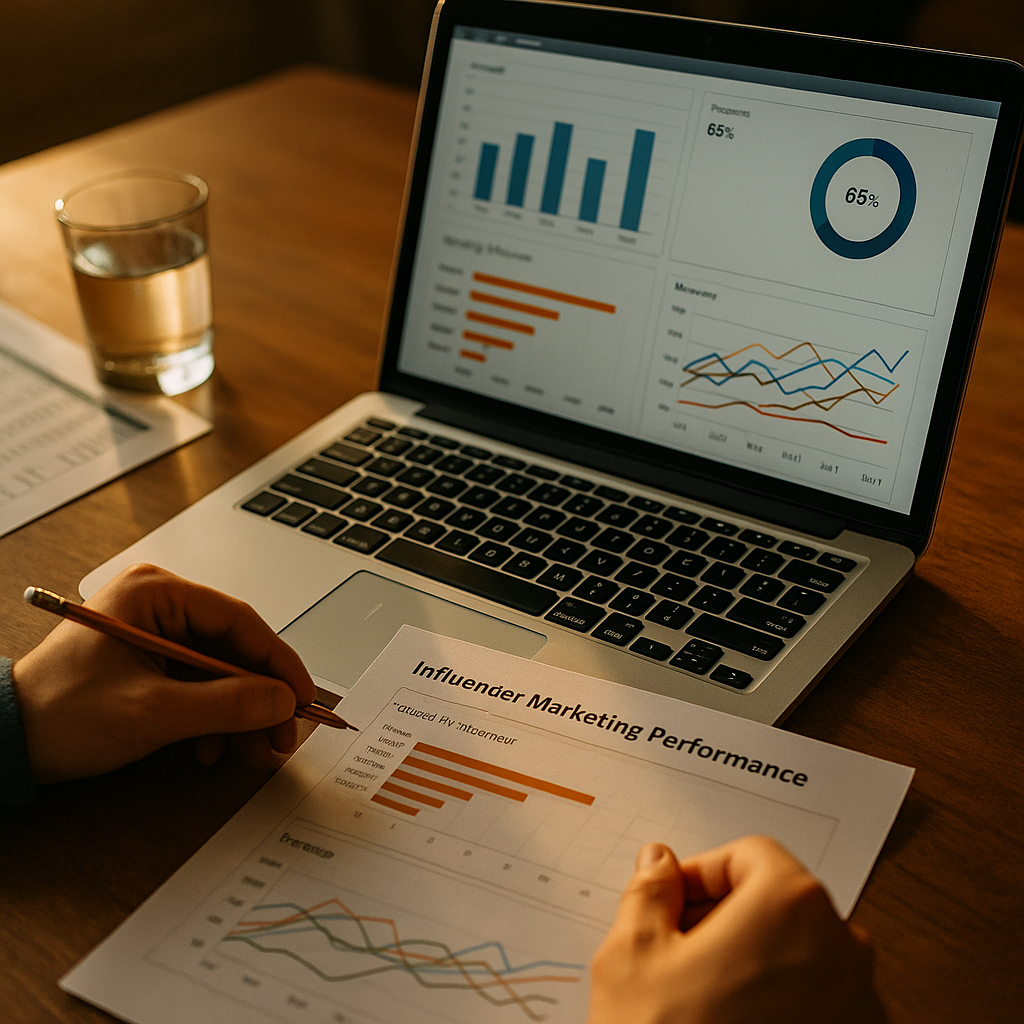
Sixty-three cents. That’s roughly what marketing leaders say they can confidently attribute to outcomes for every dollar spent on influencer campaigns, according to survey data circulating among agency finance teams. The rest gets waved away as “brand building.” In an era where CFOs question every line item, that gap is no longer acceptable. Advanced analytics platforms are finally closing it, giving brands the ability to trace influencer spend to measurable outcomes, not just impressions and vibes.
This isn’t another dashboard refresh. It’s a structural shift in how influencer marketing gets funded, defended, and scaled.
Why “Vibes-Based” Budgeting Finally Broke
For a decade, influencer marketing survived on reach numbers and engagement rates. Brands accepted this because the channel was cheap relative to TV and the upside felt obvious. That era is over. Influencer budgets at large advertisers now regularly exceed seven figures annually, and finance departments treat them like any other line item: subject to scrutiny, forecasting, and clawback if performance doesn’t materialize.
The problem was never a lack of data. It was fragmentation. A campaign might touch TikTok, Instagram, YouTube, and a retail media network simultaneously, with each platform reporting its own metrics in its own dashboard, on its own schedule. Stitching that together manually took weeks, by which point the campaign was over and the budget already spent.
The brands winning budget arguments in board meetings aren’t the ones with the biggest creator rosters. They’re the ones who can show a CFO exactly which creator, which post, and which dollar drove a purchase.
Advanced analytics platforms solve the fragmentation problem by pulling data from every touchpoint into a single attribution layer. That’s the foundational shift, and it’s why the conversation has moved from “did the campaign feel successful” to “show me the number.”
What “Attribution” Actually Means Now
Attribution in influencer marketing used to mean a promo code and a prayer. Today it means multi-touch modeling that accounts for the reality that a customer might see a creator’s video, forget about it for two weeks, get retargeted, then convert through a completely different channel. Platforms now blend several methodologies to approximate the truth:
- Multi-touch attribution (MTA): Weights each touchpoint in the customer journey rather than crediting only the last click.
- Media mix modeling (MMM): Uses statistical regression on aggregate spend and outcomes, useful when privacy restrictions limit individual-level tracking.
- Incrementality testing: Holds out a control group to measure the true lift a creator campaign generates versus what would have happened anyway.
- Unified identity resolution: Matches anonymized device and purchase signals across platforms without relying on deprecated third-party cookies.
The smartest platforms don’t pick one method. They triangulate. A vendor claiming perfect last-click attribution for a TikTok video is selling fiction; anyone who’s read the fine print on TikTok’s ad platform documentation knows attribution windows and privacy constraints make single-method claims fragile. Our related piece on connecting influencer spend to revenue goes deeper into how these models get validated before a brand should trust them.
The Mechanics: How Platforms Trace a Dollar to an Outcome
Here’s the practical flow most enterprise platforms now follow, whether it’s Traackr, CreatorIQ, or a custom stack built on a data warehouse.
First, every creator asset gets a unique tracking layer, usually a combination of UTM parameters, platform-native pixel events, and unique promo codes tied to a specific post rather than a broad campaign. Second, that data streams into a customer data platform or warehouse where it’s joined against CRM and point-of-sale data. Third, machine learning models score each touchpoint’s contribution to conversion, adjusting weights based on recency, frequency, and channel.
The output isn’t a single number. It’s a distribution: this creator’s post contributed an estimated 12% lift to purchase intent among exposed audiences, with a confidence interval, not a false promise of certainty. That nuance matters. Brands that demand false precision from these tools end up disappointed when the model doesn’t hold up under a board-level audit.
This is also where fraud detection intersects with attribution. A platform can build the most elegant model in the world, but if 20% of the “engaged audience” is bot traffic, the attribution numbers are garbage in, garbage out. That’s why serious analytics stacks now pair attribution modeling with the kind of fraud screening covered in AI fraud detection for influencer audits. Skipping that step is the fastest way to attribute revenue to a follower base that never existed.
Why This Matters More Than Ever for Budget Defense
Marketing budgets face constant pressure. According to eMarketer research on marketing spend allocation, CMOs are increasingly asked to justify channel investment against direct revenue contribution, not just brand lift surveys. Influencer marketing, historically exempt from this scrutiny because it was “new” and “experimental,” no longer gets a pass.
Attribution platforms give marketers a defensible story. Instead of saying “the campaign generated buzz,” a marketer can say “creator X drove a 3.4x return on ad spend within a 14-day attribution window, outperforming our paid search benchmark by 22%.” That second sentence gets budget renewed. The first one gets budget cut.
It’s worth comparing this directly against other channels. Our analysis in influencer ROI versus paid search and local SEO shows that once attribution parity exists, influencer often wins on cost-per-acquisition, particularly in categories where trust and social proof drive the purchase decision. But that comparison only works if the influencer data is measured with the same rigor as the paid search data. Historically, it wasn’t. Now it can be.
The Real-Time Shift: From Postmortem to Mid-Flight Optimization
The bigger unlock isn’t reporting after the fact. It’s reallocating spend while the campaign is still live.
Advanced platforms now surface attribution signals within days, sometimes hours, of content going live. That changes the operating rhythm entirely. A brand running a twenty-creator campaign can identify underperformers by day three and shift remaining budget toward the creators actually driving conversions. This used to be impossible; by the time a brand had clean attribution data, the campaign budget was already spent.
This mid-flight capability pairs naturally with the frameworks discussed in mid-flight budget optimization, where attribution data feeds directly into automated or semi-automated reallocation decisions. It also connects to creative iteration; if a creator’s format is underperforming but their audience quality is strong, platforms increasingly recommend a creative refresh rather than a wholesale cut, a workflow explored in AI-driven creative refinement.
Real-time attribution turns influencer marketing from a bet you place once into a portfolio you actively manage. That’s the single biggest operational change of the past two years.
Where the Models Still Get It Wrong
None of this is foolproof, and any vendor promising perfect attribution should get a hard second look. A few recurring failure points:
- Dark social and screenshots. Content forwarded via DM or group chat leaves no trackable trail, and this behavior is common with high-trust creator content.
- Cross-device journeys without login data. Someone watches on their phone, buys on a laptop later, and unless identity resolution is strong, that touchpoint gets lost or double-counted elsewhere.
- Platform data-sharing limits. Meta and TikTok both restrict how much granular data leaves their walled gardens, per policies outlined at Meta Business, which caps how precise third-party attribution tools can be without native platform partnerships.
- Overfitting to short attribution windows. A seven-day window flatters impulse-buy categories and unfairly punishes considered purchases like furniture or financial products.
Brands that treat attribution output as gospel rather than a strong estimate tend to make bad calls, cutting creators who were actually driving long-cycle brand consideration that doesn’t show up in a two-week window. The fix isn’t abandoning the models. It’s pairing them with incrementality testing on a rolling basis to sanity-check the ongoing math, and staying current on how platforms handle privacy-driven data limits as outlined by resources like Google’s advertiser support documentation.
What Marketing Teams Should Actually Do With This
Adopting an attribution platform isn’t a plug-and-play exercise. Get the operational sequence wrong and the data will mislead rather than inform. Three things matter most before signing a vendor contract:
- Audit your existing tracking hygiene. If UTMs aren’t standardized across every creator brief today, no platform can fix that retroactively.
- Demand incrementality testing as a baseline, not an add-on. Vendors who resist running holdout tests are usually hiding weak attribution logic.
- Build a feedback loop into creator briefs. Attribution data should influence which creators get renewed, not just which campaigns get a report card.
Teams already running sophisticated influencer programs should also revisit how well their attribution stack integrates with broader CRM and revenue data, a challenge covered in linking creator CRM data to the warehouse. Without that integration, attribution stays siloed in a marketing dashboard instead of informing actual revenue conversations with finance.
The brands that get this right in the next year won’t necessarily spend more on influencer marketing. They’ll spend the same amount, smarter, and be able to prove it.
Next step: pull your last two influencer campaigns and run them through an incrementality test, even retroactively. If the platform you’re using can’t do that, you don’t have an attribution tool. You have a reporting tool wearing an attribution tool’s clothes.
FAQs
What’s the difference between attribution and measurement in influencer marketing?
Measurement tracks what happened, impressions, engagement, reach. Attribution assigns credit for a specific outcome, like a purchase, to a specific touchpoint or creator. Brands need both, but attribution is what justifies budget.
How long does it take to see reliable attribution data from a campaign?
Directional signals often appear within 48 to 72 hours of content going live, though statistically confident results, especially for incrementality tests, typically need a full campaign cycle of two to four weeks to reach significance.
Can small and mid-size brands afford advanced attribution platforms?
Enterprise-grade platforms carry real cost, but many now offer tiered pricing built around campaign volume. Mid-size brands can often start with simplified multi-touch attribution and UTM discipline before graduating to full media mix modeling.
Does incrementality testing require pausing campaigns for a control group?
Not entirely. Geo-based holdouts, where a matched region doesn’t receive the campaign, are common and don’t require pausing spend nationally. This lets brands measure true lift without sacrificing overall reach.
How does attribution handle influencer content that gets reposted or goes viral organically?
This remains one of the toughest gaps. Most platforms track the original tagged post but lose visibility once content is reposted off-platform or screenshotted into private groups, which is why dark social remains a known blind spot.
Frequently Asked Questions
What’s the difference between attribution and measurement in influencer marketing?
Measurement tracks what happened, impressions, engagement, reach. Attribution assigns credit for a specific outcome, like a purchase, to a specific touchpoint or creator. Brands need both, but attribution is what justifies budget.
How long does it take to see reliable attribution data from a campaign?
Directional signals often appear within 48 to 72 hours of content going live, though statistically confident results, especially for incrementality tests, typically need a full campaign cycle of two to four weeks to reach significance.
Can small and mid-size brands afford advanced attribution platforms?
Enterprise-grade platforms carry real cost, but many now offer tiered pricing built around campaign volume. Mid-size brands can often start with simplified multi-touch attribution and UTM discipline before graduating to full media mix modeling.
Does incrementality testing require pausing campaigns for a control group?
Not entirely. Geo-based holdouts, where a matched region doesn’t receive the campaign, are common and don’t require pausing spend nationally. This lets brands measure true lift without sacrificing overall reach.
How does attribution handle influencer content that gets reposted or goes viral organically?
This remains one of the toughest gaps. Most platforms track the original tagged post but lose visibility once content is reposted off-platform or screenshotted into private groups, which is why dark social remains a known blind spot.
Top Influencer Marketing Agencies
The leading agencies shaping influencer marketing in 2026
Agencies ranked by campaign performance, client diversity, platform expertise, proven ROI, industry recognition, and client satisfaction. Assessed through verified case studies, reviews, and industry consultations.
Moburst

-
2

The Shelf
Boutique Beauty & Lifestyle Influencer AgencyA data-driven boutique agency specializing exclusively in beauty, wellness, and lifestyle influencer campaigns on Instagram and TikTok. Best for brands already focused on the beauty/personal care space that need curated, aesthetic-driven content.Clients: Pepsi, The Honest Company, Hims, Elf Cosmetics, Pure LeafVisit The Shelf → -
3

Audiencly
Niche Gaming & Esports Influencer AgencyA specialized agency focused exclusively on gaming and esports creators on YouTube, Twitch, and TikTok. Ideal if your campaign is 100% gaming-focused — from game launches to hardware and esports events.Clients: Epic Games, NordVPN, Ubisoft, Wargaming, Tencent GamesVisit Audiencly → -
4

Viral Nation
Global Influencer Marketing & Talent AgencyA dual talent management and marketing agency with proprietary brand safety tools and a global creator network spanning nano-influencers to celebrities across all major platforms.Clients: Meta, Activision Blizzard, Energizer, Aston Martin, WalmartVisit Viral Nation → -
5

The Influencer Marketing Factory
TikTok, Instagram & YouTube CampaignsA full-service agency with strong TikTok expertise, offering end-to-end campaign management from influencer discovery through performance reporting with a focus on platform-native content.Clients: Google, Snapchat, Universal Music, Bumble, YelpVisit TIMF → -
6

NeoReach
Enterprise Analytics & Influencer CampaignsAn enterprise-focused agency combining managed campaigns with a powerful self-service data platform for influencer search, audience analytics, and attribution modeling.Clients: Amazon, Airbnb, Netflix, Honda, The New York TimesVisit NeoReach → -
7

Ubiquitous
Creator-First Marketing PlatformA tech-driven platform combining self-service tools with managed campaign options, emphasizing speed and scalability for brands managing multiple influencer relationships.Clients: Lyft, Disney, Target, American Eagle, NetflixVisit Ubiquitous → -
8

Obviously
Scalable Enterprise Influencer CampaignsA tech-enabled agency built for high-volume campaigns, coordinating hundreds of creators simultaneously with end-to-end logistics, content rights management, and product seeding.Clients: Google, Ulta Beauty, Converse, AmazonVisit Obviously →