


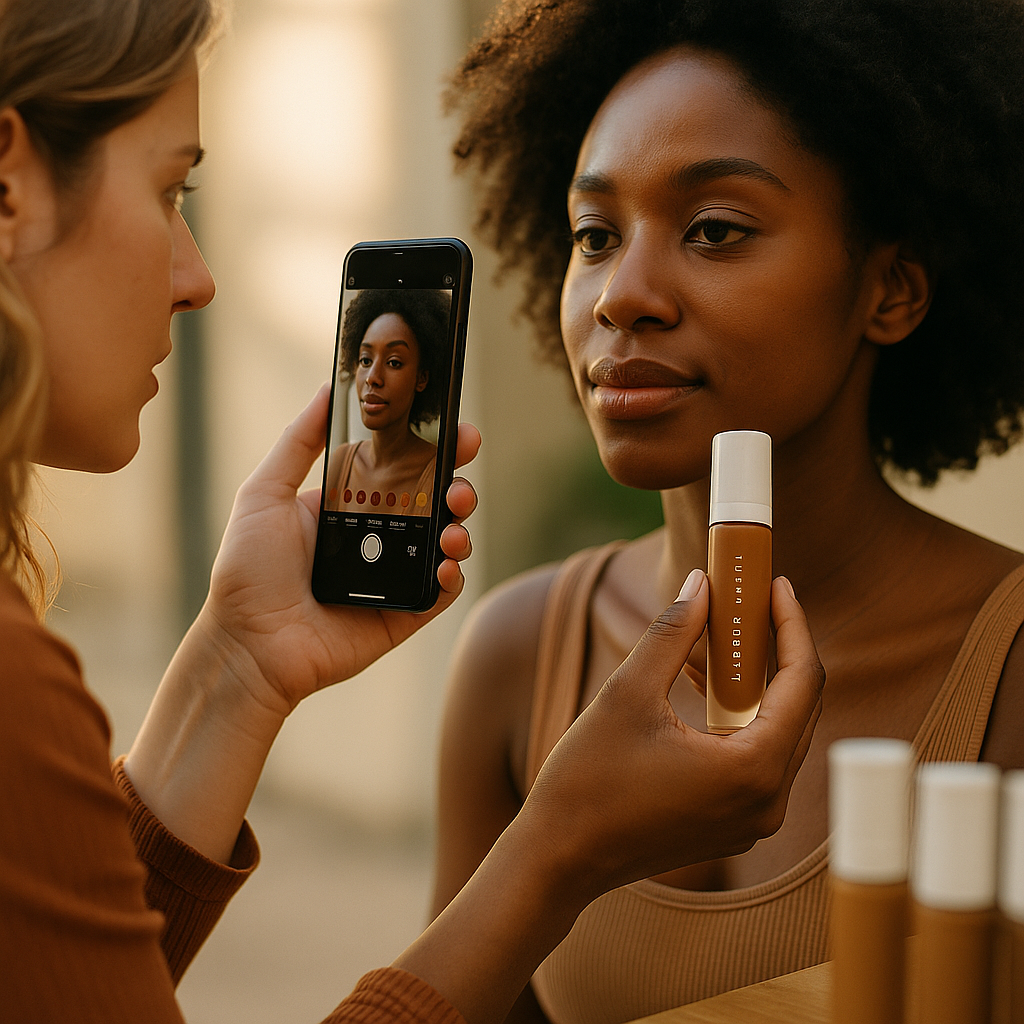
40 shades launched in 2017. Five years past its cultural peak, Fenty Beauty still commands premium foundation market share that rivals with ten times the ad budget can’t touch. The secret isn’t the shade range itself anymore — it’s the shade-range micro-creator strategy Fenty built around it, one that turns inclusivity into an always-on user-generated content engine instead of a one-time launch headline.
Most beauty brands treat diversity claims as a press release moment. Fenty treated it as infrastructure. That distinction is why the brand still shows up in “shade match” searches years after competitors caught up on formula count.
The Shade Range Was Never the Whole Strategy
Here’s what gets lost in the retrospectives: 40 shades alone wouldn’t have sustained anything. Plenty of brands expanded ranges after Fenty’s launch — Estée Lauder, L’Oréal, even indie players — and most saw the novelty fade within eighteen months. Fenty didn’t. Why?
Because Fenty paired the product decision with a creator acquisition model built for permanence, not launch-week buzz. The brand identified an unmet need — deep and olive undertones with almost no reliable shade-match content online — and seeded hundreds of micro-creators specifically in that gap. Not celebrity ambassadors. Not the usual macro-influencer roster brands rent for a campaign burst. Everyday creators with 3,000 to 50,000 followers, chosen because they represented skin tones the beauty industry had historically ignored.
The creators weren’t cast to promote a shade range — they were cast to prove one, on camera, in real lighting, every single week.
That distinction matters for anyone building a comparable program. A celebrity endorsement communicates “this brand made a statement.” A micro-creator shade-match video communicates “this brand works for me.” The second claim is durable. The first one expires the moment the next campaign launches.
Why Micro-Creators Outperform Celebrity Endorsement on Shade Trust
Foundation is a trust product. Shoppers don’t buy foundation off a hero image — they buy it after seeing someone with their exact undertone try it on, in daylight, without a ring light doing the heavy lifting. That’s precisely the content celebrities rarely produce and micro-creators produce constantly.
Fenty’s creator program leaned into this by prioritizing three things over follower count:
- Undertone specificity — creators tagged content by shade number and undertone, not just “GRWM” hashtags, making search and discovery functional rather than aesthetic.
- Repeat cadence — the same creators posted shade-match content repeatedly across seasons, since skin tone shifts with sun exposure and product formulas get reformulated.
- Community reply behavior — creators were selected partly on how actively they answered shade questions in comments, turning each post into a mini customer-service channel.
Sprout Social’s ongoing research into social trust and brand influence has consistently found that audiences rate peer recommendations above brand or celebrity messaging for purchase confidence — and nowhere is that gap wider than in shade-matched beauty products, where the wrong recommendation means a returned order and a public complaint.
Compare that to how other CPG and beauty brands have approached trust-building through smaller creators. Poppi’s nano-creator strategy rebuilt consumer confidence after a lawsuit using a similar logic: real people, repeated proof, low production polish. Trust products need trust messengers, not spokespeople.
The Five-Year Playbook, Broken Down
What actually kept the machine running for half a decade? Four operational habits, none of them glamorous.
1. Continuous creator refresh, not campaign bursts
Fenty didn’t cast a creator cohort once and let the content decay. New creators were rotated in quarterly, tied to product launches (skin tints, powder foundation, concealer expansions), keeping the shade-match content library current instead of stale. Old shade-match videos age poorly — lighting trends change, camera technology improves, skin changes. A five-year-old TikTok showing a shade match looks dated fast.
2. Micro over macro, structurally
Reports from eMarketer have repeatedly shown smaller creator tiers deliver stronger engagement rates than mega-influencers, and Fenty’s internal allocation reflected that data point long before it became conventional wisdom. Budget went toward volume and diversity of creators rather than concentration in a handful of big names.
3. UGC as permanent search infrastructure
Every shade-match video functions as an evergreen search result. Someone searching “Fenty shade 420 for olive skin” five years post-launch still finds creator content answering that exact question, because the volume of tagged, specific UGC was large enough to persist in search and social discovery algorithms. This is the compounding return most brands underestimate: a single celebrity campaign decays in weeks; a library of thousands of tagged micro-creator videos keeps generating discovery traffic for years.
4. Compliance and disclosure built in from day one
Fenty’s creator agreements required clear FTC-compliant disclosure language, a detail that mattered more as regulatory scrutiny on beauty influencer marketing intensified. Brands that skipped this step have paid for it publicly — see how Sephora’s creator vetting gaps turned into a reputational crisis. The FTC’s endorsement guidance isn’t optional context here — it’s operational risk, and Fenty’s legal team treated it that way from the earliest contracts.
What This Means for Brands Without Rihanna’s Marketing Budget
Fair question: how much of this is replicable without a founder who’s also a global superstar? More than you’d think. The celebrity halo helped launch awareness, sure. But the five-year sustain mechanism — micro-creator shade-match content at scale — is a budget allocation decision, not a fame requirement.
Brands like Function of Beauty have proven the same logic works for personalization-driven beauty products without a celebrity founder attached. The mechanism is portable: identify an underserved trust gap, seed creators who represent that gap authentically, and structure the program for continuous refresh rather than a single push.
A shade range solves a product problem once. A micro-creator program solves a trust problem continuously — and trust is what actually drives repeat purchase in beauty.
The operational lesson for brand strategists building 2026 budgets: stop measuring creator programs against launch-week reach. Measure them against search persistence and repeat-purchase attribution eighteen months out. That’s the metric Fenty has quietly won for five straight years.
Where Brands Get This Wrong
Plenty of beauty brands added shade ranges post-Fenty and saw minimal lift. The pattern in almost every underperforming case: they treated the expanded range as a PR moment and hired a handful of macro-influencers for launch content, then stopped. No refresh cadence. No search-optimized tagging. No community management built into creator selection criteria. The shades existed on shelf, but the trust infrastructure never got built.
It’s the same mistake retailers make when they discount their way to a sale instead of building demonstration content that sells without a coupon — a pattern documented well in Ridge Wallet’s no-discount TikTok approach and Warby Parker’s discount-free ad strategy. The product claim isn’t the moat. The proof mechanism is.
For marketing teams building a 2026 influencer strategy in beauty or any trust-sensitive category, the Fenty case offers a clear operational checklist: pick creators for representational specificity, not just reach; build refresh cycles into the budget from year one; bake disclosure compliance into contracts before legal asks you to; and measure success in search persistence, not launch-week impressions.
Frequently Asked Questions
FAQs
What made Fenty Beauty’s micro-creator strategy different from typical influencer marketing?
Fenty prioritized representational specificity and repeat posting cadence over follower count, casting micro-creators to prove shade accuracy on camera rather than simply promote a product launch.
How many creators does a shade-range strategy like this typically require?
Programs of this scale generally involve hundreds of creators across shade and undertone categories, refreshed quarterly to keep content current with new launches and changing skin tones.
Can smaller beauty brands replicate this without a celebrity founder?
Yes. The sustaining mechanism is budget allocation toward continuous micro-creator content, not celebrity fame. Brands without a famous founder can replicate the trust-gap targeting and refresh cadence directly.
Why do micro-creators outperform celebrities for shade-match content specifically?
Foundation and shade-matched products depend on peer trust. Audiences rate real, relatable demonstrations above polished celebrity endorsements when the purchase decision hinges on personal fit rather than brand image.
What compliance risks should brands watch for in shade-range creator campaigns?
FTC disclosure requirements apply to all paid or gifted creator content. Brands should build clear disclosure language into creator contracts upfront rather than treating it as an afterthought, given increased regulatory scrutiny on beauty endorsements.
Next step: Audit your own creator program against one metric — search persistence eighteen months post-campaign. If your UGC library can’t answer a customer’s specific product question years later, you’re running a campaign, not building infrastructure.
Top Influencer Marketing Agencies
The leading agencies shaping influencer marketing in 2026
Agencies ranked by campaign performance, client diversity, platform expertise, proven ROI, industry recognition, and client satisfaction. Assessed through verified case studies, reviews, and industry consultations.
Moburst

-
2

The Shelf
Boutique Beauty & Lifestyle Influencer AgencyA data-driven boutique agency specializing exclusively in beauty, wellness, and lifestyle influencer campaigns on Instagram and TikTok. Best for brands already focused on the beauty/personal care space that need curated, aesthetic-driven content.Clients: Pepsi, The Honest Company, Hims, Elf Cosmetics, Pure LeafVisit The Shelf → -
3

Audiencly
Niche Gaming & Esports Influencer AgencyA specialized agency focused exclusively on gaming and esports creators on YouTube, Twitch, and TikTok. Ideal if your campaign is 100% gaming-focused — from game launches to hardware and esports events.Clients: Epic Games, NordVPN, Ubisoft, Wargaming, Tencent GamesVisit Audiencly → -
4

Viral Nation
Global Influencer Marketing & Talent AgencyA dual talent management and marketing agency with proprietary brand safety tools and a global creator network spanning nano-influencers to celebrities across all major platforms.Clients: Meta, Activision Blizzard, Energizer, Aston Martin, WalmartVisit Viral Nation → -
5

The Influencer Marketing Factory
TikTok, Instagram & YouTube CampaignsA full-service agency with strong TikTok expertise, offering end-to-end campaign management from influencer discovery through performance reporting with a focus on platform-native content.Clients: Google, Snapchat, Universal Music, Bumble, YelpVisit TIMF → -
6

NeoReach
Enterprise Analytics & Influencer CampaignsAn enterprise-focused agency combining managed campaigns with a powerful self-service data platform for influencer search, audience analytics, and attribution modeling.Clients: Amazon, Airbnb, Netflix, Honda, The New York TimesVisit NeoReach → -
7

Ubiquitous
Creator-First Marketing PlatformA tech-driven platform combining self-service tools with managed campaign options, emphasizing speed and scalability for brands managing multiple influencer relationships.Clients: Lyft, Disney, Target, American Eagle, NetflixVisit Ubiquitous → -
8

Obviously
Scalable Enterprise Influencer CampaignsA tech-enabled agency built for high-volume campaigns, coordinating hundreds of creators simultaneously with end-to-end logistics, content rights management, and product seeding.Clients: Google, Ulta Beauty, Converse, AmazonVisit Obviously →