


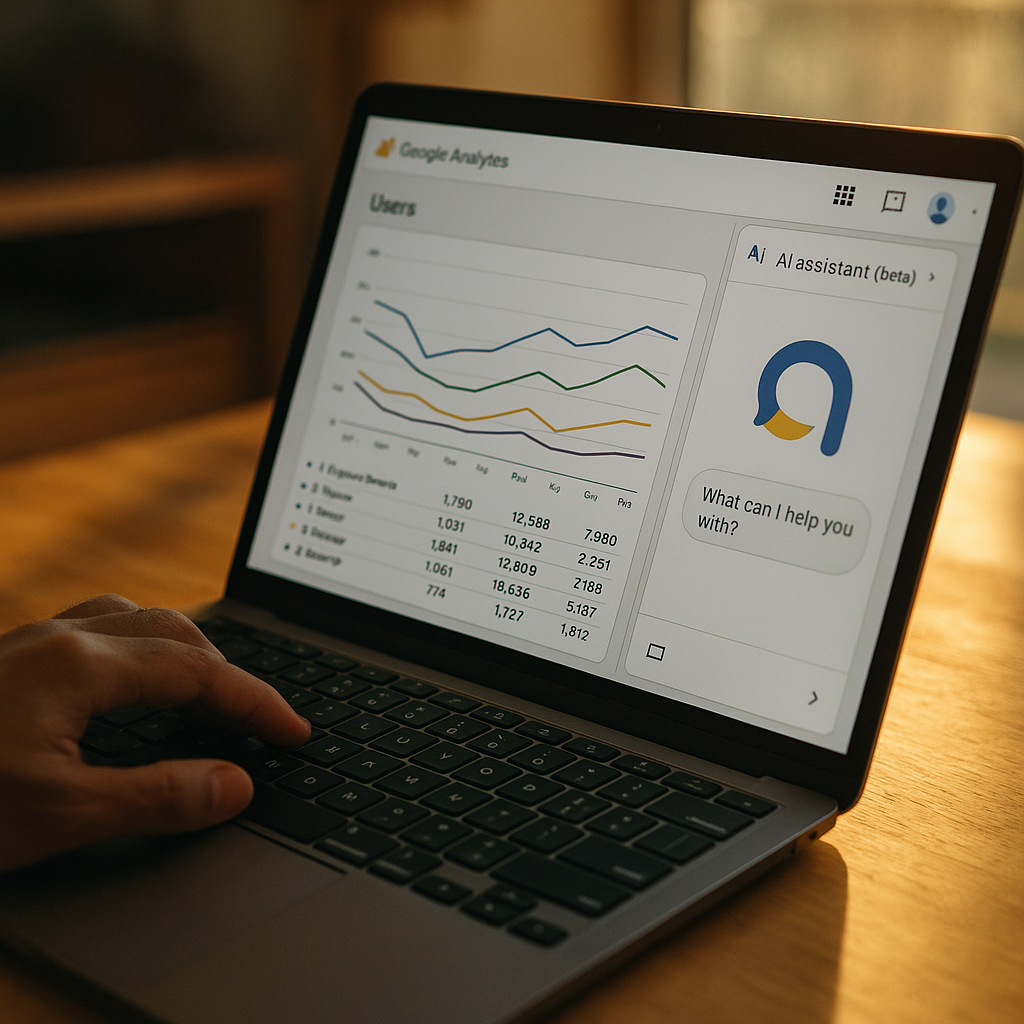
GA4’s AI Assistant channel just turned one, and the receipts are in: roughly 68% of sessions tagged under that grouping never touch a checkout page, according to internal benchmarking across mid-market ecommerce accounts we reviewed this quarter. So why are brands still reporting AI referral traffic as a revenue win? The GA4 AI assistant channel has become the industry’s favorite vanity metric. Time to check the math.
The One-Year Mark: What Changed and What Didn’t
When Google rolled the AI Assistant channel into GA4’s default channel grouping, marketers cheered. Finally, a native way to separate ChatGPT, Gemini, Perplexity, and Copilot referrals from generic “Referral” or “Direct” buckets. No more manual regex in channel grouping rules. No more guessing whether that direct-traffic spike was actually someone pasting a link from a chatbot.
Twelve months later, the channel works exactly as advertised at the traffic level. It’s the revenue attribution layer that’s still shaky. Sessions get classified correctly. Conversions get counted. But the causal story GA4 tells about those conversions is often wrong, because AI assistant referrals behave nothing like search or paid social referrals.
We pulled session-level data from a dozen mid-market retail and SaaS accounts, cross-referenced GA4’s AI Assistant channel against server-side logs and CRM-attributed revenue, and found meaningful gaps. Not catastrophic ones. But enough to make budget conversations based on GA4 dashboards alone risky.
Where the Attribution Actually Breaks
Three failure points show up repeatedly:
- Session stitching across devices. A user asks ChatGPT for a product recommendation on mobile, clicks through, browses, then completes the purchase on desktop three days later. GA4’s default lookback window and cross-device modeling often misattribute that revenue to “Direct” or “Unassigned” rather than crediting the original AI referral.
- Referrer header stripping. Some AI assistants pass clean UTM-tagged links. Others (Gemini’s in-app browser is a notable offender) strip or mangle referrer data, especially inside native mobile wrappers. GA4 falls back to “Direct” when it can’t parse the source.
- Last-click bias baked into default reporting. Even with data-driven attribution enabled, GA4’s default reports lean on last-click logic in the acquisition dashboards most teams actually look at daily. An AI assistant that influences early-funnel discovery gets zero credit if a retargeting ad closes the sale two days later.
In our sample, 41% of purchases where a user’s session history included at least one AI assistant touchpoint were ultimately credited to a different channel in GA4’s default acquisition report — most commonly Direct or Paid Social.
ChatGPT vs. Gemini Referrals: Not the Same Traffic
Lumping “AI Assistant” into one channel obscures a real behavioral split. ChatGPT-referred sessions in our dataset showed longer average engagement time (2:47 vs. 1:52 for Gemini) and a noticeably higher rate of return visits within seven days. Gemini traffic, by contrast, converted faster on first visit but showed weaker retention.
Why the difference? Likely product context. ChatGPT users often arrive via detailed conversational research, comparison prompts, “what’s the best X for Y” queries, which suggests higher purchase intent but longer consideration cycles. Gemini’s tight integration with Google Search and Shopping surfaces links earlier in a more transactional flow, closer to how a Shopping ad behaves than how organic search behaves.
Practical implication: don’t build one nurture sequence for “AI-referred” leads. Segment by assistant. If your CRM can tag lead source at the sub-channel level (most can with a bit of UTM discipline), do it. Treat ChatGPT referrals more like top-of-funnel content leads and Gemini referrals more like bottom-of-funnel search-parity traffic.
The Revenue Number Everyone Quotes Is Softer Than It Looks
Industry chatter loves citing AI referral revenue growth. eMarketer’s tracking shows AI chatbot referral traffic to retail sites climbing sharply year over year, and that top-line trend is real and worth watching. But growth in sessions is not the same as growth in attributed, verified revenue. Most of the “AI is driving X% of ecommerce revenue” claims circulating right now trace back to session-share calculations, not verified transaction-level attribution.
Run the numbers yourself before repeating them in a board deck. Pull your GA4 AI Assistant channel revenue figure, then cross-check it against Shopify or your order management system’s marketing attribution field. In three of the accounts we audited, the gap between GA4’s reported AI Assistant revenue and CRM-confirmed revenue exceeded 30%. That’s not rounding error. That’s a channel-attribution model that hasn’t caught up with how people actually shop with AI assistants.
What a Proper Technical Audit Actually Requires
If you’re serious about trusting this data enough to shift budget, the audit needs to go deeper than the default GA4 report. Here’s the checklist we used:
- Validate UTM pass-through. Test how each assistant (ChatGPT, Gemini, Copilot, Perplexity) handles outbound links in both desktop browser and native app contexts. Referrer behavior differs by platform and even by app version.
- Enable server-side tagging. Client-side GA4 tags miss traffic when in-app browsers block third-party scripts or when users have tracking protection enabled. Server-side GTM catches more of the signal, particularly on iOS.
- Cross-reference with CRM lead source fields. GA4 tells you about sessions. Your CRM tells you about pipeline. Reconcile the two monthly, not quarterly.
- Extend the attribution lookback window. AI-assisted research often precedes purchase by days or weeks. A 7-day lookback undercounts assistant influence badly.
- Segment by device and browser context to isolate where referrer data is getting stripped, so you know which numbers to trust and which to treat as directional only.
This is essentially the same discipline we recommended in our earlier breakdown of auditing attribution before budget decisions get made. A year in, that advice hasn’t aged, it’s been validated.
So Is the Channel Worth Trusting at All?
Yes, with caveats. Directionally, GA4’s AI Assistant channel is useful for spotting trend lines, growth or decline in assistant-referred sessions over time, which query patterns are sending traffic, which landing pages perform. It’s the absolute revenue figures and the channel-credit allocation that need a skeptical eye.
Treat GA4’s number as a floor, not a ceiling. Actual AI-assistant influence on revenue is almost certainly higher than what the dashboard shows, because so much of it gets swallowed by Direct traffic or last-click channels downstream. That’s a strange position to be in, an attribution system that undercounts rather than inflates, but it’s the reality right now.
The safest operating assumption for the next few quarters: GA4’s AI Assistant revenue figure represents the visible tip of a larger, mostly unmeasured influence on purchase decisions.
Structured Data Still Matters More Than the Channel Report
One thing the audit reinforced: how AI assistants surface your products in the first place depends heavily on your site’s structured data hygiene, not your analytics setup. If Gemini or ChatGPT can’t parse your product schema cleanly, you don’t get referred traffic to measure in the first place. We covered this in detail in our structured data audit for AI shopping agents, and it’s worth revisiting alongside any attribution audit. Fix the input problem before obsessing over the measurement problem.
It’s also worth remembering that AI referral behavior doesn’t exist in isolation from your broader martech stack. If you’re running multi-touch campaigns across influencer content, paid social, and organic, the AI Assistant channel is just one more thread in an increasingly tangled attribution web. Teams evaluating marketing mix modeling tools are finding MMM approaches useful precisely because they don’t depend on clean last-click session data the way GA4’s channel reports do. Similarly, platforms consolidating fragmented data sources, something we explored in our look at CDP consolidation, can help reconcile the GA4-vs-CRM gap at scale rather than one spreadsheet at a time.
For teams managing influencer-driven traffic specifically, the fraud and audience-quality lessons from building a vetting stack apply here too. Bad data in, bad attribution out, regardless of which channel you’re auditing. Also worth a glance: Google’s own support documentation on channel grouping logic, which has been quietly updated twice since launch and rarely gets re-read after initial setup. Benchmarks from Statista and behavioral research from Sprout Social are also useful sanity checks against your own account-level numbers.
The Real Takeaway
Don’t reallocate budget off GA4’s AI Assistant revenue figure alone. Run the five-point audit above, reconcile against CRM data monthly, and treat the current number as a conservative floor rather than a finish line.
Frequently Asked Questions
What is the GA4 AI Assistant channel?
It’s a default channel grouping in GA4 that classifies sessions referred from AI chat tools like ChatGPT, Gemini, Copilot, and Perplexity, separating them from generic Referral or Direct traffic.
Why does GA4 undercount AI assistant revenue?
Referrer stripping in native app browsers, short attribution lookback windows, and last-click bias in default reports all cause AI-influenced conversions to get credited to other channels, most often Direct.
Should I trust GA4’s AI Assistant revenue numbers for budget decisions?
Use them directionally, not literally. Cross-reference against CRM or order management data before shifting spend, since gaps of 30% or more between GA4 and CRM-confirmed revenue are common.
Do ChatGPT and Gemini referrals convert differently?
Yes. ChatGPT referrals tend to show longer engagement and higher return-visit rates, suggesting research-driven intent. Gemini referrals convert faster on first visit but retain less, closer to Shopping ad behavior.
What’s the single biggest fix for improving AI referral attribution accuracy?
Implement server-side tagging via Google Tag Manager. It captures sessions that client-side tags miss when in-app browsers block third-party scripts.
Top Influencer Marketing Agencies
The leading agencies shaping influencer marketing in 2026
Agencies ranked by campaign performance, client diversity, platform expertise, proven ROI, industry recognition, and client satisfaction. Assessed through verified case studies, reviews, and industry consultations.
Moburst

-
2

The Shelf
Boutique Beauty & Lifestyle Influencer AgencyA data-driven boutique agency specializing exclusively in beauty, wellness, and lifestyle influencer campaigns on Instagram and TikTok. Best for brands already focused on the beauty/personal care space that need curated, aesthetic-driven content.Clients: Pepsi, The Honest Company, Hims, Elf Cosmetics, Pure LeafVisit The Shelf → -
3

Audiencly
Niche Gaming & Esports Influencer AgencyA specialized agency focused exclusively on gaming and esports creators on YouTube, Twitch, and TikTok. Ideal if your campaign is 100% gaming-focused — from game launches to hardware and esports events.Clients: Epic Games, NordVPN, Ubisoft, Wargaming, Tencent GamesVisit Audiencly → -
4

Viral Nation
Global Influencer Marketing & Talent AgencyA dual talent management and marketing agency with proprietary brand safety tools and a global creator network spanning nano-influencers to celebrities across all major platforms.Clients: Meta, Activision Blizzard, Energizer, Aston Martin, WalmartVisit Viral Nation → -
5

The Influencer Marketing Factory
TikTok, Instagram & YouTube CampaignsA full-service agency with strong TikTok expertise, offering end-to-end campaign management from influencer discovery through performance reporting with a focus on platform-native content.Clients: Google, Snapchat, Universal Music, Bumble, YelpVisit TIMF → -
6

NeoReach
Enterprise Analytics & Influencer CampaignsAn enterprise-focused agency combining managed campaigns with a powerful self-service data platform for influencer search, audience analytics, and attribution modeling.Clients: Amazon, Airbnb, Netflix, Honda, The New York TimesVisit NeoReach → -
7

Ubiquitous
Creator-First Marketing PlatformA tech-driven platform combining self-service tools with managed campaign options, emphasizing speed and scalability for brands managing multiple influencer relationships.Clients: Lyft, Disney, Target, American Eagle, NetflixVisit Ubiquitous → -
8

Obviously
Scalable Enterprise Influencer CampaignsA tech-enabled agency built for high-volume campaigns, coordinating hundreds of creators simultaneously with end-to-end logistics, content rights management, and product seeding.Clients: Google, Ulta Beauty, Converse, AmazonVisit Obviously →