


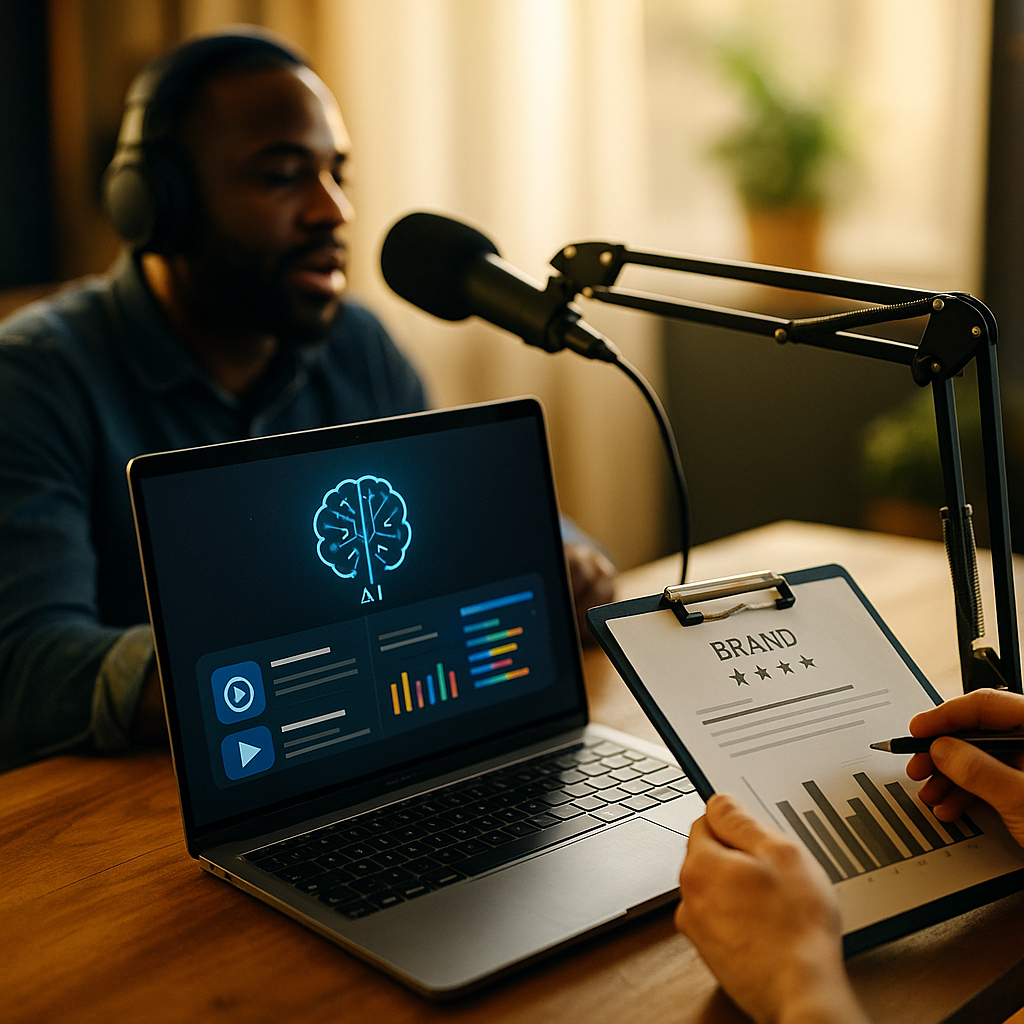
Seventy-two percent of podcast ad impressions could be dynamically personalized within the next two years, according to industry estimates from ad tech vendors racing to own this space. That’s not a rounding error. That’s a wholesale shift in how brands buy audio. AI-powered podcast ad insertion is no longer a novelty pitch from a scrappy startup — it’s becoming the default infrastructure layer for sponsorship-driven audio, and brand marketers who haven’t stress-tested these tools are already behind.
Podcast advertising has always sold itself on intimacy: the host-read endorsement, the parasocial trust, the sense that a creator is talking directly to you. Dynamic ad insertion (DAI) threatens to industrialize that intimacy — or, done well, to scale it without gutting what made it work. The question brand teams need answered isn’t “does this technology exist?” It clearly does. The question is whether the current crop of tools can personalize audio at scale without triggering brand safety incidents, disclosure violations, or listener backlash that erodes the very trust advertisers are paying for.
Why Podcast Ad Insertion Suddenly Matters to Brand Budgets
Podcast ad spend has grown steadily for years, but the buying mechanics stayed stubbornly manual. Host-read spots got recorded once, baked into an episode, and left there — static, untargeted, impossible to update if a promo code expired or a campaign pivoted. Programmatic display solved this problem for banner ads a decade ago. Audio is only catching up now, and AI is the accelerant.
Dynamic audio personalization tools use text-to-speech synthesis, voice cloning (with consent), and listener data signals to insert different ad reads into the same podcast episode based on geography, device, listening platform, or even inferred demographic segment. A listener in Austin might hear a localized restaurant promo; a listener in Denver hears a different one, generated in the host’s own cloned voice, in the same episode, without the host recording a second take.
That’s the pitch. The execution varies wildly by vendor.
The real ROI question isn’t whether AI can insert ads dynamically — it’s whether the personalization actually moves the needle enough to justify the compliance and brand-safety overhead it introduces.
For media buyers, this changes the unit economics of podcast sponsorship. Instead of buying a flat host-read package, you’re buying inventory that can theoretically be segmented like paid social. That’s attractive on paper. It also means brand teams need a new evaluation lens, because the risks aren’t the same risks you manage in programmatic display or paid search.
If your team already runs a formal review process for AI vendors, this is a natural extension of it — see our internal AI sandbox approach for how ops teams pressure-test new martech before committing budget.
What “Personalization at Scale” Actually Means Here
Vendors in this space — think Instreamatic, AdsWizz (owned by SXM Media), and Acast’s dynamic insertion layer — generally offer some combination of the following capabilities:
- Geo and device targeting: swapping ad copy based on listener location or app environment, the most mature and least controversial use case.
- Synthetic voice reads: AI-generated audio that mimics a host’s cadence to insert new copy without a studio session.
- Contextual triggers: ad selection based on episode topic, sentiment, or even real-time news events.
- Frequency and sequencing logic: serving different creative to the same listener across episodes to avoid fatigue.
Each layer adds a new evaluation criterion. Geo-targeting is low-risk and largely solved. Synthetic voice cloning is where things get complicated fast, both legally and reputationally.
Ask any vendor demoing voice synthesis a simple question: what happens if the host leaves the show, or revokes consent for their voice model? Most vendors don’t have a clean answer yet.
The Disclosure Problem Nobody’s Fully Solved
The FTC has been explicit that endorsements — including podcast ad reads — must be clearly and conspicuously disclosed, and that applies regardless of whether a human or an AI voice model delivers the read (see the FTC’s endorsement guidance). But dynamic insertion complicates disclosure in a way static ads never did. If every listener hears a different ad, who’s auditing that every version carries proper disclosure language? Manual QA doesn’t scale to thousands of personalized variants per episode.
This is the same governance gap agencies are wrestling with in AI creative-scoring tools for compliance — the tooling has to catch violations before they ship, not after a listener complaint or regulator inquiry.
Evaluating Vendors: The Checklist Brand Teams Actually Need
Most vendor pitch decks lead with reach and personalization lift. Skip past that. Here’s what actually determines whether a dynamic audio tool is safe to put brand dollars behind.
- Consent architecture for voice cloning. Does the vendor have documented, revocable consent agreements with every host whose voice gets synthesized? Ask for the contract language, not a verbal assurance.
- Disclosure automation. Can the platform guarantee that every dynamically inserted variant includes required sponsorship disclosure, and can it produce an audit log proving it?
- Brand safety context matching. Does contextual targeting account for episode sentiment, so a beer ad doesn’t insert next to a segment about addiction recovery?
- Attribution transparency. Can the vendor tie a specific ad variant to a specific conversion event, or is measurement still bucketed at the show level?
- Latency and QA at scale. How many variants can be generated and reviewed within your campaign launch window, and what’s the human-in-the-loop checkpoint before anything goes live?
Notice none of these are about audio quality. That’s table stakes now. The differentiation is in governance, and that’s exactly where most vendors are thinnest. If you’ve built out a formal vendor scoring rubric for other AI martech, this checklist should slot directly into it — the same way teams evaluate AI insertion order generators for risk before rollout.
Does Personalized Audio Actually Perform Better?
Here’s the uncomfortable question agencies don’t love asking out loud: is the lift real, or is it a rounding error dressed up in AI marketing language?
Early data from platforms like AdsWizz suggests geo and contextual targeting can lift completion rates and recall versus static host-reads, particularly for local and multi-market advertisers. That tracks with broader digital ad personalization research from firms like eMarketer, which has long shown relevance-driven creative outperforming generic reach.
But synthetic voice reads are a different story. Listener trust research on podcasts consistently shows that authenticity — the sense that a real, known host genuinely uses or believes in a product — drives conversion more than production polish. If listeners can tell a read is synthetic, or worse, feel deceived when they find out, you don’t just lose lift. You risk damaging the host relationship and the brand’s standing in that community simultaneously.
Personalization only pays off if listeners can’t feel the seams. The moment an audience suspects a host “read” was synthetic, the trust premium that made podcast advertising valuable in the first place evaporates.
That’s why the smartest brand teams aren’t defaulting to full voice synthesis. Many are starting with geo and contextual DAI — the lower-risk, higher-confidence layer — and treating synthetic host voice as a pilot category with tight guardrails, not a blanket replacement for studio recording.
Measurement Still Lags the Hype
One structural problem: podcast attribution has always been weaker than display or social. Promo codes and vanity URLs are blunt instruments. Dynamic insertion, in theory, should make attribution sharper because you know exactly which variant a listener heard. In practice, most platforms haven’t connected that variant-level data cleanly into brand CRM or CDP systems.
This is the same fragmentation problem showing up across the media stack — see how teams are approaching creator attribution stacks tying influencer touchpoints back to CRM revenue. Podcast DAI vendors need to solve the same problem, and most are a step or two behind where paid social attribution already sits.
Ask any vendor for a live demo of variant-to-conversion tracking, not a slide. If they can’t show it, budget accordingly — treat it as awareness spend, not a performance channel, until the data pipe is proven.
Where This Fits in the Broader Martech Stack
Dynamic audio insertion doesn’t live in isolation. It needs to talk to your DSP, your CDP for audience segments, and increasingly, your compliance layer for AI-generated content. Teams already auditing their stack for agentic function readiness should add podcast DAI vendors to that same audit cycle rather than treating audio as a siloed buy.
Cost is another factor worth modeling honestly. Dynamic insertion at scale requires real-time inference for voice generation, and that infrastructure isn’t free — margins on cheap CPM podcast inventory can get eaten fast if the personalization engine underneath is expensive to run. It’s worth understanding how infrastructure costs trickle down into vendor pricing, similar to the inference-cost conversations happening around ad chip economics in programmatic more broadly.
A Practical Rollout Path
If you’re a brand or agency considering dynamic podcast ad insertion, don’t start with a full-network rollout. Start narrow.
- Pilot geo/contextual DAI with one or two shows where you already have a strong host relationship and clear performance baselines.
- Require a disclosure audit log as a contract deliverable, not an optional add-on.
- Hold synthetic voice reads to a separate approval tier — legal and the host’s team should both sign off before launch.
- Set a 90-day measurement window comparing DAI variants against your existing static host-read benchmark, using consistent promo codes so attribution stays comparable.
Treat the first campaign as a controlled experiment, not a channel migration. The vendors selling full-scale personalization “today” are, in most cases, still building the governance tooling to make it safe at scale.
Podcast advertising earned its premium through trust, and that trust is exactly what’s on the line as insertion gets automated. Run a narrow, well-governed pilot before committing meaningful sponsorship budget, and make disclosure automation a non-negotiable line item in every vendor contract you sign.
FAQs
What is AI-powered podcast ad insertion?
It’s the use of artificial intelligence, including text-to-speech synthesis and data-driven targeting, to dynamically swap ad content within a podcast episode based on listener location, device, or context, rather than relying on a single static host-read recording.
Is synthetic voice cloning for podcast ads legal?
It can be, provided the platform has documented, revocable consent from the host whose voice is being used and the resulting ads carry clear sponsorship disclosure. Brands should require proof of consent agreements before running synthetic voice campaigns.
Does dynamic ad insertion actually improve podcast ad performance?
Geo and contextual targeting generally show measurable lift in completion rates and recall. Synthetic voice reads are less proven and carry higher risk if listeners detect the audio isn’t authentic, which can undermine the trust that makes podcast advertising effective.
How do brands ensure FTC compliance with dynamically inserted ads?
Require vendors to demonstrate automated disclosure insertion across every ad variant, with an audit log proving compliance at scale, since manual review isn’t feasible when thousands of personalized versions are generated per campaign.
What’s the biggest risk with podcast ad personalization tools?
The combination of unclear consent for voice cloning and inconsistent disclosure enforcement across variants. Both create legal exposure and reputational risk that can outweigh any personalization-driven performance lift.
Top Influencer Marketing Agencies
The leading agencies shaping influencer marketing in 2026
Agencies ranked by campaign performance, client diversity, platform expertise, proven ROI, industry recognition, and client satisfaction. Assessed through verified case studies, reviews, and industry consultations.
Moburst

-
2

The Shelf
Boutique Beauty & Lifestyle Influencer AgencyA data-driven boutique agency specializing exclusively in beauty, wellness, and lifestyle influencer campaigns on Instagram and TikTok. Best for brands already focused on the beauty/personal care space that need curated, aesthetic-driven content.Clients: Pepsi, The Honest Company, Hims, Elf Cosmetics, Pure LeafVisit The Shelf → -
3

Audiencly
Niche Gaming & Esports Influencer AgencyA specialized agency focused exclusively on gaming and esports creators on YouTube, Twitch, and TikTok. Ideal if your campaign is 100% gaming-focused — from game launches to hardware and esports events.Clients: Epic Games, NordVPN, Ubisoft, Wargaming, Tencent GamesVisit Audiencly → -
4

Viral Nation
Global Influencer Marketing & Talent AgencyA dual talent management and marketing agency with proprietary brand safety tools and a global creator network spanning nano-influencers to celebrities across all major platforms.Clients: Meta, Activision Blizzard, Energizer, Aston Martin, WalmartVisit Viral Nation → -
5

The Influencer Marketing Factory
TikTok, Instagram & YouTube CampaignsA full-service agency with strong TikTok expertise, offering end-to-end campaign management from influencer discovery through performance reporting with a focus on platform-native content.Clients: Google, Snapchat, Universal Music, Bumble, YelpVisit TIMF → -
6

NeoReach
Enterprise Analytics & Influencer CampaignsAn enterprise-focused agency combining managed campaigns with a powerful self-service data platform for influencer search, audience analytics, and attribution modeling.Clients: Amazon, Airbnb, Netflix, Honda, The New York TimesVisit NeoReach → -
7

Ubiquitous
Creator-First Marketing PlatformA tech-driven platform combining self-service tools with managed campaign options, emphasizing speed and scalability for brands managing multiple influencer relationships.Clients: Lyft, Disney, Target, American Eagle, NetflixVisit Ubiquitous → -
8

Obviously
Scalable Enterprise Influencer CampaignsA tech-enabled agency built for high-volume campaigns, coordinating hundreds of creators simultaneously with end-to-end logistics, content rights management, and product seeding.Clients: Google, Ulta Beauty, Converse, AmazonVisit Obviously →