


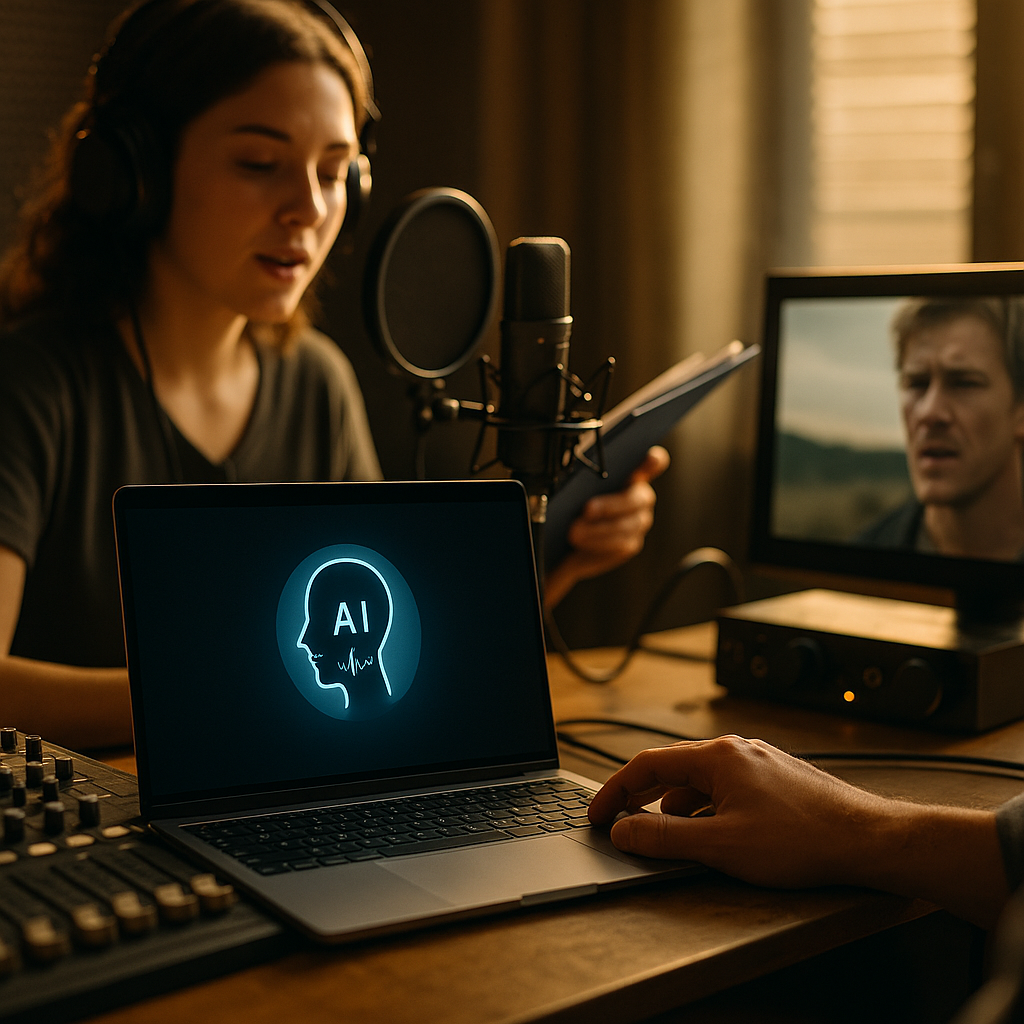
A 60-second creator video dubbed into eight languages through a traditional studio can run $8,000 to $15,000 and take three weeks. Run the same job through an AI voiceover localization pipeline and you’re looking at a few hundred dollars and same-day turnaround. That gap is why every brand scaling creator content internationally is now asking the same question: does AI-enhanced voiceover localization actually hold up against human dubbing, or are you just trading quality for speed?
The Real Cost Breakdown Nobody Shows You
Traditional dubbing studios price by the minute, not the project, and the minute rate hides a lot. A single language pass typically includes a native voice actor, a studio engineer, a translator or localization specialist, and a QA reviewer. Industry rates for professional dubbing generally fall between $100 and $300 per finished minute per language, depending on the market and talent tier. Multiply that across ten languages for a creator campaign with twenty video assets, and you’ve built a six-figure line item before you’ve spent a dollar on media.
AI voiceover localization platforms like ElevenLabs, HeyGen, and Papercup collapse most of that cost structure. Pricing models vary, but many charge per character, per minute, or via monthly subscription tiers that scale with volume. A brand localizing the same twenty-asset campaign into ten languages might spend $2,000 to $5,000 total using AI tools, plus a modest human review pass. That’s a cost reduction of 70-85% in most side-by-side comparisons agencies have run internally.
The math isn’t close. Brands running high-volume creator localization programs are reporting cost reductions of 70-85% when switching from studio dubbing to AI-enhanced voiceover, with turnaround dropping from weeks to hours.
But cost per minute is the wrong metric if the output damages brand trust in a new market. Let’s get into where the savings actually come from, and where they quietly disappear.
Where AI Voiceover Genuinely Wins
Speed is the obvious advantage, but it’s not the only one. Here’s where AI localization outperforms traditional dubbing on more than just price:
- Volume scalability: AI tools handle hundreds of short-form videos in parallel. Studios book talent by the hour and can’t compress a ten-language batch into a single afternoon.
- Iteration speed: Creator content changes fast. If a script needs a last-minute edit, AI regenerates the voiceover in minutes. A studio re-book means re-scheduling talent, sometimes days later.
- Voice cloning consistency: Tools like ElevenLabs and HeyGen can clone a creator’s own voice and apply it across languages, preserving brand identity in a way a hired voice actor never fully replicates.
- Lip-sync automation: Platforms increasingly bundle AI dubbing with automated lip-sync adjustment, something that used to require separate, expensive post-production work.
For high-frequency, lower-stakes content — UGC-style ads, product demo cutdowns, TikTok and Reels localization — AI voiceover is now good enough that most viewers won’t clock the difference. According to eMarketer, short-form video consumption continues to climb globally, and brands localizing at that volume simply cannot afford studio pricing at scale.
Where Human Dubbing Still Earns Its Premium
Here’s the part vendors selling AI dubbing platforms don’t lead with: emotional nuance is still hard. A grieving scene, a comedic beat, a culturally specific idiom — these require interpretive judgment that current AI models approximate but don’t consistently nail. Human voice actors bring performance choices: pacing shifts, breath, emphasis on the right syllable in a joke. AI-generated voiceover has improved dramatically, but reviewers still flag a flatness in emotionally complex content.
There’s also the cultural adaptation problem, which is separate from translation accuracy. A phrase that’s perfectly polite in Spanish-Spain can land oddly in Mexican Spanish. Human localization specialists catch these nuances during the dubbing process because they’re native to the target culture, not just fluent in the target language. AI tools are getting better at this through region-specific voice models, but errors still slip through, especially in humor, slang, and anything touching religion or politics.
This is precisely the risk our earlier piece on AI localization QA tools covers in depth: the cost savings evaporate fast if a mistranslated joke goes viral for the wrong reasons in a market you were trying to enter carefully.
For flagship brand campaigns, product launches, or anything with legal or regulatory sensitivity (pharma, finance, alcohol), most agencies still recommend a human-in-the-loop dubbing process, even if AI generates the first pass.
A Hybrid Model Is Where the Budget Actually Lands
Almost nobody running a serious localization program is choosing purely AI or purely human anymore. The operational reality looks more like a tiered system:
- Tier 1 — High volume, low risk: UGC-style creator content, product cutdowns, organic social. Fully AI-generated voiceover, no human review beyond a quick QA pass.
- Tier 2 — Mid-tier paid media: AI-generated first pass, reviewed and lightly edited by a native-speaking freelancer for tone and cultural fit.
- Tier 3 — Flagship campaigns and regulated categories: Traditional studio dubbing, or AI-assisted with full human performance direction.
This tiered approach is where the real ROI shows up. You’re not trying to force every asset through the same pipeline. You’re matching production method to risk level and reach, which is the same operational logic marketing teams already apply to repeatable media spend decisions elsewhere in the funnel.
Brands that skip this tiering and go all-in on AI dubbing for everything tend to get burned exactly once, usually on a flagship launch, before they build the tiered model anyway. Better to design it upfront.
What About Compliance and Voice Rights?
This is the part legal teams should be asking about before finance signs off on the cost savings. Voice cloning raises consent questions that traditional dubbing never had to deal with. If you’re cloning a creator’s voice to generate localized versions of their content, you need explicit contractual rights to do so, in writing, covering every target market and use case.
The FTC has signaled increased scrutiny of AI-generated voice content, particularly around disclosure and consent, and the EU’s approach under GDPR-adjacent frameworks treats voice as biometric data in some contexts. That means your creator contracts need updated language specifically addressing AI voice replication and localization rights, not just generic “content usage” clauses written before this technology existed.
Agencies that skipped this step have had to pull entire campaigns mid-flight because a creator’s management team objected to unauthorized voice cloning. That’s a far more expensive mistake than any studio dubbing invoice.
Brand safety diligence matters here too. Just as marketing teams now audit AI-generated creative for brand voice drift, localized voiceover needs its own review layer to confirm the cloned or synthetic voice still matches brand tone across every market, not just the source language.
Choosing a Vendor: What Actually Matters
Not all AI dubbing platforms are built the same, and the differences matter more than the marketing pages suggest. When evaluating vendors, look past the demo reel and ask about:
- Language and dialect coverage: Some platforms handle major languages well but stumble on regional dialects that matter for your target markets.
- Latency and turnaround at scale: A tool that’s fast for one video might bottleneck badly across a 200-asset batch. Ask for real throughput numbers, not best-case demos.
- Emotional range controls: Can you adjust tone, pacing, and emphasis, or is the output a single flat setting?
- Data handling and voice storage policies: Where is the cloned voice data stored, and who else can access it?
- Integration with existing workflows: Does it plug into your DAM or creative pipeline, or does it require manual file shuffling that eats into the time savings?
This kind of structured vendor comparison is similar to how brand teams already evaluate synthetic media platforms, as we broke down in our brand-safety comparison of Synthesia, HeyGen, and Colossyan. The same due diligence framework applies directly to voiceover-specific tools. Don’t take a vendor’s accuracy claims at face value either — run your own internal sandbox test with real campaign scripts before committing budget.
So, Is It Actually Cheaper?
Yes, dramatically, for the majority of creator content brands localize today. But “cheaper” only matters if the output performs. A flat, culturally tone-deaf voiceover that tanks engagement in a new market isn’t a savings, it’s a sunk cost with extra steps. The brands getting this right treat AI voiceover localization as the default for high-volume, lower-risk content, and reserve human studio dubbing (or heavy human review) for anything carrying real brand or regulatory weight. Model your budget around that tiered structure, not a blanket switch, and the ROI case builds itself.
FAQs
How much cheaper is AI voiceover localization than traditional dubbing?
Most brands report cost reductions between 70% and 85% when moving from traditional studio dubbing to AI-enhanced voiceover, particularly at higher volumes across multiple languages.
Can AI voiceover match the emotional quality of human dubbing?
It’s close for straightforward, informational, or promotional content, but still lags on emotionally complex or comedic material where pacing and inflection carry meaning that current models don’t always capture.
Do I need creator consent to clone their voice for localization?
Yes. Voice cloning requires explicit contractual consent covering AI replication and every target market you plan to localize into. Generic content usage clauses typically don’t cover this.
Which content types are safest to fully automate with AI voiceover?
High-volume, lower-risk formats like UGC-style ads, product demo cutdowns, and short-form social content are the safest candidates for full AI automation with minimal human review.
What’s the biggest hidden risk in switching to AI dubbing?
Cultural mistranslation and tone mismatches that a native human reviewer would catch but an AI model might miss, especially around humor, slang, and region-specific sensitivities.
FAQs
How much cheaper is AI voiceover localization than traditional dubbing?
Most brands report cost reductions between 70% and 85% when moving from traditional studio dubbing to AI-enhanced voiceover, particularly at higher volumes across multiple languages.
Can AI voiceover match the emotional quality of human dubbing?
It’s close for straightforward, informational, or promotional content, but still lags on emotionally complex or comedic material where pacing and inflection carry meaning that current models don’t always capture.
Do I need creator consent to clone their voice for localization?
Yes. Voice cloning requires explicit contractual consent covering AI replication and every target market you plan to localize into. Generic content usage clauses typically don’t cover this.
Which content types are safest to fully automate with AI voiceover?
High-volume, lower-risk formats like UGC-style ads, product demo cutdowns, and short-form social content are the safest candidates for full AI automation with minimal human review.
What’s the biggest hidden risk in switching to AI dubbing?
Cultural mistranslation and tone mismatches that a native human reviewer would catch but an AI model might miss, especially around humor, slang, and region-specific sensitivities.
Top Influencer Marketing Agencies
The leading agencies shaping influencer marketing in 2026
Agencies ranked by campaign performance, client diversity, platform expertise, proven ROI, industry recognition, and client satisfaction. Assessed through verified case studies, reviews, and industry consultations.
Moburst

-
2

The Shelf
Boutique Beauty & Lifestyle Influencer AgencyA data-driven boutique agency specializing exclusively in beauty, wellness, and lifestyle influencer campaigns on Instagram and TikTok. Best for brands already focused on the beauty/personal care space that need curated, aesthetic-driven content.Clients: Pepsi, The Honest Company, Hims, Elf Cosmetics, Pure LeafVisit The Shelf → -
3

Audiencly
Niche Gaming & Esports Influencer AgencyA specialized agency focused exclusively on gaming and esports creators on YouTube, Twitch, and TikTok. Ideal if your campaign is 100% gaming-focused — from game launches to hardware and esports events.Clients: Epic Games, NordVPN, Ubisoft, Wargaming, Tencent GamesVisit Audiencly → -
4

Viral Nation
Global Influencer Marketing & Talent AgencyA dual talent management and marketing agency with proprietary brand safety tools and a global creator network spanning nano-influencers to celebrities across all major platforms.Clients: Meta, Activision Blizzard, Energizer, Aston Martin, WalmartVisit Viral Nation → -
5

The Influencer Marketing Factory
TikTok, Instagram & YouTube CampaignsA full-service agency with strong TikTok expertise, offering end-to-end campaign management from influencer discovery through performance reporting with a focus on platform-native content.Clients: Google, Snapchat, Universal Music, Bumble, YelpVisit TIMF → -
6

NeoReach
Enterprise Analytics & Influencer CampaignsAn enterprise-focused agency combining managed campaigns with a powerful self-service data platform for influencer search, audience analytics, and attribution modeling.Clients: Amazon, Airbnb, Netflix, Honda, The New York TimesVisit NeoReach → -
7

Ubiquitous
Creator-First Marketing PlatformA tech-driven platform combining self-service tools with managed campaign options, emphasizing speed and scalability for brands managing multiple influencer relationships.Clients: Lyft, Disney, Target, American Eagle, NetflixVisit Ubiquitous → -
8

Obviously
Scalable Enterprise Influencer CampaignsA tech-enabled agency built for high-volume campaigns, coordinating hundreds of creators simultaneously with end-to-end logistics, content rights management, and product seeding.Clients: Google, Ulta Beauty, Converse, AmazonVisit Obviously →