


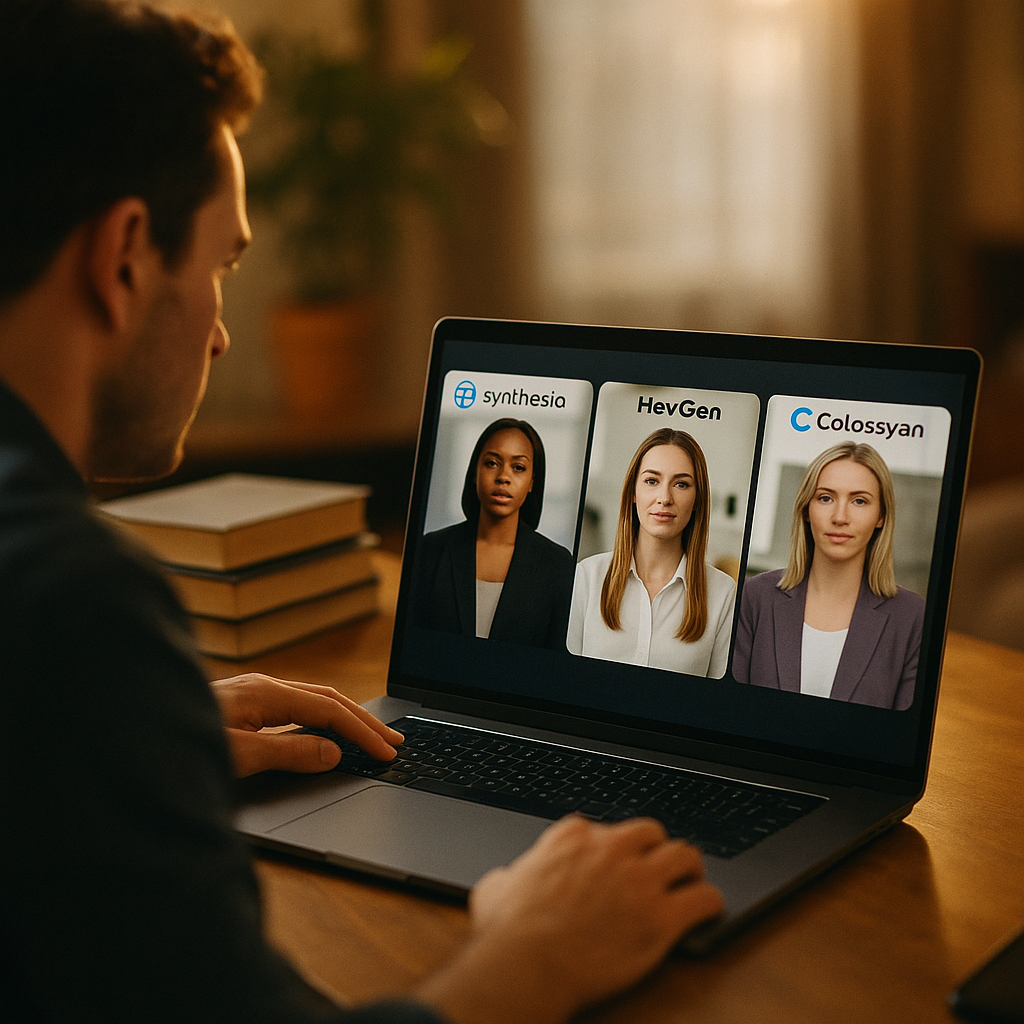
Sixty-eight percent of marketers now say they’ve used AI-generated video in a live campaign, according to HubSpot’s annual marketing trends research. Yet most brand teams still pick their AI video generation vendor based on a slick demo reel, not a compliance audit. That’s a costly mistake when your avatar is fronting a product claim in front of regulators, retailers, and a skeptical FTC.
Synthesia, HeyGen, and Colossyan have become the default shortlist for avatar-led product demos. All three generate photorealistic or stylized talking-head video from a script, no camera crew required. But they differ sharply on brand safety controls, licensing terms, and what they actually cost once you scale past the free tier. Here’s how they stack up.
Why Avatar Video Suddenly Matters for Product Marketing
Product demo videos used to require a studio, a presenter, a script supervisor, and a week of scheduling. Now a PMM can generate a localized 90-second walkthrough before lunch. That speed is the entire pitch. It’s also the risk.
When a synthetic presenter delivers a product claim, your legal team inherits a new question: who’s liable if the avatar says something inaccurate, off-brand, or legally shaky? Unlike a human spokesperson, an AI avatar can be cloned, repurposed, or deepfaked by someone outside your organization if your platform’s consent and watermarking controls are weak. This is precisely why brand safety, not just render quality, should be the first filter in your vendor evaluation, not an afterthought bolted on after the contract is signed.
The real cost of avatar video isn’t the subscription fee. It’s the legal exposure if brand-safety controls fail after the content is already live on a retailer’s page or a paid social feed.
Synthesia: Enterprise Guardrails, Enterprise Price Tag
Synthesia has positioned itself as the enterprise-safe choice, and the pricing reflects that. Its Enterprise tier includes custom avatars built from consented actor footage, SOC 2 Type II compliance, and granular workspace permissions that let brand teams lock down which templates, backgrounds, and scripts junior team members can touch. For a global CPG brand running demos across a dozen markets, that governance layer is worth the premium.
Cost-wise, Synthesia’s Starter plan runs monthly for a limited number of video minutes, but serious brand use pushes teams into Creator or Enterprise tiers, where per-minute costs drop but the seat-based licensing adds up fast across regional marketing teams. The brand safety upside: Synthesia requires identity verification for custom avatar creation and has stayed conservative with content moderation, refusing generations tied to political figures, medical claims without disclaimers, and financial promises. If your compliance team has veto power over vendor selection, this conservatism is a feature, not a limitation.
Where Synthesia lags is speed of iteration. Rendering can feel sluggish compared to HeyGen, and the avatar library, while polished, skews corporate. If your demo needs a more casual, creator-style presenter, you’ll notice the gap.
HeyGen: Fast, Flexible, and a Little Looser on Guardrails
HeyGen has become the darling of performance marketing teams because it’s fast, cheap at entry level, and integrates cleanly with tools agencies already use for dynamic catalog video ads. Its avatar cloning feature is genuinely impressive: upload two minutes of footage and get a usable digital twin within the hour.
That speed comes with a trade-off. HeyGen’s content moderation has historically been more permissive than Synthesia’s, and reports of near-miss impersonation attempts (avatars resembling public figures without clear consent chains) have circulated in creator and marketing forums. For a brand running regulated-category demos, healthcare, finance, alcohol, that laxity is a liability you need to underwrite with your own legal review process before every publish.
On cost, HeyGen is the most accessible of the three. Its Creator and Team plans are priced well below Synthesia’s equivalent tiers, and the per-video math looks attractive for high-volume content operations, think hundreds of localized SKU demos a quarter. But budget for the hidden cost: more internal legal and compliance review hours to compensate for looser platform-side guardrails. That’s a classic build-vs-buy tradeoff worth mapping against your martech stack audit before committing budget.
Where HeyGen Actually Wins
- Fastest turnaround from script to rendered video, useful for rapid A/B testing of demo scripts
- Strong API access for teams building automated, templated video pipelines at scale
- Wide language and accent library, helpful for multi-market product launches
Colossyan: The Compliance-First Middle Ground
Colossyan doesn’t get the same buzz as its two rivals, but for brand teams in regulated industries, it deserves a longer look. It leans heavily into workplace training and internal comms use cases, which means its content moderation defaults are built around HR and compliance sensitivities: no gratuitous claims, structured disclaimers, and built-in accessibility features like auto-generated captions and multilingual voiceover matching.
For product demos specifically, Colossyan’s strength is consistency, not flash. Its avatars look slightly less photorealistic than Synthesia’s top tier, but the platform gives brand teams more granular control over tone, pacing, and script structure, which matters when your legal team needs demo language to match approved claims language exactly, word for word, market by market.
Pricing sits between the other two: cheaper than Synthesia’s enterprise tier, more expensive than HeyGen’s entry plans, but with fewer surprise compliance costs downstream. If your organization already treats influencer and creator content through a strict claims-review lens, similar to how you’d evaluate brand-safety scanning tools for creator content, Colossyan’s workflow will feel familiar.
Cost Comparison: What You’re Actually Paying For
Sticker price is the wrong metric. The real comparison is cost-per-compliant-video, factoring in review cycles, re-renders, and legal escalation risk. Here’s the practical breakdown:
- Synthesia: Highest upfront cost, lowest downstream compliance risk. Best for regulated industries and global brand teams with strict governance needs.
- HeyGen: Lowest upfront cost, highest downstream review burden. Best for high-volume, lower-risk content like internal training or unregulated product categories.
- Colossyan: Mid-tier cost, mid-tier flexibility, strongest built-in compliance scaffolding for teams without a dedicated legal review pipeline.
None of these platforms publish fully transparent enterprise pricing, so expect a sales call before you get real numbers. Budget for negotiation room, especially if you’re bundling avatar video licenses with existing seats in your broader AI budget allocation.
Brand Safety Checklist Before You Sign
Don’t take a vendor’s brand-safety claims at face value. Verify them the way you’d verify any AI vendor SLA, with documentation, not marketing copy. Ask specifically about:
- Consent chain documentation for stock and custom avatars, including how likeness rights are licensed and renewed
- Content moderation policy for regulated claims (health, finance, alcohol, children’s products)
- Watermarking or provenance metadata to prove content originated from your account, not a bad actor’s clone
- Data residency and training-data policies, particularly if you operate under GDPR or similar regimes
- Escalation process if an avatar is used to generate impersonation content outside your organization
This is the same due-diligence muscle you’d apply when reviewing AI vendor uptime SLAs, just pointed at reputational risk instead of downtime risk. Regulators are watching this space closely too; the FTC has already signaled interest in synthetic media disclosure requirements, and the UK’s ICO has published guidance touching on AI-generated personal likeness data.
Which One Should Your Team Actually Pick?
If you’re a global enterprise brand with legal sign-off requirements and multi-market compliance obligations, Synthesia’s governance tools justify the premium. If you’re running high-volume, lower-stakes content like internal enablement or unregulated SKU demos, HeyGen’s speed and price win. If you sit in the messy middle, regulated but resource-constrained, Colossyan’s built-in compliance scaffolding does some of the legal team’s job for you, which is worth real money in saved review hours.
Don’t evaluate these tools in isolation from the rest of your content operation, either. Avatar video increasingly feeds into paid media inventory, which means brand safety failures don’t stay contained to organic posts. A flawed demo can end up amplified with real ad spend behind it before anyone catches the error.
FAQs
Frequently Asked Questions
Which AI video platform is safest for regulated industries?
Synthesia currently offers the strongest built-in governance for regulated categories like healthcare, finance, and consumer packaged goods, thanks to SOC 2 compliance, identity verification for custom avatars, and conservative content moderation defaults.
Is HeyGen safe to use for brand product demos?
HeyGen is usable for product demos, but brand teams should add their own legal review layer, particularly for regulated claims, since its content moderation has historically been more permissive than Synthesia’s or Colossyan’s.
How much does avatar-led video actually cost at scale?
List pricing is only part of the picture. Factor in review cycles, re-renders after compliance flags, and legal escalation time. HeyGen tends to have the lowest sticker price but higher downstream review costs; Synthesia is the inverse.
Do AI avatars require model consent and licensing?
Reputable platforms require documented consent for any custom avatar built from real footage. Always request consent chain documentation before deploying a custom avatar in paid or public-facing campaigns.
Can competitors clone our brand’s AI avatar?
Platforms with strong provenance and watermarking controls make unauthorized cloning harder to execute and easier to prove. Ask vendors directly about watermarking metadata and their escalation process for reported impersonation.
Should avatar video go through the same review process as influencer content?
Yes. Many brand teams already run creator content through claims-review and brand-safety scanning; avatar video should follow the same pipeline, since it carries similar legal exposure around product claims and endorsements.
Next step: Before your next renewal cycle, run all three platforms through your legal team’s claims-review checklist on the same script, then compare cost-per-compliant-video, not list price, to see which vendor actually fits your risk tolerance.
Top Influencer Marketing Agencies
The leading agencies shaping influencer marketing in 2026
Agencies ranked by campaign performance, client diversity, platform expertise, proven ROI, industry recognition, and client satisfaction. Assessed through verified case studies, reviews, and industry consultations.
Moburst

-
2

The Shelf
Boutique Beauty & Lifestyle Influencer AgencyA data-driven boutique agency specializing exclusively in beauty, wellness, and lifestyle influencer campaigns on Instagram and TikTok. Best for brands already focused on the beauty/personal care space that need curated, aesthetic-driven content.Clients: Pepsi, The Honest Company, Hims, Elf Cosmetics, Pure LeafVisit The Shelf → -
3

Audiencly
Niche Gaming & Esports Influencer AgencyA specialized agency focused exclusively on gaming and esports creators on YouTube, Twitch, and TikTok. Ideal if your campaign is 100% gaming-focused — from game launches to hardware and esports events.Clients: Epic Games, NordVPN, Ubisoft, Wargaming, Tencent GamesVisit Audiencly → -
4

Viral Nation
Global Influencer Marketing & Talent AgencyA dual talent management and marketing agency with proprietary brand safety tools and a global creator network spanning nano-influencers to celebrities across all major platforms.Clients: Meta, Activision Blizzard, Energizer, Aston Martin, WalmartVisit Viral Nation → -
5

The Influencer Marketing Factory
TikTok, Instagram & YouTube CampaignsA full-service agency with strong TikTok expertise, offering end-to-end campaign management from influencer discovery through performance reporting with a focus on platform-native content.Clients: Google, Snapchat, Universal Music, Bumble, YelpVisit TIMF → -
6

NeoReach
Enterprise Analytics & Influencer CampaignsAn enterprise-focused agency combining managed campaigns with a powerful self-service data platform for influencer search, audience analytics, and attribution modeling.Clients: Amazon, Airbnb, Netflix, Honda, The New York TimesVisit NeoReach → -
7

Ubiquitous
Creator-First Marketing PlatformA tech-driven platform combining self-service tools with managed campaign options, emphasizing speed and scalability for brands managing multiple influencer relationships.Clients: Lyft, Disney, Target, American Eagle, NetflixVisit Ubiquitous → -
8

Obviously
Scalable Enterprise Influencer CampaignsA tech-enabled agency built for high-volume campaigns, coordinating hundreds of creators simultaneously with end-to-end logistics, content rights management, and product seeding.Clients: Google, Ulta Beauty, Converse, AmazonVisit Obviously →