


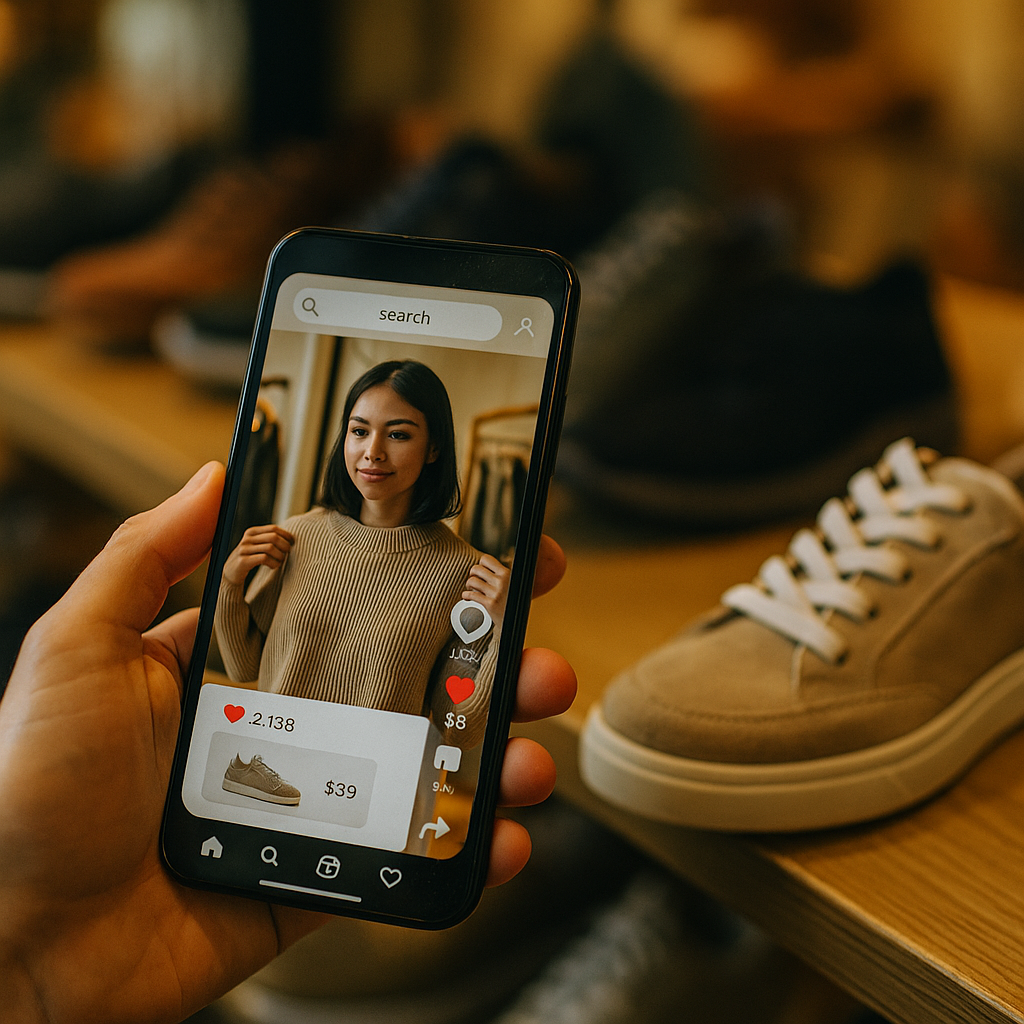
Nearly 40% of Gen Z now opens TikTok or Instagram before Google when researching a purchase, according to data Google itself has acknowledged. Read that again. The social-search discovery shift isn’t a trend piece anymore — it’s a budget reallocation problem sitting on every CMO’s desk right now.
For two decades, marketers built funnels around a simple assumption: search engines handle discovery, social handles engagement, and the two rarely overlap. That assumption is dead. Consumers now treat TikTok and Instagram as primary research tools, not just inspiration feeds, and the implications for budget allocation, content strategy, and attribution are massive.
Why Search Behavior Moved to Social Apps
The mechanics are simple. Typing “best running shoes” into Google returns ten blue links, a few ads, and maybe a shopping carousel. Typing the same query into TikTok returns real people running in the shoes, comparing them side-by-side, showing the return process when they didn’t fit. One format is theoretical. The other is proof.
Consumers aren’t abandoning search intent. They’re relocating it to platforms that answer with demonstration instead of description. That’s a critical distinction for brand strategists to internalize: this isn’t about awareness content getting more views. It’s about bottom-funnel research behavior migrating to entirely new environments — ones your SEO team probably doesn’t own.
Social platforms haven’t just added search features. They’ve become the default research layer for entire categories — beauty, food, travel, home goods, tech accessories — where visual proof beats written claims every time.
Instagram’s continued investment in keyword-searchable captions and TikTok’s search-driven “TikTok Made Me Buy It” phenomenon aren’t accidents. Both platforms have watched users treat hashtags and captions like search queries for years and built product accordingly. TikTok’s own advertising resources at ads.tiktok.com now position search ads as a core discovery product, not an afterthought.
The Funnel Isn’t Linear Anymore — It’s Looped
Traditional funnel models (awareness, consideration, conversion) assumed a straight line. Social-search behavior breaks that line into a loop. A user sees a product in a creator’s video, searches the brand name on Instagram, reads comments for real opinions, checks TikTok for more reviews, then circles back to the original video to finally tap “shop now.” Discovery and validation now happen in the same session, often on the same app, sometimes in under three minutes.
This isn’t a new phenomenon in isolation — it echoes what we covered in how AI discovery and creators are reshaping the funnel. But social search adds a distinct wrinkle: it’s not an AI engine summarizing the web. It’s peer-generated content acting as a live search index, ranked by relevance, recency, and engagement rather than domain authority.
Brands that still measure success by top-of-funnel reach are missing where the real decision-making happens: in the comments section, in the search results page of an app, in the fourth video a user watches before deciding to buy.
What This Means for Comments and UGC
Comments sections have quietly become the new reviews page. Shoppers scroll past the caption straight to “does this actually work” replies. Brands that ignore comment moderation or fail to seed authentic responses are leaving purchase-decision real estate wide open to competitors, or worse, to negative sentiment that goes unanswered.
This is exactly why vetting and testing creator partners matters more than ever — a single low-trust creator whose comments fill with skepticism can tank a product’s social-search standing before the ad campaign even finishes.
Rebuilding Measurement Around Search-Style Intent
Marketing teams optimizing for reach and impressions are optimizing for the wrong outcome. Social search rewards specificity: does your content answer a query someone would actually type? “How does this foundation look on oily skin” beats a polished thirty-second brand film every time, because it mirrors real search intent rather than broadcast messaging.
This is a fundamental shift in creative brief-writing. Instead of asking creators for “brand awareness content,” briefs need to target actual research queries: comparisons, use-cases, objections, alternatives. Some agencies are now building content calendars directly off TikTok’s search suggestion data, treating it like keyword research for a blog.
Attribution gets messier here, not cleaner. A user might search on TikTok, click through to a retailer’s app, and buy without ever touching a trackable link. This is part of why retail media data is replacing reach as the top creator KPI — because platform-reported metrics increasingly fail to capture where the decision actually happened.
If your attribution model can’t account for a purchase that started as a TikTok search and ended in a retail app three platforms later, you’re not measuring the funnel — you’re measuring a fraction of it.
Search-First Content Isn’t the Same as Viral Content
Here’s where a lot of brands get it wrong. They see the discovery shift and respond by chasing more viral hooks, more trending audio, more attention-bait. But social search rewards durability and specificity, not virality. A comparison video that answers “X vs Y” can keep generating discovery traffic for months, long after a viral moment has faded from anyone’s feed.
Think of it as evergreen SEO content, just filmed instead of written. The best-performing “social search” videos read almost like structured how-to content: clear titles, spoken keywords in the first three seconds, on-screen text matching the caption. Creators who understand this are producing what amounts to video landing pages.
This isn’t just theory. Sprout Social’s own research on platform behavior (see sproutsocial.com) has repeatedly shown that saves and shares — not likes — correlate most strongly with purchase-intent content, because saved content functions as a personal research library users return to before buying.
Impulse Buying and Deliberate Research Are Colliding
It’s worth noting the tension here: social commerce data shows a huge share of influencer-driven purchases are impulsive, not researched. Our own reporting found that 42% of influencer purchases are impulsive, which seems to contradict the “social search as research tool” narrative.
It doesn’t, actually. Both behaviors coexist on the same platforms, often for the same user in the same week. Low-consideration purchases (a $15 phone case) stay impulsive. High-consideration purchases (skincare, electronics, travel) trigger the research loop. Smart brands segment their content strategy accordingly instead of assuming one creative approach serves both behaviors.
What Brands Should Actually Do About It
- Audit your content for query-matching. Pull the top ten questions customers ask in DMs, reviews, and support tickets. Brief creators to answer those questions directly, on camera, in the first five seconds.
- Invest in comment strategy, not just caption strategy. Assign someone to seed and moderate comments the way you’d manage a review platform.
- Stop measuring in isolation. Combine platform analytics with retail media and site search data to see the full loop, not just the first touch.
- Test creators across multiple cycles, not single campaigns, since search-style content compounds in discoverability over time. This is the core argument behind multi-cycle creator testing outperforming rate-cutting as a budget strategy.
- Treat platform search ads as a discovery channel, not a retargeting afterthought. Both Meta and TikTok now support keyword-adjacent targeting that mimics traditional SEM logic.
None of this requires abandoning traditional search or paid social. It requires acknowledging that the boundary between “search marketing” and “social marketing” has effectively dissolved. Teams still operating in separate silos, separate budgets, separate KPIs, are structurally behind the way consumers actually behave.
There’s also a compliance dimension brands can’t ignore. When creator content functions as de facto product research, disclosure and accuracy obligations tighten. The FTC’s endorsement guidance already applies to this content; regulators are increasingly scrutinizing comparison and review-style posts precisely because they carry more purchase influence than a standard ad unit. Brands should treat search-style creator content with the same legal review rigor as paid media, not less.
Google itself has responded by pushing more visual, short-form answers into its own search results, a tacit admission that behavior has shifted. Google’s own guidance on search and discovery best practices increasingly references video content as a ranking factor, further blurring the line between “SEO” and “social.”
The Takeaway
Stop asking whether social search will affect your funnel. It already has. The brands winning right now are the ones auditing their creator briefs for search intent, tightening comment moderation, and building attribution models that follow the loop instead of the line.
FAQs
What is social-search discovery in marketing?
Social-search discovery refers to consumers using platforms like TikTok and Instagram as primary research tools for product decisions, searching for reviews, comparisons, and demonstrations instead of relying solely on Google or traditional search engines.
How is this shift changing the traditional purchase funnel?
It’s replacing the linear awareness-consideration-conversion model with a looped experience where discovery, validation, and purchase intent happen within the same platform session, often across multiple short videos and comment threads.
Why do comments sections matter more now?
Shoppers treat comment sections as informal review pages, scanning them for authentic opinions before trusting a product claim. Unmoderated or skeptical comment threads can undermine purchase intent even when the content itself performs well.
How should brands measure ROI in a social-search environment?
Brands need to combine platform-level engagement data with retail media and site-search analytics to capture the full discovery loop, since a single attribution touchpoint rarely reflects where the purchase decision actually happened.
Does social search replace the need for traditional SEO?
No. Traditional SEO still matters for many search categories, but brands now need a parallel strategy for platform-native search behavior, particularly for visually driven or high-consideration product categories.
Top Influencer Marketing Agencies
The leading agencies shaping influencer marketing in 2026
Agencies ranked by campaign performance, client diversity, platform expertise, proven ROI, industry recognition, and client satisfaction. Assessed through verified case studies, reviews, and industry consultations.
Moburst

-
2

The Shelf
Boutique Beauty & Lifestyle Influencer AgencyA data-driven boutique agency specializing exclusively in beauty, wellness, and lifestyle influencer campaigns on Instagram and TikTok. Best for brands already focused on the beauty/personal care space that need curated, aesthetic-driven content.Clients: Pepsi, The Honest Company, Hims, Elf Cosmetics, Pure LeafVisit The Shelf → -
3

Audiencly
Niche Gaming & Esports Influencer AgencyA specialized agency focused exclusively on gaming and esports creators on YouTube, Twitch, and TikTok. Ideal if your campaign is 100% gaming-focused — from game launches to hardware and esports events.Clients: Epic Games, NordVPN, Ubisoft, Wargaming, Tencent GamesVisit Audiencly → -
4

Viral Nation
Global Influencer Marketing & Talent AgencyA dual talent management and marketing agency with proprietary brand safety tools and a global creator network spanning nano-influencers to celebrities across all major platforms.Clients: Meta, Activision Blizzard, Energizer, Aston Martin, WalmartVisit Viral Nation → -
5

The Influencer Marketing Factory
TikTok, Instagram & YouTube CampaignsA full-service agency with strong TikTok expertise, offering end-to-end campaign management from influencer discovery through performance reporting with a focus on platform-native content.Clients: Google, Snapchat, Universal Music, Bumble, YelpVisit TIMF → -
6

NeoReach
Enterprise Analytics & Influencer CampaignsAn enterprise-focused agency combining managed campaigns with a powerful self-service data platform for influencer search, audience analytics, and attribution modeling.Clients: Amazon, Airbnb, Netflix, Honda, The New York TimesVisit NeoReach → -
7

Ubiquitous
Creator-First Marketing PlatformA tech-driven platform combining self-service tools with managed campaign options, emphasizing speed and scalability for brands managing multiple influencer relationships.Clients: Lyft, Disney, Target, American Eagle, NetflixVisit Ubiquitous → -
8

Obviously
Scalable Enterprise Influencer CampaignsA tech-enabled agency built for high-volume campaigns, coordinating hundreds of creators simultaneously with end-to-end logistics, content rights management, and product seeding.Clients: Google, Ulta Beauty, Converse, AmazonVisit Obviously →