


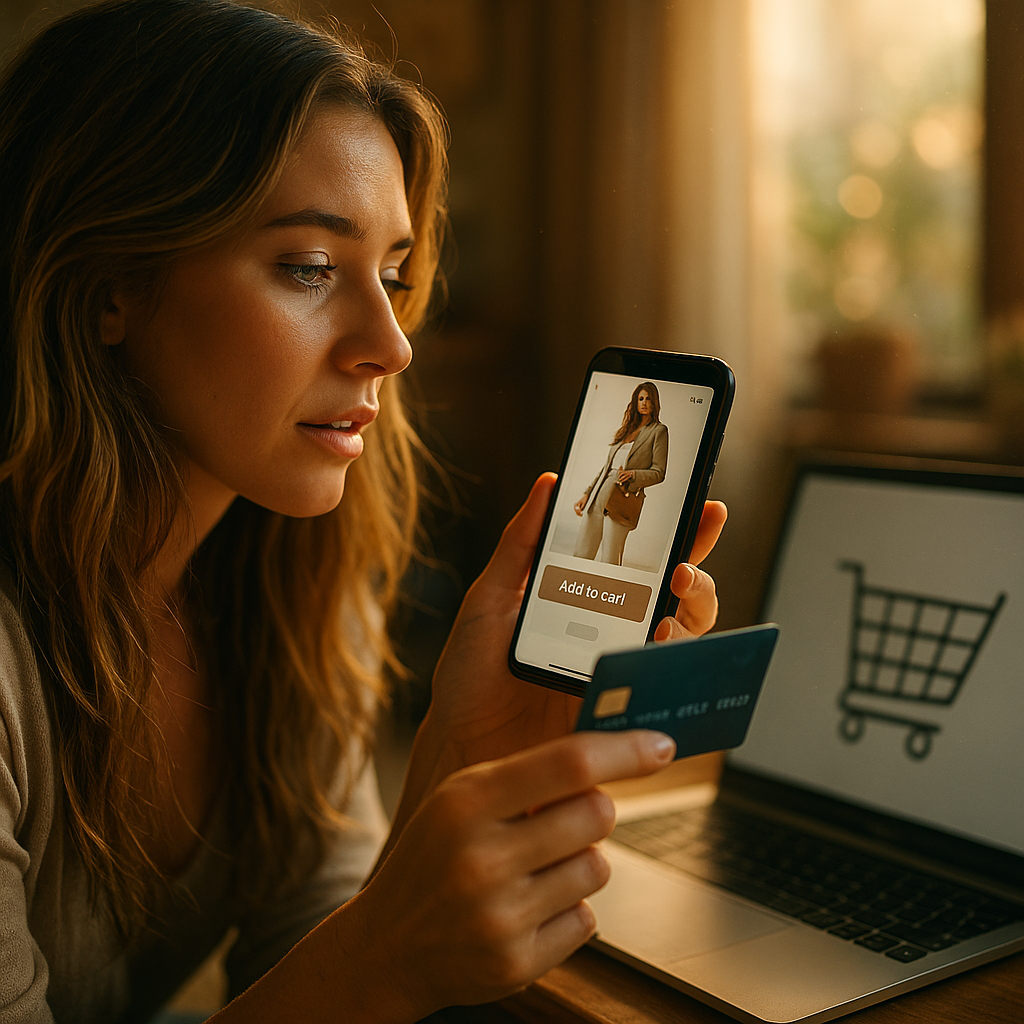
Nearly half of all influencer-driven purchases happen without a second thought. If your funnel still assumes a tidy path from awareness to consideration to conversion, the impulse economy is quietly making that model obsolete. A new wave of data puts spontaneous, creator-triggered buying at 42% of total influencer-driven sales, and that number should be reshaping how you allocate budget right now.
The 42% Number, and Why It’s Not a Fluke
Impulse buying tied to influencer content isn’t a fringe behavior anymore. It’s the plurality behavior. When 42% of purchases sparked by creator content happen on impulse, rather than after research or comparison shopping, that tells you the purchase decision is being made inside the content itself, not downstream of it.
Think about what that actually looks like in practice. A shopper scrolls past a TikTok Shop demo, taps “buy,” and owns the product before they’ve finished the video. No product page visit. No price comparison. No cart abandonment email sequence, because there was barely a cart. The entire consideration phase collapsed into a six-second decision window.
When nearly half of influencer-driven sales bypass consideration entirely, the traditional funnel isn’t just outdated, it’s actively misallocating budget toward stages consumers are skipping.
This isn’t limited to low-cost novelty items either. Beauty, snacks, apparel, and even some electronics accessories are seeing impulse-driven spikes tied directly to creator content, according to trend data tracked by eMarketer. The mechanism is the same across categories: trust in the creator substitutes for the research the consumer would otherwise do themselves.
Why the Old Funnel Can’t Handle This
The classic AIDA model (awareness, interest, desire, action) assumes friction between each stage. Budget gets allocated accordingly: heavy spend on top-of-funnel awareness, moderate spend on consideration content, and conversion-focused spend at the bottom, often through retargeting.
But if the action happens at the same moment as the awareness, that budget split is wrong. You’re essentially paying for a consideration stage that a huge chunk of your audience never enters. We’ve already argued that the traditional funnel is dead, and the impulse-economy data adds a sharper edge to that claim: it’s not just AI discovery collapsing the funnel, it’s the purchase mechanics of live shopping and shoppable content.
Marketers who keep budgeting for a three-stage journey when the real journey is one stage are burning spend on assets nobody clicks through in the way the model assumes.
What Actually Drives the Impulse Moment
- Authentic-feeling demos. Unscripted, in-the-moment product use reads as more trustworthy than polished ads, triggering faster decisions.
- Native checkout. Shoppable video on TikTok Shop, Instagram, and YouTube removes every point of friction between desire and purchase.
- Scarcity and social proof stacked together. Live comment counts, “selling fast” tags, and creator urgency cues compress decision time.
- Parasocial trust. Long-term followers extend a kind of credit to creators they’d never extend to a brand’s own ad copy.
Rethinking Funnel Design for Split-Second Decisions
If the funnel is collapsing, budget design has to collapse with it, deliberately, not by accident. That means treating the “discovery equals conversion” moment as its own funnel stage with its own budget line, rather than folding it into generic awareness spend.
Some practical shifts worth testing:
- Front-load conversion-ready creative. Every piece of creator content aimed at driving impulse purchases needs a built-in path to buy: shoppable tags, pinned links, on-screen codes. If the content requires a viewer to leave the platform to purchase, you’ve already lost a meaningful share of impulse buyers.
- Shift budget from retargeting to first-touch conversion. If the purchase decision happens on first exposure, pouring budget into retargeting sequences for people who already decided (or already declined) is inefficient. Reallocate toward getting the first touch right.
- Treat creator selection as a conversion lever, not just a reach lever. Creators with high parasocial trust convert impulse buyers better than creators with simply large audiences. This is where rebuilding vetting budgets pays for itself: a creator with an inflated but disengaged following will show reach without conversion.
- Measure differently. Standard click-through attribution undercounts impulse purchases that happen inside a native shopping surface. Retail media metrics and platform-reported conversion data, which we’ve covered in the context of why reach is dead, are a better proxy for what’s actually happening.
Budget Reallocation, in Practical Terms
Here’s a rough reallocation model brands are testing: shift 15-25% of what used to go toward mid-funnel consideration content (comparison videos, testimonial series, long-form reviews) into first-touch, shoppable creator content. Keep enough consideration content alive for higher-ticket categories, where impulse behavior is weaker, but stop assuming every category behaves the same way.
Fashion and beauty impulse rates are running higher than home goods or electronics, based on patterns in Statista’s consumer behavior tracking. That’s not surprising: lower price points and higher emotional resonance make snap decisions easier. Budget allocation should reflect that category-level variance rather than applying a single funnel model across the whole portfolio.
Does This Mean Consideration Content Is Dead?
No, and this is where a lot of hot takes overcorrect. Consideration content still matters, particularly for considered purchases like electronics, travel, or anything north of $150. But even in those categories, creator content is increasingly doing double duty: building brand trust for later consideration while planting the seed for an eventual impulse-adjacent decision once price sensitivity drops.
The smarter move isn’t abandoning the funnel entirely. It’s running two funnel models in parallel: a compressed, single-touch model for impulse-prone categories, and a traditional multi-touch model for considered purchases, with creator content built differently for each. Brands running both models tend to see better budget efficiency than those forcing every product into one framework.
Attribution Is the Real Bottleneck
Here’s the uncomfortable part. Most brands can’t even prove the 42% figure applies to their own campaigns, because their measurement stack wasn’t built for impulse behavior. Standard funnel attribution assumes multiple touchpoints. Impulse purchases often have exactly one.
That’s forcing a shift toward platform-native attribution and engagement-based signals rather than last-click models. Meta’s own attribution shift toward engagement is a direct response to this reality. If your measurement framework still leans on multi-touch attribution models designed for a five-step journey, you’re going to systematically undercount impulse-driven revenue and misjudge which creators are actually driving sales.
Brands still measuring creator ROI through last-click, multi-touch models are flying blind on nearly half of the purchases their campaigns generate.
Practical fix: lean harder on platform-reported shop conversion data, use post-purchase surveys to capture attribution the pixel misses, and stop treating a single-touch purchase as a measurement failure. It’s a behavior pattern, not noise.
Also worth noting: content approval speed matters more in an impulse economy than it used to. A trend window for impulse-driven products can close in days. Brands using AI-assisted content review to compress approval cycles are getting creative live while the moment is still commercially viable, rather than three weeks after the trend has cooled.
Where Budget Actually Needs to Move
Pulling this together, the reallocation logic for 2027 planning cycles looks something like this:
- More budget toward native shoppable creator content, less toward standalone brand awareness video that lacks a purchase path.
- More budget toward creator vetting and authenticity signals, since trust is the mechanism that triggers impulse conversion.
- Less budget toward broad retargeting pools, more toward first-touch optimization and creative testing speed.
- Dedicated budget for platform-native measurement tools rather than relying solely on legacy multi-touch attribution.
None of this requires blowing up your entire media plan. It requires being honest about where the money is actually converting, and stopping the practice of funding funnel stages that a growing share of your audience simply doesn’t use.
Next step: audit your last two quarters of creator spend against actual point-of-purchase data, not funnel-stage assumptions. If a meaningful chunk of conversions happened on first exposure, your budget split is already out of date, and the fix is a reallocation, not a bigger overall spend.
Frequently Asked Questions
What counts as an “impulse” influencer-driven purchase?
It generally refers to a purchase made with little or no deliberate research or comparison, typically within the same session as first exposure to the creator content, often through native shoppable features.
Does the impulse-economy shift apply to all product categories equally?
No. Lower-priced, emotionally driven categories like beauty, fashion, and snacks show higher impulse rates than considered purchases like electronics or travel, which still benefit from traditional multi-touch funnels.
How should brands adjust attribution models for impulse purchases?
Lean on platform-native conversion data and post-purchase surveys rather than multi-touch attribution, since single-touch impulse purchases are systematically undercounted by legacy models.
Should brands cut consideration-stage content entirely?
Not for every category. Running parallel funnel models, a compressed model for impulse-prone products and a traditional model for considered purchases, tends to outperform forcing everything into one framework.
What creator qualities matter most for driving impulse conversions?
Parasocial trust and perceived authenticity matter more than raw follower count. Vetting for engagement quality, not just audience size, is critical to avoiding wasted spend.
Top Influencer Marketing Agencies
The leading agencies shaping influencer marketing in 2026
Agencies ranked by campaign performance, client diversity, platform expertise, proven ROI, industry recognition, and client satisfaction. Assessed through verified case studies, reviews, and industry consultations.
Moburst

-
2

The Shelf
Boutique Beauty & Lifestyle Influencer AgencyA data-driven boutique agency specializing exclusively in beauty, wellness, and lifestyle influencer campaigns on Instagram and TikTok. Best for brands already focused on the beauty/personal care space that need curated, aesthetic-driven content.Clients: Pepsi, The Honest Company, Hims, Elf Cosmetics, Pure LeafVisit The Shelf → -
3

Audiencly
Niche Gaming & Esports Influencer AgencyA specialized agency focused exclusively on gaming and esports creators on YouTube, Twitch, and TikTok. Ideal if your campaign is 100% gaming-focused — from game launches to hardware and esports events.Clients: Epic Games, NordVPN, Ubisoft, Wargaming, Tencent GamesVisit Audiencly → -
4

Viral Nation
Global Influencer Marketing & Talent AgencyA dual talent management and marketing agency with proprietary brand safety tools and a global creator network spanning nano-influencers to celebrities across all major platforms.Clients: Meta, Activision Blizzard, Energizer, Aston Martin, WalmartVisit Viral Nation → -
5

The Influencer Marketing Factory
TikTok, Instagram & YouTube CampaignsA full-service agency with strong TikTok expertise, offering end-to-end campaign management from influencer discovery through performance reporting with a focus on platform-native content.Clients: Google, Snapchat, Universal Music, Bumble, YelpVisit TIMF → -
6

NeoReach
Enterprise Analytics & Influencer CampaignsAn enterprise-focused agency combining managed campaigns with a powerful self-service data platform for influencer search, audience analytics, and attribution modeling.Clients: Amazon, Airbnb, Netflix, Honda, The New York TimesVisit NeoReach → -
7

Ubiquitous
Creator-First Marketing PlatformA tech-driven platform combining self-service tools with managed campaign options, emphasizing speed and scalability for brands managing multiple influencer relationships.Clients: Lyft, Disney, Target, American Eagle, NetflixVisit Ubiquitous → -
8

Obviously
Scalable Enterprise Influencer CampaignsA tech-enabled agency built for high-volume campaigns, coordinating hundreds of creators simultaneously with end-to-end logistics, content rights management, and product seeding.Clients: Google, Ulta Beauty, Converse, AmazonVisit Obviously →